
Suchergebnisse
UNMESH GUNDECHA, Satya Avasarala
Selenium WebDriver is an open source automation tool implemented through a browser-specific driver, which sends commands to a browser and retrieves results. The latest version of Selenium 3 brings with it a lot of new features that change the way you use and setup Selenium WebDriver. This book covers all those features along with the source code, including a demo website that allows you to work with an HMTL5 application and other examples throughout the book.Selenium WebDriver 3 Practical Guide will walk you through the various APIs of Selenium WebDriver, which are used in automation tests, followed by a discussion of the various WebDriver implementations available. You will learn to strategize and handle rich web UI using advanced WebDriver API along with real-time challenges faced in WebDriver and solutions to handle them. You will discover different types and domains of testing such as cross-browser testing, load testing, and mobile testing with Selenium. Finally, you will also be introduced to data-driven testing using TestNG to create your own automation framework.By the end of this book, you will be able to select any web application and automate it the way you want.
J-P Contreras, Steven Koelpin, Erickson Delgado, Betsy...
Splunk is a search, reporting, and analytics software platform for machine data, which has an ever-growing market adoption rate. More organizations than ever are adopting Splunk to make informed decisions in areas such as IT operations, information security, and the Internet of Things.The first two chapters of the book will get you started with a simple Splunkinstallation and set up of a sample machine data generator, called Eventgen.After this, you will learn to create various reports, dashboards, and alerts. You willalso explore Splunk's Pivot functionality to model data for business users. Youwill then have the opportunity to test-drive Splunk's powerful HTTP Event Collector. After covering the core Splunk functionality, you'll be provided with some real-world best practices for using Splunk, and information on how to build upon what you've learned in this book.Throughout the book, there will be additional comments and best practicerecommendations from a member of the SplunkTrust Community, calledTips from the Fez.
Siddharth Shekar, Stephen Haney
Swift is the perfect choice for game development. Developers are intrigued by Swift and want to make use of new features to develop their best games yet. Packed with best practices and easy-to-use examples, this book leads you step by step through the development of your first Swift game.The book starts by introducing Swift's best features – including its new ones for game development. Using SpriteKit, you will learn how to animate sprites and textures. Along the way, you will master physics, animations, and collision effects and how to build the UI aspects of a game. You will then work on creating a 3D game using the SceneKit framework. Further, we will look at how to add monetization and integrate Game Center. With iOS 12, we see the introduction of ARKit 2.0. This new version allows us to integrate shared experiences such as multiplayer augmented reality and persistent AR that is tied to a specific location so that the same information can be replicated on all connected devices. In the next section, we will dive into creating Augmented Reality games using SpriteKit and SceneKit. Then, finally, we will see how to create a Multipeer AR project to connect two devices, and send and receive data back and forth between those devices in real time.By the end of this book, you will be able to create your own iOS games using Swift and publish them on the iOS App Store.
Alex Garcia, Viktor Farcic
Test-driven development (TDD) is a development approach that relies on a test-first procedure that emphasizes writing a test before writing the necessary code, and then refactoring the code to optimize it.The value of performing TDD with Java, one of the longest established programming languages, is to improve the productivity of programmers and the maintainability and performance of code, and develop a deeper understanding of the language and how to employ it effectively.Starting with the basics of TDD and understanding why its adoption is beneficial, this book will take you from the first steps of TDD with Java until you are confident enough to embrace the practice in your day-to-day routine.You'll be guided through setting up tools, frameworks, and the environment you need, and we will dive right into hands-on exercises with the goal of mastering one practice, tool, or framework at a time. You'll learn about the Red-Green-Refactor procedure, how to write unit tests, and how to use them as executable documentation.With this book, you'll also discover how to design simple and easily maintainable code, work with mocks, utilize behavior-driven development, refactor old legacy code, and release a half-finished feature to production with feature toggles.You will finish this book with a deep understanding of the test-driven development methodology and the confidence to apply it to application programming with Java.
Raymundo Barrera
Unity 2017 provides game and app developers with a variety of tools to implement Artificial Intelligence. Leveraging these tools via Unity's API or built-in features allows limitless possibilities when it comes to creating your game's worlds and characters. This third edition with Unity will help you break down Artificial Intelligence into simple concepts to give you a fundamental understanding of the topic to build upon. Using a variety of examples, the book then takes those concepts and walks you through actual implementations designed to highlight key concepts, and features related to game AI in Unity 5. Further on you will learn to distinguish the state machine pattern and implement one of your own. This is followed by learning how to implement a basic sensory system for your AI agent and coupling it with a Finite State Machine (FSM).Next you'll learn how to use Unity's built-in NavMesh feature and implement your own A* pathfinding system. You will then learn how to implement simple flocks and crowd's dynamics, key AI concepts. Moving on, you will learn how to implement a behavior tree through a game-focused example. Lastly, you'll combine fuzzy logic concepts with state machines and apply all the concepts in the book to build a simple tank game.
Jorge Palacios
Interactive and engaging games come with intelligent enemies, and this intellectual behavior is combined with a variety of techniques collectively referred to as Artificial Intelligence. Exploring Unity's API, or its built-in features, allows limitless possibilities when it comes to creating your game's worlds and characters. This cookbook covers both essential and niche techniques to help you take your AI programming to the next level.To start with, you’ll quickly run through the essential building blocks of working with an agent, programming movement, and navigation in a game environment, followed by improving your agent's decision-making and coordination mechanisms – all through hands-on examples using easily customizable techniques. You’ll then discover how to emulate the vision and hearing capabilities of your agent for natural and humanlike AI behavior, and later improve the agents with the help of graphs. This book also covers the new navigational mesh with improved AI and pathfinding tools introduced in the Unity 2018 update. You’ll empower your AI with decision-making functions by programming simple board games, such as tic-tac-toe and checkers, and orchestrate agent coordination to get your AIs working together as one.By the end of this book, you’ll have gained expertise in AI programming and developed creative and interactive games.
Alan Thorn
Unity is the most exciting and popular engine used for developing games. With its 2018 release, Unity has become the primary source of both game development and virtual reality content.In Unity 2018 By Example, you’ll learn how to use Unity in order to make amazing games from popular genres - from action shooters to mind-bending puzzle games to adventure and Virtual Reality (VR) games. Even if you have no previous experience of using Unity, this book will help you understand the toolsets it provides in depth. In addition to this, you'll understand how to create time-critical collection games, twin-stick space shooters, platformers, and action-fest games with intelligent enemies. Finally, you'll get to grips with creating VR games with the new toolsets introduced by Unity to help you develop amazing VR experiences.To make things easier, you will be provided with step-by-step tutorials for making five great games in Unity 2018, along with a detailed explanation of all the fundamental concepts. By the end of this book, you’ll have established a strong foundation in making games with Unity 2018.
Matt Smith, Francisco Queiroz
With the help of the Unity 2018 Cookbook, you’ll discover how to make the most of the UI system and understand how to animate both 2D and 3D characters and game scene objects using Unity's Mecanim animation toolsets.Once you’ve got to grips with the basics, you will familiarize yourself with shaders and Shader Graphs, followed by understanding the animation features to enhance your skills in building fantastic games. In addition to this, you will discover AI and navigation techniques for nonplayer character control and later explore Unity 2018’s newly added features to improve your 2D and 3D game development skills. This book provides many Unity C# gameplay scripting techniques.By the end of this book, you'll have gained comprehensive knowledge in game development with Unity 2018.
Jonathan Linowes
Unity has become the leading platform for building virtual reality games, applications, and experiences for this new generation of consumer VR devices. Unity Virtual Reality Projects walks you through a series of hands-on tutorials and in-depth discussions on using the Unity game engine to develop VR applications. With its practical and project-based approach, this book will get you up to speed with the specifics of VR development in Unity. You will learn how to use Unity to develop VR applications that can be experienced with devices such as Oculus, Daydream, and Vive. Among the many topics and projects, you will explore gaze-based versus hand-controller input, world space UI canvases, locomotion and teleportation, software design patterns, 360-degree media, timeline animation, and multiplayer networking. You will learn about the Unity 3D game engine via the interactive Unity Editor, and you will also learn about C# programming. By the end of the book, you will be fully equipped to develop rich, interactive VR experiences using Unity.
John P. Doran, William Sherif, Stephen Whittle
Unreal Engine 4 (UE4) is a popular and award-winning game engine that powers some of the most popular games. A truly powerful tool for game development, there has never been a better time to use it for both commercial and independent projects. With more than 100 recipes, this book shows how to unleash the power of C++ while developing games with Unreal Engine.This book takes you on a journey to jumpstart your C++ and UE4 development skills. You will start off by setting up UE4 for C++ development and learn how to work with Visual Studio, a popular code editor. You will learn how to create C++ classes and structs the Unreal way. This will be followed by exploring memory management, smart pointers, and debugging your code. You will then learn how to make your own Actors and Components through code and how to handle input and collision events. You will also get exposure to many elements of game development including creating user interfaces, artificial intelligence, and writing code with networked play in mind. You will also learn how to add on to the Unreal Editor itself. With a range of task-oriented recipes, this book provides actionable information about writing code for games with UE4 using C++. By the end of the book, you will be empowered to become a top-notch developer with UE4 using C++ as your scripting language!
Chris Beeley, Shitalkumar R. Sukhdeve
Web Application Development with R Using Shiny helps you become familiar with the complete R Shiny package. The book starts with a quick overview of R and its fundamentals, followed by an exploration of the fundamentals of Shiny and some of the things that it can help you do. You’ll learn about the wide range of widgets and functions within Shiny and how they fit together to make an attractive and easy to use application.Once you have understood the basics, you'll move on to studying more advanced UI features, including how to style apps in detail using the Bootstrap framework or and Shiny's inbuilt layout functions.You'll learn about enhancing Shiny with JavaScript, ranging from adding simple interactivity with JavaScript right through to using JavaScript to enhance the reactivity between your app and the UI.You'll learn more advanced Shiny features of Shiny, such as uploading and downloading data and reports, as well as how to interact with tables and link reactive outputs. Lastly, you'll learn how to deploy Shiny applications over the internet, as well as and how to handle storage and data persistence within Shiny applications, including the use of relational databases.By the end of this book, you'll be ready to create responsive, interactive web applications using the complete R (v 3.4) Shiny (1.1.0) suite.
Working with Odoo 11. Configure, manage, and customize your Odoo system - Third Edition
Greg Moss
Odoo is an all-in-one management software that offers an array of business applications, forming a complete suite of enterprise management applications. Odoo 11 comes with advances on usability, speed, and design.Working with Odoo 11 starts with how to set up Odoo, both online and on your own server. You’ll then configure the basic company settings required to quickly get your first Odoo system up and running. Later, you’ll explore customer relationship management in Odoo and its importance in a modern business environment. You'll then dive into purchasing applications with Odoo, learn some of the primary functionalities of ERP systems for manufacturing operations, and use analytic accounting to provide better reporting. After that, you'll learn how to work with Odoo for mobile, and finally, you will walk through the recent Odoo 11 features with respect to the community and enterprise edition, giving you a complete understanding of what Odoo can do for your business.
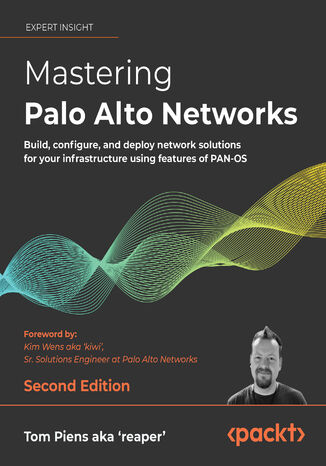
Tom Piens aka 'reaper', Kim Wens aka...
Palo Alto Networks’ integrated platform makes it easy to manage network and cloud security along with endpoint protection and a wide range of security services.This book is an end-to-end guide to configure firewalls and deploy them in your network infrastructure. You will see how to quickly set up, configure and understand the technology, and troubleshoot any issues that may occur. This book will serve as your go-to reference for everything from setting up to troubleshooting complex issues. You will learn your way around the web interface and command-line structure, understand how the technology works so you can confidently predict the expected behavior, and successfully troubleshoot any anomalies you may encounter. Finally, you will see how to deploy firewalls in a cloud environment, and special or unique considerations when setting them to protect resources.By the end of this book, for your configuration setup you will instinctively know how to approach challenges, find the resources you need, and solve most issues efficiently.
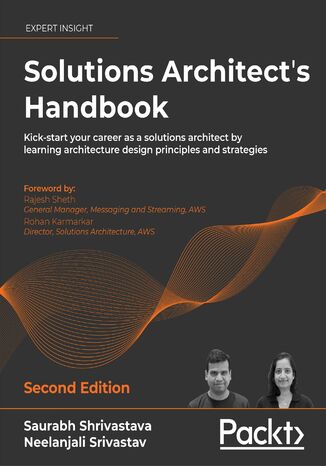
Saurabh Shrivastava, Neelanjali Srivastav, Rajesh Sheth, Rohan...
Becoming a solutions architect requires a hands-on approach, and this edition of the Solutions Architect's Handbook brings exactly that. This handbook will teach you how to create robust, scalable, and fault-tolerant solutions and next-generation architecture designs in a cloud environment. It will also help you build effective product strategies for your business and implement them from start to finish.This new edition features additional chapters on disruptive technologies, such as Internet of Things (IoT), quantum computing, data engineering, and machine learning. It also includes updated discussions on cloud-native architecture, blockchain data storage, and mainframe modernization with public cloud.The Solutions Architect's Handbook provides an understanding of solution architecture and how it fits into an agile enterprise environment. It will take you through the journey of solution architecture design by providing detailed knowledge of design pillars, advanced design patterns, anti-patterns, and the cloud-native aspects of modern software design.By the end of this handbook, you'll have learned the techniques needed to create efficient architecture designs that meet your business requirements.
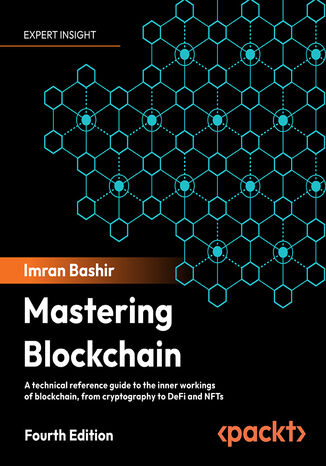
Imran Bashir
Blockchain is the backbone of cryptocurrencies, with applications in finance, government, media, and more. With a legacy of providing technologists with executable insights, this new edition of Mastering Blockchain is thoroughly revised and updated according to the latest blockchain research. With new chapters on decentralized finance, decentralized identity, blockchain privacy, scalability, security, and bonus online content exploring alternative blockchains, this is an unmissable read for everyone who wants to gain a deep understanding of blockchain.Although this book covers the basics, including blockchain's technical underpinnings, cryptography, and consensus protocols, it doesn’t shy away from advanced topics and practical expertise, such as decentralized application (DApp) development using smart contracts. Throughout the book, you’ll explore blockchain solutions beyond cryptocurrencies, such as the Internet of Things (IoT) with blockchain, enterprise blockchains, and tokenization, and gain insight into the future scope of this fascinating and disruptive technology.By the end of this blockchain book, you will have gained a thorough understanding of the various facets of blockchain and understand the potential of this technology in diverse real-world scenarios.
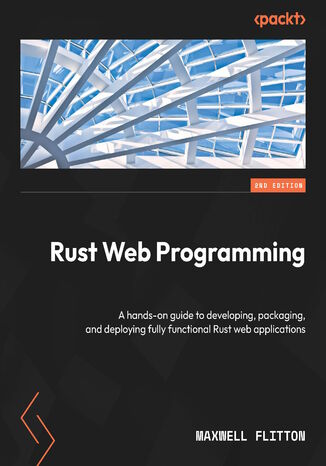
Maxwell Flitton
Are safety and high performance a big concern for you while developing web applications?With this practical Rust book, you’ll discover how you can implement Rust on the web to achieve the desired performance and security as you learn techniques and tooling to build fully operational web apps.In this second edition, you’ll get hands-on with implementing emerging Rust web frameworks, including Actix, Rocket, and Hyper. It also features HTTPS configuration on AWS when deploying a web application and introduces you to Terraform for automating the building of web infrastructure on AWS. What’s more, this edition also covers advanced async topics. Built on the Tokio async runtime, this explores TCP and framing, implementing async systems with the actor framework, and queuing tasks on Redis to be consumed by a number of worker nodes. Finally, you’ll go over best practices for packaging Rust servers in distroless Rust Docker images with database drivers, so your servers are a total size of 50Mb each.By the end of this book, you’ll have confidence in your skills to build robust, functional, and scalable web applications from scratch.