
Результати пошуку
Kali Linux Cookbook. Effective penetration testing solutions - Second Edition
Corey P. Schultz, Bob Perciaccante
Kali Linux is a Linux distribution designed for penetration testing and security auditing. It is the successor to BackTrack, the world’s most popular penetration testing distribution. Kali Linux is the most widely used platform and toolkit for penetration testing. Security is currently the hottest field in technology with a projected need for millions of security professionals.This book focuses on enhancing your knowledge in Kali Linux for security by expanding your skills with toolkits and frameworks that can increase your value as a security professional.Kali Linux Cookbook, Second Edition starts by helping you install Kali Linux on different options available. You will also be able to understand the lab architecture and install a Windows host for use in the lab. Next, you will understand the concept of vulnerability analysis and look at the different types of exploits. The book will introduce you to the concept and psychology of Social Engineering and password cracking. You will then be able to use these skills to expand the scope of any breaches you create. Finally, the book will guide you in exploiting specific technologies and gaining access to other systems in the environment. By the end of this book, you will have gained the core knowledge and concepts of the penetration testing process.
Puppet 5 Essentials. A fast-paced guide to automating your infrastructure - Third Edition
Martin Alfke, Felix Frank
Puppet is a configuration management tool that allows you to automate all your IT configurations, giving you control over what you do to each Puppet Agent in a network, and when and how you do it. In this age of digital delivery and ubiquitous Internet presence, it's becoming increasingly important to implement scaleable and portable solutions, not only in terms of software, but also the system that runs it.This book gets you started quickly with Puppet and its tools in the right way. It highlights improvements in Puppet and provides solutions for upgrading. It starts with a quick introduction to Puppet in order to quickly get your IT automation platform in place. Then you learn about the Puppet Agent and its installation and configuration along with Puppet Server and its scaling options. The book adopts an innovative structure and approach, and Puppet is explained with flexible use cases that empower you to manage complex infrastructures easily.Finally, the book will take readers through Puppet and its companion tools such as Facter, Hiera, and R10k and how to make use of tool chains.
Sebastian Raschka, Vahid Mirjalili
Publisher's Note: This edition from 2017 is outdated and is not compatible with TensorFlow 2 or any of the most recent updates to Python libraries. A new third edition, updated for 2020 and featuring TensorFlow 2 and the latest in scikit-learn, reinforcement learning, and GANs, has now been published.Machine learning is eating the software world, and now deep learning is extending machine learning. Understand and work at the cutting edge of machine learning, neural networks, and deep learning with this second edition of Sebastian Raschka’s bestselling book, Python Machine Learning. Using Python's open source libraries, this book offers the practical knowledge and techniques you need to create and contribute to machine learning, deep learning, and modern data analysis.Fully extended and modernized, Python Machine Learning Second Edition now includes the popular TensorFlow 1.x deep learning library. The scikit-learn code has also been fully updated to v0.18.1 to include improvements and additions to this versatile machine learning library. Sebastian Raschka and Vahid Mirjalili’s unique insight and expertise introduce you to machine learning and deep learning algorithms from scratch, and show you how to apply them to practical industry challenges using realistic and interesting examples. By the end of the book, you’ll be ready to meet the new data analysis opportunities.If you’ve read the first edition of this book, you’ll be delighted to find a balance of classical ideas and modern insights into machine learning. Every chapter has been critically updated, and there are new chapters on key technologies. You’ll be able to learn and work with TensorFlow 1.x more deeply than ever before, and get essential coverage of the Keras neural network library, along with updates to scikit-learn 0.18.1.
Kuntal Ganguly, Shanthi Viswanathan, Viswa Viswanathan
Data analytics with R has emerged as a very important focus for organizations of all kinds. R enables even those with only an intuitive grasp of the underlying concepts, without a deep mathematical background, to unleash powerful and detailed examinations of their data.This book will show you how you can put your data analysis skills in R to practical use, with recipes catering to the basic as well as advanced data analysis tasks. Right from acquiring your data and preparing it for analysis to the more complex data analysis techniques, the book will show you how you can implement each technique in the best possible manner. You will also visualize your data using the popular R packages like ggplot2 and gain hidden insights from it. Starting with implementing the basic data analysis concepts like handling your data to creating basic plots, you will master the more advanced data analysis techniques like performing cluster analysis, and generating effective analysis reports and visualizations. Throughout the book, you will get to know the common problems and obstacles you might encounter while implementing each of the data analysis techniques in R, with ways to overcoming them in the easiest possible way.By the end of this book, you will have all the knowledge you need to become an expert in data analysis with R, and put your skills to test in real-world scenarios.
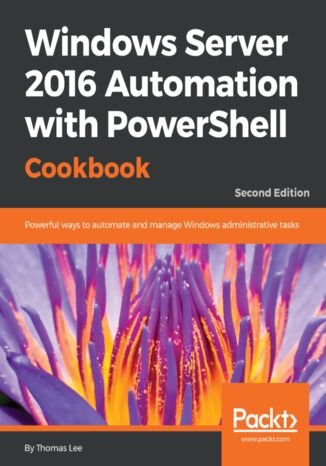
Thomas Lee, Ed Goad
This book showcases several ways that Windows administrators can use to automate and streamline their job. You'll start with the PowerShell and Windows Server fundamentals, where you'll become well versed with PowerShell and Windows Server features.In the next module, Core Windows Server 2016, you'll implement Nano Server, manage Windows updates, and implement troubleshooting and server inventories. You'll then move on to the Networking module, where you'll manage Windows network services and network shares.The last module covers Azure and DSC, where you will use Azure on PowerShell and DSC to easily maintain Windows servers.
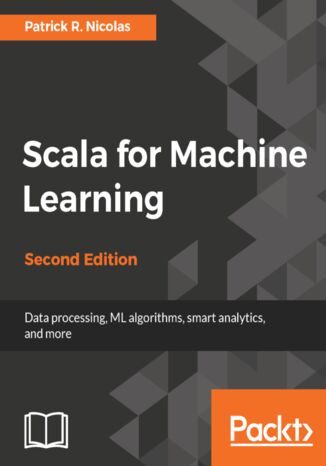
Patrick R. Nicolas
The discovery of information through data clustering and classification is becoming a key differentiator for competitive organizations. Machine learning applications are everywhere, from self-driving cars, engineering design, logistics, manufacturing, and trading strategies, to detection of genetic anomalies. The book is your one stop guide that introduces you to the functional capabilities of the Scala programming language that are critical to the creation of machine learning algorithms such as dependency injection and implicits. You start by learning data preprocessing and filtering techniques. Following this, you'll move on to unsupervised learning techniques such as clustering and dimension reduction, followed by probabilistic graphical models such as Naïve Bayes, hidden Markov models and Monte Carlo inference. Further, it covers the discriminative algorithms such as linear, logistic regression with regularization, kernelization, support vector machines, neural networks, and deep learning. You’ll move on to evolutionary computing, multibandit algorithms, and reinforcement learning.Finally, the book includes a comprehensive overview of parallel computing in Scala and Akka followed by a description of Apache Spark and its ML library. With updated codes based on the latest version of Scala and comprehensive examples, this book will ensure that you have more than just a solid fundamental knowledge in machine learning with Scala.
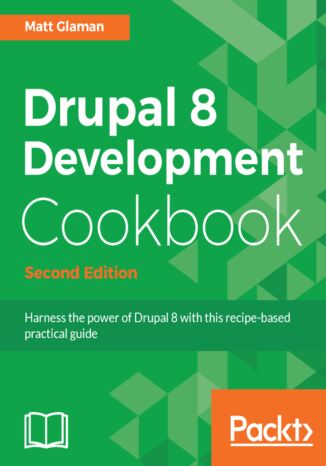
Matt Glaman
Began as a message board, Drupal today is open source software maintained and developed by a community of over 1,000,000 users and developers. Drupal is used by numerous local businesses to global corporations and diverse organizations all across the globe. With Drupal 8’s exciting features it brings, this book will be your go-to guide to experimenting with all of these features through helpful recipes.We’ll start by showing you how to customize and configure the Drupal environment as per your requirements, as well as how to install third-party libraries and then use them in the Drupal environment. Then we will move on to creating blocks and custom modules with the help of libraries. We will show you how to use the latest mobile-first feature of Drupal 8, which will help you make your apps responsive across all the major platforms. This book will also show you how to incorporate multilingual facilities in your sites, use web services and third-party plugins with your applications from inside Drupal 8, and test and deploy your apps.
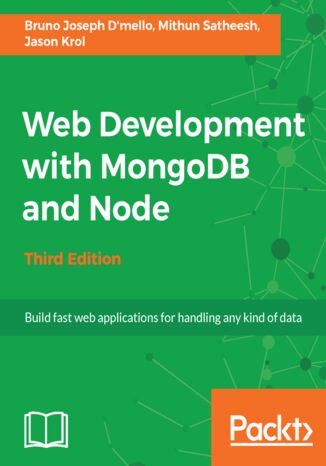
Bruno Joseph D'mello
Node.js builds fast, scalable network applications while MongoDB is the perfect fit as a high-performance, open source NoSQL database solution. The combination of these two technologies offers high performance and scalability and helps in building fast, scalable network applications. Together they provide the power for manage any form of data as well as speed of delivery.This book will help you to get these two technologies working together to build web applications quickly and easily, with effortless deployment to the cloud. You will also learn about angular 4, which consumes pure JSON APOIs from a hapi server.The book begins by setting up your development environment, running you through the steps necessary to get the main application server up-and-running. Then you will see how to use Node.js to connect to a MongoDB database and perform data manipulations.From here on, the book will take you through integration with third-party tools to interact with web apps. You will see how to use controllers and view models to generate reusable code that will reduce development time. Toward the end, the book supplies tests to properly execute your code and take your skills to the next level with the most popular frameworks for developing web applications.By the end of the book, you will have a running web application developed with MongoDB, Node.js, and some of the most powerful and popular frameworks.
Puppet 5 Beginner's Guide. Go from newbie to pro with Puppet 5 - Third Edition
John Arundel
Puppet 5 Beginner’s Guide, Third Edition gets you up and running with the very latest features of Puppet 5, including Docker containers, Hiera data, and Amazon AWS cloud orchestration. Go from beginner to confident Puppet user with a series of clear, practical examples to help you manage every aspect of your server setup. Whether you’re a developer, a system administrator, or you are simply curious about Puppet, you’ll learn Puppet skills that you can put into practice right away. With practical steps giving you the key concepts you need, this book teaches you how to install packages and config files, create users, set up scheduled jobs, provision cloud instances, build containers, and so much more. Every example in this book deals with something real and practical that you’re likely to need in your work, and you’ll see the complete Puppet code that makes it happen, along with step-by-step instructions for what to type and what output you’ll see. All the examples are available in a GitHub repo for you to download and adapt for your own server setup.
Jon Hoffman
Swift has become the number one language used in iOS and macOS development. The Swift standard library is developed using protocol-oriented programming techniques, generics, and first-class value semantics; therefore, every Swift developer should understand these powerful concepts and how to take advantage of them in their application design.This book will help you understand the differences between object-oriented programming and protocol-oriented programming. It will demonstrate how to work with protocol-oriented programming using real-world use cases. You will gain a solid knowledge of the various types that can be used in Swift and the differences between value and reference types. You will be taught how protocol-oriented programming techniques can be used to develop very flexible and easy-to-maintain code.By the end of the book, you will have a thorough understanding of protocol-oriented programming and how to utilize it to build powerful and practical applications.
James Singleton
The ASP.NET Core 2 framework is used to develop high-performance and cross-platform web applications. It is built on .NET Core 2 and includes significantly more framework APIs than version 1.This book addresses high-level performance improvement techniques. It starts by showing you how to locate and measure problems and then shows you how to solve some of the most common ones. Next, it shows you how to get started with ASP.NET Core 2 on Windows, Mac, Linux, and with Docker containers.The book illustrates what problems can occur as latency increases when deploying to a cloud infrastructure. It also shows you how to optimize C# code and choose the best data structures for the job. It covers new features in C# 6 and 7, along with parallel programming and distributed architectures.By the end of this book, you will be fixing latency issues and optimizing performance problems, but you will also know how this affects the complexity and maintenance of your application. Finally, we will explore a few highly advanced techniques for further optimization.
Learning Ceph. Unifed, scalable, and reliable open source storage solution - Second Edition
Karan Singh, Vaibhav Bhembre, Anthony D'Atri
Learning Ceph, Second Edition will give you all the skills you need to plan, deploy, and effectively manage your Ceph cluster. You will begin with the first module, where you will be introduced to Ceph use cases, its architecture, and core projects. In the next module, you will learn to set up a test cluster, using Ceph clusters and hardware selection. After you have learned to use Ceph clusters, the next module will teach you how to monitor cluster health, improve performance, and troubleshoot any issues that arise. In the last module, you will learn to integrate Ceph with other tools such as OpenStack, Glance, Manila, Swift, and Cinder.By the end of the book you will have learned to use Ceph effectively for your data storage requirements.
Jerome Baton, Rik Van Bruggen
Neo4j is a graph database that allows traversing huge amounts of data with ease. This book aims at quickly getting you started with the popular graph database Neo4j.Starting with a brief introduction to graph theory, this book will show you the advantages of using graph databases along with data modeling techniques for graph databases. You'll gain practical hands-on experience with commonly used and lesser known features for updating graph store with Neo4j's Cypher query language. Furthermore, you'll also learn to create awesome procedures using APOC and extend Neo4j's functionality, enabling integration, algorithmic analysis, and other advanced spatial operation capabilities on data.Through the course of the book you will come across implementation examples on the latest updates in Neo4j, such as in-graph indexes, scaling, performance improvements, visualization, data refactoring techniques, security enhancements, and much more. By the end of the book, you'll have gained the skills to design and implement modern spatial applications, from graphing data to unraveling business capabilities with the help of real-world use cases.
GeoServer Beginner's Guide. Share geospatial data using Open Source standards - Second Edition
Stefano Iacovella
GeoServer is an opensource server writtenin Java that allows users to share, process,and edit geospatial data. This book willguide you through the new featuresand improvements of GeoServer and willhelp you get started with it. GeoServerBeginner's Guide gives you the impetus tobuild custom maps using your data withoutthe need for costly commercial softwarelicenses and restrictions. Even if you donot have prior GIS knowledge, you will beable to make interactive maps after readingthis book.You will install GeoServer, access your datafrom a database, and apply style points,lines, polygons, and labels to impress sitevisitors with real-time maps. Then youfollow a step-by-step guide that installsGeoServer in minutes. You will explorethe web-based administrative interfaceto connect to backend data stores suchas PostGIS, and Oracle. Going ahead, youcan display your data on web-basedinteractive maps, use style lines, points,polygons, and embed images to visualizethis data for your web visitors. You willwalk away from this book with a workingapplication ready for production.After reading GeoServer Beginner's Guide,you will be able to build beautiful custommaps on your website using your geospatialdata.
Leif Larsen
Microsoft has revamped its Project Oxford to launch the all new Cognitive Services platform-a set of 30 APIs to add speech, vision, language, and knowledge capabilities to apps.This book will introduce you to 24 of the APIs released as part of Cognitive Services platform and show you how to leverage their capabilities. More importantly, you'll see how the power of these APIs can be combined to build real-world apps that have cognitive capabilities. The book is split into three sections: computer vision, speech recognition and language processing, and knowledge and search.You will be taken through the vision APIs at first as this is very visual, and not too complex. The next part revolves around speech and language, which are somewhat connected. The last part is about adding real-world intelligence to apps by connecting them to Knowledge and Search APIs.By the end of this book, you will be in a position to understand what Microsoft Cognitive Service can offer and how to use the different APIs.
Machine Learning with R Cookbook. Analyze data and build predictive models - Second Edition
AshishSingh Bhatia, Yu-Wei, Chiu (David Chiu)
Big data has become a popular buzzword across many industries. An increasing number of people have been exposed to the term and are looking at how to leverage big data in their own businesses, to improve sales and profitability. However, collecting, aggregating, and visualizing data is just one part of the equation. Being able to extract useful information from data is another task, and a much more challenging one. Machine Learning with R Cookbook, Second Edition uses a practical approach to teach you how to perform machine learning with R. Each chapter is divided into several simple recipes. Through the step-by-step instructions provided in each recipe, you will be able to construct a predictive model by using a variety of machine learning packages. In this book, you will first learn to set up the R environment and use simple R commands to explore data. The next topic covers how to perform statistical analysis with machine learning analysis and assess created models, covered in detail later on in the book. You'll also learn how to integrate R and Hadoop to create a big data analysis platform. The detailed illustrations provide all the information required to start applying machine learning to individual projects. With Machine Learning with R Cookbook, machine learning has never been easier.
Software-Defined Networking with OpenFlow. Deliver innovative business solutions - Second Edition
SIAMAK AZODOLMOLKY, Oswald Coker
OpenFlow paves the way for an open, centrally programmable structure, thereby accelerating the effectiveness of Software-Defined Networking.Software-Defined Networking with OpenFlow, Second Edition takes you through the product cycle and gives you an in-depth description of the components and options that are available at each stage. The aim of this book is to help you implement OpenFlow concepts and improve Software-Defined Networking on your projects. You will begin by learning about building blocks and OpenFlow messages such as controller-to-switch and symmetric and asynchronous messages. Next, this book will take you through OpenFlow controllers and their existing implementations followed by network application development. Key topics include the basic environment setup, the Neutron and Floodlight OpenFlow controller, XORPlus OF13SoftSwitch, enterprise and affordable switches such as the Zodiac FX and HP2920.By the end of this book, you will be able to implement OpenFlow concepts and improve Software-Defined Networking in your projects.
Tiffanie Miko Coffey
Squarespace is a web-based tool that allows non-technical people to create and manage professional-looking websites quickly, without needing to write any code. It empowers business owners to take total control of their own websites, without needing to pay someone to design or maintain it.This book covers much more than just how to use Squarespace. It covers all aspects of creating a successful business website, from developing your brand identity, to writing and structuring content to match your target audience's needs, and dozens of other other valuable tips that will help your website shine. Most importantly, you'll learn the correct steps to follow in order to ensure your project is smooth and stress-free.The book starts by helping you plan your website project and gather all the raw materials you'll need. Next, you'll set up your account and become familiar with the terminology and tools that you'll be using. Once you've learned the basics of how the Squarespace interface, templates, and different page types operate, you will create the framework of your website, ready for you to insert content and functionality. Then, once all the core elements are in place, you'll apply the aesthetic fine-tuning needed to bring your website in line with your brand. After the aesthetics have been honed and all functions tested, you will launch your website and drive traffic to it, monitor it, and improve it.
Chris Dent
PowerShell scripts offer a handy way to automate various chores. Working with these scripts effectively can be a difficult task.This comprehensive guide starts from scratch and covers advanced-level topics to make you a PowerShell expert. The first module, PowerShell Fundamentals, begins with new features, installing PowerShell on Linux, working with parameters and objects, and also how you can work with .NET classes from within PowerShell. In the next module, you’ll see how to efficiently manage large amounts of data and interact with other services using PowerShell. You’ll be able to make the most of PowerShell’s powerful automation feature, where you will have different methods to parse and manipulate data, regular expressions, and WMI.After automation, you will enter the Extending PowerShell module, which covers topics such as asynchronous processing and, creating modules. The final step is to secure your PowerShell, so you will land in the last module, Securing and Debugging PowerShell, which covers PowerShell execution policies, error handling techniques, and testing. By the end of the book, you will be an expert in using the PowerShell language.
Alan Thorn
Do you want to make the leap from being an everyday Unity developer to being a pro game developer? Then look no further! This book is your one-stop solution to creating mesmerizing games with lifelike features and amazing gameplay. This book focuses in some detail on a practical project with Unity, building a first-person game with many features. You'll delve into the architecture of a Unity game, creating expansive worlds, interesting render effects, and other features to make your games special. You will create individual game components, use efficient animation techniques, and implement collision and physics effectively. Specifically, we'll explore optimal techniques for importing game assets, such as meshes and textures; tips and tricks for effective level design; how to animate and script NPCs; how to configure and deploy to mobile devices; how to prepare for VR development; how to work with version control; and more. By the end of this book, you'll have developed sufficient competency in Unity development to produce fun games with confidence.
Dr. Dominik Hauser
Test-driven development (TDD) is a proven way to find software bugs early. Writing tests before you code improves the structure and maintainability of your apps. Using TDD, in combination with Swift 4's improved syntax, means there is no longer any excuse for writing bad code.This book will help you understand the process of TDD and how to apply it to your apps written in Swift. Through practical, real-world examples, you’ll learn how to implement TDD in context. You will begin with an overview of the TDD workflow and then delve into unit-testing concepts and code cycles.You will also plan and structure your test-driven iOS app, and write tests to drive the development of view controllers and helper classes. Next, you’ll learn how to write tests for network code and explore how the test-driven approach—in combination with stubs—helps you write network code even before the backend component is finished.Finally, the book will guide you through the next steps to becoming a testing expert by discussing integration tests, Behavior Driven Development (BDD), open source testing frameworks, and UI Tests (introduced in Xcode 9).
Mitesh Soni, Alan Mark Berg
Jenkins 2.x is one of the most popular Continuous Integration servers in the market today. It was designed to maintain, secure, communicate, test, build, and improve the software development process.This book will begin by guiding you through steps for installing and configuring Jenkins 2.x on AWS and Azure. This is followed by steps that enable you to manage and monitor Jenkins 2.x. You will also explore the ways to enhance the overall security of Jenkins 2.x. You will then explore the steps involved in improving the code quality using SonarQube. Then, you will learn the ways to improve quality, followed by how to run performance and functional tests against a web application and web services. Finally, you will see what the available plugins are, concluding with best practices to improve quality.
Minko Gechev
Align your work to stable APIs of Angular, version 5 and beyond, with Angular expert Minko Gechev. Angular is the modern Google framework for you to build high-performance, SEO-friendly, and robust web applications. Switching to Angular, Third Edition, shows you how you can align your current and future development with Google's long-term vision for Angular. Gechev shares his expert knowledge and community involvement to give you the clarity you need to confidently switch to Angular and stable APIs. Minko Gechev helps you get to grips with Angular with an overview of the framework, and understand the long-term building blocks of Google's web framework. Gechev then gives you the lowdown on TypeScript with a crash course, so you can take advantage of Angular in its native, statically typed environment. You'll next move on to see how to use Angular dependency injection, plus how Angular router and forms, and Angular pipes, are designed to work for your projects today and in the future.You'll be aligned with the vision and techniques of the one Angular, and be ready to start building quick and efficient Angular applications. You'll know how to take advantage of the latest Angular features and the core, stable APIs you can depend on. You'll be ready to confidently plan your future with the Angular framework.
Greg L. Turnquist
Spring Boot provides a variety of features that address today's business needs along with today's scalable requirements. In this book, you will learn how to leverage powerful databases and Spring Boot's state-of-the-art WebFlux framework. This practical guide will help you get up and running with all the latest features of Spring Boot, especially the new Reactor-based toolkit.The book starts off by helping you build a simple app, then shows you how to bundle and deploy it to the cloud. From here, we take you through reactive programming, showing you how to interact with controllers and templates and handle data access. Once you're done, you can start writing unit tests, slice tests, embedded container tests, and even autoconfiguration tests.We go into detail about developer tools, AMQP messaging, WebSockets, security, and deployment. You will learn how to secure your application using both routes and method-based rules. By the end of the book, you'll have built a social media platform from which to apply the lessons you have learned to any problem. If you want a good understanding of building scalable applications using the core functionality of Spring Boot, this is the book for you.