
Suchergebnisse
Jon Holt, Tim Weilkiens
Systems engineering helps in developing and describing complex systems. Written by an internationally-recognized systems engineering expert, this updated edition provides insight into elements to consider when designing a complex system that is robust and successful.The latest edition covers the new approaches of Model-Based Systems Engineering (MBSE) and its deployment techniques using the Trinity approach. You will learn about the system engineering life cycle and processes to implement. Effective systems can be built only when the system is designed with close attention to detail, meaning each aspect of the system is recognized and understood before the system is built. The book explains in great detail, different system models and visualization techniques, with a focus on SysML, to help you visualize a system in the design phase. You will also learn various verification and validation techniques to ensure your system design is ready to be implemented. The book ends with key management processes, systems engineering best practices, and guidelines, with a new section on effective approaches based on the author’s impressive 30 years of experience in the field.By the end of this systems engineering book, you'll be able to apply modern model-based systems engineering techniques to your own systems and projects.
François Voron
Building Data Science Applications with FastAPI is the go-to resource for creating efficient and dependable data science API backends. This second edition incorporates the latest Python and FastAPI advancements, along with two new AI projects – a real-time object detection system and a text-to-image generation platform using Stable Diffusion. The book starts with the basics of FastAPI and modern Python programming. You'll grasp FastAPI's robust dependency injection system, which facilitates seamless database communication, authentication implementation, and ML model integration. As you progress, you'll learn testing and deployment best practices, guaranteeing high-quality, resilient applications. Throughout the book, you'll build data science applications using FastAPI with the help of projects covering common AI use cases, such as object detection and text-to-image generation. These hands-on experiences will deepen your understanding of using FastAPI in real-world scenarios. By the end of this book, you'll be well equipped to maintain, design, and monitor applications to meet the highest programming standards using FastAPI, empowering you to create fast and reliable data science API backends with ease while keeping up with the latest advancements.
Fedor G. Pikus
C++ is a general-purpose programming language designed for efficiency, performance, and flexibility. Design patterns are commonly accepted solutions to well-recognized design problems. In essence, they are a library of reusable components, only for software architecture, and not for a concrete implementation. This book helps you focus on the design patterns that naturally adapt to your needs, and on the patterns that uniquely benefit from the features of C++. Armed with the knowledge of these patterns, you’ll spend less time searching for solutions to common problems and tackle challenges with the solutions developed from experience. You’ll also explore that design patterns are a concise and efficient way to communicate, as patterns are a familiar and recognizable solution to a specific problem and can convey a considerable amount of information with a single line of code. By the end of this book, you’ll have a deep understanding of how to use design patterns to write maintainable, robust, and reusable software.
Chris Bradfield
Godot 4.0 is one of the most sought-after open-source game engines, and if you’re enthusiastic about exploring its features, then this book is for you. Written by an author with over twenty-five years of experience, the Godot 4 Game Development Projects introduces the Godot game engine and its feature-rich 4.0 version. With an array of new capabilities, Godot 4.0 is a strong alternative to expensive commercial game engines. If you’re a beginner, this book will help you learn game development techniques, while experienced developers will understand how to use this powerful and customizable tool to bring their creative visions to life.This updated edition consists of five projects with an emphasis on the 3D capabilities of the engine that will help you build on your foundation-level skills through small-scale game projects. Along the way, you’ll gain insights into Godot’s inner workings and discover game development techniques that you can apply to your projects.Using a step-by-step approach and practical examples, this book covers everything from the absolute basics to sophisticated game physics, animations, and much more. By the time you complete the final project, you’ll have a strong foundation for future success with Godot 4.0 and you’ll be well on your way to developing a variety of games.
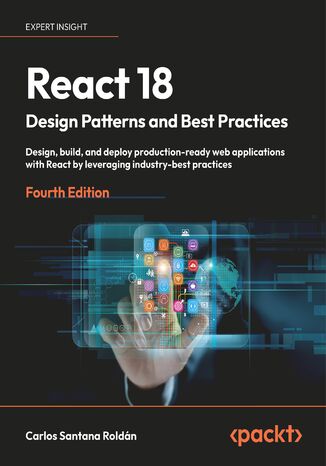
Carlos Santana Roldán
React helps you work smarter, not harder — but to reap the benefits of this popular JavaScript library and its components, you need a straightforward guide that will teach you how to make the most of it.React 18 Design Patterns and Best Practices will help you use React effectively to make your applications more flexible, easier to maintain, and improve their performance, while giving your workflow a huge boost. With a better organization of topics and knowledge about best practices added to your developer toolbox, the updated fourth edition ensures an enhanced learning experience.The book is split into three parts; the first will teach you the fundamentals of React patterns, the second will dive into how React works, and the third will focus on real-world applications. All the code samples are updated to the latest version of React and you’ll also find plenty of new additions that explore React 18 and Node 19’s newest features, alongside MonoRepo Architecture and a dedicated chapter on TypeScript.By the end of this book, you'll be able to efficiently build and deploy real-world React web applications.
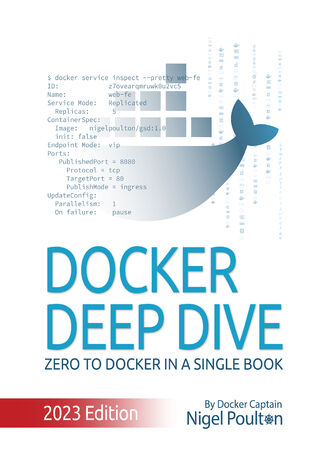
Docker Deep Dive. Zero to Docker in a Single Book - Second Edition
Nigel Poulton
Most applications, even the funky cloud-native microservices ones, need high-performance, production-grade infrastructure to run on. Having impeccable knowledge of Docker will help you thrive in the modern cloud-first world. With this book, you will gain the skills you need in order to work with Docker and its containers.The book begins with an introduction to containers and explains their functionality and application in the real world. You will then get an overview of VMware, Kubernetes, and Docker and learn to install Docker on Windows, Mac, and Linux. Once you have understood the Ops and Dev perspective of Docker, you will be able to see the big picture and understand what Docker exactly does. The book then turns its attention to the more technical aspects, guiding you through practical exercises covering Docker engine, Docker images, and Docker containers. You will learn techniques for containerizing an app, deploying apps with Docker Compose, and managing cloud-native applications with Swarm. You will also build Docker networks and Docker overlay networks and handle applications that write persistent data. Finally, you will deploy apps with Docker stacks and secure your Docker environment.By the end of this book, you will be well-versed in Docker and containers and have developed the skills to create, deploy, and run applications on the cloud.
James Freeman, Fabio Alessandro Locati, Daniel Oh
Ansible empowers you to automate a myriad of tasks, including software provisioning, configuration management, infrastructure deployment, and application rollouts. It can be used as a deployment tool as well as an orchestration tool. While Ansible provides simple yet powerful features to automate multi-layer environments using agentless communication, it can also solve other critical IT challenges, such as ensuring continuous integration and continuous deployment (CI/CD) with zero downtime.In this book, you'll work with the latest release of Ansible and learn how to solve complex issues quickly with the help of task-oriented scenarios. You'll start by installing and configuring Ansible on Linux and macOS to automate monotonous and repetitive IT tasks and learn concepts such as playbooks, inventories, and roles. As you progress, you'll gain insight into the YAML syntax and learn how to port between Ansible versions. Additionally, you'll understand how Ansible enables you to orchestrate multi-layer environments such as networks, containers, and the cloud.By the end of this Ansible book, you'll be well versed in writing playbooks and other related Ansible code to overcome all your IT challenges, from infrastructure-as-a-code provisioning to application deployments and handling mundane day-to-day maintenance tasks.
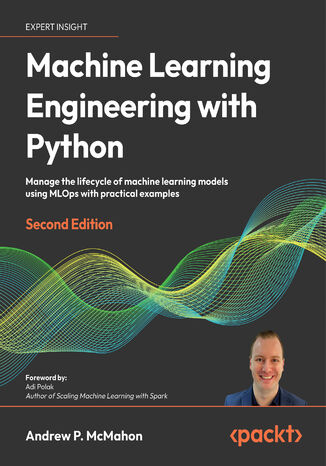
Andrew P. McMahon, Adi Polak
The Second Edition of Machine Learning Engineering with Python is the practical guide that MLOps and ML engineers need to build solutions to real-world problems. It will provide you with the skills you need to stay ahead in this rapidly evolving field.The book takes an examples-based approach to help you develop your skills and covers the technical concepts, implementation patterns, and development methodologies you need. You'll explore the key steps of the ML development lifecycle and create your own standardized model factory for training and retraining of models. You'll learn to employ concepts like CI/CD and how to detect different types of drift.Get hands-on with the latest in deployment architectures and discover methods for scaling up your solutions. This edition goes deeper in all aspects of ML engineering and MLOps, with emphasis on the latest open-source and cloud-based technologies. This includes a completely revamped approach to advanced pipelining and orchestration techniques.With a new chapter on deep learning, generative AI, and LLMOps, you will learn to use tools like LangChain, PyTorch, and Hugging Face to leverage LLMs for supercharged analysis. You will explore AI assistants like GitHub Copilot to become more productive, then dive deep into the engineering considerations of working with deep learning.
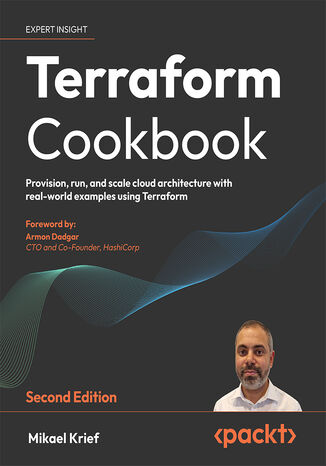
Mikael Krief, Armon Dadgar
HashiCorp Configuration Language (HCL) has changed how we define and provision data center infrastructure with the launch of Terraform, a top-tier product for building Infrastructure as Code (IaC). Terraform Cookbook shows you how to leverage Terraform to manage complex infrastructure with ease.This new edition has been updated to include real-world examples for provisioning Azure, AWS and GCP infrastructure with Terraform. You'll delve into manual and automated testing with Terraform configurations, creating and managing a balanced, efficient, and reusable infrastructure with Terraform modules. You'll learn how to automate the deployment of Terraform configuration with continuous integration and continuous delivery (CI/CD).Besides that, several new chapters have been added that describe the use of Terraform for Docker and Kubernetes, examine advanced topics on GitOps practices, and explain how to test Terraform configurations using different tools to check code and security compliance. The final chapter covers troubleshooting common Terraform issues and provides solutions for frequently encountered errors.By the end of this book, you'll have developed the skills needed to get the most value out of Terraform and to effectively manage your infrastructure.
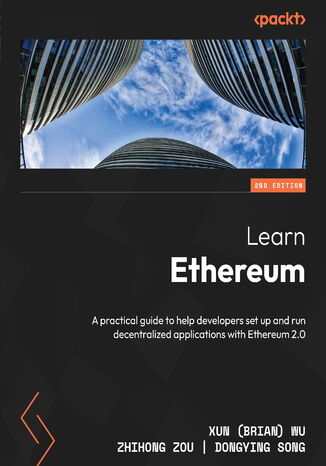
Xun (Brian) Wu, Zhihong Zou, Dongying Song
Ethereum is a blockchain-based, decentralized computing platform that allows you to run smart contracts. With this book, you’ll discover the latest Ethereum tools, frameworks, wallets, and layer 2, along with setting up and running decentralized applications for the complete, end-to-end development experience.Learn Ethereum, 2nd Edition is a comprehensive overview of the Ethereum ecosystem, exploring its concepts, mechanisms, and decentralized application development process. You’ll delve into Ethereum's internals, technologies, and tools, including Ethereum 2.0 and the Ethereum Virtual Machine (EVM), gas, and its account systems. You’ll also explore Ethereum's transition to proof of stake, L1/L2 scaling solutions, DeFi protocols, and the current marketplace. Additionally, you’ll learn about EVM-compatible blockchains, connectivity techniques, and advanced topics such as sharding, off-chain scaling, DAOs, Metaverse, and NFTs.By the end of this book, you’ll be well-equipped to write smart contracts and develop, test, and deploy DApps using various tools, wallets, and frameworks.
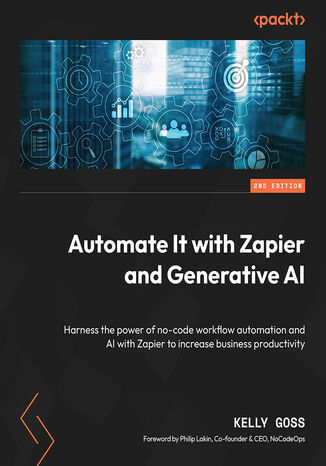
Kelly Goss, Philip Lakin
Organizations experience significant issues with productivity when dealing with manual and repetitive tasks. Automate it with Zapier and Generative AI, second edition has been extensively revised to help you analyze your processes and identify repetitive tasks that can be automated between 6000+ cloud-based business applications.This book includes all Zapier’s newest features such as AI functionality using the ChatGPT plugin, drafts, reordering and duplicating steps and paths, subfolders and version history, as well as built-in apps such as Looping, Sub-Zap, Interfaces, Tables, and Transfer. The chapters also contain examples covering various use cases sourced from the Zapier user community.You'll learn how to implement automation in your organization along with key principles and terminology, and take the first steps toward using Zapier. As you advance, you'll learn how to use Zapier’s native functionality and all 27 built-in apps such as Filter, Paths, Formatter, Digest, and Scheduler to enable you to build multi-step Zaps. You’ll also discover how to manage your Zapier account effectively, as well as how to troubleshoot technical problems with your workflows, and use the OpenAI integration to automate AI tasks.By the end of this book, you'll be able to automate your manual and repetitive tasks using Zapier.
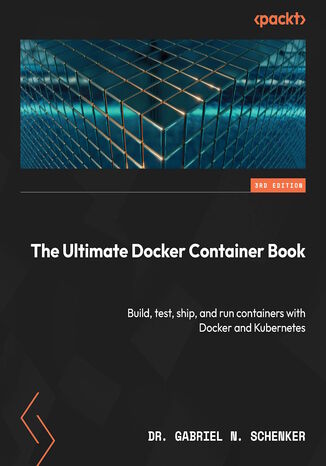
Dr. Gabriel N. Schenker
The Ultimate Docker Container Book, 3rd edition enables you to leverage Docker containers for streamlined software development. You’ll uncover Docker fundamentals and how containers improve software supply chain efficiency and enhance security.You’ll start by learning practical skills such as setting up Docker environments, handling stateful components, running and testing code within containers, and managing Docker images. You’ll also explore how to adapt legacy applications for containerization and understand distributed application architecture. Next, you’ll delve into Docker's networking model, software-defined networks for secure applications, and Docker compose for managing multi-service applications along with tools for log analysis and metrics. You’ll further deepen your understanding of popular orchestrators like Kubernetes and Docker swarmkit, exploring their key concepts, and deployment strategies for resilient applications. In the final sections, you’ll gain insights into deploying containerized applications on major cloud platforms, including Azure, AWS, and GCE and discover techniques for production monitoring and troubleshooting.By the end of this book, you’ll be well-equipped to manage and scale containerized applications effectively.

Davi Vieira
We live in a fast-evolving world with new technologies emerging every day, where enterprises are constantly changing in an unending quest to be more profitable. So, the question arises — how to develop software capable of handling a high level of unpredictability. With this question in mind, this book explores how the hexagonal architecture can help build robust, change-tolerable, maintainable, and cloud-native applications that can meet the needs of enterprises seeking to increase their profits while dealing with uncertainties. This book starts by uncovering the secrets of the hexagonal architecture’s building blocks, such as entities, use cases, ports, and adapters. You’ll learn how to assemble business code in the domain hexagon, create features with ports and use cases in the application hexagon, and make your software compatible with different technologies by employing adapters in the framework hexagon. In this new edition, you’ll learn about the differences between a hexagonal and layered architecture and how to apply SOLID principles while developing a hexagonal system based on a real-world scenario. Finally, you’ll get to grips with using Quarkus to turn your hexagonal application into a cloud-native system.By the end of this book, you’ll be able to develop robust, flexible, and maintainable systems that will stand the test of time.
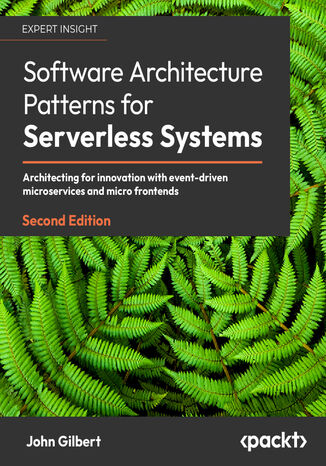
John Gilbert, Memi Lavi
Organizations undergoing digital transformation rely on IT professionals to design systems to keep up with the rate of change while maintaining stability. With this edition, enriched with more real-world examples, you’ll be perfectly equipped to architect the future for unparalleled innovation.This book guides through the architectural patterns that power enterprise-grade software systems while exploring key architectural elements (such as events-driven microservices, and micro frontends) and learning how to implement anti-fragile systems.First, you'll divide up a system and define boundaries so that your teams can work autonomously and accelerate innovation. You'll cover the low-level event and data patterns that support the entire architecture while getting up and running with the different autonomous service design patterns.This edition is tailored with several new topics on security, observability, and multi-regional deployment. It focuses on best practices for security, reliability, testability, observability, and performance. You'll be exploring the methodologies of continuous experimentation, deployment, and delivery before delving into some final thoughts on how to start making progress.By the end of this book, you'll be able to architect your own event-driven, serverless systems that are ready to adapt and change.
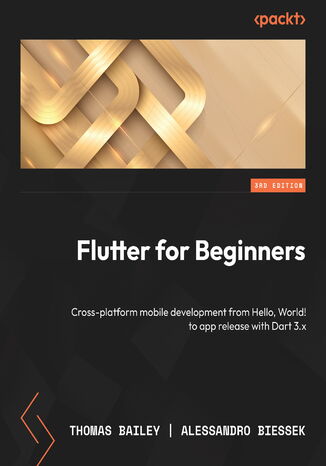
Thomas Bailey, Alessandro Biessek
There have been many attempts at creating frameworks that are truly cross-platform, but most struggle to create a native-like experience at high-performance levels. Flutter achieves this with an elegant design and a wealth of third-party plugins, solidifying its status as the future of mobile app development. If you are a mobile developer who wants to create rich and expressive native apps with the latest Google Flutter framework, this book is for you.You’ll start with the basics of cross-platform development frameworks, specifically Flutter. You’ll then explore the Dart programming language which is the foundation of the Flutter framework. Next, you’ll get a feel for Flutter and how to create your first app, followed by an exploration of the various popular plugins that supplement the Flutter framework. Finally, you’ll explore testing and app release, including some common glitches that you may experience.By the end of this book, you’ll be well-equipped to create and release a basic Flutter app along with gaining a solid understanding of the Flutter framework and Dart language.
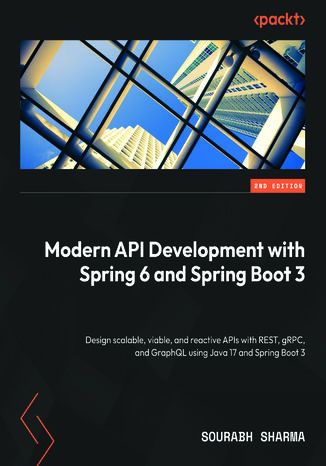
Sourabh Sharma
Spring is a powerful and widely adopted framework for building scalable and reliable web applications in Java, complemented by Spring Boot, a popular extension to the framework that simplifies the setup and configuration of Spring-based applications. This book is an in-depth guide to harnessing Spring 6 and Spring Boot 3 for web development, offering practical knowledge of building modern robust web APIs and services.The book covers a wide range of topics that are essential for API development, including RESTful web service fundamentals, Spring concepts, and API specifications. It also explores asynchronous API design, security, designing user interfaces, testing APIs, and the deployment of web services. In addition to its comprehensive coverage, this book offers a highly contextual real-world sample app that you can use as a reference for building different types of APIs for real-world applications. This sample app will lead you through the entire API development cycle, encompassing design and specification, implementation, testing, and deployment.By the end of this book, you’ll have learned how to design, develop, test, and deploy scalable and maintainable modern APIs using Spring 6 and Spring Boot 3, along with best practices for bolstering the security and reliability of your applications and improving your application's overall functionality.
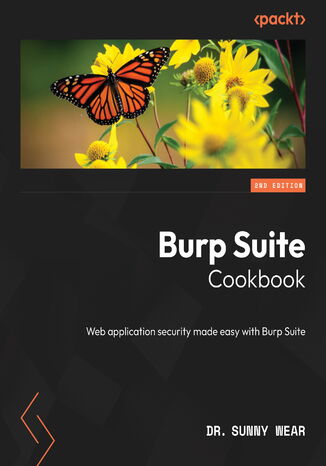
Burp Suite Cookbook. Web application security made easy with Burp Suite - Second Edition
Dr. Sunny Wear
With its many features, easy-to-use interface, and flexibility, Burp Suite is the top choice for professionals looking to strengthen web application and API security.This book offers solutions to challenges related to identifying, testing, and exploiting vulnerabilities in web applications and APIs. It provides guidance on identifying security weaknesses in diverse environments by using different test cases. Once you’ve learned how to configure Burp Suite, the book will demonstrate the effective utilization of its tools, such as Live tasks, Scanner, Intruder, Repeater, and Decoder, enabling you to evaluate the security vulnerability of target applications. Additionally, you’ll explore various Burp extensions and the latest features of Burp Suite, including DOM Invader.By the end of this book, you’ll have acquired the skills needed to confidently use Burp Suite to conduct comprehensive security assessments of web applications and APIs.
Matthew Weston, Elisa Bárcena Martín
Microsoft Power Apps provides a modern approach to building low-code business applications for mobiles, tablets, browsers, and Microsoft Teams. The second edition of Learn Microsoft Power Apps will guide you in creating well designed and secure apps that transform old processes and workflows.Learn Microsoft Power Apps starts with an introduction to Power Apps to help you feel comfortable with the creation experience. Using screenshots from the latest UI, you will be guided through how to create an app, building your confidence to start developing further. This book will help you design, set up, and configure your first application by writing simple formulas. You'll learn about the different types of apps you can build in Power Apps and which one applies best to your requirements.In addition to this, you’ll learn how to identify the right data storage system for you, with new chapters covering how to integrate apps with SharePoint or Dataverse. As you advance, you’ll be able to use various controls, connectors, and data sources to create a powerful, interactive app. For example, this book will help you understand how Power Apps can use Microsoft Power Automate, Power BI, and Azure functionalities to improve your applications. Finally, you will be introduced to the emerging Power Apps Copilot tool, which uses artificial intelligence to accelerate the app building process.By the end of this Power Apps book, you’ll be ready to confidently develop lightweight business applications with minimal code.
Manu Joseph, Jeffrey Tackes, Christoph Bergmeir
Predicting the future, whether it's market trends, energy demand, or website traffic, has never been more crucial. This practical, hands-on guide empowers you to build and deploy powerful time series forecasting models. Whether you’re working with traditional statistical methods or cutting-edge deep learning architectures, this book provides structured learning and best practices for both.Starting with the basics, this data science book introduces fundamental time series concepts, such as ARIMA and exponential smoothing, before gradually progressing to advanced topics, such as machine learning for time series, deep neural networks, and transformers. As part of your fundamentals training, you’ll learn preprocessing, feature engineering, and model evaluation. As you progress, you’ll also explore global forecasting models, ensemble methods, and probabilistic forecasting techniques.This new edition goes deeper into transformer architectures and probabilistic forecasting, including new content on the latest time series models, conformal prediction, and hierarchical forecasting. Whether you seek advanced deep learning insights or specialized architecture implementations, this edition provides practical strategies and new content to elevate your forecasting skills.*Email sign-up and proof of purchase required
React Key Concepts. An in-depth guide to React's core features - Second Edition
Maximilian Schwarzmüller
Maximilian Schwarzmüller is a bestselling instructor who has helped more than three million students worldwide learn how to code. His bestselling React video course, “React – The Complete Guide”, has over nine hundred thousand students on Udemy.Max has written this quick-start reference that distills the core concepts of React. Simple explanations, relevant examples, and step-by-step derivations make this guide the ideal resource for busy developers. In this second edition, Max guides you through changes brought by React 19, including the new use() hook, form actions, and how to think about React on the server.This book will support you through your next React projects in giving you a behind-the-scenes understanding of the framework – whether you've just finished Max's video course and are looking for a handy reference, or you’re using a variety of other learning materials and need a single study guide to bring everything together.You’ll find full solutions to all end-of-chapter quizzes and exercises in the book’s GitHub repository.
Matthew Whiteside
Programming Puzzles is a meticulously crafted collection designed to elevate your coding skills through engaging and challenging exercises. The book begins with a helpful guide on getting started, ensuring that readers are well-prepared to tackle the puzzles ahead. As you delve deeper, you'll encounter a series of challenge puzzles that test your logical thinking and problem-solving abilities, followed by fun puzzles that offer a more relaxed yet equally rewarding experience.Hints are provided for the challenge puzzles to guide you through particularly tough spots, ensuring you stay motivated without giving away the solutions. Once you've worked through the puzzles, comprehensive solutions are provided, allowing you to understand different approaches and learn from your mistakes. Each section of the book is designed to progressively build your skills, from basic logic to advanced problem-solving techniques, making it an invaluable resource for anyone looking to improve their programming abilities.The journey through this book is not just about finding solutions; it's about developing a deeper understanding of how to approach and solve complex problems. By the end of this book, you'll have honed your coding skills, enhanced your logical thinking, and gained a new appreciation for the art of problem-solving in programming.
Irene Bratsis
AI is rapidly transforming product management, presenting new challenges and business opportunities. As AI-driven solutions become more complex, product managers must bridge the gap between technological capabilities and business needs. This book provides a detailed roadmap for successfully building and maintaining AI-driven products, serving as an indispensable companion on your journey to becoming an effective AI product manager. In this second edition, you'll find fresh insights into generative AI, and responsible AI practices with the most relevant tools for building AI-powered products.Authored by a leading AI product expert with years of hands-on experience in developing and managing AI solutions, this guide translates complex AI concepts into actionable strategies. Whether you're an aspiring AI PM or an experienced professional, this book offers a structured approach to defining AI product vision, leveraging data effectively, and aligning AI with business objectives. With new case studies and refined frameworks, this edition provides deeper insights into ethical AI, cross-functional collaboration, and deployment challenges.By the end of this book, you’ll be equipped with the knowledge to drive AI product success with key techniques for identifying AI opportunities and managing risks in a rapidly evolving landscape.*Email sign-up and proof of purchase required

Christophe Foulon, Ken Underhill, Tia Hopkins
The cybersecurity field is evolving fast, and so are its job interviews. Hack the Cybersecurity Interview, Second Edition is your go-to guide for landing your dream cybersecurity job—whether you're breaking in or aiming for a senior role.This expanded edition builds on reader feedback, refines career paths, and updates strategies for success. With a real-world approach, it preps you for key technical and behavioral questions, covering roles like Cybersecurity Engineer, SOC Analyst, and CISO. You'll learn best practices for answering with confidence and standing out in a competitive market.The book helps you showcase problem-solving skills, highlight transferable experience, and navigate personal branding, job offers, and interview stress. Using the HACK method, it provides a structured approach to adapt to different roles and employer expectations.Whether you're switching careers, advancing in cybersecurity, or preparing for your first role, this book equips you with the insights, strategies, and confidence to secure your ideal cybersecurity job.
Arjuna Sky Kok
We are living in the age of decentralized fi nance and NFTs. People swap tokens on Uniswap, borrow assets from Aave, send payments with stablecoins, trade art NFTs on OpenSea, and more. To build applications of this kind, you need to know how to write smart contracts.This comprehensive guide will help you explore all the features of Vyper, a programming language designed to write smart contracts. You’ll also explore the web3.py library. As you progress, you’ll learn how to connect to smart contracts, read values, and create transactions. To make sure your foundational knowledge is strong enough, the book guides you through Ape Framework, which can help you create decentralized exchanges, NFT marketplaces, voting applications, and more. Each project provides invaluable insights and hands-on experience, equipping you with the skills you need to build real-world blockchain solutions.By the end of this book, you’ll be well versed with writing common Web3 applications such as a decentralized exchange, an NFT marketplace, a voting application, and more.