
Видавець: 16
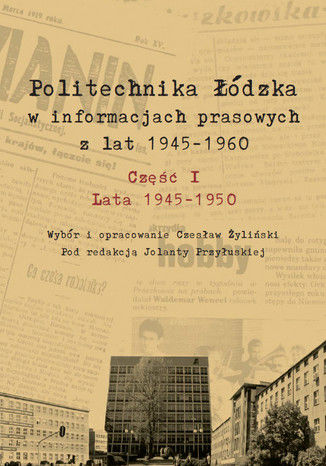
Politechnika Łódzka w informacjach prasowych z lat 1945-1950
Czesław Żyliński, Jolanta Przyłuska
Czesław Żyliński ukończył Państwowe Studium Kulturalno-Oświatowe i Bibliotekarskie w Łodzi. Od 1969 roku pracował jako bibliotekarz w Politechnice Łódzkiej, kolejno w Bibliotece Wydziału Budownictwa Lądowego, Bibliotece Instytutu Materiałoznawstwa i Technologii Metali oraz w Bibliotece na Wydziale Elektrotechniki, Elektroniki, Informatyki i Automatyki. Kronikarstwo jest jego pasją. Szperanie w dawnych rocznikach gazet, przeglądanie strona po stronie i odtwarzanie historii PŁ sprawiło, że stał się ekspertem od informacji prasowych, w szczególności z lat 1945- 1960, a często nawet do 1990 roku. Posiada swoją „kartotekę europejską” za lata 1945-1990 zawierającą nazwiska głów państw, premierów, ministrów spraw zagranicznych Europy od 1945 roku. Opublikował kilkaset listów do redakcji, sprostowań, uzupełnień i uwag prasowych. Teksty związane z PŁ lub życiem akademickim tworzył na podstawie różnych źródeł. Drukowano je obok „Kronik” w „Życiu Uczelni” – łącznie 80 pozycji. Oprócz prasy codziennej pomocą służyły czasopisma techniczne, informatory, a nawet encyklopedie. Praca nad wydawnictwem „Politechnika Łódzka w informacjach prasowych z lat 1945-1960” to spełnienie jego planów. Autor opracował kroniki wydarzeń związanych z PŁ do roku 1960. Powstały one na podstawie informacji zawartych głównie w „Dzienniku Łódzkim”, „Ekspresie Ilustrowanym” i „Głosie Robotniczym”. Poszukując informacji o PŁ, organizacjach studenckich i profesorach, Pan Czesław przeglądał każdą stronę gazet i spisywał interesujące go teksty. Do każdego półrocza lub kwartału dopisywał komentarz chrakteryzujący dany okres.
Political Players? Sovereign Wealth Funds' Investments in Central and Eastern Europe
Tomasz Kamiński
Although there has been vivid academic debate as to what extent Sovereign Wealth Funds (SWFs) are motivated by political reasons, it is rather clear that countries can use state-owned investment funds as a tool of their foreign policy. Even Barack Obama, during his initial presidential campaign in 2008 commented: “I am obviously concerned if these... sovereign wealth funds are motivated by more than just market consideration and that’s obviously a possibility”. This book looks at SWF activities in Central and Eastern Europe (CEE) to determine the main motives for SWF presence in CEE. Are the potential financial gains the only reason behind their investments? Are SWF activities in the region dangerous for the stability and security of the CEE countries? The book is pioneering analyses of SWFs behaviour in the region, based on empirical data collected from the Sovereign Wealth Fund Institute Transaction Database, arguably the most comprehensive and authoritative resource tracking SWF investment behaviour globally.
Aristotle
The treatise is divided into 8 chapters (books), each of which is devoted to a particular topic. First of all, in the first book, Aristotle begins his concept with the very concept of state, since without understanding this term one can forget about further theory. In the second book, Aristotle undertakes to criticize the already existing theories about the state, namely the theory of Plato, Faley of Chalkedon, Hippodamus; It also analyzes and analyzes the states and their devices that existed during it Crete, Athens, Carthage, Lacedaemon.
Politics and Society in the Islamic World. Polityka i społeczeństwo w świecie islamu
Izabela Kończak, Magdalena Lewicka, Marta Widy-Behiesse
As we prepare this book for publication, the enthusiasm for the «Arab Spring» has proved entirely misguided. The situation across the Middle East is now more dangerous than it has been for half a century. Tunisia’s revolution sparked a string of regional uprisings which ousted the rulers of Egypt, Libya and Yemen, leading to chaos in Egypt and anarchy in Libya, as well as to conflict in Syria. Several major world powers have become embroiled in the latter and the conflict evolved into full scale war. Although Bashar al-Assad of Syria still has control over some territories due to his secret police and the armed forces, he cannot, and probably has no interest in stopping the expansion of the Islamic State of Iraq and Syria (ISIS) - a Salafi militant organization born in 2014 in the political vacuum in Iraq left by the fall of Saddam Hussein. With thousands of migrants fleeing conflict-torn countries of the Middle East, Europe is currently struggling to cope with a massive refugee influx, although the vast majority of the refugees have remained in the region, especially in the camps in Turkey, Lebanon and Jordan. Some European countries, including Germany and Sweden, opened their gates to refugees, while others (i. e. Poland and Hungary) refused to take the migrants. Undoubtedly, the migrant crisis has been feeding xenophobia and political populism - anti-immigrant sentiment was one of the reasons why the British voted to leave the European Union in referendum held in June, 2016.
Politics Society and the economy in contemporary Poland
Dominika Kasprowicz, Grzegorz Foryś, Dorota Murzyn
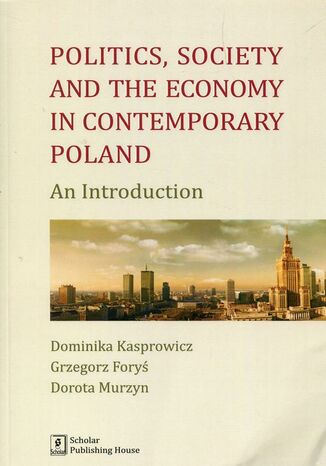
This book has been designed as a guide for foreigners studying in Poland. The preparation of such a book for this particular kind of recipient represents a much-needed and valuable initiative, as there are considered to be far too few publications of this kind. For this book offers in an understandable and digestible form basic information on the past and present of Poland, with particular emphasis put on the areas of policy, society and the economy. A volume designed in such a way can serve students of both the social sciences and other fields, as they seek a better understanding of the country in which they find themselves, within the framework of an academic exchange. It should be emphasized that all three parts here are on a high professional level, hence there is no doubt as to the presence here of specialists in the given fields, who have nevertheless made every effort to ensure that issues presented are accessible and understandable, as well as being carefully selected to ensure a good and wide-ranging outline of socio-political and economic issues in Poland. It thus remains for me to reemphasize the high professional level of this book, and the achievement it represents in and of itself, as well as in the way it meets a sore market need for an item of this kind.
Politik - Medien - Sprache. Deutsche und polnische Realien aus linguistischer Sicht
Dorota Kaczmarek
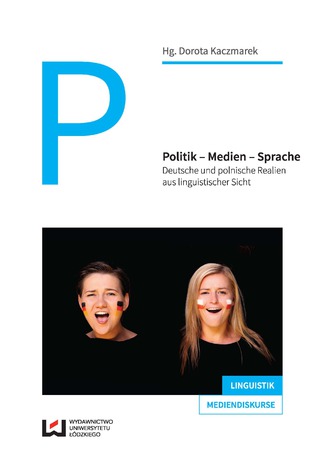
Den im Band präsentierten Beiträgen liegt sowohl theoretisch als auch empirisch eine medienlinguistische Perspektive in der Betrachtung gegenwärtiger gesellschaftspolitischer Ereignisse in Deutschland und Polen, die in letzter Zeit viele kontroverse Debatten hervorgerufen haben, zugrunde. Die gezeigten unterschiedlichen Möglichkeiten der Vernetzung linguistischer und medienorientierter Forschungen resultieren deshalb aus der Überzeugung, dass die Medien die Welt der Politik auf ihre Art interpretieren, und zwar mit verschiedenen sprachlichen und visuellen Mitteln. Nicht nur in der theoretisch-empirischen Reflexion über die neusten Verschränkungen der Politik, Medien und Sprache sind aber die Vorteile dieser Arbeit zu sehen, sie betreffen auch text- und diskursanalytische Vorschläge der Interpretation solcher Vernetzungen, die besonders für Studierende, Doktoranden der linguistischen und journalistischen Studienrichtungen sowie andere Interessierte inspirierend sein können.
Dariusz Jeziorny, Sławomir M. Nowinowski, Radosław Paweł...
Oddawany do rąk czytelników tom studiów i szkiców z dziejów stosunków międzynarodowych w XX i XXI w. jest dedykowany Panu Profesorowi Andrzejowi Maciejowi Brzezińskiemu – wybitnemu historykowi i nauczycielowi akademickiemu, w latach 1993–2016 kierownikowi Zakładu, a następnie Katedry Historii Powszechnej Najnowszej Uniwersytetu Łódzkiego. Książka dotyczy różnych aspektów stosunków międzynarodowych, począwszy od schyłku belle époque przed I wojną światową poprzez dwudziestolecie międzywojenne, II wojnę światową i panujący po niej ład pojałtański, a na problemach współczesnego świata skończywszy. Ta rozległość chronologiczna prezentowanych zagadnień odzwierciedla obszar zainteresowań naukowych Profesora Brzezińskiego. Problemy badawcze ukazano przez pryzmat działań polityków, dyplomatów i żołnierzy – bohaterów opisywanych wydarzeń, głównych aktorów oraz animatorów badanych procesów, przedsięwzięć czy instytucji. Mimo różnorodności podjętych tematów wszystkie one mieszczą się w nurcie szeroko rozumianej historii relacji międzynarodowych i międzypaństwowych czy stosunków dyplomatycznych. Taki dobór rozpraw nadaje publikacji spójny charakter, czyniąc zeń wieloautorskie studium adresowane przede wszystkim do historyków i miłośników najnowszych politycznych i dyplomatycznych dziejów świata.
Sławomir Koper
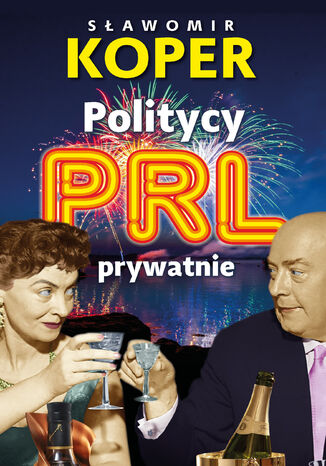
Elity zwłaszcza polityczne czasów PRL-u najlepiej podsumował niegdyś Jonasz Kofta, pisząc o nich establiszmęty społeczne. Czy tego jednak chcemy, czy nie czasy Polski Ludowej stanowią ważną epokę w naszych dziejach i bez niej współczesna Polska wyglądałaby zupełnie inaczej. Znany detektyw historii Sławomir Koper stara się odnaleźć w przaśnych życiorysach inżynierów dusz nuty prywatności, nie stroniąc od ujawniania sensacyjnych wątków. Maciej Szczepański wirtuoz propagandy sukcesu i jego damsko-męskie ekscesy Niezatapialny prezes i niespełniony Nobel literacki. Wszystkie twarze Jarosława Iwaszkiewicza Największy plotkarz i kobieciarz PRL-u. Żony i kochanice Włodzimierza Sokorskiego Cesarz prawej strony Polski Ludowej Bolesław Piasecki i jego życie poza PAX-em Wieszcz epoki wielkich pieców i szerokich pleców Adam Ważyk. Raczej dla dorosłych Bardziej politruk niż literat. Towarzysz Pucio. Jerzy Putrament i jego pamiętniki Zbierając materiały do tej książki, napotkałem problem, na który natrafiają wszyscy badacze życia prywatnego polityków epoki PRL-u. Źródeł jest niewiele, przy czym niektóre przeczą sobie nawzajem, a spora część z nich to typowe laurki ku chwale i czci. Bardzo mało tam informacji o życiu prywatnym. W archiwum IPN-u znalazłem wiele ciekawych materiałów, które wykorzystałem w tej książce. Oczywiście po wszechstronnym zanalizowaniu trudno bowiem o coś gorszego niż posługiwanie się źródłami bez uprzedniego poddania ich fachowej krytyce. Sławomir Koper