
Verleger: 16
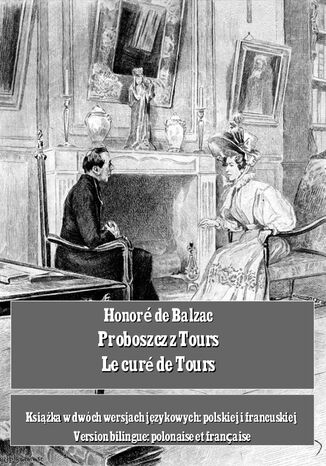
Proboszcz z Tours. Le curé de Tours
Honoré de Balzac
Ksiądz Franciszek Birotteau, jest jednym z księży katedry Świętego Gracjana w Tours. Po śmierci swojego przyjaciela, księdza Chapelouda, wynajmuje jego piękny pokój u starej panny Zofii Gamard. W chwili, gdy rozpoczyna się opowieść oczekuje nominacji na kanonika katedralnego. Nie wie, że mieszkający u pani Gamard kanonik Troubert, zazdrości mu wszystkiego: mieszkania, wpływowych przyjaciół, bywania w towarzystwie. Nie wie też, że swoim mimowolnym postępowaniem dotknął do żywego pannę Gamard. Troubert zawiera pakt z panną Gamard i wspólnie organizuje szeroką intrygę przeciw prostolinijnemu, niepodejrzewającemu niczego Birotteau. Stara panna dopuszcza się wobec niego szeregu dotkliwych złośliwości, po czym doprowadza Birotteau do zrzeczenia się przez niego wynajmowanego u niej mieszkania, a także podstępem przejmuje odziedziczony po księdzu Chapeloud dobytek. (za Wikipedią). Ale to bynajmniej nie koniec opowieści, dalsze losy księdza pozna się przeczytawszy oferowana książkę Książka w dwóch wersjach językowych: polskiej i francuskiej Version bilingue: polonaise et française.

Proca Dawida czyli różaniec po męsku
praca zbiorowa
ze wstępu bpa Artura Ważnego: "Toczymy (...) duchową walkę. Mężczyzna lubi mieć odpowiednią broń przy sobie, aby w tej walce móc uczestniczyć i w niej zwyciężać. Taką bronią jest duchowa proca, którą jest różaniec. Ma on pięć dziesiątków, tak jak Dawid miał pięć kamyków ze strumienia. Przed każdym z nas, mężczyzn, stoją problemy do rozwiązania. Często tak wielkie jak Goliat. Nie wiesz, jak sobie z nimi poradzić? wtedy naśladujesz Dawida. Bierzesz duchową procę".
Procedura legalizacji urządzeń w Prawie wodnym
Marcin Sarna
Posiadasz staw rybny, ale nie uzyskałeś na niego pozwolenia wodnoprawnego? Zbudowałeś pomost i nie zgłosiłeśtego faktu odpowiednim organom? Są to przykłady tzw.samowoli, która obarczona jest przykrymi konsekwencjami. Jak zalegalizować takie urządzenia na gruncie Prawa wodnego, z uwzględnieniem aspektów samowoli budowlanej, i ograniczyć potencjalne konsekwencje? Do którego organu złożyć wniosek i z jaką opłatą musisz się liczyć legalizując urządzenie wodne?
Procedura rozstrzygania sporów w Światowej Organizacji Handlu
Agnieszka Stępień-Trela
Światowa Organizacja Handlu (World Trade Organization – WTO) jest organem regulującym międzynarodowe stosunki gospodarcze. Jej powstanie jest konsekwencją trwającej od 1986 do 1994 r. Rundy Urugwajskiej, podczas której nastąpiło przekształcenie Układu Ogólnego w Sprawie Taryf Celnych i Handlu (General Agreement on Tariffs and Trade – GATT) w WTO. Niniejsza publikacja jest podstawowym kompedium wiedzy na temat rostrzygania sporów w WTO, krórego stronami są państwa. Książka opisuje podstawowe mechanizmy i cele rostrzygnięć, a także sposoby ich rozstrzygania.
Procedura zapłodnienia pozaustrojowego - rola i zastosowanie progesteronu
Grzegorz Polak
Progesteron jest hormonem niezbędnym do przemiany wydzielniczej endometrium, warunkującej implantację zarodka i utrzymanie wczesnej ciąży. Wsparcie fazy lutealnej gestagenami po transferze zarodka jest jednym z etapów procedury zapłodnienia pozaustrojowego. Połączenie preparatów progesteronu podawanych podjęzykowo oraz dopochwowo zapewnia jego stężenia optymalne dla uzyskania ciąży podczas tej procedury.
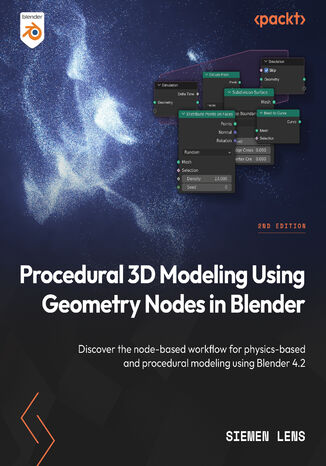
Siemen Lens, Robin Rodet
Geometry Nodes are tools that enable you to manipulate and generate 3D geometry in a node-based workflow. In this updated edition, you’ll learn how to use the basic and intermediate features of Geometry Nodes that are essential for creating complex, physics-based simulations and animations in Blender 4.5 LTS.After an introduction to the Geometry Nodes system and its inner workings, you’ll learn about different node inputs and outputs, along with the basic nodes necessary for your Geometry Nodes projects. You’ll apply your newfound knowledge through exercises that involve modifying curves, meshes, text, and more, as well as work on a range of interesting projects, including creating a procedural plant, a brick wall generator, and a procedural LED panel to explore different aspects of node-based modeling. The concluding chapters take you through a brand-new addition to Geometry Nodes called the Simulation Zone, where you’ll create various physics simulations such as a procedural fountain and bugs crawling over objects using the Geometry Node editor.By the end of this book, you’ll be able to tackle minor to major Geometry Nodes issues with confidence and create complicated Geometry Nodes trees and complex physics simulations tailored to your needs.*Email sign-up and proof of purchase required
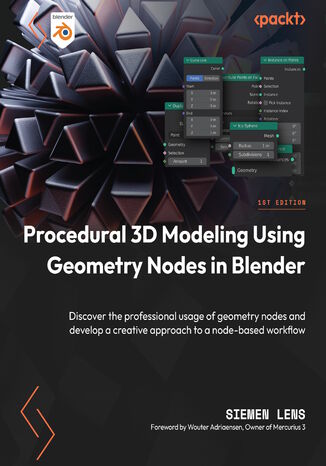
Siemen Lens, Wouter Adriaensen
For anyone working in the computer graphics industry, understanding how to use Blender’s new geometry nodes tools to manipulate and generate 3D geometry in a node-based workflow is an essential skill. In this book, you’ll learn how to use the basic and intermediate features of geometry nodes that are a crucial part of your Blender roadmap.You’ll start by understanding the different node inputs and outputs followed by the basic nodes you’ll need throughout your geometry nodes projects. The book will show you how the node system works and enable you to put your newfound knowledge to use through exercises that involve modifying curves, meshes, and more. You’ll work on a range of interesting projects such as creating a procedural plant, where you’ll use nodes to generate the intricate details and variations of a plant in a procedural manner, and a spiderweb generator to refine your skills of cleaning up a node tree. Finally, you’ll build a procedural LED panel using geometry nodes to generate the look of an LED panel.By the end of this book, you’ll be able to overcome any geometry node issue confidently and make complicated geometry node trees exactly how you need them.
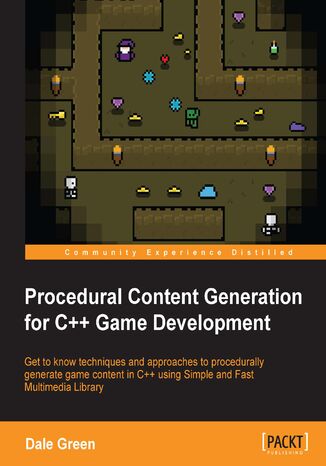
Dale Green
Procedural generation is a growing trend in game development. It allows developers to create games that are bigger and more dynamic, giving the games a higher level of replayability. Procedural generation isn’t just one technique, it’s a collection of techniques and approaches that are used together to create dynamic systems and objects. C++ is the industry-standard programming language to write computer games. It’s at the heart of most engines, and is incredibly powerful. SFML is an easy-to-use, cross-platform, and open-source multimedia library. Access to computer hardware is broken into succinct modules, making it a great choice if you want to develop cross-platform games with ease.Using C++ and SFML technologies, this book will guide you through the techniques and approaches used to generate content procedurally within game development. Throughout the course of this book, we’ll look at examples of these technologies, starting with setting up a roguelike project using the C++ template. We’ll then move on to using RNG with C++ data types and randomly scattering objects within a game map. We will create simple console examples to implement in a real game by creating unique and randomised game items, dynamic sprites, and effects, and procedurally generating game events. Then we will walk you through generating random game maps. At the end, we will have a retrospective look at the project. By the end of the book, not only will you have a solid understanding of procedural generation, but you’ll also have a working roguelike game that you will have extended using the examples provided.