
Verleger: 16

Programista. Przewodnik po zawodzie
Arkadiusz Kałkus
Kariera kodera Na listach najlepiej opłacanych zawodów koder, developer, programista zawsze plasują się wysoko. Specjaliści do spraw administrowania sieciami komputerowymi, frontend i backend developerzy, analitycy systemów i architekci oprogramowania są stale poszukiwani. A ponieważ głodny nowoczesnych technologii rynek tak bardzo ich pożąda, oferuje programistom warunki płacy i pracy, o jakich przedstawiciele wielu innych zawodów mogą tylko pomarzyć. Zarobki grubo powyżej średniej krajowej? Tak! Praca zdalna z dowolnego miejsca na świecie? Bardzo często! Duża samodzielność? Jasne! W dodatku, jeśli wolisz, jako programista możesz założyć firmę i działać w stu procentach na własnych zasadach. Brzmi jak bajka? Oczywiście. I jest to bajka, której bohaterem możesz się stać, jeśli ukończysz odpowiednie studia i nabierzesz wprawy jako stażysta, a potem junior w firmach z branży IT. Nim jednak zdecydujesz o wyborze zawodu programisty, upewnij się, że właśnie TO chcesz robić w życiu: Przekonaj się, na czym tak naprawdę polega programowanie Poznaj ramowy plan dnia programisty Zorientuj się, z kim na co dzień współpracuje developer Dowiedz się, w jaki sposób organizuje się projekty w branży IT Zajrzyj w przyszłość i sprawdź, co czeka developerów w nadchodzących latach
Programiści i tłumacze. Wprowadzenie do lokalizacji oprogramowania
Agenor Hofmann-Delbor, Marta Bartnicka
Prawie wszystkie interfejsy cyfrowej wieży Babel! Status quo, czyli dlaczego warto tłumaczyć oprogramowanie Procesy tłumaczeniowe i inne koła zębate Skomplikowane związki, czyli tester i programista O graniu i naprawianiu, czyli kilka problemów i ich proponowane rozwiązania Dawno, dawno temu, w czasach, gdy na świecie pojawiały się nieśmiało pierwsze komputery osobiste, nikt nie przejmował się zbytnio kwestią tłumaczenia oprogramowania na lokalne języki. Bez znajomości choćby paru słów po angielsku Twoje szanse na uruchomienie gry czy sformatowanie dokumentu były w zasadzie zerowe. Od tamtych czasów przebyliśmy jednak długą drogę i dziś nikt nie kupi oprogramowania, które nie jest dostępne w lokalnej wersji językowej, a nawet więcej: w wersji dostosowanej do lokalnej kultury i zwyczajów związanych z korzystaniem z konkretnych produktów. To dlatego dobra współpraca tłumacza i programisty jest dziś na wagę złota. Niestety, ten tandem często ma wyraźny problem z wzajemnym zrozumieniem. W tej książce znajdziesz mnóstwo praktycznych, a także zabawnych przykładów sytuacji, w których potrzeby tłumacza i programisty kompletnie się rozmijają. Zobaczysz, skąd biorą się problemy, gdzie najczęściej się pojawiają i jak zapobiegać ich powstawaniu. Jeśli jesteś programistą, być może przestaniesz alfabetycznie sortować teksty w pliku do tłumaczenia i jasno określisz płeć postaci w Twojej grze, a jeśli tłumaczem, może uda Ci się rozpoznać to, co należy zostawić w oryginale, i nie zmienisz pomocy technicznej programu w zbiór ezoterycznych, poetyckich tekstów. Nie zastąpi to praktyki i codziennych interakcji zawodowych, ale może ułatwić przyjrzenie się problemom z innej perspektywy. I z pewnością przyczyni się do podniesienia jakości nowej wersji oprogramowania. Klienci to docenią! Lokalizacja oprogramowania to klucz do serca i portfela klienta!
Jesse Liberty, Joseph Dluzen
APIs are at the heart of modern software development, enabling seamless communication between applications. In the C# and .NET ecosystem, mastering API development is key to building scalable, reliable systems that meet both client and enterprise needs.Written by C# and .NET experts Jesse Liberty and Joseph Dluzen, this book draws on their extensive experience as hands-on programmers to equip you with the tools, techniques, and best practices for creating powerful APIs.Starting with API fundamentals, it covers everything you need to design, build, and consume APIs using .NET technologies such as ASP.NET Core, and explores both controller and Function API implementations. You'll integrate essential tools such as Postman for testing to streamline your development workflow.Through practical examples and exercises, the book guides you from database creation to deploying APIs on Azure. By the end of this book, you’ll have gained real-world skills to develop secure, high-performance APIs that scale with your applications for both personal projects and enterprise-level systems.
Eric Pimpler
ArcGIS is an industry standard geographic information system from ESRI.This book will show you how to use the Python programming language to create geoprocessing scripts, tools, and shortcuts for the ArcGIS Desktop environment.This book will make you a more effective and efficient GIS professional by showing you how to use the Python programming language with ArcGIS Desktop to automate geoprocessing tasks, manage map documents and layers, find and fix broken data links, edit data in feature classes and tables, and much more.Programming ArcGIS 10.1 with Python Cookbook starts by covering fundamental Python programming concepts in an ArcGIS Desktop context. Using a how-to instruction style you'll then learn how to use Python to automate common important ArcGIS geoprocessing tasks.In this book you will also cover specific ArcGIS scripting topics which will help save you time and effort when working with ArcGIS. Topics include managing map document files, automating map production and printing, finding and fixing broken data sources, creating custom geoprocessing tools, and working with feature classes and tables, among others.In Python ArcGIS 10.1 Programming Cookbook you'll learn how to write geoprocessing scripts using a pragmatic approach designed around an approach of accomplishing specific tasks in a Cookbook style format.
Eric Pimpler
The book kicks off with the fundamentals of starting to use Python with ArcGIS, followed by recipes on managing map documents and layers, including how to find and fix broken data links in these files.In the second part of the book, you will learn to create custom geoprocessing tools and how to use the Attribute and Location tools to select specific features.The third part of the book covers topics for advanced users including the REST API, and also teaches you how to use Python with ArcGIS Pro. The book finishes with appendices covering how to automate Python scripts, and the five things that should be at the back of every GIS programmer's mind.
Marco Schwartz
If you already have some experience with LabVIEW and want to apply your skills to control physical objects and make measurements using the Arduino sensor, this book is for you. Prior knowledge of Arduino and LabVIEW is essential to fully understand the projects detailed in this book.
Programming Excel with Office Scripts. Straight to the Point
MrExcel's Holy Macro! Books, Eduardo N. Sanchez
This book guides readers through the fundamentals of automating Excel using Office Scripts, TypeScript, and Power Automate. It starts by introducing scripting basics and gradually explores how to manipulate Excel data, tables, and charts programmatically. The progression from core coding concepts to applied automation ensures clarity for those new to scripting.Readers will gain confidence in building scripts that handle repetitive Excel tasks, automate workflows through Power Automate, and apply programming logic to optimize efficiency. Each chapter introduces practical examples and progressively builds toward creating complete automation pipelines that connect data manipulation, visualization, and workflow execution.By the end, readers will be equipped to design intelligent automation routines that blend Excel’s familiar interface with the flexibility of TypeScript, enabling smarter, faster, and more efficient business operations across the Microsoft 365 environment.
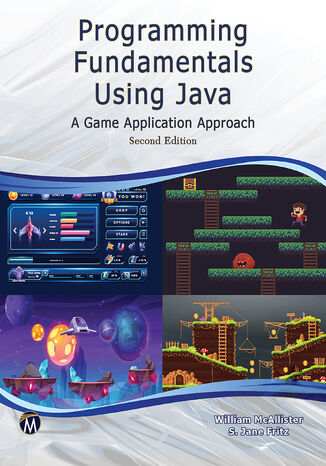
Mercury Learning and Information, William McAllister, S....
This Java-based book is designed for beginning programmers, using game programming as a central tool to enhance student engagement and learning outcomes. The new edition updates GUI interface chapters from Swing to FX-based programs. The game programming integration does not compromise the traditional programming material, allowing instructors unfamiliar with game programming to leverage its pedagogical benefits. The book assumes no prior programming experience.Starting with an introduction, the course progresses through variables, input/output, calculations, methods, classes, objects, boolean expressions, and decision-making. It then covers loops, arrays, advanced object-oriented concepts, inheritance, recursion, and exceptions. The latter part focuses on graphical user interfaces, generics, the API collection framework, multithreading, and concurrency.By the end of the course, students will have a comprehensive understanding of Java programming, enhanced by practical game programming applications. This approach not only makes learning more engaging but also provides a solid foundation for more advanced Java programming concepts.