
Wydawca: 24
Pavel Strakhov, Witold Wysota, Lorenz Haas
Qt is the leading cross-platform toolkit for all significant desktop, mobile, and embedded platforms and is becoming popular by the day, especially on mobile and embedded devices. It's a powerful tool that perfectly fits the needs of game developers. This book will help you learn the basics of Qt and will equip you with the necessary toolsets to build apps and games.The book begins by how to create an application and prepare a working environment for both desktop and mobile platforms. You will learn how to use built-in Qt widgets and Form Editor to create a GUI application and then learn the basics of creating graphical interfaces and Qt's core concepts.Further, you'll learn to enrich your games by implementing network connectivity and employing scripting. You will learn about Qt's capabilities for handling strings and files, data storage, and serialization.Moving on, you will learn about the new Qt Gamepad module and how to add it in your game and then delve into OpenGL and Vulcan, and how it can be used in Qt applications to implement hardware-accelerated 2D and 3D graphics. You will then explore various facets of Qt Quick: how it can be used in games to add game logic, add game physics, and build astonishing UIs for your games. By the end of this book, you will have developed the skillset to develop interesting games with Qt.
Witold Wysota, Lorenz Haas
Qt is the leading cross-platform toolkit for all significant desktop, mobile, and embedded platforms and is becoming more popular by the day, especially on mobile and embedded devices. Despite its simplicity, it's a powerful tool that perfectly fits game developers’ needs. Using Qt and Qt Quick, it is easy to build fun games or shiny user interfaces. You only need to create your game once and deploy it on all major platforms like iOS, Android, and WinRT without changing a single source file.The book begins with a brief introduction to creating an application and preparing a working environment for both desktop and mobile platforms. It then dives deeper into the basics of creating graphical interfaces and Qt core concepts of data processing and display before you try creating a game. As you progress through the chapters, you’ll learn to enrich your games by implementing network connectivity and employing scripting. We then delve into Qt Quick, OpenGL, and various other tools to add game logic, design animation, add game physics, and build astonishing UI for the games. Towards the final chapters, you’ll learn to exploit mobile device features such as accelerators and sensors to build engaging user experiences. If you are planning to learn about Qt and its associated toolsets to build apps and games, this book is a must have.
Game Testing. Mastering the Art of Quality Assurance in Game Development
Mercury Learning and Information, Robert Denton Bryant
This updated fourth edition is your comprehensive guide to video game testing. Whether you're a student aspiring to join the industry or a professional honing your skills, this book covers essential aspects of game testing. It explains how testers fit into development and provides practical knowledge of tools, roles, responsibilities, and metrics for game quality.The book guides you through test design and QA methods using real game scenarios and interviews with veteran developers. You'll learn the basics of game testing, writing bug reports, and defect tracking. The chapters cover exploratory testing, gameplay testing, combinatorial testing, and regression testing.Each chapter includes questions and exercises, suitable for classroom or personal study. Companion files with templates and tutorials for creating combinatorial tables and test flow diagrams are included, forming the basis of a robust QA plan. This edition equips you with the skills to succeed in game testing and contribute effectively to any development team.
Wojciech Załuski
Game theory is a branch of mathematics which studies strategic interactions, i.e., interactions which involve more than one agent and in which each agent makes her decision while striving to predict the decisions of other agents. Game theory has been successfully applied in many areas of both the natural and social sciences, and it is the belief of this book’s author – Wojciech Załuski – that it can also be gainfully invoked in the area of legal philosophy. In this book, Załuski analyzes such legal-philosophical concepts as legal interpretation, justice, legal rights, contract, tort and property law through the lens of game theory. Since the book does not assume any previous knowledge of game theory, it appeals mainly to its conceptual rather than the technical side, and intertwines game-theoretical analysis with the philosophical, it will be accessible to a wider circle of readers interested in legal and moral philosophy.
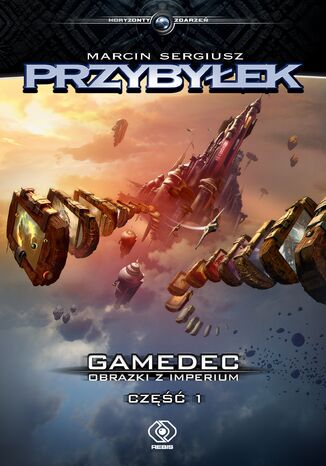
Gamedec. Gamedec. Obrazki z Imperium. Część 1
Marcin Sergiusz Przybyłek
Torkil Aymore powraca! Marcin Przybyłek zasila serię Horyzonty zdarzeń kolejnym tomem przygód Gamedeca. Po Drugiej Wojnie z Thirami w WayEmpire nastały Czasy Szczęśliwości. Ludzkość kontroluje ImBu cyfrowy byt będący połączeniem programu Budda i wirtualnej reprezentacji Imperatora Gorgona Nemezjusa Ezry. Realną władzę sprawują Błogosławieni Ranowie wyznaczeni przez ImBu. Na tym nieskazitelnym obrazie pojawiają się jednak rysy: na jednej z planet wybucha epidemia, anarchista Han Fierce postanawia zamordować Rana, silniki pancerników otaczających Łzę Cheronei przestają działać, a Whale statki cywilizacji, która współistnieje z WayEmpire - otwierają ogień do tajemniczej obcej floty. Tymczasem Torkil Aymore odkrywa kult kobiety, która każe się nazywać Imperatorką i chce dzielić władzę z ImBu. Imperatorka twierdzi, że tylko ona może uratować ludzkość Biorąc do ręki kolejny tom przygód Gamedeca, aż chciałoby się krzyknąć: Torkil Aymore powraca! - Katedra.nast.pl (Gamedec. Sprzedawcy lokomotyw) Stworzony przez Przybyłka świat jest niesamowity. - Esensja.stopklatka.pl (Gamedec. Zabaweczki. Sztorm)
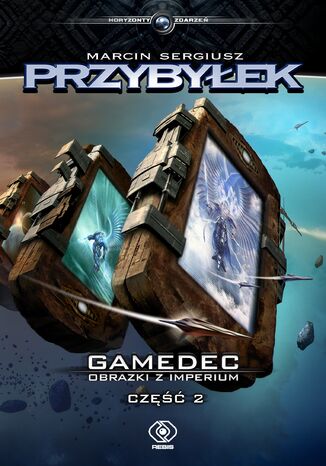
Gamedec. Gamedec. Obrazki z Imperium. Część 2
Marcin Sergiusz Przybyłek
Torkil Aymore powraca! Marcin Przybyłek zasila serię Horyzonty zdarzeń kolejnym tomem przygód Gamedeca. Po Drugiej Wojnie z Thirami w WayEmpire nastały Czasy Szczęśliwości. Ludzkość kontroluje ImBu cyfrowy byt będący połączeniem programu Budda i wirtualnej reprezentacji Imperatora Gorgona Nemezjusa Ezry. Realną władzę sprawują Błogosławieni Ranowie wyznaczeni przez ImBu. Na tym nieskazitelnym obrazie pojawiają się jednak rysy: na jednej z planet wybucha epidemia, anarchista Han Fierce postanawia zamordować Rana, silniki pancerników otaczających Łzę Cheronei przestają działać, a Whale statki cywilizacji, która współistnieje z WayEmpire - otwierają ogień do tajemniczej obcej floty. Tymczasem Torkil Aymore odkrywa kult kobiety, która każe się nazywać Imperatorką i chce dzielić władzę z ImBu. Imperatorka twierdzi, że tylko ona może uratować ludzkość Biorąc do ręki kolejny tom przygód Gamedeca, aż chciałoby się krzyknąć: Torkil Aymore powraca! - Katedra.nast.pl (Gamedec. Sprzedawcy lokomotyw) Stworzony przez Przybyłka świat jest niesamowity. - Esensja.stopklatka.pl (Gamedec. Zabaweczki. Sztorm)
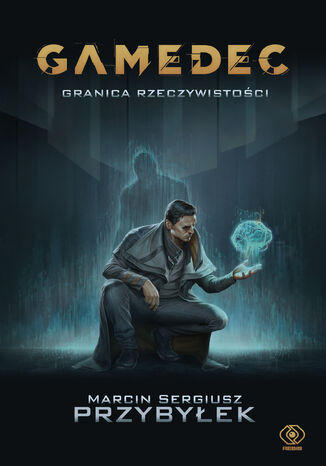
Gamedec. Granica rzeczywistości
Marcin Sergiusz Przybyłek
Pierwsza część 5-tomowego cyklu "GAMEDEC" Gamedec. Game Detective. Zawód popularny pod koniec XXII wieku. Mówią, że to profesja bez perspektyw. Ale są tacy, którzy ją wybierają, odrzucając rzeczywistość. Torkil Aymore jest jednym z nich. Filozof amator, niebieski ptak, nie umiejący nie kochać, rozumiejący, że jego największą bronią nie jest plasmagun schowany w szafce Ale mózg.
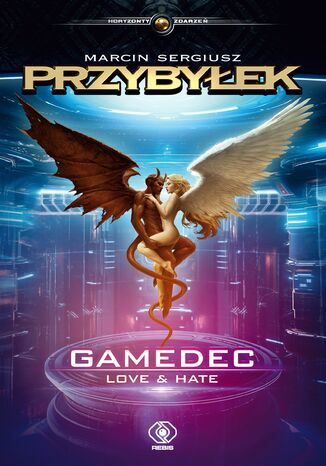
Marcin Sergiusz Przybyłek
Niniejsza książka zawiera opowiadanie Licencja oraz powieść Love & Hate. Koniec XXII wieku, Warsaw City. Torkil Aymore, absolwent Uniwersytetu Medycznego Warsaw City, sprzedawca zabawek, człowiek skłócony z ojcem oskarżający go o śmierć matki, chce wyrwać się ze szponów reistycznej rzeczywistości. Jak wygląda zdobywanie licencji gamedeca? Kim jest Max Bełchatow, pierwszy mentor Torkila? Po co podążać granicą rzeczywistości? I czy ten zawód ma w ogóle sens? Sztuczne inteligencje nie rozumieją, co widzą, nie nadają znaczeń wypowiadanym przez siebie słowom, nie pojmują, co do nich mówimy nie wiedzą nawet, że istnieją. Mimo to stanowią zagrożenie nie tylko dla malarzy, rzeźbiarzy i pisarzy. Młoda aktorka Marla Stone szantażuje Torkila, by wziął z nią udział w grze Love & Hate, virtuality show, w którym ludzie konkurują z programami. W ten sposób chce powrócić w światła sceny i udowodnić, że SI nie mają szans z człowiekiem. Czy gamedecowi uda się odróżnić ludzi od botów? Jaki jest ukryty plan Marli? I jaki jest ukryty plan Torkila?