
Verleger: 24
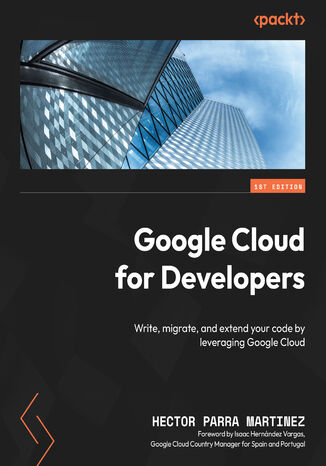
Google Cloud for Developers. Write, migrate, and extend your code by leveraging Google Cloud
Hector Parra Martinez, Isaac Hernández Vargas
As more organizations embrace cloud computing, developers new to the cloud often feel overwhelmed by cloud migration and code running directly on the cloud. Google Cloud for Developers comes packed with practical tips and expert advice to accelerate your application development journey and help you unlock the full potential of cloud computing.You’ll begin by understanding and comparing all the available options to run your code. You’ll write, deploy, monitor, and troubleshoot your code without leaving the Google Cloud IDE while selecting the best option – serverless or GKE containers – for each use case. After that, you’ll get to grips with the basic Google Cloud infrastructure services and connect your code with public APIs. This will help you add features to your application, such as language translation and object detection in images or videos. Furthermore, you’ll explore a comprehensive list of tips and best practices to make your migration smooth. You’ll also gain the necessary knowledge to write code from scratch, by employing the basics of hybrid cloud applications and build services that can run virtually anywhere.By the end of this book, you’ll be well equipped to carry out the application development process and successfully move your code to Google Cloud.
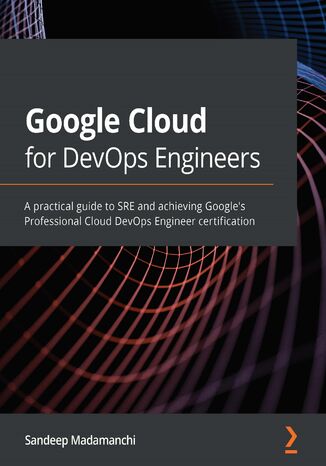
Sandeep Madamanchi
DevOps is a set of practices that help remove barriers between developers and system administrators, and is implemented by Google through site reliability engineering (SRE).With the help of this book, you'll explore the evolution of DevOps and SRE, before delving into SRE technical practices such as SLA, SLO, SLI, and error budgets that are critical to building reliable software faster and balance new feature deployment with system reliability. You'll then explore SRE cultural practices such as incident management and being on-call, and learn the building blocks to form SRE teams. The second part of the book focuses on Google Cloud services to implement DevOps via continuous integration and continuous delivery (CI/CD). You'll learn how to add source code via Cloud Source Repositories, build code to create deployment artifacts via Cloud Build, and push it to Container Registry. Moving on, you'll understand the need for container orchestration via Kubernetes, comprehend Kubernetes essentials, apply via Google Kubernetes Engine (GKE), and secure the GKE cluster. Finally, you'll explore Cloud Operations to monitor, alert, debug, trace, and profile deployed applications.By the end of this SRE book, you'll be well-versed with the key concepts necessary for gaining Professional Cloud DevOps Engineer certification with the help of mock tests.
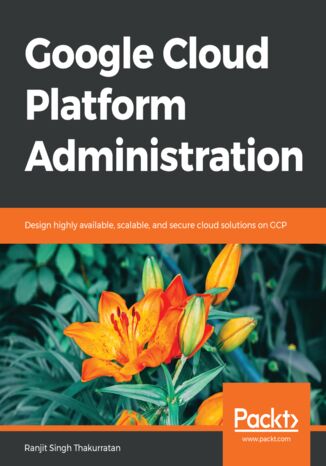
Ranjit Singh Thakurratan
On-premise data centers are costly to manage. If you need a data center but don’t want to deal with a physical one, Google Cloud Platform (GCP) is the solution. With GCP, you can build, test, and deploy applications on Google’s infrastructure. Google Cloud Platform Administration begins with GCP fundamentals, with the help of which you will deploy your first app and gain an understanding of Google Cloud architecture and services. Furthermore, you will learn how to manage Compute, networking, and storage resources. As you make your way through the book, you will learn how to track and manage GCP’s usage, monitoring, and billing access control. You will also be able to manage your GCP's access and permissions. In the concluding chapters, you will explore a list of different developer tools for managing and interacting with the GCP platform. By the end of this book, you will have learned how to effectively deploy workloads on GCP.
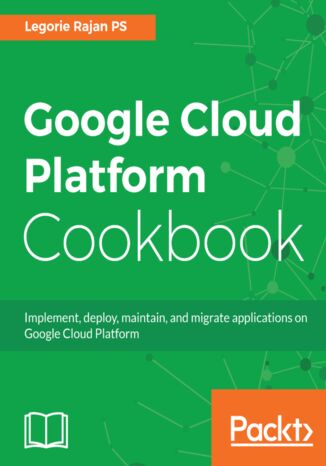
Legorie Rajan PS
Google Cloud Platform is a cloud computing platform that offers products and services to host applications using state-of-the art infrastructure and technology. You can build and host applications and websites, store data, and analyze data on Google's scalable infrastructure. This book follows a recipe-based approach, giving you hands-on experience to make the most of Google Cloud services.This book starts with practical recipes that explain how to utilize Google Cloud's common services. Then, you'll see how to make full use of Google Cloud components such as networking, security, management, and developer tools. Next, we'll deep dive into implementing core Google Cloud services into your organization, with practical recipes on App Engine, Compute Engine, Cloud Functions, virtual networks, and Cloud Storage. Later, we'll provide recipes on implementing authentication and security, Cloud APIs, command-line management, deployment management, and the Cloud SDK. Finally, we'll cover administration and troubleshooting tasks on applications with Compute services and we'll show how to monitor your organization's efficiency with best practices.By the end of this book, you'll have an overall understanding and hands-on implementation of Google Cloud services in your organization with ease.
Google Cloud Platform for Architects. Design and manage powerful cloud solutions
Vitthal Srinivasan, Loonycorn Ravi, Judy Raj
Using a public cloud platform was considered risky a decade ago, and unconventional even just a few years ago. Today, however, use of the public cloud is completely mainstream - the norm, rather than the exception. Several leading technology firms, including Google, have built sophisticated cloud platforms, and are locked in a fierce competition for market share.The main goal of this book is to enable you to get the best out of the GCP, and to use it with confidence and competence. You will learn why cloud architectures take the forms that they do, and this will help you become a skilled high-level cloud architect. You will also learn how individual cloud services are configured and used, so that you are never intimidated at having to build it yourself. You will also learn the right way and the right situation in which to use the important GCP services.By the end of this book, you will be able to make the most out of Google Cloud Platform design.
Ted Hunter, Steven Porter
Google Cloud Platform (GCP) provides autoscaling compute power and distributed in-memory cache, task queues, and datastores to write, build, and deploy Cloud-hosted applications.With Google Cloud Platform for Developers, you will be able to develop and deploy scalable applications from scratch and make them globally available in almost any language. This book will guide you in designing, deploying, and managing applications running on Google Cloud. You’ll start with App Engine and move on to work with Container Engine, compute engine, and cloud functions. You’ll learn how to integrate your new applications with the various data solutions on GCP, including Cloud SQL, Bigtable, and Cloud Storage. This book will teach you how to streamline your workflow with tools such as Source Repositories, Container Builder, and StackDriver. Along the way, you’ll see how to deploy and debug services with IntelliJ, implement continuous delivery pipelines, and configure robust monitoring and alerting for your production systems.By the end of this book, you’ll be well-versed with all the development tools of Google Cloud Platform, and you’ll develop, deploy, and manage highly scalable and reliable applications.
Chris Brogan
Google+ naprawdę może w tym pomóc! Google+ to sieć społecznościowa, do której każdego dnia dołączają dziesiątki tysięcy nowych odbiorców. W ciągu pierwszych kilku tygodni istnienia pojawiło się w niej 20 milionów użytkowników, co oznacza, że sieć ta bardzo szybko dogoni inne sieci społecznościowe, a co więcej, ma także szansę zagrozić hegemonowi wśród portali społecznościowych - Facebookowi! Potencjał Google+ dostrzegły również firmy: lawinowo rośnie liczba profili firmowych w ramach Google+. Nie przegap tej szansy i zacznij swoje działania biznesowe w Google+ już dziś! Dzięki tej książce poznasz wyjątkowe możliwości biznesowe Google+, których nie oferują inne sieci społecznościowe. Uznany profesjonalny mówca i doradca biznesowy, specjalista ds. mediów społecznościowych - Chris Brogan - pokazuje tu, jak uzyskać świetne rezultaty szybko i nie stracić przy tym czasu ani pieniędzy. Nauczysz się wykorzystywać Google+ w zakresie obsługi klienta, promocji, uzyskiwania rekomendacji czy bieżącej współpracy. Dodatkowo poznasz możliwości Kręgów oraz Spotkań. Dowiesz się też, jak zbudować profil przyciągający uwagę oraz jak zaopatrzyć go w interesujące treści, zarówno tekstowe, jak i multimedialne. Książka ta jest idealną pozycją dla osób odpowiedzialnych za kreowanie wizerunku firmy w sieci oraz za wzrost sprzedaży. Załóż swój profil w Google +, a następnie: dodaj atrakcyjne treści opublikuj materiały wideo i audio zdobądź nowych klientów zbuduj swój wizerunek zwiększ sprzedaż i rozpoznawalność Twojej marki! Nie zostawaj w tyle - dołącz do Google+!
Google Gemini for Python. Coding with Bard: Mastering Python with Google's AI Tools
Mercury Learning and Information, Oswald Campesato
This book bridges Python 3 programming and Generative AI, equipping readers with the skills to navigate both domains confidently. It starts with Python basics, covering data types, number formatting, text manipulation, loops, functions, data structures, NumPy, Pandas, conditional logic, and reserved words. You'll also learn about handling user input, managing exceptions, and working with command-line arguments.The journey continues into Generative AI, distinguishing it from Conversational AI. It introduces popular platforms and models, including Bard (now called Gemini) and its competitors, providing insights into their capabilities, strengths, weaknesses, and applications. The final chapters show how to generate various Python 3 code samples using Gemini.Understanding these concepts is crucial for modern programming and AI applications. This book transitions readers from basic Python programming to advanced AI techniques, blending theoretical knowledge with practical skills. Companion files with source code and figures enhance the learning experience, making this an essential resource for mastering Python 3 and Generative AI.