
Wydawca: 24

2012 Polish Yearbook of International Law vol. XXXII
Władysław Czapliński
periodyk wydany wraz z Instytutem Nauk Prawnych oraz Komitetem Nauk Prawnych Polskiej Akademii Nauk The Polish Yearbook of International Law (PYIL) is a scientific journal published since 1966. The major focus of the Yearbook is on public and private international law as well as European law. Each volume of the PYIL also includes legal bibliography of Polish authors publishing in the above areas. The new volume (XXXII) includes an article by Prof. Sadurski on the problem of democratic legitimacy in the European Union. This is followed by Prof. Kwiecień's article which enquires into the issue of sovereignty of States in the context of the legitimacy of international law. The article by Prof. Fitzmaurice explores the legal and philosophical concepts underlying the foundations of international environmental law (e.g. principles of the common heritage). In a very personal article (which sometimes sounds like real manifesto for environmental sustainability), Prof. Vieira discusses changes in system of global governance necessary to cope with the challenges connected with climate change. Prof. Wyrozumska analyses the practice of Polish courts with respect to attachment and debt enforcement from an embassy's bank account. Other texts include an article on the rules of international law applicable to the sovereign debt crisis (by Prof. de Jonge); analysis of the recent ICC Lubanga Reparations Decision (Prof. Swart); assessment of the legality of overseas use of drones under the framework of European Convention of Human Rights (Drs. Bodnar and Pacho), and an article on the ICC's practice with regard to arrest warrants (Dłubak). The new volume also includes a series of articles presented at the conference "Limits of the Security Council Powers", which was organized in Warsaw in January 2013 by ILA Poland in cooperation with the Institute of Law Studies. Prof. Arcari looks at the question of limits of Security Council powers as a problem of UN Charter interpretation; Prof. Fernandez Sola analyses the role of the European Union in the UN system (as a form of enforcement agency), and Prof. Richter inquires into the problem of judicial review of Security Council decisions. Two other contributions discuss the applicability to the Security Council of rules on the responsibility and accountability of international organizations (Prof. Sturma) and the obligations of the Security Council with respect to war crimes and genocide (Prof. Zimmermann).
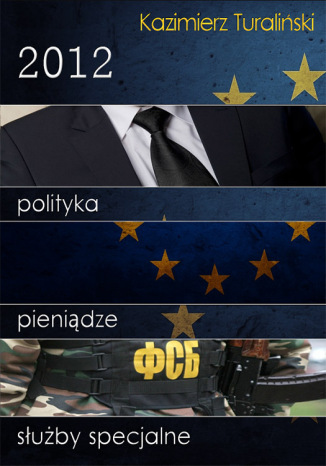
2012: Polityka, pieniądze, służby specjalne
Kazimierz Turaliński
Rok 2012 bezpowrotnie odmienił oblicze Polski. To, co dawniej wydawało się wręcz nieprawdopodobne, wraz z jego końcem zapisało się już na kartach jak najbardziej realnej historii, a najważniejsze wydarzenia tego czasu oscylowały wokół siedmiu haseł-kluczy: • Polityka – bezpardonowa walka rządu z opozycją doprowadziła do pogłębienia podziału Polaków na dwa, trwale już skłócone obozy • Pieniądze – miliardy złotych z defraudacji środków przeznaczonych na budowę autostrad oraz z przemytu papierosów stały się głównymi celami przestępczości zorganizowanej i białych kołnierzyków • Służby specjalne – uznane przez obywateli o prawicowych poglądach za wroga nr 1 polskiej demokracji wdały się, wbrew prognozom, w otwarty konflikt z premierem Donaldem Tuskiem • Mafia – Polska, jako wschodnia rubież Unii Europejskiej, przyjęła rolę punktu tranzytowego dla organizowanego przez Włochów przemytu, nad Wisłą masowo stosować zaczęto metody oszustw gospodarczych z Półwyspu Apenińskiego, zorganizowane struktury przestępcze połączyły siły, a wszelkie godzące w nie śledztwa zostały faktycznie zablokowane • Terroryzm – koniec roku przyniósł zatrzymanie pierwszego w III RP polskiego podejrzanego o organizowanie zamachu bombowego na posłów, premiera i prezydenta oraz spadek liczby Polaków niewierzących w zamach w Smoleńsku do 56% obywateli • Samobójstwo – w tajemniczych okolicznościach życie utraciło wiele znanych osób oraz świadków kluczowych śledztw, a do kanonu żartów politycznych przeszły te, o grasującym w Polsce „seryjnym samobójcy” • Rosja – piętno kilku stuleci konfliktów oraz zimnowojennej doktryny mocarstwowej Kremla do dziś kształtuje wizerunek polityki rosyjskiej, co dodatkowo utwierdza ekspansja tamtejszych służb wywiadowczych, oskarżanych nie tylko o powrót do agresywnego szpiegostwa, ale też o zabójstwa na tle politycznym i kreowanie decyzji rządów obcych państw Wybór artykułów i komentarzy prasowych Kazimierza Turalińskiego przedstawia najważniejsze wydarzenia 2012 roku z perspektywy często wymykającej się mainstreamowym mediom. Wszyscy przywykliśmy już do tego, że ani członkowie rządu, ani parlamentarzyści, nie znają polskiego i europejskiego prawa, podstaw ekonomii, czy nawet filozoficznych fundamentów ustroju, w którym władzę przyszło im sprawować. Swe funkcje pełnią „na wyczucie”, co niestety nie umniejsza ogromu popełnianych błędów i wynikających z nich konsekwencji, zwłaszcza w zakresie tolerowania zorganizowanej działalności przestępczej na szkodę rodzimych przedsiębiorców, czy bagatelizowania innych źródeł zagrożenia dla bezpieczeństwa publicznego. Polityka, pieniądze – w tym środki unijne, służby specjalne, mafia, terroryzm, samobójstwa i Rosja to najważniejsze tematy wypełniające czołówki gazet w minionym, przełomowym roku. Wokół nich też skupiony został niniejszy zbiór materiałów prasowych i komentarzy. Uważna analiza znów pozornie tylko odległych wydarzeń ujawnia, jak poważna choroba trapi współczesną Polskę. Obok słabej władzy i agresywnych białych kołnierzyków najpoważniejszy problem to koniunkturalne media, które, zamiast przekazywać informacje, w ślepej pogoni za sensacją często wprowadzają odbiorców w błąd. Niczym krzywe zwierciadło zniekształcają rzeczywistość, a historię i wiedzę naukową omijają szerokim łukiem. Dziś nadszedł czas by parę trudnych tematów wyciągnąć spod klosza propagandy dobrobytu – wprost na światło dzienne, a inne, nazbyt dobrze już nagłośnione, odkłamać.
2013 Polish Yearbook of International Law vol. XXXIII
Władysław Czapliński
The article section of the current volume starts with Maurizio Arcari's text on the constitutionalization and fragmentation of international law. This is followed by the articles of Cezary Mik on the concept of jus cogens in contemporary international law, and Gino Naldi & Konstantinos Magliveras on the denunciation of treaties and withdrawal from international organizations in the field of international human rights. This section also includes this year's Marek Nowicki Memorial Lecture by Lord Lester of Herne Hill QC on the right of free speech. In addition there are three articles on EU law. Dimitry Kochenov, in his very timely piece, critically analyzes two new proposals aimed at ensuring the observance of certain democratic standards by EU Member States, Krystyna Kowalik- Bańczyk writes about the emerging practices of domestic Constitutional Courts in resolving conflicts between EU law and national constitutional law. The section ends with the contribution by Jakub Kociubiński on EU competition law in the air transport sector. The next section is dedicated to the recent judgement of the European Court of Human Rights (Grand Chamber) in Janowiec and Others v. Russia. The case, which relates to one of the greatest tragedies in the contemporary history of Poland, was closely followed not only by scholars in the region but also by the general public. We present different voices from the international academic community, who discuss the case from various perspectives and critically assess the reasoning of the court. This group includes Ireneusz Kamiński, Yaroslav Kozheurov, William Schabas, Susana Sanz Caballero and Gabrielle Citroni. We have also added the complete set of legal observations submitted to the ECtHR on behalf of the applicants. As usual, the volume also includes the traditional sections: Polish practice in international law, book reviews and the Polish bibliography in international and European law for 2013.

2014 Polish Yearbook of International Law vol. XXXIV
Władysław Czapliński
CONTENTS IN MEMORIAM Jan Kolasa: Karol Wolfke (1915-2015), doi: 10.7420/pyil2014a, pp. 11-16; Jerzy Kranz: Sapere auso (To One Who Dared to Be Wise): On the Fifth Anniversary of the Death of Krzysztof Skubiszewsk, doi: 10.7420/pyil2014b, pp. 17-36. LEGAL PERSPECTIVES ON THE UKRAINIAN-RUSSIAN CONFLICT Patrycja Grzebyk: Classification of the Conflict between Ukraine and Russia in International Law (Ius ad Bellum and Ius in Bello), doi: 10.7420/pyil2014c, pp. 39-60; Natalia Cwicinskaja: The Legality and Certain Legal Consequences of the "Accession" of Crimea to the Russian Federation, doi: 10.7420/pyil2014d, pp. 61-88; Thomas D. Grant: The Budapest Memorandum of 5 December 1994: Political Engagement or Legal Obligation?, doi: 10.7420/pyil2014e, pp. 89-114; René Värk: The Advisory Opinion on Kosovo's Declaration of Independence: Hopes, Disappointments and Its Relevance to Crimea, doi: 10.7420/pyil2014f, pp. 115-132. GENERAL ARTICLES Koen Lenaerts: EU Values and Constitutional Pluralism: The EU System of Fundamental Rights Protection, doi: 10.7420/pyil2014g, pp. 135-160; Aleksandra Gliszczyńska-Grabias: Memory Laws or Memory Loss? Europe in Search of Its Historical Identity through the National and International Law, doi: 10.7420/pyil2014h, pp. 161-186; Hanna Kuczyńska: Selection of Defendants before the ICC: Between the Principle of Opportunism and Legalism, doi: 10.7420/pyil2014i, pp. 187-224; Magdalena Słok-Wódkowska: National Treatment Rules in EU Regional Trade Agreements, doi: 10.7420/pyil2014j, pp. 225-248; Magdalena Silska: Protection of Internally Displaced Persons: An International Legal Obligation?, doi: 10.7420/pyil2014k, pp. 249-272. POLISH PRACTICE OF INTERNATIONAL LAW The Opinion by the Legal Advisory Committee to the Minister of Foreign Affairs of the Republic of Poland on the Annexation of the Crimean Peninsula to the Russian Federation in Light of International Law, doi: 10.7420/pyil2014l, pp. 275-284; Szymon Zaręba: Treaty Interpretation by the Polish Administrative Courts: A Case Study of the Interpretation of the 1972 Prague Convention, doi: 10.7420/pyil2014m, pp. 285-302. BOOK REVIEWS Cezary Mik: Lukasz Gruszczynski, Wouter Werner (eds.), Deference in International Courts and Tribunals: Standard of Review and Margin of Appreciation, pp. 305-308; Bartłomiej Krzan: Vesselin Popovski, Trudy Fraser (eds.), The Security Council as Global Legislator, pp. 309-312; Bartłomiej Krzan: Robert Kolb, The International Court of Justice, pp. 313-317; Andrzej Jakubowski: Lilian Richieri Hanania (ed.), Cultural Diversity in International Law, pp. 318-322; Michał Balcerzak: Ryan Goodman, Derek Jinks, Socializing States: Promoting Human Rights through International Law, pp. 323-328. POLISH BIBLIOGRAPHY OF INTERNATIONAL AND EUROPEAN LAW 2014, pp. 329-376.
2015 Polish Yearbook of International Law vol. XXXV
Władysław Czapliński, Karolina Wierczyńska, Łukasz Gruszczyński
Contents GENERAL ARTICLES Peter Tomka, Jessica Howley, Vincent-Joël Proulx: International and Municipal Law before the World Court: One or Two Legal Orders?, doi: 10.7420/pyoil2015a, pp.11-46; Daniel Costelloe, Malgosia Fitzmaurice: Interpretation of Secondary Instruments in International Law, doi: 10.7420/pyoil2015b, pp. 47-82; Barbara Mikołajczyk: International Law and Ageism, doi: 10.7420/pyoil2015c, pp. 83-108; Marco Longobardo: Some Developments in the Prosecution of International Crimes Committed in Palestine: Any Real News?, doi: 10.7420/pyoil2015d, pp. 109-138; Oleksandr Zadorozhnii: To Justify against All Odds: The Annexation of Crimea in 2014 and the Russian Legal Scholarship, doi: 10.7420/pyoil2015e, pp. 139-170; Stefania Ninatti, Maurizio Arcari: Patterns of Democracy in the Case Law of the EU Court of Justice and the European Court of Human Rights, doi: 10.7420/pyoil2015f, pp. 171-192; Aleksandra Kustra: The Polish Constitutional Tribunal and the Judicial Europeanization of the Constitution, doi: 10.7420/pyoil2015g, pp. 193-216; Elena Carpanelli: Can States Withhold Information about Alleged Human Rights Abuses on National Security Grounds? Some Remarks on the ECtHR Judgments of Al-Nashiri v. Poland and Husayn (Abu-Zubaydah) v. Poland, doi: 10.7420/pyoil2015h, pp. 217-234; Cedric Vanleenhove: The Current European Perspective on the Exequatur of U.S. Punitive Damages: Opening the Gate But Keeping a Guard, doi: 10.7420/pyoil2015i, pp. 235-264; Michał König: Non-State Law in International Commercial Arbitration, doi: 10.7420/pyoil2015j, pp. 265-292; Konrad Czech: The Distinctive Characteristics of Commercial and Investment Arbitration Proceedings: Lex multiplex, universa curiositas, ius unum?, doi: 10.7420/pyoil2015k, pp. 293-324. POLISH PRACTICE OF INTERNATIONAL LAW Agata Kleczkowska: Decision of the Supreme Court - Criminal Chamber, Dated October 14, 2015, doi: 10.7420/pyoil2015l, pp. 327-340. BOOK REVIEWS Marcin Kałduński: Przemysław Saganek, Unilateral Acts of States in Public International Law, doi: 10.7420/pyoil2015m, pp. 343-350; Maria Issaeva: Lauri Malksoo, Russian Approaches to International Law, doi: 10.7420/pyoil2015n, pp. 351-358; Maria Eduarda Gonçalves: Patrycja Dąbrowska-Kłosińska (ed.), Essays on Global Safety Governance: Challenges and Solutions, doi: 10.7420/pyoil2015o, pp, 359-364. POLISH BIBLIOGRAPHY OF INTERNATIONAL AND EUROPEAN LAW, doi: 10.7420/pyoil2015p, pp. 365-407.
2016 Polish Yearbook of International Law vol. XXXVI
Władysław Czapliński, Bartłomiej Krzan, Roman Kwiecień, Michał...
Contents IN MEMORIAM Bartłomiej Krzan: Professor Jan Kolasa (1926-2016), doi: 10.7420/pyil2016a, pp. 11-18; GENERAL ARTICLES Roman Kwiecień: The "Nicaragua" Judgement and the Use of Force - 30 Years Later, doi: 10.7420/pyil2016b, pp. 21-36; Michał Kowalski: Original Sin Reaffirmed: The Nicaragua Judgement's Impact on the Notion of Armed Attack as the Most Grave Form of the Use of Force, doi: 10.7420/pyil2016c, pp. 37-50; François Finck: The State between Fact and Law: The Role of Recognition and the Conditions under which It Is Granted in the Creation of New States, doi: 10.7420/pyil2016d, pp. 51-81; Wojciech Burek: Family Reunification Regulations and Women: The Perspective of International Law, doi: 10.7420/pyil2016e, pp. 83-108; Athanasios Yupsanis: Cultural Autonomy for Minorities in the Baltic States, Ukraine, and the Russian Federation: A Dead Letter, doi: 10.7420/pyil2016f, pp. 109-135; Anna Karapetyan: A Recurring Phenomenon: The Lawful Sanctions Clause in the Definition of Torture and the Question of Judicial Corporal Punishment under International Human Rights Law, doi: 10.7420/pyil2016g, pp. 137-161; Aleksandra Rychlewska: The Nullum Crimen Sine Lege Principle in the European Convention of Human Rights: The Actual Scope of Guarantees; doi: 10.7420/pyil2016h, pp. 163-186. CONTENTS Petra Bárd: Scrutiny over the Rule of Law in the European Union, doi: 10.7420/pyil2016i, pp. 187-208; Joanna Ryszka: "Social Dumping" and "Letterbox Companies" - Interdependent or Mutually Exclusive Concepts in European Union Law?, doi: 10.7420/pyil2016j, pp. 209-229; Dominik Horodyski, Maria Kierska: Enforcement of Emergency Arbitrators' Decisions under Polish Law, doi: 10.7420/pyil2016k, pp. 230-244. POLISH PRACTICE IN INTERNATIONAL LAW Dorota Pyć: Compliance and Enforcement of Maritime Labour Conditions - The Polish Legal Perspective, doi: 10.7420/pyil2016l, pp. 247-255; Grzegorz Wierczyński: The Polish Practice Regarding the Promulgation of International Agreements between 1945 and 2017, doi: 10.7420/pyil2016m, pp. 258-266; Agata Kleczkowska: Judgement of the Supreme Court, dated 17 February 2016 (Ref. no. WA 16/15), doi: 10.7420/pyil2016n, pp. 267-276. BOOK REVIEWS Kaja Kowalczewska: William H. Boothby, Weapons Law and The Law of Armed Conflict, doi: 10.7420/pyil2016o, pp. 279-282; Bartłomiej Krzan: M. Ruffert, C. Walter, Institutionalised International Law, doi: 10.7420/pyil2016p, pp. 283-286; Roman Kwiecień: Robert Kolb, Peremptory International Law - Jus Cogens, doi: 10.7420/pyil2016q, pp. 287-290; Marcin Menkes: Eugene Kontorovich, Francesco Parisi (eds.), Economic Analysis of International Law, doi: 10.7420/pyil2016r, pp. 291-294; Marcin Menkes: Marc-William Palen, The 'Conspiracy' of Free Trade, doi: 10.7420/pyil2016s, pp. 295-298. LIST OF REVIEWERS (vol . 36/2016), pp. 299-300.
2017 Polish Yearbook of International Law vol. XXXVII
Christian Tomuschat, Alessandra La Vaccara, Maryna Rabinovych,...
CONTENTS GENERAL ARTICLES o Christian Tomuschat: Individual and Collective Identity: Factual Givens and Their Legal Reflection in International Law. Words in Commemoration of Krzysztof Skubiszewski, doi 10.7420/pyil2017a, pp. 11-34; o Alessandra La Vaccara: Past Conflicts, Present Uncertainty: Legal Answers to the Quest for Information on Missing Persons and Victims of Enforced Disappearance. Three Case Studies from the European Context, doi 10.7420/pyil2017b, pp. 35-70; o Maryna Rabinovych: The Rule of Law Promotion Through Trade in the "Associated" Eastern Neighbourhood, doi 10.7420/pyil2017c, pp. 71-100; o Hanna Kuczyńska: Changing Evidentiary Rules to the Detriment of the Accused? The Ruto and Sang Decision of the ICC Appeals Chamber, doi 10.7420/pyil2017d, pp. 101-125; o Maciej Szpunar: Is the Court of Justice Afraid of International Jurisdictions? doi 10.7420/pyil2017e, pp. 125-142; o Marton Varju: Member States' Interests and EU Law: Filtering, Moderating and Transforming? doi 10.7420/pyil2017f, pp. 143-162; o Jakub Kociubiński: European "Ghost Airports": EU Law Failure or Policy Failure? The Need for Economic Analysis in State Aid Law, doi 10.7420/pyil2017g, pp. 163-184; o Justyna Maliszewska-Nienartowicz: A New Chapter in the EU Counterterrorism Policy? The Main Changes Introduced by the Directive 2017/541 on Combating Terrorism, doi 10.7420/pyil2017h, pp. 185-202; o Mirosława Myszke-Nowakowska: Insolvency Forum Shopping - What Can Be Learned from the ECJ and US Supreme Court Case Law on International Company Law and Insolvency Procedures? doi 10.7420/pyil2017i, pp. 203-222. MINISYMPOSIUM ON GENERAL PRINCIPLES OF INTERNATIONAL LAW o Artur Kozłowski: Systematicity of General Principles of (International) Law - An Outline, doi 10.7420/pyil2017j, pp. 225-234; o Roman Kwiecień: General Principles of Law: The Gentle Guardians of Systemic Integration of International, doi 10.7420/pyil2017k, pp. 235-242; o Przemysław Saganek: General Principles of Law in Public International Law, doi 10.7420/pyil2017l, pp. 243-254; o Izabela Skomerska-Muchowska: Some Remarks on the Role of General Principles in the Interpretation and Application of International Customary and Treaty Law, doi 10.7420/pyil2017m, pp. 255-272. POLISH PRACTICE IN INTERNATIONAL LAW o Karolina Wierczyńska: Act of 18 December 1998 on the Institute of National Remembrance - Commission for the Prosecution of Crimes against the Polish Nation as a Ground for Prosecution of Crimes against Humanity, War Crimes and Crimes against Peace, doi 10.7420/pyil2017n, pp. 275-286; o Patrycja Grzebyk: Amendments of January 2018 to the Act on the Institute of National Remembrance - Commission for the Prosecution of Crimes against the Polish Nation in Light of International Law, doi 10.7420/pyil2017o, pp. 287-300. BOOK REVIEWS o Andrzej Jakubowski: Alexandra Xanthaki, Sanna Valkonen, Leena Heinamaki and Piia Nuorgam (eds.), In-di-genous Peoples' Cultural Heritage: Rights, Debates, Challenges, pp. 303-307; o Marcin Kałduński: Bimal N. Patel, Aruna K. Malik and William Nunes (eds.), Indian Ocean and Maritime Security: Competition, Cooperation and Threat, pp. 308-311; o Agata Kleczkowska: Claus Kres and Stefan Barriga (eds.), The Crime of Aggression: A Commentary, pp. 312-316; o Kaja Kowalczewska: Noam Zamir, Classification of Conflicts in International Humanitarian Law: The Legal Impact of Foreign Intervention in Civil Wars, pp. 317-319; o Karolina Wierczyńska: Cheryl Lawther, Luke Moffett and Dov Jacobs (eds.), Research Handbook on Transitional Justice, pp. 320-324. LIST OF THE REVIEWERS (VOL . 37/2017), PP. 325-326.
Jerzy Cierpiatka, Marek Latasiewicz
Piłka nożna to najpopularniejsza dyscyplina sportu na świecie - bez dyskusji. Mistrzostwa świata rozgrywane co cztery lata to z kolei impreza, która przyciąga najwięcej widzów, zarówno na stadiony jak i przed telewizory. Niemal 90 lat temu odbyły się pierwsze zmagania o czempionat globu, który zapewnili sobie Urugwajczycy, pokonując w decydującym boju Argentyńczyków. Od tamtej pory byliśmy świadkami wielu niesamowitych meczów, spektakularnych goli, oszałamiających interwencji bramkarzy, ofiarnych akcji obronnych, czy zapierających dech w piersiach ataków. Piłkarskie mistrzostwa świata sprawiają, że ludzie na całym świecie zapominają o codzienności, a przez miesiąc liczy się tylko mundial. Jego historia jest tak niesamowita, jak lądowanie amerykańskich kosmonautów na księżycu. Zapraszamy do zapoznania się z podsumowaniem mundialu z roku 2022 który miał miejsce w Katarze.