
Publisher: 8
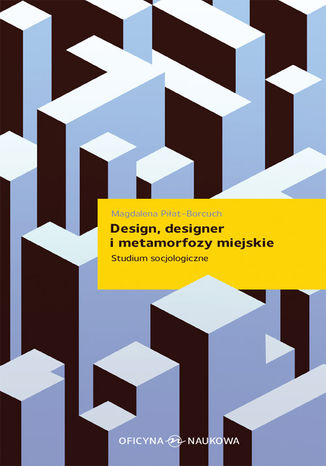
Design, designer i metamorfozy miejskie. Studium socjologiczne
Magdalena Piłat-Borcuch
W jaki sposób design i designerzy kształtują przestrzeń miejską i relacje społeczne? Jak należy projektować przestrzeń miejską, by coraz lepiej odpowiadała potrzebom jej użytkowników? Praca mieści się w rodzącej się dopiero subdyscyplinie socjologii designu, przedstawia działania, w wyniku których przestrzeń miejska mogłaby lepiej odpowiadać zróżnicowanym potrzebom obecnych i przyszłych społeczeństw. Dotyczy kwestii niezwykle istotnych z punktu widzenia nie tylko wąskiego grona specjalistów zajmujących się problematyką designu miejskiego, ale również każdego mieszkańca miasta i osób miastem zarządzających. O jej wyjątkowości świadczy innowacyjność w wyborze problematyki, wartość poznawcza i wartość zgromadzonego materiału empirycznego. Oryginalne badania przeprowadziła autorka z najważniejszymi ekspertami zajmującymi się designem w Polsce, a także z ekspertami z czterdziestu siedmiu krajów. Doktor Magdalena Piłat-Borcuch jest adiunktem na Wydziale Prawa, Administracji i Zarządzania Uniwersytetu Jana Kochanowskiego w Kielcach. Jej zainteresowania naukowe skupiają się przede wszystkim na socjologii designu, mieście i designie miejskim. Jest autorką kilkudziesięciu publikacji związanych z tą problematyką.
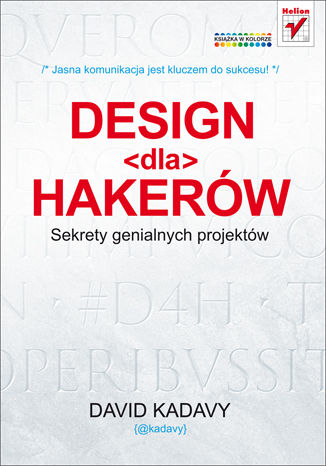
Design dla hakerów. Sekrety genialnych projektów
David Kadavy
Pasjonująca wyprawa w świat projektów! Tego jeszcze nie było! Książka, która rozprawia się z mitami oraz wyjaśnia powszechnie przyjęte założenia. Prawda, że Comic Sans to znienawidzona czcionka? Ale czy wiesz dlaczego? Czy złota proporcja faktycznie ma znaczenie? Dlaczego Monet nigdy nie używał czarnego na swoich obrazach? To tylko niektóre z pytań, nad którymi zastanawia się David Kadavy — utytułowany projektant, który rozłożył klasyczne zasady projektowania i techniki webdesignerów na części pierwsze. Co jeszcze umieścił w tej wyjątkowej książce? Znajdziesz tu mnóstwo informacji na temat typografii, grafiki tworzonej na potrzeby stron internetowych oraz teorii kolorów. W trakcie lektury nauczysz się dobierać odpowiednie proporcje projektu oraz wykorzystywać kolory do ożywienia swojego dzieła. Ponadto zdobędziesz ogromną wiedzę na temat odpowiedniego zagospodarowania przestrzeni i tworzenia przejrzystych układów. Jeżeli chcesz tworzyć eleganckie, intrygujące i przyciągające wzrok prace, ta książka wprost idealnie spełni Twoje oczekiwania. Dodatkowo zawiera ona wiele informacji o niuansach i sprawach historycznych, lecz wciąż mających wpływ na dzisiejsze sposoby projektowania. Uważaj, ta lektura naprawdę wciąga! Dowiedz się: dlaczego używanie czcionki Comic Sans jest niewskazane w jaki sposób teoria kolorów wpływa na codzienną pracę jak zapewnić projektowi przejrzystość Myśl jak haker, a Twoje projekty będą nowatorskie, niebanalne i funkcjonalne!
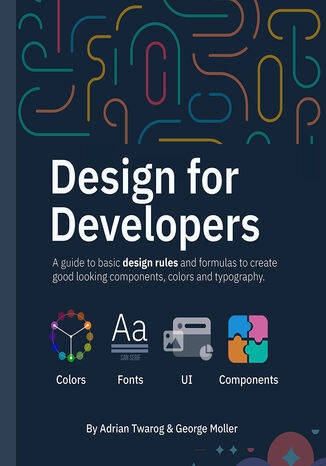
Adrian Twarog, George Moller
For developers eager to enhance their UI design skills, this book offers a comprehensive guide to design fundamentals. Starting with the essentials like color theory and typography, it progresses through component design and visual hierarchy, culminating in a hands-on approach to building design systems and implementing them in projects. Readers will gain the tools and confidence to integrate aesthetics into their coding projects.The book balances theoretical concepts like visual hierarchy, color psychology, and text legibility with actionable techniques for wireframing, building UI components, and creating full-fledged design systems. Each chapter delves deep into practical strategies, such as selecting color palettes, designing scalable typography, and constructing reusable elements like buttons and icons.By the end of this journey, readers will have a thorough understanding of how to blend design principles with development expertise to craft seamless and engaging user experiences. They will be equipped to create beautiful, functional, and consistent interfaces that are as intuitive as they are visually striking.
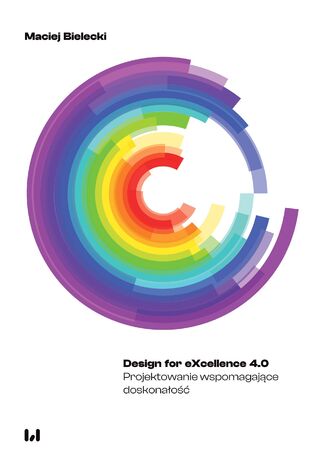
Design for eXcellence 4.0. Projektowanie wspomagające doskonałość
Maciej Bielecki
Monografia Design for excellence 4.0. Projektowanie wspomagające doskonałość zawiera kompleksowy i systematyczny przegląd literatury dotyczący koncepcji Design for excellence (DfX), wykorzystywanych w niej metod i technik oraz współczesnych trendów jej rozwoju. W pierwszej części publikacji zaprezentowane są ogólne zagadnienia związane z projektowaniem wyrobów oraz koncepcją DfX. W części drugiej przedstawiono wyniki badań ilościowych i jakościowych odnoszące się do dwóch obecnie najważniejszych kontekstów wpływających na procesy projektowania i rozwoju produktów. Pierwszy odnosi się do kwestii środowiskowych, zrównoważonego rozwoju oraz gospodarki o obiegu zamkniętym. Drugi dotyczy zagadnień technologicznych, opierających się na założeniach, zasadach i technikach czwartej rewolucji przemysłowej. W trzeciej części opracowania ukazana jest autor ska koncepcja DfX 4.0 uwzględniająca problematykę z zakresu cyrkularności produktów, logistyki odwrotnej, łańcuchów dostaw o obiegu zamkniętym oraz wykorzystania technologii przemysłu 4.0 w procesie projektowania i rozwoju produktów. Książka jest dobrym punktem wyjścia do dyskusji o tym, jak powinno wyglądać projektowanie i rozwój produktów w najbliższej przyszłości.
Aaron Maurer
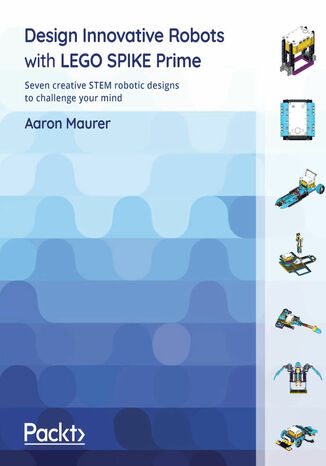
The new LEGO SPIKE Prime is one of the latest additions to the LEGO robotics line of products. This book will help you to enjoy building robots and understand how exciting robotics can be in terms of design, coding, and the expression of ideas.The book begins by taking you through a new realm of playful learning experiences designed for inventors and creators of any age. In each chapter, you'll find out how to build a creative robot, learn to bring the robot to life through code, and finally work with exercises to test what you've learned and remix the robot to suit your own unique style. Throughout the chapters, you'll build exciting new smart robots such as a handheld game, a robotic arm with a joystick, a guitar, a flying bird, a sumobot, a dragster, and a Simon Says game.By the end of this LEGO book, you'll have gained the knowledge and skills you need to build any robot that you can imagine.
Christopher Rogers
With the power and versatility of the Inkscape software, making charts, diagrams, illustrations, and UI mockups with infinite resolution becomes enjoyable. If you’re looking to get up to speed with vector illustration in no time, this comprehensive guide has got your back! Design Made Easy with Inkscape is easy to follow and teaches you everything you need to know to create graphics that you can use and reuse forever, for free!You’ll benefit from the author’s industry experience as you go over the basics of vector illustration, discovering tips and tricks for getting professional graphics done fast by leveraging Inkscape's powerful toolset. This book teaches by example, using a great variety of use cases from icons and logos to illustration, web design, and product design. You’ll learn about hotkeys and take a best-practices approach developed over ten years of using Inkscape as a design tool in production. What’s more, this book also includes links to free graphics resources that you can use in all your projects.Whether you’re a new user or a professional, by the end of this book, you’ll have full understanding of how to use Inkscape and its myriad of excellent features to make stunning graphics for your projects.
Gigi Sayfan
Frustrated by opaque agent frameworks that hide how things work? This book gives you complete control by guiding you through building a fully functional, extensible agentic AI framework in Python without relying on external orchestration tools.You’ll begin by implementing a simple tool-using agent, and then gradually extend its capabilities with structured tool schemas, user interfaces, and memory via the Model Context Protocol (MCP). From there, you’ll build collaborative multi-agent systems powered by Agent-to-Agent (A2A) messaging and deploy them in realistic environments. Along the way, you’ll explore secure tool invocation, message routing, observability, and human-in-the-loop workflows.With annotated code, deep engineering insights, and practical deployment patterns, this hands-on guide equips you to build AI agents that reason, plan, act, and adapt, whether you’re shipping production systems or experimenting with cutting-edge LLM-based architectures.Written by Gigi Sayfan, who builds AI agent infrastructure at Perplexity and is a bestselling author with decades of experience in AI and distributed systems, this book gives you the tools and knowledge to engineer your own advanced agentic systems.*Email sign-up and proof of purchase required
Kamalmeet Singh, Ianculescu, Lucian-Paul Torje
Having a knowledge of design patterns enables you, as a developer, to improve your code base, promote code reuse, and make the architecture more robust. As languages evolve, new features take time to fully understand before they are adopted en masse. The mission of this book is to ease the adoption of the latest trends and provide good practices for programmers.We focus on showing you the practical aspects of smarter coding in Java. We'll start off by going over object-oriented (OOP) and functional programming (FP) paradigms, moving on to describe the most frequently used design patterns in their classical format and explain how Java’s functional programming features are changing them.You will learn to enhance implementations by mixing OOP and FP, and finally get to know about the reactive programming model, where FP and OOP are used in conjunction with a view to writing better code. Gradually, the book will show you the latest trends in architecture, moving from MVC to microservices and serverless architecture. We will finish off by highlighting the new Java features and best practices. By the end of the book, you will be able to efficiently address common problems faced while developing applications and be comfortable working on scalable and maintainable projects of any size.