
Verleger: K-i-s-publishing
Bill Weinman
C++ STL Cookbook is a comprehensive guide that provides practical solutions for mastering the latest features of the C++23 Standard Template Library (STL) through hands-on recipes. Beginning with new features in C++23, this book will help you understand the language's updated mechanics and library features, and offer insights into how they work. Unlike other books, this cookbook takes an implementation-specific, problem-solution approach that will help you overcome hurdles quickly. You'll learn core STL concepts, such as containers, algorithms, utility classes, lambda expressions, iterators, and more, through specific real-world recipes. Building on the success of the first edition, this updated guide includes a new chapter dedicated to the latest features introduced in C++23, such as improved modules, refined ranges, and coroutine-based generators. It also covers essential best practices for writing cleaner and more efficient code, including the use of coroutines, structured bindings, and std::span. Whether you're looking to deepen your understanding of the C++ STL or implement the latest features in your projects, this book provides valuable insights, clear and concise explanations and practical solutions to enhance your C++ programming skills.
Onorato Vaticone
C++ is the preferred language for system programming due to its efficient low-level computation, data abstraction, and object-oriented features. System programming is about designing and writing computer programs that interact closely with the underlying operating system and allow computer hardware to interface with the programmer and the user. The C++ System Programming Cookbook will serve as a reference for developers who want to have ready-to-use solutions for the essential aspects of system programming using the latest C++ standards wherever possible.This C++ book starts out by giving you an overview of system programming and refreshing your C++ knowledge. Moving ahead, you will learn how to deal with threads and processes, before going on to discover recipes for how to manage memory. The concluding chapters will then help you understand how processes communicate and how to interact with the console (console I/O). Finally, you will learn how to deal with time interfaces, signals, and CPU scheduling.By the end of the book, you will become adept at developing robust systems applications using C++.
Rheinwerk Publishing, Inc, Torsten T. Will
This book begins by grounding readers in the essentials of modern C++23, covering syntax, compiling, and core programming concepts. Early chapters introduce building blocks like data types, functions, and statements, ensuring a solid foundation. Readers also learn coding best practices focused on readability and modularization.As the journey progresses, the focus shifts to object-oriented programming, exploring classes, inheritance, namespaces, and lifecycle management. The text includes advanced topics such as templates, macros, and the integration of C libraries. Readers develop skills in designing secure, maintainable, and extensible code while mastering error handling and testing.The final sections dive into concurrency, standard library features like containers and algorithms, and advanced stream handling. Practical guidance on thread management, synchronization, and modern concurrency tools prepares readers for real-world applications. Concluding chapters present C++ guidelines, emphasizing sustainable and quality code development, completing a comprehensive path from fundamentals to expert-level mastery.
C++ Windows Programming. Develop real-world applications in Windows
Stefan Bjornander
It is critical that modern developers have the right tools to build practical, user-friendly, and efficient applications in order to compete in today’s market. Through hands-on guidance, this book illustrates and demonstrates C++ best practices and the Small Windows object-oriented class library to ease your development of interactive Windows applications. Begin with a focus on high level application development using Small Windows. Learn how to build four real-world applications which focus on the general problems faced when developing graphical applications. Get essential troubleshooting guidance on drawing, spreadsheet, and word processing applications. Finally finish up with a deep dive into the workings of the Small Windows class library, which will give you all the insights you need to build your own object-oriented class library in C++.
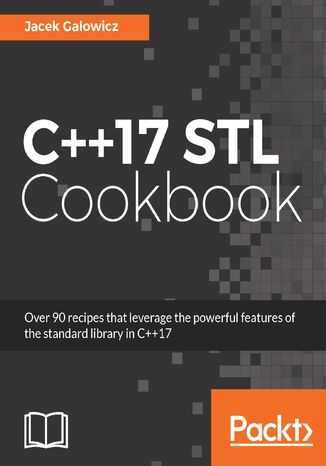
Jacek Galowicz
C++ has come a long way and is in use in every area of the industry. Fast, efficient, and flexible, it is used to solve many problems. The upcoming version of C++ will see programmers change the way they code. If you want to grasp the practical usefulness of the C++17 STL in order to write smarter, fully portable code, then this book is for you.Beginning with new language features, this book will help you understand the language’s mechanics and library features, and offers insight into how they work. Unlike other books, ours takes an implementation-specific, problem-solution approach that will help you quickly overcome hurdles. You will learn the core STL concepts, such as containers, algorithms, utility classes, lambda expressions, iterators, and more, while working on practical real-world recipes. These recipes will help you get the most from the STL and show you how to program in a better way. By the end of the book, you will be up to date with the latest C++17 features and save time and effort while solving tasks elegantly using the STL.
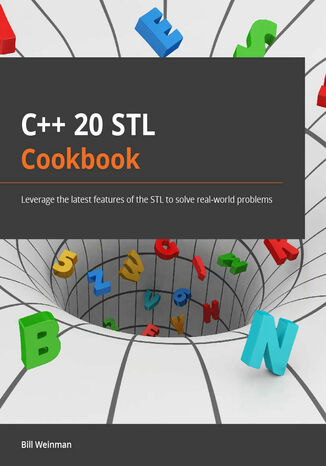
C++20 STL Cookbook. Leverage the latest features of the STL to solve real-world problems
Bill Weinman
Fast, efficient, and flexible, the C++ programming language has come a long way and is used in every area of the industry to solve many problems. The latest version C++20 will see programmers change the way they code as it brings a whole array of features enabling the quick deployment of applications. This book will get you up and running with using the STL in the best way possible.Beginning with new language features in C++20, this book will help you understand the language's mechanics and library features and offer insights into how they work. Unlike other books, the C++20 STL Cookbook takes an implementation-specific, problem-solution approach that will help you overcome hurdles quickly. You'll learn core STL concepts, such as containers, algorithms, utility classes, lambda expressions, iterators, and more, while working on real-world recipes. This book is a reference guide for using the C++ STL with its latest capabilities and exploring the cutting-edge features in functional programming and lambda expressions.By the end of the book C++20 book, you'll be able to leverage the latest C++ features and save time and effort while solving tasks elegantly using the STL.
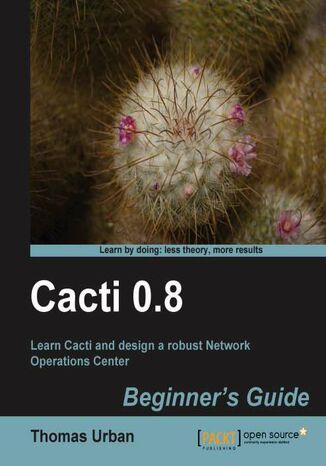
Cacti 0.8 Beginner's Guide. Learn Cacti and design a robust Network Operations Center
Thomas Urban
Cacti is a performance measurement tool that provides easy methods and functions for gathering and graphing system data. You can use Cacti to develop a robust event management system that can alert on just about anything you would like it to. But to do that, you need to gain a solid understanding of the basics of Cacti, its plugin architecture, and automation concepts.Cacti 0.8 Beginner's Guide will introduce you to the wide variety of features of Cacti and will guide you on how to use them for maximum effectiveness. Advanced topics like the plugin architecture and Cacti automation using the command-line interface will help you build a professional performance measurement system.Designed as a beginner's guide, the book starts off with the basics of installing and using Cacti, and also covers the advanced topics that will show you how to customize and extend the core Cacti functionalities. The book offers essential tutorials for creating advanced graphs and using plugins to create enterprise-class reports to show your customers and colleagues.From data templates to input methods and plugin installation to creating your own customized plugins, this book provides you with a rich selection of step-by-step instructions to reach your goals. It covers all you need to know to implement professional performance measurement techniques with Cacti and ways to fully customize Cacti to fit your needs.By the end of the book, you will be able to implement and extend Cacti to monitor, display, and report the performance of your network exactly the way you want.
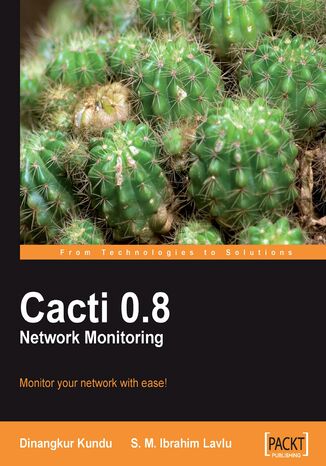
Cacti 0.8 Network Monitoring. Monitor your network with ease!
Dinangkur Kundu, S.M. Ibrahim Lavlu
Cacti is a network monitoring tool that provides graphic solutions to your everyday monitoring issues. It has a wide variety of features and misusing them can mean that you are not monitoring your network as closely as you think. This book takes you through all of the key features of Cacti and shows how to use them for maximum effectiveness.This book will teach you how to use Cacti effectively to monitor your network through its web interface leaving aside all the heavy chunks of code. You will be introduced to all the features of Cacti in an easy-to-understand format. This book introduces Cacti and goes through its complete installation and setup. After a quick look, it will teach you to use Cacti's amazing graph templating and user management features. You will learn to customize graphs and make them better looking and easier to understand. It will teach you to provide the paths to any external script or command using Cacti. Then it will take you through importing and managing new templates and also customizing them. Creating users and assigning permissions to them is the next step in this book. Towards the end, you will learn to take backups and restore the system.