
Видавець: K-i-s-publishing
Hardik Trivedi, Ameya Kulkarni
Serverless is a cloud computing execution model where the cloud provider dynamically manages the allocation and provisioning of servers. Many companies now use serverless architectures to cut costs and improve scalability. Thanks to its concise and expressive syntax and a smooth learning curve, Kotlin is a great fit for developing serverless applications.With this book, you’ll be able to put your knowledge to work by implementing serverless technology in your applications and become productive in no time. Complete with detailed explanation of essential concepts and examples, this book will help you understand the serverless architecture fundamentals and how to design serverless architectures for your applications. You’ll also explore how AWS Lambda functions work. The book will guide you in designing, building, securing, and deploying your application to production, along with implementing non-functional requirements such as auditing and logging. Furthermore, you’ll discover how to scale up and orchestrate serverless applications using an open source framework and handle distributed serverless systems in production.By the end of the book, you’ll be able to build scalable and cost-efficient Kotlin applications with a serverless framework.
Kuldeep Chowhan
Serverless applications and architectures are gaining momentum and are increasingly being used by companies of all sizes. Serverless software takes care of many problems that developers face when running systems and servers, such as fault tolerance, centralized logging, horizontal scalability, and deployments.You will learn how to harness serverless technology to rapidly reduce production time and minimize your costs, while still having the freedom to customize your code, without hindering functionality. Upon finishing the book, you will have the knowledge and resources to build your own serverless application hosted in AWS, Microsoft Azure, or Google Cloud Platform, and will have experienced the benefits of event-driven technology for yourself.This hands-on guide dives into the basis of serverless architectures and how to build them using Node.js as a programming language, Visual Studio Code for code editing, and Postman for quickly and securely developing applications without the hassle of configuring and maintaining infrastructure on three public cloud platforms.
Richard Rose
Google Cloud's serverless platform allows organizations to scale fully managed solutions without worrying about the underlying infrastructure. With this book, you will learn how to design, develop, and deploy full stack serverless apps on Google Cloud.The book starts with a quick overview of the Google Cloud console, its features, user interface (UI), and capabilities. After getting to grips with the Google Cloud interface and its features, you will explore the core aspects of serverless products such as Cloud Run, Cloud Functions and App Engine. You will also learn essential features such as version control, containerization, and identity and access management with the help of real-world use cases. Later, you will understand how to incorporate continuous integration and continuous deployment (CI/CD) techniques for serverless applications. Toward the concluding chapters, you will get to grips with how key technologies such as Knative enable Cloud Run to be hosted on multiple platforms including Kubernetes and VMware.By the end of this book, you will have become proficient in confidently developing, managing, and deploying containerized applications on Google Cloud.
Angus Yeung
This book is about building professional web applications and web services using Swift 4.0 and leveraging two popular Swift web frameworks: Vapor 3.0 and Kitura 2.5. In the first part of this book, we’ll focus on the creation of basic web applications from Vapor and Kitura boilerplate projects. As the web apps start out simple, more useful techniques, such as unit test development, debugging, logging, and the build and release process, will be introduced to readers.In the second part, we’ll learn different aspects of web application development with server-side Swift, including setting up routes and controllers to process custom client requests, working with template engines such as Leaf and Stencil to create dynamic web content, beautifying the content with Bootstrap, managing user access with authentication framework, and leveraging the Object Relational Mapping (ORM) abstraction layer (Vapor’s Fluent and Kitura’s Kuery) to perform database operations.Finally, in the third part, we’ll develop web services in Swift and build our API Gateway, microservices and database backend in a three-tier architecture design. Readers will learn how to design RESTful APIs, work with asynchronous processes, and leverage container technology such as Docker in deploying microservices to cloud hosting services such as Vapor Cloud and IBM Cloud.
Giuseppe Ciaburro
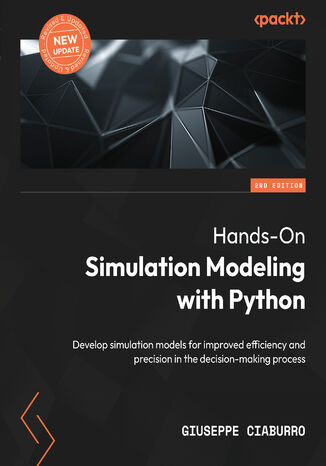
Simulation modelling is an exploration method that aims to imitate physical systems in a virtual environment and retrieve useful statistical inferences from it. The ability to analyze the model as it runs sets simulation modelling apart from other methods used in conventional analyses. This book is your comprehensive and hands-on guide to understanding various computational statistical simulations using Python. The book begins by helping you get familiarized with the fundamental concepts of simulation modelling, that’ll enable you to understand the various methods and techniques needed to explore complex topics. Data scientists working with simulation models will be able to put their knowledge to work with this practical guide. As you advance, you’ll dive deep into numerical simulation algorithms, including an overview of relevant applications, with the help of real-world use cases and practical examples. You'll also find out how to use Python to develop simulation models and how to use several Python packages. Finally, you’ll get to grips with various numerical simulation algorithms and concepts, such as Markov Decision Processes, Monte Carlo methods, and bootstrapping techniques.By the end of this book, you'll have learned how to construct and deploy simulation models of your own to overcome real-world challenges.
Giuseppe Ciaburro
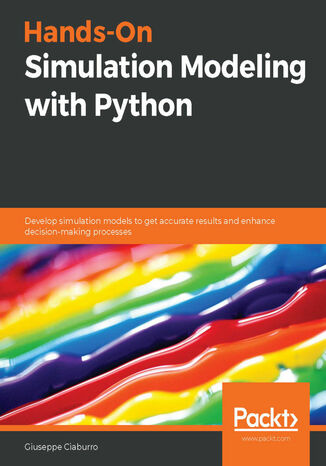
Simulation modeling helps you to create digital prototypes of physical models to analyze how they work and predict their performance in the real world. With this comprehensive guide, you'll understand various computational statistical simulations using Python.Starting with the fundamentals of simulation modeling, you'll understand concepts such as randomness and explore data generating processes, resampling methods, and bootstrapping techniques. You'll then cover key algorithms such as Monte Carlo simulations and Markov decision processes, which are used to develop numerical simulation models, and discover how they can be used to solve real-world problems. As you advance, you'll develop simulation models to help you get accurate results and enhance decision-making processes. Using optimization techniques, you'll learn to modify the performance of a model to improve results and make optimal use of resources. The book will guide you in creating a digital prototype using practical use cases for financial engineering, prototyping project management to improve planning, and simulating physical phenomena using neural networks.By the end of this book, you'll have learned how to construct and deploy simulation models of your own to overcome real-world challenges.
Jyotiswarup Raiturkar
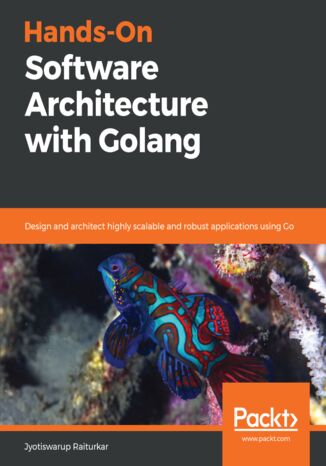
Building software requires careful planning and architectural considerations; Golang was developed with a fresh perspective on building next-generation applications on the cloud with distributed and concurrent computing concerns.Hands-On Software Architecture with Golang starts with a brief introduction to architectural elements, Go, and a case study to demonstrate architectural principles. You'll then move on to look at code-level aspects such as modularity, class design, and constructs specific to Golang and implementation of design patterns. As you make your way through the chapters, you'll explore the core objectives of architecture such as effectively managing complexity, scalability, and reliability of software systems. You'll also work through creating distributed systems and their communication before moving on to modeling and scaling of data. In the concluding chapters, you'll learn to deploy architectures and plan the migration of applications from other languages.By the end of this book, you will have gained insight into various design and architectural patterns, which will enable you to create robust, scalable architecture using Golang.
Giuseppe Bonocore
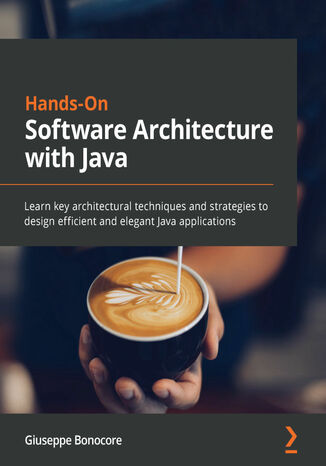
Well-written software architecture is the core of an efficient and scalable enterprise application. Java, the most widespread technology in current enterprises, provides complete toolkits to support the implementation of a well-designed architecture.This book starts with the fundamentals of architecture and takes you through the basic components of application architecture. You'll cover the different types of software architectural patterns and application integration patterns and learn about their most widespread implementation in Java. You'll then explore cloud-native architectures and best practices for enhancing existing applications to better suit a cloud-enabled world. Later, the book highlights some cross-cutting concerns and the importance of monitoring and tracing for planning the evolution of the software, foreseeing predictable maintenance, and troubleshooting. The book concludes with an analysis of the current status of software architectures in Java programming and offers insights into transforming your architecture to reduce technical debt.By the end of this software architecture book, you'll have acquired some of the most valuable and in-demand software architect skills to progress in your career.