Видавець: Oficyna Wydawnicza Politechniki Białostockiej
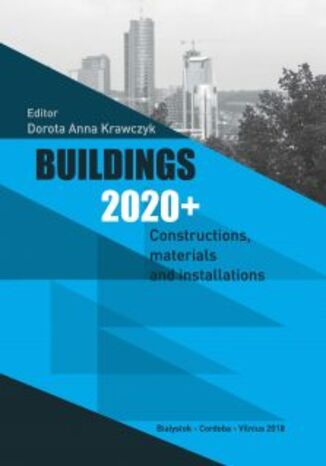
Buildings 2020+. Constructions, materials and installations
Dorota Anna Krawczyk (Editor)
This book was developed by a group of teachers and scientists from Bialystok University of Technology (Poland), the University of Cordoba (Spain) and Vilnius College of Technologies and Design (Lithuania) working within the VIPSKILLS project (Virtual and Intensive Course Developing Practical Skills of Future Engineers) Erasmus+ 2016-1-PL01-KA203-026152. The continual development of technologies, changing requirements in law regarding standard of new buildings’ constructions reshapes European cities. The book explores relations between architecture, environmental and civil engineering. Collaboration in a process of buildings’ design and construction is extremely important for further proper operation and thermal comfort of users, as well as achieving low energy consumption and good indoor air quality.
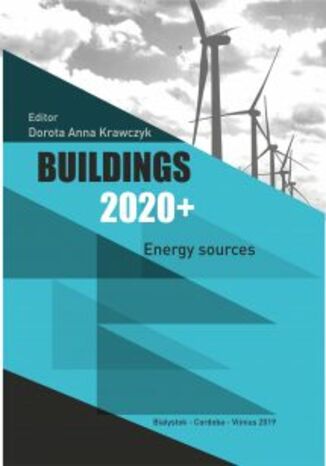
Buildings 2020+. Energy sources
Dorota Anna Krawczyk (Editor)
In the last decades, significant energy market changes have been observed. Along with improvements within the building structure and systems leading to reduction of energy consumption, there have been introduced a relevant modification in the global energy sources balance. Fossil fuels have been displaced by different kinds of alternative energy sources. New technologies have been applied that allow to make heating, cooling, hot and electricity systems much more efficient and environmentally friendly. In this book we show the development of renewable energy sources. We present several examples of technologies using solar, wind, geothermal energy as well as systems using biomass or cogeneration. The book was developed by a group of teachers and scientists from Bialystok University of Technology (Poland), the University of Cordoba (Spain) and Vilnius College of Technologies and Design (Lithuania) working within the VIPSKILLS project (Virtual and Intensive Course Developing Practical Skills of Future Engineers) Erasmus+ 2016-1-PL01-KA203-026152.
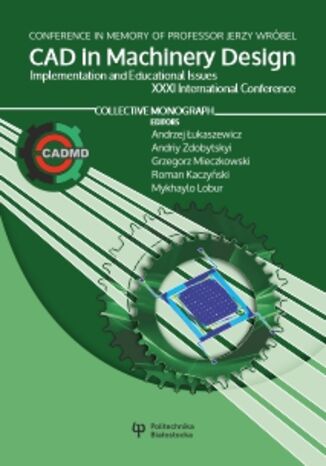
CAD in machinery design implementation and educational issues xxxi international conference
Andrzej Łukaszewicz, Andriy Zdobytskyi, Grzegorz Mieczkowski, Roman...
The purpose of this monograph is to present the current state of the art in computer-aided design (CAD) in the mechanical (MCAD) and electrical (ECAD) industries. With the rapid development of new applications and simulation methods, CAx techniques are widely used in many branches of engineering activity. The articles in this book present the key challenges of CAx systemes. The authors propose new solutions, approaches and methodologies to meet today's engineering challenges.CAD; CAx; MEMS; UAV; FEM; AM; 3D print; reverse engineering; 3D scanning; 3D modelling; engineering education The aim of the XXXI CADMD conference was to exchange experiences between scientists in modern information technology, the development of CAx systems, teaching methods and the implementation of automated systems in the educational process, and establishing closer ties between researchers. The conference papers are presented on problems in the field of MCAD and ECAD techniques and CAx tools in automation of machine and mechanism design, identification, modelling of processes and systems, UAV, UGV, robotics, automation, electromechanical systems, application of information technologies in engineering, software, programming and algorithms, additive technologies, reverse engineering, databases, CAx engineering education, educational methods and Internet technologies in education.
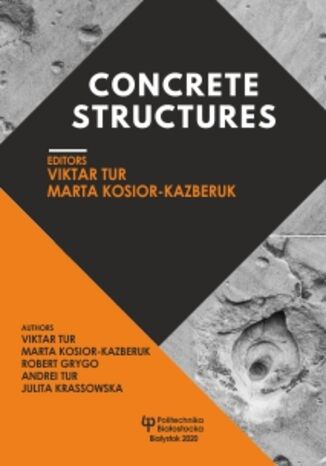
Viktar Tur, Marta Kosior-Kazberuk, Robert Grygo, Andrei...
Implementation of the Eurocodes extends to all of the European countries and there are firm steps toward their adoption internationally. As with any design codes, it is important to have an understanding of the principles and background, as well as design aids to assist in the design process. The relevance to train in the use of Eurocodes should be pointed out, especially in engineering schools as a basic course for civil and structural engineering students and as a part of continious professional development courses for engineers and technicians, which are promoted both at national and international levels. This book is directed primarily at civil and structural engineering students, young designers, who require an understanding of the basic theory and a concise guide for design procedure.
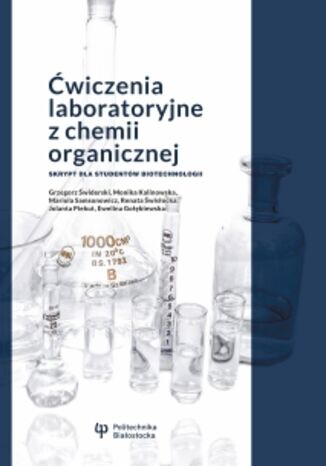
Ćwiczenia laboratoryjne z chemii organicznej. Skrypt dla studentów biotechnologii
Grzegorz Świderski, Monika Kalinowska, Mariola Samsonowicz, Renata...
Skrypt "Ćwiczenia laboratoryjne z chemii organicznej" przeznaczony jest dla studentów kierunku biotechnologia. Może być również cenną pomocą w realizacji ćwiczeń laboratoryjnych na innych kierunkach studiów, gdzie realizowany jest przedmiot chemia organiczna. W opracowaniu przedstawiono zestaw instrukcji z materiałem teoretycznym niezbędnym do realizacji zajęć oraz odniesieniem do literatury, wzbogacającej wiedzę dotyczącą omawianych tematów. Zakres przedstawionego materiału obejmuje tematy związane z identyfikacją podstawowych związków organicznych, syntezą wybranych związków organicznych oraz technikami rozdziału, takimi jak destylacja, ekstrakcja i podstawowymi metodami oczyszczania otrzymywanych substancji. W rozdziale pierwszym omówiono zasady bezpieczeństwa pracy i higieny pracy obowiązujące w pracowni chemii organicznej oraz przedstawiono podstawowy sprzęt używany podczas wykonywania ćwiczeń laboratoryjnych. Ostatni rozdział zawiera przykładowe zadania związane z nazewnictwem.
Ćwiczenia z przedmiotu wprowadzenie do informatyki. Arytmetyka zmiennoprzecinkowa
Irena Bułatowa
Liczby rzeczywiste przechowywane są w pamięci systemu komputerowego w formatach zmiennoprzecinkowych. W takich formatach liczby są kodowane w postaci wykładniczej, co pozwala w znacznym stopniu rozszerzyć zakres reprezentacji liczb przy zapewnieniu wystarczająco dobrej dokładności ich zapisu. Ze względu na ograniczony rozmiar formatów zmiennoprzecinkowych, bardzo często liczby rzeczywiste oraz wyniki wykonywanych na nich operacji arytmetycznych nie mogą być dokładnie zapamiętane w pamięci komputera, więc są reprezentowane w postaci przybliżonej. W książce omówione zostały podstawy zmiennoprzecinkowej reprezentacji liczb oraz algorytmy wykonywania operacji arytmetycznych na formatach zmiennoprzecinkowych. Szczegółowo wyjaśniono sposób przeliczania liczb rzeczywistych na zapis zmiennoprzecinkowy, przedstawiono standardowe formaty zmiennoprzecinkowe zgodne z powszechnie używanym standardem IEEE 754-2008. Dokładnie opisane zostały reguły wykonywania podstawowych działań arytmetycznych.
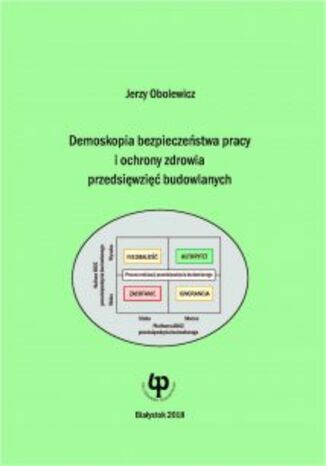
Demoskopia bezpieczeństwa pracy i ochrony zdrowia przedsięwzięć budowlanych
Jerzy Obolewicz
Monografia na temat demoskopii bezpieczeństwa pracy i ochrony zdrowia przedsięwzięć budowlanych składa się z dwóch części: opisowej i badawczej. Część opisowa potraktowana została jako platforma do części badawczej, obejmującej badania BIOZ.
Daria Smarżewska
Głównym celem monografii jest opracowanie modelu determinant lojalności pielęgniarek i pielęgniarzy w szpitalach publicznych w Polsce. Związane są z nim następujące cele szczegółowe: 1) cel poznawczy: synteza wiedzy na temat determinant lojalności wobec organizacji; 2) cel empiryczny: identyfikacja determinant lojalności wobec organizacji pielęgniarek i pielęgniarzy zatrudnionych w szpitalach publicznych; 3) cel utylitarny: wypracowanie rekomendacji dotyczących zarządzania lojalnością pielęgniarek i pielęgniarzy dla kadry zarządzającej szpitalami publicznymi. W procesie badawczym wykorzystano krytyczną analizę literatury przedmiotu, analizę danych wtórnych, analizę aktów prawnych. Zastosowano metody ilościowe, takie jak badania ankietowe, metody statystyczne, oraz metody jakościowe - indywidualne wywiady pogłębione, analizę narracji.