
Wydawca: Packt Publishing
Jon Hoffman
This book follows a recipe-based approach that will heavily focus on the code and how to integrate the samples with the reader’s projects.Each recipe consists of one or more methods that you can put directly into your app and use. This book is ideal for developers that want to create network applications for the Apple OS X or iOS platforms. All examples are written in Objective-C using XCode as the IDE. Knowledge of Objective-C and X-Code is essential.
Joseph Howse
iOS Application Development with OpenCV 3 enables you to turn your smartphone camera into an advanced tool for photography and computer vision. Using the highly optimized OpenCV library, you will process high-resolution images in real time. You will locate and classify objects, and create models of their geometry. As you develop photo and augmented reality apps, you will gain a general understanding of iOS frameworks and developer tools, plus a deeper understanding of the camera and image APIs. After completing the book's four projects, you will be a well-rounded iOS developer with valuable experience in OpenCV.
Dimitrios Tavlikos
The book is written in a recipe format with practical examples, allowing you to go directly to your topic of interest or follow topics throughout a chapter to gain an in-depth knowledge. There are also plenty of hints and best practices along the way. If you are a C#/.NET developer with no previous experience in iOS development or an Objective-C developer who wants to create complete iOS applications and deploy them to the App Store, then this book is ideal for you. No experience with Xamarin is needed.
Bhanu Birani, Mayank Birani
Mobile device forensics is a branch of digital forensics that involves the recovery of evidence or data in a digital format from a device without affecting its integrity. With the growing popularity of iOS-based Apple devices, iOS forensics has developed immense importance. To cater to the need, this book deals with tasks such as the encryption and decryption of files, various ways to integrate techniques withsocial media, and ways to grab the user events and actions on the iOS app. Using practical examples, we’ll start with the analysis keychain and raw disk decryption, social media integration, and getting accustomed to analytics tools. You’ll also learn how to distribute the iOS apps without releasing them to Apple’s App Store. Moving on, the book covers test flights and hockey app integration, the crash reporting system, recovery tools, and their features. By the end of the book, using the aforementioned techniques, you will be able to successfully analyze iOS-based devices forensically.
Gianluca Tiepolo
Professionals working in the mobile forensics industry will be able to put their knowledge to work with this practical guide to learning how to extract and analyze all available data from an iOS device.This book is a comprehensive, how-to guide that leads investigators through the process of collecting mobile devices and preserving, extracting, and analyzing data, as well as building a report. Complete with step-by-step explanations of essential concepts, practical examples, and self-assessment questions, this book starts by covering the fundamentals of mobile forensics and how to overcome challenges in extracting data from iOS devices. Once you've walked through the basics of iOS, you’ll learn how to use commercial tools to extract and process data and manually search for artifacts stored in database files. Next, you'll find out the correct workflows for handling iOS devices and understand how to extract valuable information to track device usage. You’ll also get to grips with analyzing key artifacts, such as browser history, the pattern of life data, location data, and social network forensics.By the end of this book, you'll be able to establish a proper workflow for handling iOS devices, extracting all available data, and analyzing it to gather precious insights that can be reported as prosecutable evidence.
Gianluca Tiepolo
Professionals working in the mobile forensics industry will be able to put their knowledge to work with this practical guide to learning how to extract and analyze all available data from an iOS device.This audiobook is a comprehensive, how-to guide that leads investigators through the process of collecting mobile devices and preserving, extracting, and analyzing data, as well as building a report. Complete with step-by-step explanations of essential concepts, practical examples, and self-assessment questions, this book starts by covering the fundamentals of mobile forensics and how to overcome challenges in extracting data from iOS devices. Once you've walked through the basics of iOS, you’ll learn how to use commercial tools to extract and process data and manually search for artifacts stored in database files. Next, you'll find out the correct workflows for handling iOS devices and understand how to extract valuable information to track device usage. You’ll also get to grips with analyzing key artifacts, such as browser history, the pattern of life data, location data, and social network forensics.By the end of this audiobook, you'll be able to establish a proper workflow for handling iOS devices, extracting all available data, and analyzing it to gather precious insights that can be reported as prosecutable evidence.
Samanyu Chopra
Game development has always been an exciting subject for game enthusiasts and players and iOS game development takes a big piece of this cake in terms of perpetuating growth and creativity. With the newest version of iOS and Sprite Kit, comes a series of breathtaking features such as Metal rendering support, camera nodes, and a new and improved Scene Editor. Conceptualizing a game is a dream for both young and old. Sprite Kit is an exciting framework supported by Apple within the iOS development environment. With Sprite Kit, creating stunning games has become an easy avenue.Starting with the basics of game development and swift language, this book will guide you to create your own fully functional game. Dive in and learn how to build and deploy a game on your iOS platform using Sprite Kit game engine.Go on a detailed journey of game development on the iOS platform using the Sprite Kit game engine. Learn about various features implemented in iOS 8 that further increase the essence of game development using Sprite Kit. Build an endless runner game and implement features like physics bodies, character animations, scoring and other essential elements in a game. You will successfully conceive a 2D game along with discovering the path to reach the pinnacle of iOS game development.By the end of the book, you will not only have created an endless runner game but also have in-depth knowledge of creating larger games on the iOS platform.Style and approach An easy-to-follow, comprehensive guide that makes your learning experience more intriguing by gradually developing a Sprite Kit game. This book discusses each topic in detail making sure you attain a clear vision of the subject.
Chhavi Vaishnav
This book is for developers who are willing to explore iOS game programming in depth.Good knowledge level and understanding of iOS game development will be an added advantage. You should already have a working installation of Xcode and Sprite kit.
Hossam Ghareeb
Do you want to understand all the facets of iOS programming and build complex iOS apps? Then you have come to the right place. This problem-solution guide will help you to eliminate expensive learning curves and focus on specific issues to make you proficient at tasks and the speed-up time involved.Beginning with some advanced UI components such as Stack Views and UICollectionView, you will gradually move on to building an interface efficiently.You will work through adding gesture recognizer and touch elements on table cells for custom actions. You will work with the Photos framework to access and manipulate photos. You will then prepare your app for multitasking and write responsive and highly efficient apps. Next, you will integrate maps and core location services while making your app more secure through various encryption methods. Finally, you will dive deep into the advanced techniques of implementing notifications while working with memory management and optimizing the performance of your apps. By the end of the book, you will master most of the latest iOS 10 frameworks.
Deya Elkhawaldeh, Dave Poirier
If you build iOS apps, you also manage risk, from insecure data storage to reverse engineering and runtime tampering. This book treats security as part of the development workflow, not an afterthought, and focuses on practical techniques you can apply without needing deep cryptography or penetration testing expertise.You will start by defining what needs protection: sensitive data, how it is categorized, how long it should be retained, and how privacy expectations and legal requirements shape design decisions. From there, you will study common attack techniques such as network interception, injection, configuration mistakes, URL scheme abuse, code tampering, repackaging, and runtime manipulation.The book then moves into defenses: platform and language safety, code signing and entitlements, secure error and execution handling, data validation, transport security with TLS pinning, and runtime protections against debuggers and emulation. On the data side, you will use Keychain, file protection classes, and Secure Enclave features to protect secrets and keys, and you will evaluate clipboard and backup related risks. Finally, you will build a repeatable security program across the app lifecycle, from static and dynamic analysis to incident response planning and bug bounty triage, so you can ship trustworthy iOS apps at scale.
Perry Lea
Industries are embracing IoT technologies to improve operational expenses, product life, and people's well-being. An architectural guide is needed if you want to traverse the spectrum of technologies needed to build a successful IoT system, whether that's a single device or millions of IoT devices.IoT and Edge Computing for Architects, 2E encompasses the entire spectrum of IoT solutions, from IoT sensors to the cloud. It examines modern sensor systems, focusing on their power and functionality. It also looks at communication theory, paying close attention to near-range PAN, including the new Bluetooth® 5.0 specification and mesh networks. Then, the book explores IP-based communication in LAN and WAN, including 802.11ah, 5G LTE cellular, Sigfox, and LoRaWAN. It also explains edge computing, routing and gateways, and their role in fog computing, as well as the messaging protocols of MQTT 5.0 and CoAP.With the data now in internet form, you'll get an understanding of cloud and fog architectures, including the OpenFog standards. The book wraps up the analytics portion with the application of statistical analysis, complex event processing, and deep learning models. The book then concludes by providing a holistic view of IoT security, cryptography, and shell security in addition to software-defined perimeters and blockchains.
Smita Jain, Vasantha Lakshmi
The Fourth Industrial Revolution, or Industry 4.0, is all about digital transformation, manufacturing, and production. The connected world we live in today, including industries, comes with several cybersecurity challenges that need immediate attention. This book takes you through the basics of IoT and OT architecture and helps you understand and mitigate these security challenges.The book begins with an overview of the challenges faced in managing and securing IoT and OT devices in Industry 4.0. You’ll then get to grips with the Purdue model of reference architecture, which will help you explore common cyber attacks in IoT and OT environments. As you progress, you’ll be introduced to Microsoft Defender for IoT and understand its capabilities in securing IoT and OT environments. Finally, you will discover best practices for achieving continuous monitoring and vulnerability management, as well as threat monitoring and hunting, and find out how to align your business model toward zero trust.By the end of this security book, you’ll be equipped with the knowledge and skills to efficiently secure IoT and OT environments using Microsoft Defender for IoT.
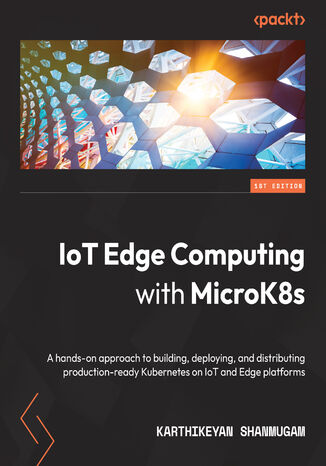
Karthikeyan Shanmugam
Are you facing challenges with developing, deploying, monitoring, clustering, storing, securing, and managing Kubernetes in production environments as you're not familiar with infrastructure technologies? MicroK8s - a zero-ops, lightweight, and CNCF-compliant Kubernetes with a small footprint is the apt solution for you.This book gets you up and running with production-grade, highly available (HA) Kubernetes clusters on MicroK8s using best practices and examples based on IoT and edge computing.Beginning with an introduction to Kubernetes, MicroK8s, and IoT and edge computing architectures, this book shows you how to install, deploy sample apps, and enable add-ons (like DNS and dashboard) on the MicroK8s platform. You’ll work with multi-node Kubernetes clusters on Raspberry Pi and networking plugins (such as Calico and Cilium) and implement service mesh, load balancing with MetalLB and Ingress, and AI/ML workloads on MicroK8s. You’ll also understand how to secure containers, monitor infrastructure and apps with Prometheus, Grafana, and the ELK stack, manage storage replication with OpenEBS, resist component failure using a HA cluster, and more, as well as take a sneak peek into future trends.By the end of this book, you’ll be able to use MicroK8 to build and implement scenarios for IoT and edge computing workloads in a production environment.
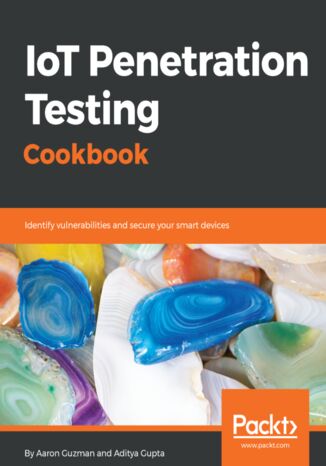
IoT Penetration Testing Cookbook. Identify vulnerabilities and secure your smart devices
Aaron Guzman, Aditya Gupta
IoT is an upcoming trend in the IT industry today; there are a lot of IoT devices on the market, but there is a minimal understanding of how to safeguard them. If you are a security enthusiast or pentester, this book will help you understand how to exploit and secure IoT devices.This book follows a recipe-based approach, giving you practical experience in securing upcoming smart devices. It starts with practical recipes on how to analyze IoT device architectures and identify vulnerabilities. Then, it focuses on enhancing your pentesting skill set, teaching you how to exploit a vulnerable IoT device, along with identifying vulnerabilities in IoT device firmware. Next, this book teaches you how to secure embedded devices and exploit smart devices with hardware techniques. Moving forward, this book reveals advanced hardware pentesting techniques, along with software-defined, radio-based IoT pentesting with Zigbee and Z-Wave. Finally, this book also covers how to use new and unique pentesting techniques for different IoT devices, along with smart devices connected to the cloud.By the end of this book, you will have a fair understanding of how to use different pentesting techniques to exploit and secure various IoT devices.
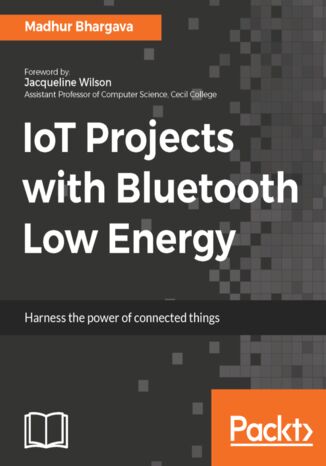
IoT Projects with Bluetooth Low Energy. Harness the power of connected things
Madhur Bhargava
Bluetooth Low Energy, or Bluetooth Smart, is Wireless Personal Area networking aimed at smart devices and IoT applications. BLE has been increasingly adopted by application developers and IoT enthusiasts to establish connections between smart devices.This book initially covers all the required aspects of BLE, before you start working on IoT projects. In the initial stages of the book, you will learn about the basic aspects of Bluetooth Low Energy—such as discovering devices, services, and characteristics—that will be helpful for advanced-level projects. This book will guide you through building hands-on projects using BLE and IoT. These projects include tracking health data, using a mobile App, and making this data available for health practitioners; Indoor navigation; creating beacons using the Raspberry Pi; and warehouse weather Monitoring. This book also covers aspects of Bluetooth 5 (the latest release) and its effect on each of these projects.By the end of this book, you will have hands-on experience of using Bluetooth Low Energy to integrate with smart devices and IoT projects.
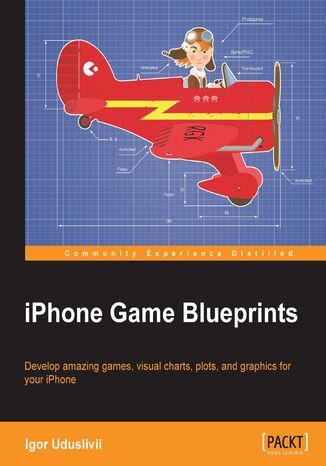
Igor Uduslivii
Designing and selling games on the iOS platform has become a phenomenon ever since the introduction of the App Store. With mobile gaming taking the World by storm, users are indulging in all different types of games. iPhone Game Blueprints is a hands on guide to both inspire and help developers, graphic designers, and game enthusiasts to create their own games for iOS devices.Taking a selection of iPhone game styles we will learn how to set the foundation and essential functionality for each game. Including thorough explanations of popular games such as puzzles, arcades, and adventures, as well as useful theoretical and technical concepts. iPhone Game Blueprints is your complete guide to creating great iPhone games, from a simple gesture game to a classic shoot 'em up.iPhone Game Blueprints guides you through the universe of mobile games, starting with the overall information about game ideas, ergonomic aspects, and much more. Then it switches to a description of each particular game type, presenting ready-to-use ideas and applications.This book will take you through a selection of iPhone game styles and show how to create the foundation and essential functionality for a game of that genre.The examples in this book are only the beginning.Including a deluge of practical tips, focusing on the best approach to game design, not forgetting to mention the pitfalls. iPhone Game Blueprints will give you the blueprints of several mobile game's essentials cores. Whether you're just getting started with gaming, or want to try a whole different genre of game, these blueprints are everything you need.