
Publisher: Packt Publishing
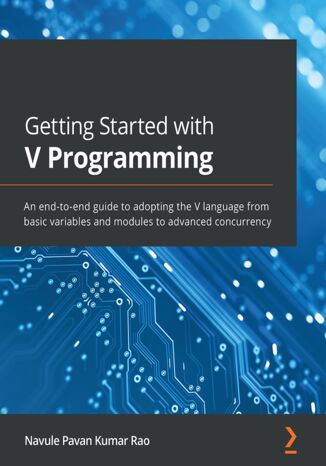
Navule Pavan Kumar Rao
A new language on the block, V comes with a promising set of features such as fast compilation and interoperability with other programming languages. This is the first book on the V programming language, packed with concise information and a walkthrough of all the features you need to know to get started with the language.The book begins by covering the fundamentals to help you learn about the basic features of V and the suite of built-in libraries available within the V ecosystem. You'll become familiar with primitive data types, declaring variables, arrays, and maps. In addition to basic programming, you'll develop a solid understanding of the building blocks of programming, including functions, structs, and modules in the V programming language.As you advance through the chapters, you'll learn how to implement concurrency in V Programming, and finally learn how to write test cases for functions. This book takes you through an end-to-end project that will guide you to build fast and maintainable RESTful microservices by leveraging the power of V and its built-in libraries.By the end of this V programming book, you'll be well-versed with the V programming language and be able to start writing your own programs and applications.
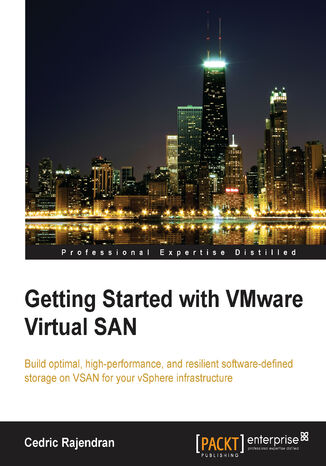
Cedric Rajendran
This book is intended for server administrators and storage administrators who would like to successfully build and scale a VSAN-backed vSphere infrastructure. A basic understanding of vSphere concepts and storage fundamentals will be helpful.
Prateek Jadhwani
Web Components are a set of APIs that help you build reusable UI modules that can operate in any modern browser using just Vanilla JavaScript. The power of Web Components lies in their ability to build frontend web applications with or without web frameworks.With this practical guide, you will understand how Web Components can help you build reusable UI components for your modern web apps. The book starts by explaining the fundamentals of Web Components' design and strategies for using them in your existing frontend web projects. You will also learn how to use JavaScript libraries such as Polymer.js and Stencil.js for building practical components. As you progress, you will build a single-page application using only Web Components to fully realize their potential. This practical guide demonstrates how to work with Shadow DOM and custom elements to build the standard components of a web application. Toward the end of the book, you will learn how to integrate Web Components with standard web frameworks to help you manage large-scale web applications.By the end of this book, you will have learned about the capabilities of Web Components in building custom elements and have the necessary skills for building a reusable UI for your web applications.
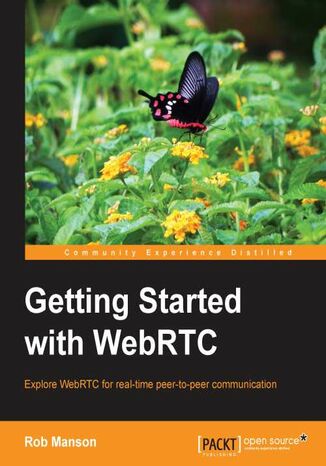
Rob Manson
WebRTC delivers web-based real-time communication and is set to revolutionize our view of what the Web really is. Streaming audio and video from browser to browser, as well as opening raw access to the camera and microphone, is already creating a whole new dynamic web. WebRTC also introduces real-time data channels that will allow interaction with dynamic data feeds from sensors and other devices. This really is a great time to be a web developer!Getting Started with WebRTC provides all of the practical information you need to quickly understand what WebRTC is, how it works, and how you can add it to your own web applications. It includes clear working examples designed to help you get started building your own WebRTC-enabled applications right away.Getting Started with WebRTC will guide you through the process of creating your own WebRTC application that can be applied in a number of different real-world situations, using well documented and clearly explained code examples.You will learn how to quickly and easily create a practical peer-to-peer video chat application, an audio only call option, and how a Web-Socket-based signaling server can also be used to enable real-time text-based chat. You will also be shown how this same server and application structure can easily be extended to include simple drag-and-drop file sharing with transfer updates and thumbnail previews.
Craig Thomas Ellrod
This is a step-by-step, task-based, practical guide to learning and getting your basic XenDesktop 7.x site up and running. It is fast, easy, and makes learning desktop and application virtualization simple. If you are a system administrator, consultant, or beginner who wants to implement and administer Citrix XenDesktop sites, then this book is for you. Familiarity with virtualization of desktops and applications and datacenter concepts will be helpful. The ability to read network diagrams and understand servers, data flow, clients, devices, and the interworking of these pieces will be beneficial.
Donato Teutonico
This book is perfect for R programmers who are interested in learning to use ggplot2 for data visualization, from the basics up to using more advanced applications, such as faceting and grouping. Since this book will not cover the basics of R commands and objects, you should have a basic understanding of the R language.
David Álvarez Pérez
Ghidra, an open source software reverse engineering (SRE) framework created by the NSA research directorate, enables users to analyze compiled code on any platform, whether Linux, Windows, or macOS. This book is a starting point for developers interested in leveraging Ghidra to create patches and extend tool capabilities to meet their cybersecurity needs.You'll begin by installing Ghidra and exploring its features, and gradually learn how to automate reverse engineering tasks using Ghidra plug-ins. You’ll then see how to set up an environment to perform malware analysis using Ghidra and how to use it in the headless mode. As you progress, you’ll use Ghidra scripting to automate the task of identifying vulnerabilities in executable binaries. The book also covers advanced topics such as developing Ghidra plug-ins, developing your own GUI, incorporating new process architectures if needed, and contributing to the Ghidra project.By the end of this Ghidra book, you’ll have developed the skills you need to harness the power of Ghidra for analyzing and avoiding potential vulnerabilities in code and networks.
David Álvarez Pérez, Ravikant Tiwari
Written by David Álvarez Pérez, a senior malware analyst at Gen Digital Inc., and Ravikant Tiwari, a senior security researcher at Microsoft, with expertise in malware and threat detection, this book is a complete guide to using Ghidra for examining malware, making patches, and customizing its features for your cybersecurity needs.This updated edition walks you through implementing Ghidra’s capabilities and automating reverse-engineering tasks with its plugins. You’ll learn how to set up an environment for practical malware analysis, use Ghidra in headless mode, and leverage Ghidra scripting to automate vulnerability detection in executable binaries. Advanced topics such as creating Ghidra plugins, adding new binary formats, analyzing processor modules, and contributing to the Ghidra project are thoroughly covered too.This edition also simplifies complex concepts such as remote and kernel debugging and binary diffing, and their practical uses, especially in malware analysis. From unpacking malware to analyzing modern ransomware, you’ll acquire the skills necessary for handling real-world cybersecurity challenges.By the end of this Ghidra book, you’ll be adept at avoiding potential vulnerabilities in code, extending Ghidra for advanced reverse-engineering, and applying your skills to strengthen your cybersecurity strategies.