
Видавець: Packt Publishing
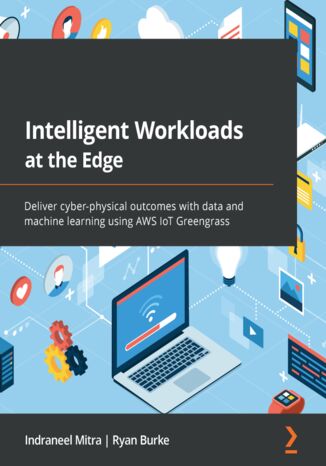
Indraneel (Neel) Mitra, Ryan Burke
The Internet of Things (IoT) has transformed how people think about and interact with the world. The ubiquitous deployment of sensors around us makes it possible to study the world at any level of accuracy and enable data-driven decision-making anywhere. Data analytics and machine learning (ML) powered by elastic cloud computing have accelerated our ability to understand and analyze the huge amount of data generated by IoT. Now, edge computing has brought information technologies closer to the data source to lower latency and reduce costs.This book will teach you how to combine the technologies of edge computing, data analytics, and ML to deliver next-generation cyber-physical outcomes. You’ll begin by discovering how to create software applications that run on edge devices with AWS IoT Greengrass. As you advance, you’ll learn how to process and stream IoT data from the edge to the cloud and use it to train ML models using Amazon SageMaker. The book also shows you how to train these models and run them at the edge for optimized performance, cost savings, and data compliance.By the end of this IoT book, you’ll be able to scope your own IoT workloads, bring the power of ML to the edge, and operate those workloads in a production setting.
Jaroslaw Krochmalski
Starting with a walkthrough of the main workspace, you will get up and running with IDEA from the word go. You will learn how to exploit IDEA's software development tools and use the various product features such as source code control, the debugger, and the many code generation tools.You will then move on to advanced topics such as how IntelliJ helps in version control, managing change lists, viewing differences and changes, and reverting changes. You will also learn how IDEA can be used for agile development and web development, as well as its integration with frameworks such as Gradle.Complete with tips and tricks, this book will make sure that you have an in-depth and extensive knowledge of informed programming.
Interactive Applications using Matplotlib
Benjamin V Root
This book is intended for Python programmers who want to do more than just see their data. Experience with GUI toolkits is not required, so this book can be an excellent complement to other GUI programming resources.
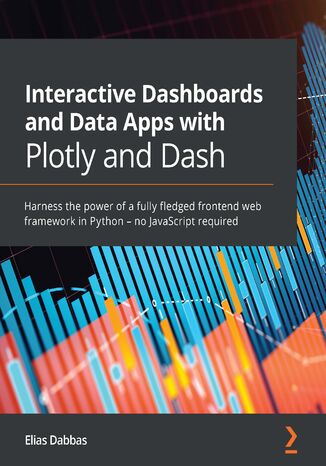
Elias Dabbas
Plotly's Dash framework is a life-saver for Python developers who want to develop complete data apps and interactive dashboards without JavaScript, but you'll need to have the right guide to make sure you’re getting the most of it. With the help of this book, you'll be able to explore the functionalities of Dash for visualizing data in different ways.Interactive Dashboards and Data Apps with Plotly and Dash will first give you an overview of the Dash ecosystem, its main packages, and the third-party packages crucial for structuring and building different parts of your apps. You'll learn how to create a basic Dash app and add different features to it.Next, you’ll integrate controls such as dropdowns, checkboxes, sliders, date pickers, and more in the app and then link them to charts and other outputs. Depending on the data you are visualizing, you'll also add several types of charts, including scatter plots, line plots, bar charts, histograms, and maps, as well as explore the options available for customizing them.By the end of this book, you'll have developed the skills you need to create and deploy an interactive dashboard, handle complexities and code refactoring, and understand the process of improving your application.
Abha Belorkar , Sharath Chandra Guntuku ,...
With so much data being continuously generated, developers, who can present data as impactful and interesting visualizations, are always in demand. Interactive Data Visualization with Python sharpens your data exploration skills, tells you everything there is to know about interactive data visualization in Python.You'll begin by learning how to draw various plots with Matplotlib and Seaborn, the non-interactive data visualization libraries. You'll study different types of visualizations, compare them, and find out how to select a particular type of visualization to suit your requirements. After you get a hang of the various non-interactive visualization libraries, you'll learn the principles of intuitive and persuasive data visualization, and use Bokeh and Plotly to transform your visuals into strong stories. You'll also gain insight into how interactive data and model visualization can optimize the performance of a regression model.By the end of the course, you'll have a new skill set that'll make you the go-to person for transforming data visualizations into engaging and interesting stories.
Diego Javier Zea
The Julia programming language offers a fresh perspective into the data visualization field.Interactive Visualization and Plotting with Julia begins by introducing the Julia language and the Plots package. The book then gives a quick overview of the Julia plotting ecosystem to help you choose the best library for your task. In particular, you will discover the many ways to create interactive visualizations with its packages. You’ll also leverage Pluto notebooks to gain interactivity and use them intensively through this book. You’ll find out how to create animations, a handy skill for communication and teaching. Then, the book shows how to solve data analysis problems using DataFrames and various plotting packages based on the grammar of graphics. Furthermore, you’ll discover how to create the most common statistical plots for data exploration. Also, you’ll learn to visualize geographically distributed data, graphs and networks, and biological data. Lastly, this book will go deeper into plot customizations with Plots, Makie, and Gadfly—focusing on the former—teaching you to create plot themes, arrange multiple plots into a single figure, and build new plot types.By the end of this Julia book, you’ll be able to create interactive and publication-quality static plots for data analysis and exploration tasks using Julia.
David Mercer
The book's accompanying Interactive learning environment on siteprebuilder.com gives you an online place to enhance and extend your practical experience through exercises, consolidate your learning and theoretical knowledge with marked quizzes, interaction with your WordPress marketing community, and fun and exciting extras such as challenges and competitions. This book is for people already using WordPress, who want more visitors, better visitors, and to convert more of them into paying customers. No prior marketing experience is required, although a basic understanding of either hosted or self-hosted WordPress blogs is assumed.
Perry Lea
The Internet of Things (IoT) is the fastest growing technology market. Industries are embracing IoT technologies to improve operational expenses, product life, and people's well-being. An architectural guide is necessary if you want to traverse the spectrum of technologies needed to build a successful IoT system, whether that's a single device or millions of devices.This book encompasses the entire spectrum of IoT solutions, from sensors to the cloud. We start by examining modern sensor systems and focus on their power and functionality. After that, we dive deep into communication theory, paying close attention to near-range PAN, including the new Bluetooth® 5.0 specification and mesh networks. Then, we explore IP-based communication in LAN and WAN, including 802.11ah, 5G LTE cellular, Sigfox, and LoRaWAN. Next, we cover edge routing and gateways and their role in fog computing, as well as the messaging protocols of MQTT and CoAP.With the data now in internet form, you'll get an understanding of cloud and fog architectures, including the OpenFog standards. We wrap up the analytics portion of the book with the application of statistical analysis, complex event processing, and deep learning models. Finally, we conclude by providing a holistic view of the IoT security stack and the anatomical details of IoT exploits while countering them with software defined perimeters and blockchains.