
Verleger: Packt Publishing
Richard Carter
Templates in Joomla! provide a powerful way to make your site look exactly the way you want either using a single template for the entire site or a separate template for each site section. Although it sounds like an easy task to build and maintain templates, it can be challenging to get beyond the basics and customize templates to meet your needs perfectly.Joomla! 1.5 Templates Cookbook consists of a series of self-contained step-by-step recipes that cover everything from common tasks such as changing your site's logo or favicon and altering color schemes, to custom error pages and template overrides. It starts off with the basics of template design and then digs deep into more complex concepts. It will help you make your site more attractive and user-friendly. You will integrate your site with various social media such as Twitter and YouTube; make your site mobile-friendly with the help of recipes for creating and customizing mobile spreadsheets; and use miscellaneous tricks and tips to get the most out of your website. You get all of this in a simple recipe format that guides you quickly through the steps and explains how it all happened.
Daniel Chapman
Setting up a basic Joomla! Web site is easy; what comes next is hard and expensive ñ making the site do exactly what and look exactly how you want. With this book in hand, it is easy to adapt your site to bring your vision fully to life.This book will help you to separate your site from the crowd of other Joomla! sites without having to invest in developers. It will guide you through how to customize different parts and aspects of your site and will also show you how to turn your site into a profitable business via these customizations. You will be able to build a successful, professional web site that will adapt to all your business needs.You will be taken beyond the basics of Joomla!, and given an insight into the techniques and tools used by the professionals to rapidly develop unique, custom sites. This will enable you to develop your own professional-quality Joomla! site without assistance, saving you time and money. You will learn how modules, plugins, components, and templates are constructed, and how to make changes in them, giving you the confidence to make more elaborate changes to your site. On top of this will be a look at common problems Joomla! site developers face and how best to deal with them.You will also learn techniques for building a business with Joomla!, as you step through building a subscription-based web business. Towards the end, you will look at marketing and monetizing this business fully to maximize your return.
Joomla! 1.6 First Look. A concise guide to everything that's new in Joomla! 1.6
Chris Davenport, Eric Tiggeler
Release of the much awaited Joomla! 1.6 is just round the corner. There is a lot of hype and curiosity about the new features Joomla! 1.6 will provide and how it will affect existing users.Joomla! 1.6 First Look is a concise guide to the new features of Joomla! 1.6, targeted at existing Joomla! users and developers. If you want to see what's new in Joomla 1.6 and how it's going to affect you, this is the book for you. This book will give readers an insight into the new features of Joomla! 1.6, showing them what has changed, how the changes will affect them, and how to upgrade to Joomla! 1.6 from existing Joomla! versions. It begins with general changes in interface and basic articles, and then takes you through the changes in menus, control levels, templates, extensions, and SEO features. It explains the new features and how to use them, drawing attention to significant differences from how things used to behave. By the end of this book, you will be well-versed with the consequences these changes will bring to you as a Joomla! user or developer.
Eric Tiggeler
Joomla! is one of the most popular open-source Content Management Systems, actively developed and supported by a world-wide user community. Although it's a fun and feature-rich tool, it can be challenging to get beyond the basics and build a site that meets your needs perfectly. Using this book you can create dynamic, interactive web- sites that perfectly fit your needs.Completely updated for Joomla! 2.5, this practical guide teaches you how to create professional, appealing and extendable websites, whether you want to create a full-featured company or club website or build a personal blog site.The Joomla! Beginner's Guide helps beginners to get started quickly and to get beyond the basics to take full advantage of Joomla!'s powerful features. Completely updated from the first book, real-life examples and tutorials will spark your imagination and show you what kind of professional, contemporary, feature-rich websites any developer can achieve with Joomla!. This book thoroughly covers the concepts behind the software and creates a coherent picture of how the software works. This book is not about what Joomla! can do ñ it's about what you can do using Joomla!.
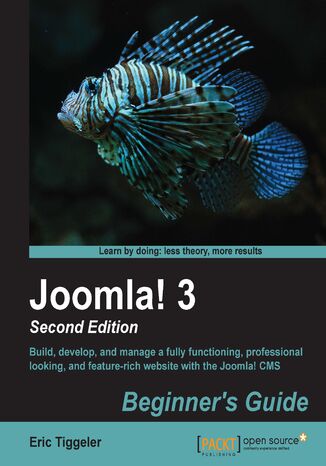
Eric Tiggeler
An easy to use, step-by-step guide to creating professional, mobile-friendly websites with the free Joomla CMS. The Joomla! 3 Beginner's Guide Second Edition is the ultimate guide for web developers who wish to build upon their skills and knowledge on creating websites. Even if you’re new to this subject, you won’t have any difficulty understanding the clear and friendly instructions and explanations. No prior knowledge of HTML and CSS is required.
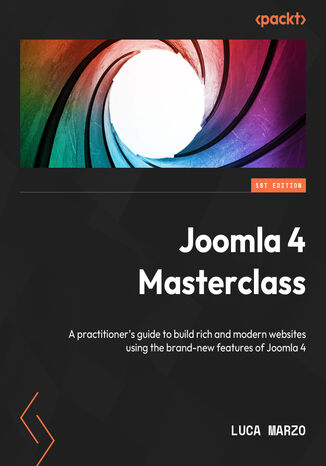
Luca Marzo
Joomla has been the second-most used open-source content management system for years. It has always had many built-in features, but several of them are not very well-known in the market. This book brings to you all the major features of the Joomla 4.x series that’ll enable you to build your own website and CMS on Joomla.The book begins by introducing you to the content management features that represent the hearth of the software and show you how to structure your website content to get the most out of it. You’ll also find out how to extend your content with custom fields, go multilingual, and set up your custom workflow. As you advance, you’ll learn all about the customization of the website, introducing templates, and child templates and overrides that’ll allow you to make your site unique. The concluding chapters will take you through four different case studies, including an online learning system, a B&B booking system, and corporate and editorial websites to see how Joomla has been used in real life to achieve a specific goal for your clients.By the end of this book, you’ll be able to confidently build modern websites on Joomla to deliver tailor-made solutions to your clients.
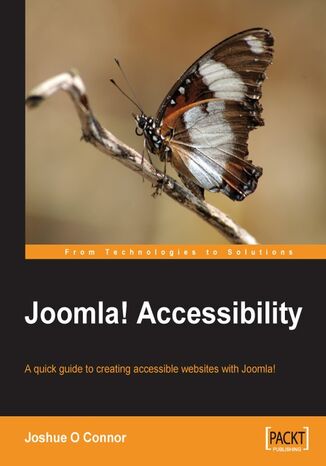
Joomla! Accessibility. A quick guide to creating accessible websites with Joomla!
Joshue O'Connor
Understanding how to create accessible websites is an essential skill these days . You may even be obliged by law to create websites that are usable by the widest audience, including people with a range of disabilities.This book looks at what accessibility is and the various reasons, such as legislative or legal, as to why you really need to understand accessibility and then create websites that can be used by everyone. This book therefore examines the diverse range of user requirements that need to be considered for humans to successfully use web technologies.If you have no experience of being around, or working with, people with disabilities then it can be very difficult to successfully design user interfaces that cover their needs. This book will show you how you can both understand some of the various needs of people with disabilities and the technology they use to interact with computers and the Web.
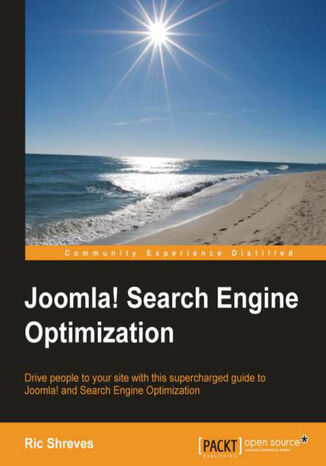
Ric Shreves
Joomla! is an award-winning content management system (CMS), which enables you to build websites and powerful online applications. SEO, or Search Engine Optimization, is the process and techniques by which you optmize the content and style of your site in order to induce more people to view it.Joomla! Search Engine Optimization will help you develop and execute an effective search engine optimization strategy for your site. From planning to implementation, the book covers best practices in contemporary SEO.In Joomla! Search Engine Optimization you will learn how to develop a dynamic and productive SEO campaign. Covering both the basics of campaign development as well as the daily work it takes to maintain your SEO competitiveness, this book will show you how to produce a distinct and appropriate strategy for your particular site. In particular you will learn key phrase selection and competitor analysis and the correct groundwork for your dynamic SEO campaign. Joomla! Search Engine Optimization will then show you, by finding the right combination of extensions, how to supercharge your site. You will also be given a guided tour of key SEO services, like Google and Bing Webmaster, in order to implement a progressive and effective link building campaign. You will then learn key expert tips and tricks to enable you to build SEO-effective content which will take your site from invisible to unmissable with little effort.