
Wydawca: Packt Publishing
John Horton
If you are completely new to either Java, Android, or game programming and are aiming to publish Android games, then this book is for you. This book also acts as a refresher for those who already have experience in Java on another platforms or other object-oriented languages.
John Horton
Android is one of the most popular mobile operating systems today. It uses the most popular programming language, Java, as one of the primary languages for building apps of all types. Unlike most other Android books, this book doesn’t assume that you have any prior knowledge of Java programming, instead helps you get started with building Android games as a beginner.This new, improved, and updated third edition of Learning Java by Building Android Games helps you to build Android games from scratch. Once you've got to grips with the fundamentals, the difficulty level increases steadily as you explore key Java topics, such as variables, loops, methods, object-oriented programming (OOP), and design patterns while working with up-to-date code and supporting examples. At each stage, you'll be able to test your understanding by implementing the concepts that you’ve learned to develop a game. Toward the end, you’ll build games such as Sub Hunter, Retro Pong, Bullet Hell, Classic Snake, and Scrolling Shooter.By the end of this Java book, you'll not only have a solid understanding of Java and Android basics but will also have developed five cool games for the Android platform.
Richard M Reese, Richard M. Reese
Functional programming is an increasingly popular technology that allows you to simplify many tasks that are often cumbersome and awkward using an object-oriented approach. It is important to understand this approach and know how and when to apply it. Functional programming requires a different mindset, but once mastered it can be very rewarding.This book simplifies the learning process as a problem is described followed by its implementation using an object-oriented approach and then a solution is provided using appropriate functional programming techniques. Writing succinct and maintainable code is facilitated by many functional programming techniques including lambda expressions and streams. In this book, you will see numerous examples of how these techniques can be applied starting with an introduction to lambda expressions. Next, you will see how they can replace older approaches and be combined to achieve surprisingly elegant solutions to problems.This is followed by the investigation of related concepts such as the Optional class and monads, which offer an additional approach to handle problems. Design patterns have been instrumental in solving common problems. You will learn how these are enhanced with functional techniques.To transition from an object-oriented approach to a functional one, it is useful to have IDE support. IDE tools to refactor, debug, and test functional programs are demonstrated through the chapters. The end of the book brings together many of these functional programming techniques to create a more comprehensive application. You will find this book a very useful resource to learn and apply functional programming techniques in Java.
Learning Java Lambdas. An in-depth look at one of the most important features of modern Java
Toby Weston
In this short book, we take an in-depth look at lambdas in Java, and their supporting features. The book covers essential topics, such as functional interfaces and type inference, and the key differences between lambdas and closures. You will learn about the background to functional programming and lambdas, before moving on to understanding the basic syntax of lambdas and what differentiates these anonymous functions from standard anonymous classes. Lastly, you'll learn how to invoke lambdas and look at the bytecode generated.After reading this book, you'll understand lambdas in depth, their background, syntax, implementation details, and how and when to use them. You'll also have a clear knowledge of the difference between functions and classes, and why that's relevant to lambdas. This knowledge will enable you to appreciate the improvements to type inference that drive a lot of the new features in modern Java, and will increase your understanding of method references and scoping.
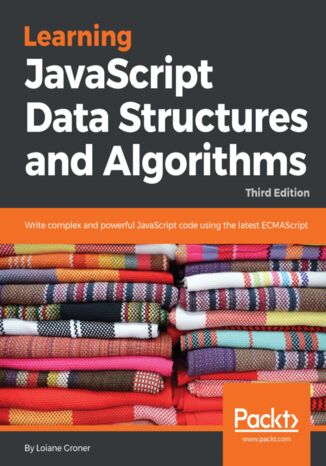
Loiane Avancini
A data structure is a particular way of organizing data in a computer to utilize resources efficiently. Data structures and algorithms are the base of every solution to any programming problem. With this book, you will learn to write complex and powerful code using the latest ES 2017 features.Learning JavaScript Data Structures and Algorithms begins by covering the basics of JavaScript and introduces you to ECMAScript 2017, before gradually moving on to the most important data structures such as arrays, queues, stacks, and linked lists. You will gain in-depth knowledge of how hash tables and set data structures function as well as how trees and hash maps can be used to search files in an HD or represent a database. This book serves as a route to take you deeper into JavaScript. You’ll also get a greater understanding of why and how graphs, one of the most complex data structures, are largely used in GPS navigation systems in social networks.Toward the end of the book, you’ll discover how all the theories presented in this book can be applied to solve real-world problems while working on your own computer networks and Facebook searches.
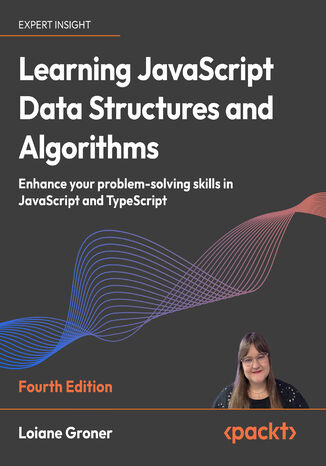
Loiane Groner, Aris Markogiannakis, Daniel Ostrovsky
Data structures and algorithms are foundational topics for software developers.This easy-to-follow book from experienced developer and trainer Loiane Groner will help you to fill in the gaps in your knowledge – whether you’re a self-taught developer, you’re preparing for technical interviews, or you just want to write better code and improve your problem-solving skills.This fourth edition covers essential data structures, algorithms, and their usage in the context of JavaScript. You’ll follow examples in both JavaScript and TypeScript, in line with the latest standards and best practices, learning how to do complexity analysis along the way. New to this edition are LeetCode and HackerRank exercises at the end of each chapter, which you'll be guided through solving. You’ll also find brand-new chapters on the tries data structure, and string and math algorithms.By the end of the book, you will know how to develop programs using the best data structures and algorithms for the job.
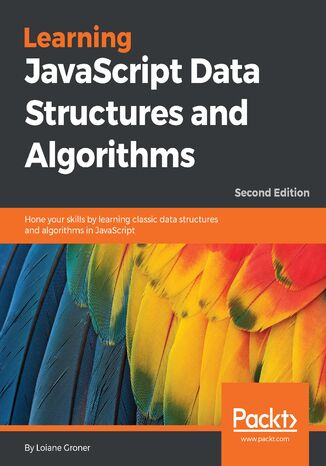
Loiane Avancini
This book begins by covering basics of the JavaScript language and introducing ECMAScript 7, before gradually moving on to the current implementations of ECMAScript 6. You will gain an in-depth knowledge of how hash tables and set data structure functions, as well as how trees and hash maps can be used to search files in a HD or represent a database. This book is an accessible route deeper into JavaScript. Graphs being one of the most complex data structures you’ll encounter, we’ll also give you a better understanding of why and how graphs are largely used in GPS navigation systems in social networks.Toward the end of the book, you’ll discover how all the theories presented by this book can be applied in real-world solutions while working on your own computer networks and Facebook searches.
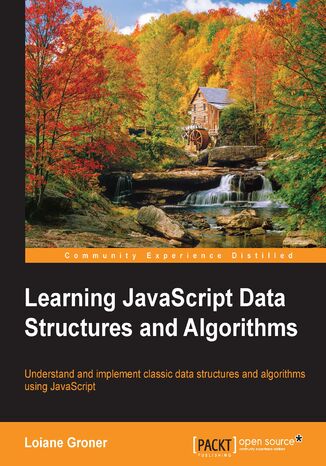
Loiane Avancini
If you are a JavaScript developer or someone who has basic knowledge of JavaScript, and want to explore its optimum ability, this fast-paced book is definitely for you. Programming logic is the only thing you need to know to start having fun with algorithms.