
Publisher: Packt Publishing
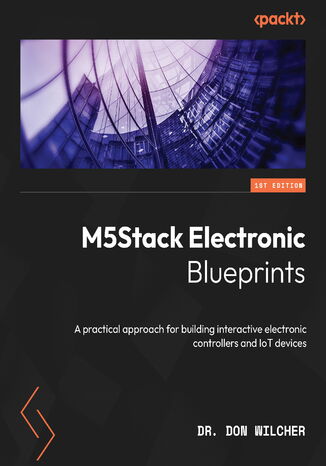
Don Wilcher
As an embedded systems developer or an IoT developer, you can often face challenges in maintaining focus on prototyping a product concept while using a specific high-level programming language for implementation. To overcome these challenges, the M5Stack Core platform uses an ESP32 microcontroller and block code that allows you to focus on product creation and application instead of the high-level programming language. M5Stack Electronics Blueprints presents various design and prototyping approaches as well as UI layout and electronics interfacing techniques that will help you to become skilled in developing useful products effectively.This book takes you through a hands-on journey for a better understanding of the ESP32 microcontroller and the M5Stack Core's architecture. You’ll delve into M5Stack Core topics such as electronic units, light, sound, motion devices, interfacing circuits, SNAP circuit kits, Arduino applications, and building Bluetooth and Wi-Fi IoT devices. Further, you’ll explore various M5Stack core applications using a project-based learning method, including the fascinating 32-bit microcontroller device technology.By the end of this book, you’ll be able to design and build interactive, portable electronic controllers, IoT, and wearable devices using the M5Stack Core.
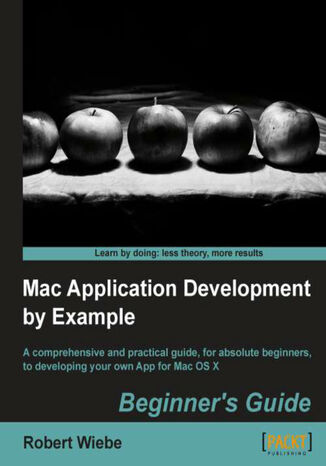
Robert Wiebe
It's never been more important to have the ability to develop an App for Mac OS X. Whether it's a System Preference, a business app that accesses information in the Cloud, or an application that uses multi-touch or uses a camera, you will have a solid foundation in app development to get the job done.Mac Application Development by Example takes you through all the aspects of using the Xcode development tool to produce complete working apps that cover a broad range of topics. This comprehensive book on developing applications covers everything a beginner needs to know and demonstrates the concepts using examples that take advantage of some of the most interesting hardware and software features available.You will discover the fundamental aspects of OS X development while investigating innovative platform features to create a final product which take advantage of the unique aspects of OS X.Learn how to use Xcode tools to create and share Mac OS X apps. Explore numerous OS X features including iCloud, multi-touch trackpad, and the iSight camera.This book provides you with an illustrated and annotated guide to bring your idea to life using fundamental concepts that work on Mac.
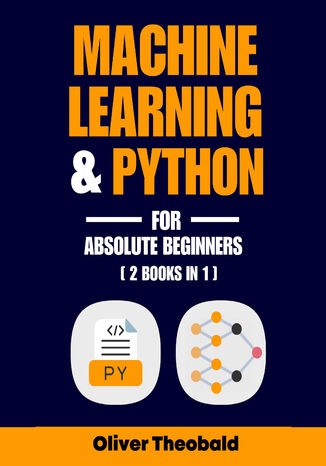
Oliver Theobald
Starting with Python syntax and data types, this guide builds toward implementing key machine learning models. Learn about loops, functions, OOP, and data cleaning, then transition into algorithms like regression, KNN, and neural networks. A final section walks you through model optimization and building projects in Python.The book is split into two major sections—foundational Python programming and introductory machine learning. Readers are guided through essential concepts such as data types, variables, control flow, object-oriented programming, and using libraries like pandas for data manipulation.In the machine learning section, topics like model selection, supervised vs unsupervised learning, bias-variance, and common algorithms are demystified with practical coding examples. It’s a structured, clear roadmap to mastering both programming and applied ML from zero knowledge.
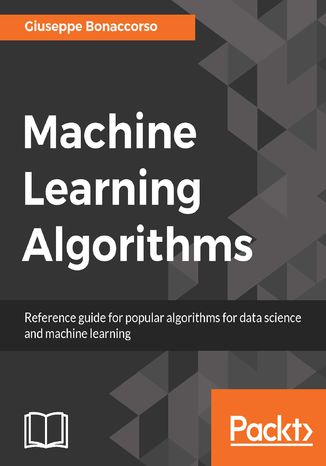
Giuseppe Bonaccorso
In this book, you will learn all the important machine learning algorithms that are commonly used in the field of data science. These algorithms can be used for supervised as well as unsupervised learning, reinforcement learning, and semi-supervised learning. The algorithms that are covered in this book are linear regression, logistic regression, SVM, naïve Bayes, k-means, random forest, TensorFlow and feature engineering.In this book, you will how to use these algorithms to resolve your problems, and how they work. This book will also introduce you to natural language processing and recommendation systems, which help you to run multiple algorithms simultaneously.On completion of the book, you will know how to pick the right machine learning algorithm for clustering, classification, or regression for your problem
Giuseppe Bonaccorso
Machine learning has gained tremendous popularity for its powerful and fast predictions with large datasets. However, the true forces behind its powerful output are the complex algorithms involving substantial statistical analysis that churn large datasets and generate substantial insight.This second edition of Machine Learning Algorithms walks you through prominent development outcomes that have taken place relating to machine learning algorithms, which constitute major contributions to the machine learning process and help you to strengthen and master statistical interpretation across the areas of supervised, semi-supervised, and reinforcement learning. Once the core concepts of an algorithm have been covered, you’ll explore real-world examples based on the most diffused libraries, such as scikit-learn, NLTK, TensorFlow, and Keras. You will discover new topics such as principal component analysis (PCA), independent component analysis (ICA), Bayesian regression, discriminant analysis, advanced clustering, and gaussian mixture.By the end of this book, you will have studied machine learning algorithms and be able to put them into production to make your machine learning applications more innovative.
Oliver Theobald
This book is an ideal starting point for anyone interested in Artificial Intelligence and Machine Learning. It begins with the foundational principles of AI, offering a deep dive into its history, building blocks, and the stages of development. Readers will explore key AI concepts and gradually transition to practical applications, starting with machine learning algorithms such as linear regression and k-nearest neighbors. Through step-by-step Python tutorials, the book helps readers build and implement models with hands-on experience.As the book progresses, readers will dive into advanced AI topics like deep learning, natural language processing (NLP), and generative AI. Topics such as recommender systems and computer vision demonstrate the real-world applications of AI technologies. Ethical considerations and privacy concerns are also addressed, providing insight into the societal impact of these technologies.By the end of the book, readers will have a solid understanding of both the theory and practice of AI and Machine Learning. The final chapters provide resources for continued learning, ensuring that readers can continue to grow their AI expertise beyond the book.
Yoon Hyup Hwang, Nicholas C. Burtch
In the dynamic world of marketing, the integration of artificial intelligence (AI) and machine learning (ML) is no longer just an advantage—it's a necessity. Moreover, the rise of generative AI (GenAI) helps with the creation of highly personalized, engaging content that resonates with the target audience.This book provides a comprehensive toolkit for harnessing the power of GenAI to craft marketing strategies that not only predict customer behaviors but also captivate and convert, leading to improved cost per acquisition, boosted conversion rates, and increased net sales.Starting with the basics of Python for data analysis and progressing to sophisticated ML and GenAI models, this book is your comprehensive guide to understanding and applying AI to enhance marketing strategies. Through engaging content & hands-on examples, you'll learn how to harness the capabilities of AI to unlock deep insights into customer behaviors, craft personalized marketing messages, and drive significant business growth. Additionally, you'll explore the ethical implications of AI, ensuring that your marketing strategies are not only effective but also responsible and compliant with current standardsBy the conclusion of this book, you'll be equipped to design, launch, and manage marketing campaigns that are not only successful but also cutting-edge.
Gregory Keys, David Whiting
H2O is an open source, fast, and scalable machine learning framework that allows you to build models using big data and then easily productionalize them in diverse enterprise environments.Machine Learning at Scale with H2O begins with an overview of the challenges faced in building machine learning models on large enterprise systems, and then addresses how H2O helps you to overcome them. You’ll start by exploring H2O’s in-memory distributed architecture and find out how it enables you to build highly accurate and explainable models on massive datasets using your favorite ML algorithms, language, and IDE. You’ll also get to grips with the seamless integration of H2O model building and deployment with Spark using H2O Sparkling Water. You’ll then learn how to easily deploy models with H2O MOJO. Next, the book shows you how H2O Enterprise Steam handles admin configurations and user management, and then helps you to identify different stakeholder perspectives that a data scientist must understand in order to succeed in an enterprise setting. Finally, you’ll be introduced to the H2O AI Cloud platform and explore the entire machine learning life cycle using multiple advanced AI capabilities.By the end of this book, you’ll be able to build and deploy advanced, state-of-the-art machine learning models for your business needs.