
Programowanie
Niezależnie czy dopiero rozpoczynacie swoją przygodę z programowaniem, czy jesteście już uznanymi na rynku profesjonalistami, to w kategorii Programowanie na pewno znajdziecie podręczniki, które pomogą Wam w przebiegu pracy, czy też w nauce podstaw programowania.
W książkach z tego działu zawarta jest wiedza zarówno związana z czysto technicznymi sprawami typu składnia języków, ale także z umiejętnościami bardziej "miękkimi" jak obsługa i wykorzystanie pełnych możliwości środowisk programistycznych, czy też projektowanie oprogramowania lub metody numeryczne czy oraz struktury danych.
Eduardo Sojo
Unlock the full potential of AI with Microsoft Foundry, Microsoft’s unified platform for building, orchestrating, and operating AI solutions at scale. This hands-on guide walks you through the full AI application lifecycle, from data preparation and model selection to deployment, monitoring, and continuous evaluation.Written by Eduardo Sojo, a former Microsoft consultant and current solutions architect at Databricks with over 15 years of experience, the book focuses on practical implementation using the latest Microsoft Foundry portal. You’ll learn to design intelligent workflows, build agents, and apply guardrails to ensure safe, reliable AI behavior in real-world scenarios.Rather than focusing only on models, the book shows how to connect workflows, agents, evaluations, and observability so solutions are not just functional, but production-ready.You’ll explore real-world use cases such as building copilots, integrating external systems like Databricks, and creating multi-agent architectures that work with enterprise data. By the end, you’ll be able to design, build, and operate secure, scalable, intelligent AI solutions using Microsoft Foundry.
Learning Azure Functions. Build scalable cloud systems with serverless architecture
Manisha Yadav, Mitesh Soni
Functions help you easily run small pieces of code in cloud with Azure functions without worrying about a whole application or the infrastructure to run it. With Azure functions, you can use triggers to execute your code and bindings to simplify the input and output of your code. This book will start with the basics of Azure Functions. You will learn the steps to set up the environment and the tools that we will be using in the further chapters. Once you have a better understanding of this, we will be creating our first hello world function app. Later you will be introduced to triggers, how they are used to activate a function, and how binding can be used to output results of a function.You will also explore the steps to create an assembly with complex functionality that can be used by functions. Next, this book will teach you to scale your functions and use them to process data, integrate systems, and build simple APIs and microservices. Finally, this book will cover some diagnostic techniques with Azure App services and best practices of working with Azure Functions. By the end of this book, you will be well-versed with the techniques of scaling your Azure functions and making the most of serverless architecture.
Arindam Mukherjee
If you are a C++ programmer who has never used Boost libraries before, this book will get you up-to-speed with using them. Whether you are developing new C++ software or maintaining existing code written using Boost libraries, this hands-on introduction will help you decide on the right library and techniques to solve your practical programming problems.
Learning Bootstrap 4. Modern, Elegant and Responsive Web Design Made Easy - Second Edition
Matt Lambert
Bootstrap, the most popular front-end framework built to design elegant, powerful, and responsive interfaces for professional-level web pages has undergone a major overhaul. Bootstrap 4 introduces a wide range of new features that make front-end web design even simpler and exciting.In this gentle and comprehensive book, we'll teach you everything that you need to know to start building websites with Bootstrap 4 in a practical way. You'll learn about build tools such as Node, Grunt, and many others. You'll also discover the principles of mobile-first design in order to ensure your pages can fit any screen size and meet the responsive requirements. Learn to play with Bootstrap's grid system and base CSS to ensure your designs are robust and that your development process is speedy and efficient. Then, you'll find out how you can extend your current build with some cool JavaScript Plugins, and throw in some Sass to spice things up and customize your themes. This book will make sure you're geared up and ready to build amazingly beautiful and responsive websites in a jiffy.
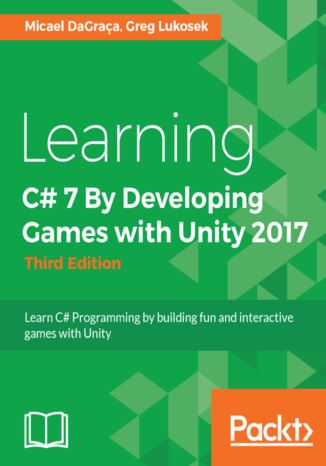
Micael DaGraça, Grzegorz Lukosek
Do you want to learn C# programming by creating fun and interactive games using the latest Unity 2017 platform? If so, look no further; this is the right book for you. Get started with programming C# so you can create 2D and 3D games in Unity. We will walk you through the basics to get you started with C# 7 and its latest features. Then, explore the use of C# 7 and its latest functional programming capabilities to create amazing games with Unity 2017.You will create your first C# script for Unity, add objects into it, and learn how to create game elements with it. Work with the latest functional programming features of C# and leverage them for great game scripting.Throughout the book, you will learn to use the new Unity 2017 2D tool set and create an interactive 2D game with it. You will make enemies appear to challenge your player, and discover some optimization techniques for great game performance. At the end, you will learn how to transform a 2D game into 3D, and you will be able to skill up to become a pro C# programmer with Unity 2017!
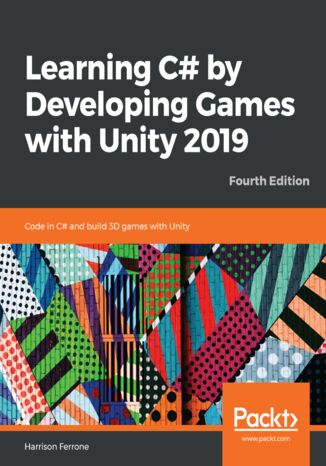
Harrison Ferrone
Learning to program in today’s technical landscape can be a daunting task, especially when faced with the sheer number of languages you have to choose from. Luckily, Learning C# with Unity 2019 removes the guesswork and starts you off on the path to becoming a confident, and competent, programmer using game development with Unity.You’ll start off small by learning the building blocks of programming, from variables, methods, and conditional statements to classes and object-oriented systems. After you have the basics under your belt you’ll explore the Unity interface, creating C# scripts, and translating your newfound knowledge into simple game mechanics.Throughout this journey, you’ll get hands-on experience with programming best practices and macro-level topics such as manager classes and flexible application architecture. By the end of the book, you’ll be familiar with intermediate C# topics like generics, delegates, and events, setting you up to take on projects of your own.
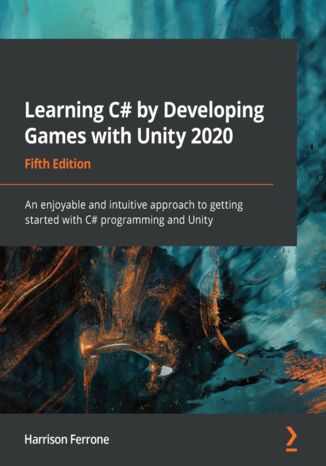
Harrison Ferrone
Over the years, the Learning C# by Developing Games with Unity series has established itself as a popular choice for getting up to speed with C#, a powerful and versatile programming language that can be applied in a wide array of application areas. This book presents a clear path for learning C# programming from the ground up without complex jargon or unclear programming logic, all while building a simple game with Unity.This fifth edition has been updated to introduce modern C# features with the latest version of the Unity game engine, and a new chapter has been added on intermediate collection types. Starting with the basics of software programming and the C# language, you’ll learn the core concepts of programming in C#, including variables, classes, and object-oriented programming. Once you’ve got to grips with C# programming, you’ll enter the world of Unity game development and discover how you can create C# scripts for simple game mechanics. Throughout the book, you’ll gain hands-on experience with programming best practices to help you take your Unity and C# skills to the next level.By the end of this book, you’ll be able to leverage the C# language to build your own real-world Unity game development projects.
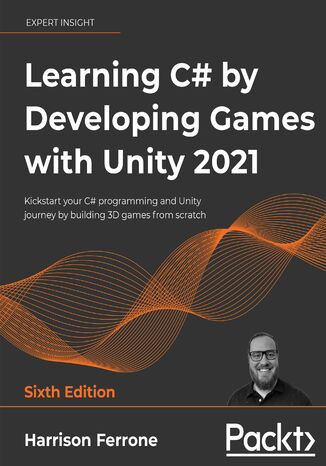
Harrison Ferrone
The Learning C# by Developing Games with Unity series has established itself as a popular choice for getting up to speed with C#, a powerful and versatile programming language with a wide array of applications in various domains. This bestselling franchise presents a clear path for learning C# programming from the ground up through the world of Unity game development.This sixth edition has been updated to introduce modern C# features with Unity 2021. A new chapter has also been added that covers reading and writing binary data from files, which will help you become proficient in handling errors and asynchronous operations.The book acquaints you with the core concepts of programming in C#, including variables, classes, and object-oriented programming. You will explore the fundamentals of Unity game development, including game design, lighting basics, player movement, camera controls, and collisions. You will write C# scripts for simple game mechanics, perform procedural programming, and add complexity to your games by introducing smart enemies and damage-causing projectiles.By the end of the book, you will have developed the skills to become proficient in C# programming and built a playable game prototype with the Unity game engine.
Greg Lukosek
Unity is a cross-platform game engine that is used to develop 2D and 3D video games. Unity 5 is the latest version, released in March 2015, and adds a real-time global illumination to the games, and its powerful new features help to improve a game’s efficiency.This book will get you started with programming behaviors in C# so you can create 2D games in Unity. You will begin by installing Unity and learning about its features, followed by creating a C# script. We will then deal with topics such as unity scripting for you to understand how codes work so you can create and use C# variables and methods. Moving forward, you will find out how to create, store, and retrieve data from collection of objects. You will also develop an understanding of loops and their use, and you’ll perform object-oriented programming. This will help you to turn your idea into a ready-to-code project and set up a Unity project for production. Finally, you will discover how to create the GameManager class to manage the game play loop, generate game levels, and develop a simple UI for the game.By the end of this book, you will have mastered the art of applying C# in Unity.
Harrison Ferrone, Justin Horner
It's the ability to write custom C# scripts for behaviors and game mechanics that really takes Unity the extra mile. That's where this book will help you as a new programmer!Harrison Ferrone, in this eighth edition of the bestselling series, will take you through the core concepts of programming and the C# language from scratch, while building an engaging and playable game prototype in Unity 6.You’ll get to grips with the fundamentals of object-oriented programming (OOP) and the Unity engine with lots of code samples, exercises, and tips to go beyond the book with your work. You’ll write C# scripts for simple game mechanics, perform procedural programming, request live data from the web, and add complexity to your games by introducing intelligent enemies and damage-dealing projectiles. You’ll also explore the underlying mechanics of Unity game development, including game design, lighting basics, player movement, camera controls, collisions, and more, with every passing chapter.Note: The screenshots in the book display the Unity Editor in full-screen mode for a comprehensive view. You can easily reference color versions of images by downloading them from the GitHub repository or the graphics bundle linked in the book.*Email sign-up and proof of purchase required
Harrison Ferrone
It's the ability to write custom C# scripts for behaviors and game mechanics that really takes Unity the extra mile. That's where this book can help you as a new programmer!Harrison Ferrone, in this seventh edition of the bestselling series, will take you through the building blocks of programming and the C# language from scratch while building a fun and playable game prototype in Unity.This book will teach you the fundamentals of OOPs, basic concepts of C#, and Unity engine with lots of code samples, exercises, and tips to go beyond the book with your work.You will write C# scripts for simple game mechanics, perform procedural programming, and add complexity to your games by introducing intelligent enemies and damage-dealing projectiles. You will explore the fundamentals of Unity game development, including game design, lighting basics, player movement, camera controls, collisions, and more with every passing chapter.*Email sign-up and proof of purchase requiredNote: The screenshots in the book display the Unity editor in full-screen mode for a comprehensive view. Users can easily reference color versions of images by downloading them from the GitHub repository or the graphics bundle linked in the book.
Syed Omar Faruk Towaha
This book will start with the fundamentals of C programming and programming topics, such data types, functions, decision making, program loops, pointers, and structures, with the help of an Arduino board. Then you will get acquainted with Arduino interactions with sensors, LEDs, and autonomous systems and setting up the Arduino environment. Moving on you will also learn how to work on the digital and analog I/O, establish serial communications with autonomous systems, and integrate with electronic devices. By the end of the book, you will be able to make basic projects such as LED cube and smart weather system that leverages C.
Wisnu Anggoro
Functional programming allows developers to divide programs into smaller, reusable components that ease the creation, testing, and maintenance of software as a whole. Combined with the power of C++, you can develop robust and scalable applications that fulfill modern day software requirements. This book will help you discover all the C++ 17 features that can be applied to build software in a functional way.The book is divided into three modules—the first introduces the fundamentals of functional programming and how it is supported by modern C++. The second module explains how to efficiently implement C++ features such as pure functions and immutable states to build robust applications. The last module describes how to achieve concurrency and apply design patterns to enhance your application’s performance. Here, you will also learn to optimize code using metaprogramming in a functional way.By the end of the book, you will be familiar with the functional approach of programming and will be able to use these techniques on a daily basis.
Michael Covert, Victoria Loewengart
This book is intended for software developers, system architects and analysts, big data project managers, and data scientists who wish to deploy big data solutions using the Cascading framework. You must have a basic understanding of the big data paradigm and should be familiar with Java development techniques.
W. David Jarvis, Rafik Naccache, Allen Rohner
Clojure is an expressive language that makes it possible to easily tackle complex software development challenges. Its bias toward interactive development has made it a powerful tool, enabling high developer productivity. In this book, you will first learn how to construct an interactive development experience for ClojureScript.. You will be guided through ClojureScript language concepts, looking at the basics first, then being introduced to advanced concepts such as functional programming or macro writing. After that, we elaborate on the subject of single page web applications, showcasing how to build a simple one, then covering different possible enhancements. We move on to study more advanced ClojureScript concepts, where you will be shown how to address some complex algorithmic cases. Finally, you'll learn about optional type-checking for your programs, how you can write portable code, test it, and put the advanced compilation mode of the Google Closure Compiler to good use.
Learning Concurrency in Kotlin. Build highly efficient and scalable applications
Miguel Angel Castiblanco Torres
Kotlin is a modern and statically typed programming language with support for concurrency. Complete with detailed explanations of essential concepts, practical examples and self-assessment questions, Learning Concurrency in Kotlin addresses the unique challenges in design and implementation of concurrent code. This practical guide will help you to build distributed and scalable applications using Kotlin.Beginning with an introduction to Kotlin's coroutines, you’ll learn how to write concurrent code and understand the fundamental concepts needed to write multithreaded software in Kotlin. You'll explore how to communicate between and synchronize your threads and coroutines to write collaborative asynchronous applications. You'll also learn how to handle errors and exceptions, as well as how to work with a multicore processor to run several programs in parallel. In addition to this, you’ll delve into how coroutines work with each other. Finally, you’ll be able to build an Android application such as an RSS reader by putting your knowledge into practice.By the end of this book, you’ll have learned techniques and skills to write optimized code and multithread applications.