
Programowanie
Niezależnie czy dopiero rozpoczynacie swoją przygodę z programowaniem, czy jesteście już uznanymi na rynku profesjonalistami, to w kategorii Programowanie na pewno znajdziecie podręczniki, które pomogą Wam w przebiegu pracy, czy też w nauce podstaw programowania.
W książkach z tego działu zawarta jest wiedza zarówno związana z czysto technicznymi sprawami typu składnia języków, ale także z umiejętnościami bardziej "miękkimi" jak obsługa i wykorzystanie pełnych możliwości środowisk programistycznych, czy też projektowanie oprogramowania lub metody numeryczne czy oraz struktury danych.
Aditya Sharma, Michael Beyeler (USD), Vishwesh Ravi...
OpenCV is an opensource library for building computer vision apps. The latest release, OpenCV 4, offers a plethora of features and platform improvements that are covered comprehensively in this up-to-date second edition.You'll start by understanding the new features and setting up OpenCV 4 to build your computer vision applications. You will explore the fundamentals of machine learning and even learn to design different algorithms that can be used for image processing. Gradually, the book will take you through supervised and unsupervised machine learning. You will gain hands-on experience using scikit-learn in Python for a variety of machine learning applications. Later chapters will focus on different machine learning algorithms, such as a decision tree, support vector machines (SVM), and Bayesian learning, and how they can be used for object detection computer vision operations. You will then delve into deep learning and ensemble learning, and discover their real-world applications, such as handwritten digit classification and gesture recognition. Finally, you’ll get to grips with the latest Intel OpenVINO for building an image processing system.By the end of this book, you will have developed the skills you need to use machine learning for building intelligent computer vision applications with OpenCV 4.
Ben Auffarth
The Python time-series ecosystem is huge and often quite hard to get a good grasp on, especially for time-series since there are so many new libraries and new models. This book aims to deepen your understanding of time series by providing a comprehensive overview of popular Python time-series packages and help you build better predictive systems.Machine Learning for Time-Series with Python starts by re-introducing the basics of time series and then builds your understanding of traditional autoregressive models as well as modern non-parametric models. By observing practical examples and the theory behind them, you will become confident with loading time-series datasets from any source, deep learning models like recurrent neural networks and causal convolutional network models, and gradient boosting with feature engineering.This book will also guide you in matching the right model to the right problem by explaining the theory behind several useful models. You’ll also have a look at real-world case studies covering weather, traffic, biking, and stock market data.By the end of this book, you should feel at home with effectively analyzing and applying machine learning methods to time-series.
Hyatt Saleh
As machine learning algorithms become popular, new tools that optimize these algorithms are also developed. Machine Learning Fundamentals explains you how to use the syntax of scikit-learn. You'll study the difference between supervised and unsupervised models, as well as the importance of choosing the appropriate algorithm for each dataset. You'll apply unsupervised clustering algorithms over real-world datasets, to discover patterns and profiles, and explore the process to solve an unsupervised machine learning problem.The focus of the book then shifts to supervised learning algorithms. You'll learn to implement different supervised algorithms and develop neural network structures using the scikit-learn package. You'll also learn how to perform coherent result analysis to improve the performance of the algorithm by tuning hyperparameters.By the end of this book, you will have gain all the skills required to start programming machine learning algorithms.
Machine Learning Hero. Master Data Science with Python Essentials
Cuantum Technologies LLC
This book takes you on a journey through the world of machine learning, beginning with foundational concepts such as supervised and unsupervised learning, and progressing to advanced topics like feature engineering, hyperparameter tuning, and dimensionality reduction. Each chapter blends theory with practical exercises to ensure a deep understanding of the material.The book emphasizes Python, introducing essential libraries like NumPy, Pandas, Matplotlib, and Scikit-learn, along with deep learning frameworks like TensorFlow and PyTorch. You’ll learn to preprocess data, visualize insights, and build models capable of tackling complex datasets. Hands-on coding examples and exercises reinforce concepts and help bridge the gap between knowledge and application.In the final chapters, you'll work on real-world projects like predictive analytics, clustering, and regression. These projects are designed to provide a practical context for the techniques learned and equip you with actionable skills for data science and AI roles. By the end, you'll be prepared to apply machine learning principles to solve real-world challenges with confidence.
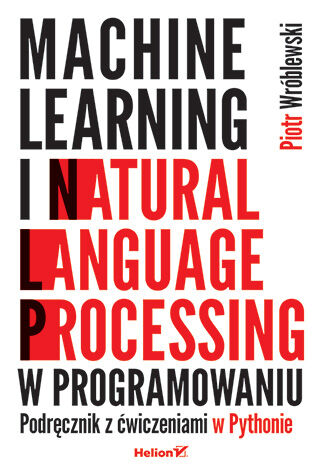
Machine learning i natural language processing w programowaniu. Podręcznik z ćwiczeniami w Pythonie
Piotr Wróblewski
Wejdź na nowy poziom programowania z ML i NLP Sztuczna inteligencja stale się rozwija. Właściwie codziennie słyszymy o jej rosnących możliwościach, nowych osiągnięciach i przyszłości, jaką nam przyniesie. Jednak w tej książce skupiamy się nie na przyszłości, a na teraźniejszości i praktycznym obliczu AI - na usługach, które świadczy już dziś. Większość najciekawszych zastosowań sztucznej inteligencji bazuje na ML (uczenie maszynowe, ang. machine learning), NLP (przetwarzanie języka naturalnego, ang. natural language processing) i architekturze RAG (ang. retrieval augmented generation) zwiększającej możliwości tzw. dużych modeli językowych (LLM, ang. large language model). Stanowią one podwaliny budowy systemów AI, bez których te systemy często wcale nie mogłyby powstać. Do niedawna ML i NLP pozostawały domeną badaczy i specjalistów - znajdowały się poza zasięgiem praktyków programowania. Aktualnie jest inaczej, szybkie komputery, pojemne pamięci RAM i zaawansowane procesory pozwalają stosować te technologie w codziennej pracy programisty. Szczególnie programisty języka Python, do którego są one niemal "naturalnie" przypisane. Mało tego, od kodujących w Pythonie coraz częściej wręcz wymaga się umiejętności znajomości obszaru AI. Tym bardziej warto sięgnąć po ten podręcznik z ćwiczeniami, dzięki któremu między innymi: Dowiesz się, jak używać Pythona do rozwiązywania problemów AI Poznasz tajniki analizy tekstów, analizy sentymentu Zrozumiesz, jak skutecznie używać algorytmów klasyfikacji, regresji i grupowania do rozwiązywania problemów biznesowych Pokonwersujesz z ChatGPT - i to bez wchodzenia na stronę internetową tego serwisu
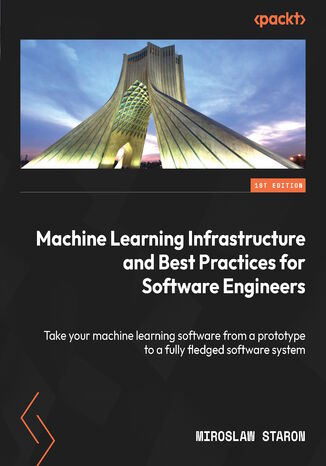
Miroslaw Staron
Although creating a machine learning pipeline or developing a working prototype of a software system from that pipeline is easy and straightforward nowadays, the journey toward a professional software system is still extensive. This book will help you get to grips with various best practices and recipes that will help software engineers transform prototype pipelines into complete software products.The book begins by introducing the main concepts of professional software systems that leverage machine learning at their core. As you progress, you’ll explore the differences between traditional, non-ML software, and machine learning software. The initial best practices will guide you in determining the type of software you need for your product. Subsequently, you will delve into algorithms, covering their selection, development, and testing before exploring the intricacies of the infrastructure for machine learning systems by defining best practices for identifying the right data source and ensuring its quality.Towards the end, you’ll address the most challenging aspect of large-scale machine learning systems – ethics. By exploring and defining best practices for assessing ethical risks and strategies for mitigation, you will conclude the book where it all began – large-scale machine learning software.
Faisal Masood, Ross Brigoli
MLOps is an emerging field that aims to bring repeatability, automation, and standardization of the software engineering domain to data science and machine learning engineering. By implementing MLOps with Kubernetes, data scientists, IT professionals, and data engineers can collaborate and build machine learning solutions that deliver business value for their organization.You'll begin by understanding the different components of a machine learning project. Then, you'll design and build a practical end-to-end machine learning project using open source software. As you progress, you'll understand the basics of MLOps and the value it can bring to machine learning projects. You will also gain experience in building, configuring, and using an open source, containerized machine learning platform. In later chapters, you will prepare data, build and deploy machine learning models, and automate workflow tasks using the same platform. Finally, the exercises in this book will help you get hands-on experience in Kubernetes and open source tools, such as JupyterHub, MLflow, and Airflow.By the end of this book, you'll have learned how to effectively build, train, and deploy a machine learning model using the machine learning platform you built.
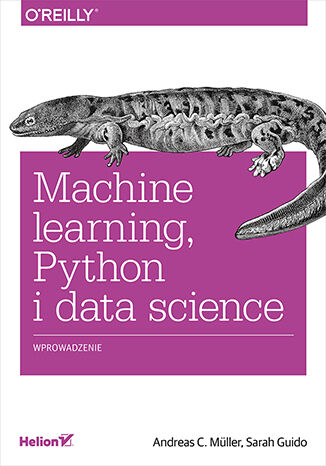
Machine learning, Python i data science. Wprowadzenie
Andreas Müller, Sarah Guido
Uczenie maszynowe kojarzy się z dużymi firmami i rozbudowanymi zespołami. Prawda jest taka, że obecnie można samodzielnie budować zaawansowane rozwiązania uczenia maszynowego i korzystać do woli z olbrzymich zasobów dostępnych danych. Trzeba tylko mieć pomysł i... trochę podstawowej wiedzy. Tymczasem większość opracowań na temat uczenia maszynowego i sztucznej inteligencji wymaga biegłości w zaawansowanej matematyce. Utrudnia to naukę tego zagadnienia, mimo że uczenie maszynowe jest coraz powszechniej stosowane w projektach badawczych i komercyjnych. Ta praktyczna książka ułatwi Ci rozpoczęcie wdrażania rozwiązań rzeczywistych problemów związanych z uczeniem maszynowym. Zawiera przystępne wprowadzenie do uczenia maszynowego i sztucznej inteligencji, a także sposoby wykorzystania Pythona i biblioteki scikit-learn, uwzględniające potrzeby badaczy i analityków danych oraz inżynierów pracujących nad aplikacjami komercyjnymi. Zagadnienia matematyczne ograniczono tu do niezbędnego minimum, zamiast tego skoncentrowano się na praktycznych aspektach algorytmów uczenia maszynowego. Dokładnie opisano, jak konkretnie można skorzystać z szerokiej gamy modeli zaimplementowanych w dostępnych bibliotekach. W książce między innymi: podstawowe informacje o uczeniu maszynowym najważniejsze algorytmy uczenia maszynowego przetwarzanie danych w uczeniu maszynowym ocena modelu i dostrajanie parametrów łańcuchy modeli i hermetyzacja przepływu pracy przetwarzanie danych tekstowych Python i uczenie maszynowe: programowanie do zadań specjalnych!
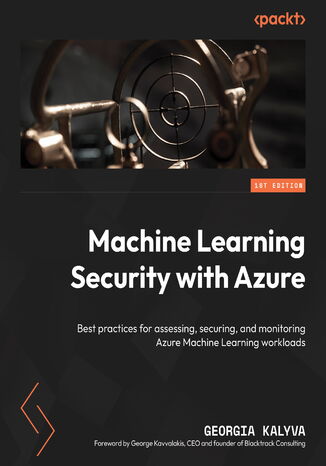
Georgia Kalyva, George Kavvalakis
With AI and machine learning (ML) models gaining popularity and integrating into more and more applications, it is more important than ever to ensure that models perform accurately and are not vulnerable to cyberattacks. However, attacks can target your data or environment as well. This book will help you identify security risks and apply the best practices to protect your assets on multiple levels, from data and models to applications and infrastructure.This book begins by introducing what some common ML attacks are, how to identify your risks, and the industry standards and responsible AI principles you need to follow to gain an understanding of what you need to protect. Next, you will learn about the best practices to secure your assets. Starting with data protection and governance and then moving on to protect your infrastructure, you will gain insights into managing and securing your Azure ML workspace. This book introduces DevOps practices to automate your tasks securely and explains how to recover from ML attacks. Finally, you will learn how to set a security benchmark for your scenario and best practices to maintain and monitor your security posture.By the end of this book, you’ll be able to implement best practices to assess and secure your ML assets throughout the Azure Machine Learning life cycle.
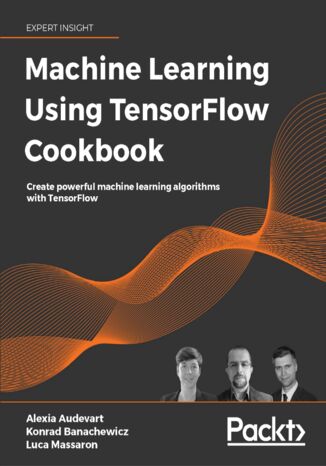
Alexia Audevart, Konrad Banachewicz, Luca Massaron
The independent recipes in Machine Learning Using TensorFlow Cookbook will teach you how to perform complex data computations and gain valuable insights into your data. Dive into recipes on training models, model evaluation, sentiment analysis, regression analysis, artificial neural networks, and deep learning - each using Google’s machine learning library, TensorFlow.This cookbook covers the fundamentals of the TensorFlow library, including variables, matrices, and various data sources. You’ll discover real-world implementations of Keras and TensorFlow and learn how to use estimators to train linear models and boosted trees, both for classification and regression.Explore the practical applications of a variety of deep learning architectures, such as recurrent neural networks and Transformers, and see how they can be used to solve computer vision and natural language processing (NLP) problems.With the help of this book, you will be proficient in using TensorFlow, understand deep learning from the basics, and be able to implement machine learning algorithms in real-world scenarios.
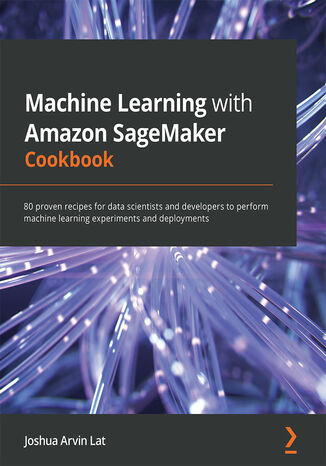
Joshua Arvin Lat
Amazon SageMaker is a fully managed machine learning (ML) service that helps data scientists and ML practitioners manage ML experiments. In this book, you'll use the different capabilities and features of Amazon SageMaker to solve relevant data science and ML problems.This step-by-step guide features 80 proven recipes designed to give you the hands-on machine learning experience needed to contribute to real-world experiments and projects. You'll cover the algorithms and techniques that are commonly used when training and deploying NLP, time series forecasting, and computer vision models to solve ML problems. You'll explore various solutions for working with deep learning libraries and frameworks such as TensorFlow, PyTorch, and Hugging Face Transformers in Amazon SageMaker. You'll also learn how to use SageMaker Clarify, SageMaker Model Monitor, SageMaker Debugger, and SageMaker Experiments to debug, manage, and monitor multiple ML experiments and deployments. Moreover, you'll have a better understanding of how SageMaker Feature Store, Autopilot, and Pipelines can meet the specific needs of data science teams.By the end of this book, you'll be able to combine the different solutions you've learned as building blocks to solve real-world ML problems.
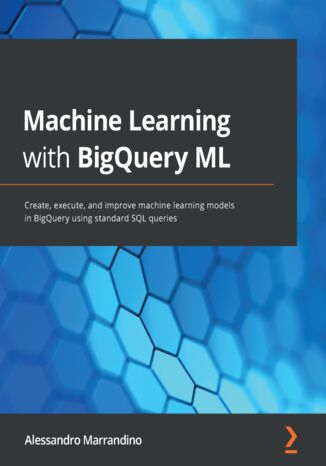
Alessandro Marrandino
BigQuery ML enables you to easily build machine learning (ML) models with SQL without much coding. This book will help you to accelerate the development and deployment of ML models with BigQuery ML.The book starts with a quick overview of Google Cloud and BigQuery architecture. You'll then learn how to configure a Google Cloud project, understand the architectural components and capabilities of BigQuery, and find out how to build ML models with BigQuery ML. The book teaches you how to use ML using SQL on BigQuery. You'll analyze the key phases of a ML model's lifecycle and get to grips with the SQL statements used to train, evaluate, test, and use a model. As you advance, you'll build a series of use cases by applying different ML techniques such as linear regression, binary and multiclass logistic regression, k-means, ARIMA time series, deep neural networks, and XGBoost using practical use cases. Moving on, you'll cover matrix factorization and deep neural networks using BigQuery ML's capabilities. Finally, you'll explore the integration of BigQuery ML with other Google Cloud Platform components such as AI Platform Notebooks and TensorFlow along with discovering best practices and tips and tricks for hyperparameter tuning and performance enhancement.By the end of this BigQuery book, you'll be able to build and evaluate your own ML models with BigQuery ML.
Michael Bironneau, Toby Coleman
Machine learning is an essential part of today's data-driven world and is extensively used across industries, including financial forecasting, robotics, and web technology. This book will teach you how to efficiently develop machine learning applications in Go.The book starts with an introduction to machine learning and its development process, explaining the types of problems that it aims to solve and the solutions it offers. It then covers setting up a frictionless Go development environment, including running Go interactively with Jupyter notebooks. Finally, common data processing techniques are introduced.The book then teaches the reader about supervised and unsupervised learning techniques through worked examples that include the implementation of evaluation metrics. These worked examples make use of the prominent open-source libraries GoML and Gonum.The book also teaches readers how to load a pre-trained model and use it to make predictions. It then moves on to the operational side of running machine learning applications: deployment, Continuous Integration, and helpful advice for effective logging and monitoring.At the end of the book, readers will learn how to set up a machine learning project for success, formulating realistic success criteria and accurately translating business requirements into technical ones.
Brett Lantz
Dive into R with this data science guide on machine learning (ML). Machine Learning with R, Fourth Edition, takes you through classification methods like nearest neighbor and Naive Bayes and regression modeling, from simple linear to logistic.Dive into practical deep learning with neural networks and support vector machines and unearth valuable insights from complex data sets with market basket analysis. Learn how to unlock hidden patterns within your data using k-means clustering.With three new chapters on data, you’ll hone your skills in advanced data preparation, mastering feature engineering, and tackling challenging data scenarios. This book helps you conquer high-dimensionality, sparsity, and imbalanced data with confidence. Navigate the complexities of big data with ease, harnessing the power of parallel computing and leveraging GPU resources for faster insights.Elevate your understanding of model performance evaluation, moving beyond accuracy metrics. With a new chapter on building better learners, you’ll pick up techniques that top teams use to improve model performance with ensemble methods and innovative model stacking and blending techniques.Machine Learning with R, Fourth Edition, equips you with the tools and knowledge to tackle even the most formidable data challenges. Unlock the full potential of machine learning and become a true master of the craft.
Quan Hua, Saif Ahmed, Shams Ul Azeem
Google's TensorFlow is a game changer in the world of machine learning. It has made machine learning faster, simpler, and more accessible than ever before. This book will teach you how to easily get started with machine learning using the power of Python and TensorFlow 1.x. Firstly, you’ll cover the basic installation procedure and explore the capabilities of TensorFlow 1.x. This is followed by training and running the first classifier, and coverage of the unique features of the library including data ?ow graphs, training, and the visualization of performance with TensorBoard—all within an example-rich context using problems from multiple industries. You’ll be able to further explore text and image analysis, and be introduced to CNN models and their setup in TensorFlow 1.x. Next, you’ll implement a complete real-life production system from training to serving a deep learning model. As you advance you’ll learn about Amazon Web Services (AWS) and create a deep neural network to solve a video action recognition problem. Lastly, you’ll convert the Caffe model to TensorFlow and be introduced to the high-level TensorFlow library, TensorFlow-Slim.By the end of this book, you will be geared up to take on any challenges of implementing TensorFlow 1.x in your machine learning environment.
Rich Collier, Camilla Montonen, Bahaaldine Azarmi
Elastic Stack, previously known as the ELK stack, is a log analysis solution that helps users ingest, process, and analyze search data effectively. With the addition of machine learning, a key commercial feature, the Elastic Stack makes this process even more efficient. This updated second edition of Machine Learning with the Elastic Stack provides a comprehensive overview of Elastic Stack's machine learning features for both time series data analysis as well as for classification, regression, and outlier detection.The book starts by explaining machine learning concepts in an intuitive way. You'll then perform time series analysis on different types of data, such as log files, network flows, application metrics, and financial data. As you progress through the chapters, you'll deploy machine learning within Elastic Stack for logging, security, and metrics. Finally, you'll discover how data frame analysis opens up a whole new set of use cases that machine learning can help you with.By the end of this Elastic Stack book, you'll have hands-on machine learning and Elastic Stack experience, along with the knowledge you need to incorporate machine learning in your distributed search and data analysis platform.