
Programowanie
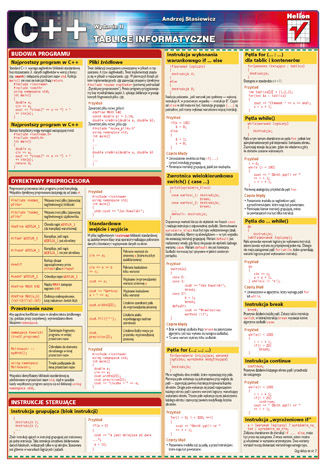
Tablice informatyczne. C++. Wydanie II
Andrzej Stasiewicz
Koniec z wertowaniem książek i dokumentacji w poszukiwaniu składni poleceń, typów danych czy struktur języka. W tablicach informatycznych znajdziesz wszystkie podstawowe informacje, których potrzebujesz podczas codziennej pracy, podane w sposób zwięzły i treściwy. Składnia poleceń, struktura programu, funkcje i metody, obiekty, typy danych -- jest tu wszystko, nad czym mógłbyś się zastanawiać. "Tablice informatyczne. C++" zawierają zestawienie najpotrzebniejszych informacji dotyczących języka C++. Każdy programista doceni je, gdy podczas pracy nie będzie miał czasu na wertowanie kilkunastu książek. W Tablicach uwzględniono najważniejsze propozycje nowego standardu języka C++ i przedstawiono następujące zagadnienia: Dyrektywy dla kompilatora Standardowe wejście i wyjście Standardowe typy danych i operacje na nich Instrukcje sterujące Funkcje Klasy Konwersje typów Wyjątki Wzorce funkcji i klas Wzorzec biblioteczny vector
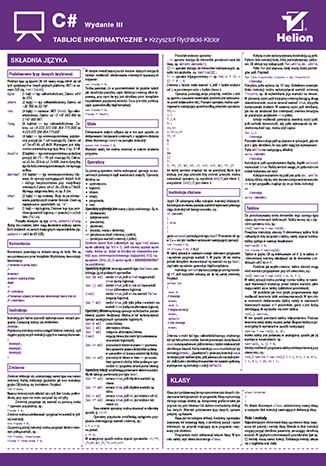
Tablice informatyczne. C#. Wydanie III
Krzysztof Rychlicki-Kicior
Najważniejsza wiedza jest tu! C# to obecnie jeden z najważniejszych, najpopularniejszych i najbardziej wszechstronnych obiektowych języków programowania, nic więc dziwnego, że na rynku dostępnych jest mnóstwo publikacji na jego temat. Niestety, są to przeważnie opasłe tomy, zupełnie nieprzydatne jako pomoc w codziennej pracy. Na szczęście są też Tablice informatyczne. C#, a ich nowe wydanie zawiera większość informacji, które zawsze należy mieć pod ręką! Skoncentrowana treść, zwarta forma, praktyczne przykłady kodu - tu szybko znajdziesz to, czego szukasz! Składnia języka Typy danych Klasy i dziedziczenie LINQ i komponenty WPF Połączenia HTTP Obsługa formatów danych XML i JSON Szukasz podpowiedzi? Sięgnij po tablice!
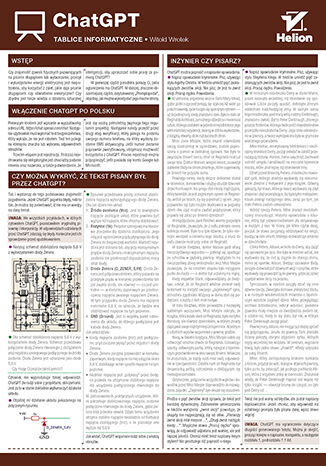
Tablice informatyczne. ChatGPT
Witold Wrotek
W porozumieniu ze sztuczną inteligencją ChatGPT, chatbot opracowany i udostępniony przez firmę OpenAI, szybko stał się obiektem zainteresowania internautów na całym świecie - i na nowo wzbudził gorące dyskusje wokół sztucznej inteligencji. Ludzie mediów prześcigają się w skrajnych wizjach, jedni podchodzą do tematu entuzjastycznie, wypatrując kolejnych, doskonalszych wersji ChatGPT i pokrewnych mu botów, inni kreślą wizje ponure niczym z literatury i filmów science fiction, oczekując momentu, w którym sztuczna inteligencja się zbuntuje i przejmie władzę nad światem... W tej dyskusji nie powinien nam umknąć praktyczny aspekt zagadnienia. Wszak ChatGPT to model językowy opracowany w konkretnym celu - ma w odpowiedni sposób reagować na dane wprowadzane do niego przez użytkownika. Innymi słowy, odpowiadać na zadawane pytania dotyczące rozmaitych dziedzin dostępnej ludziom wiedzy. Jak się z nim poprawnie komunikować? Jak formułować myśli w sposób, który pozwoli nakłonić ChatGPT do podzielenia się pożądanymi przez nas informacjami? Tego dowiesz się z niniejszej pozycji. Jeśli chcesz zaprząc ChatGPT do pracy na swoją rzecz: Poznaj mocne i słabe strony ChatGPT Dowiedz się, w czym i jak może Ci pomóc Naucz się promptować, czyli zadawać właściwe pytania w odpowiedni sposób
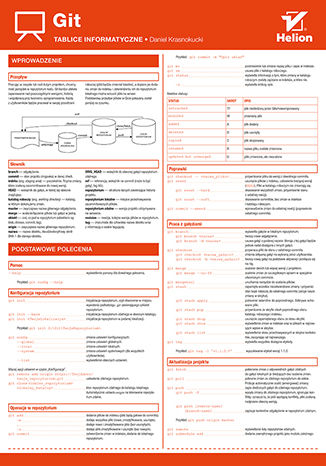
Daniel Krasnokucki
Git — zapanuj nad projektem! Na pewno wiesz już, że praca nad dużym projektem informatycznym bez sensownego, dobrze funkcjonującego systemu kontroli wersji jest po prostu niemożliwa. Git świetnie sprawdza się w tej roli — ostrzega przed popełnianiem błędów, nadpisywaniem wersji, niweczeniem efektów pracy innych członków zespołu. A dodatkowo działa szybko, wydajnie i jest dostępny w ramach wolnego oprogramowania. Tablice informatyczne powinieneś mieć pod ręką zawsze wtedy, gdy pracujesz z wykorzystaniem Gita. Szybko znajdziesz w nich wszystko, co będzie Ci aktualnie potrzebne. Polecenia podzielono tu na podstawowe i zaawansowane, a oprócz tego uporządkowano je tematycznie. Zobaczysz, jak praca z tablicami usprawni i ułatwi Ci poruszanie się po całym projekcie i przyspieszy jego tworzenie. Weź je do ręki i zacznij działać! Podręczna ściąga z Gita — bez niej ani rusz!
Tablice informatyczne. HTML 5. Wydanie II
Radosław Sokół
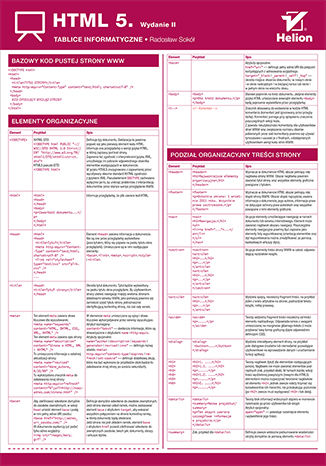
Szybka ściąga z HTML-a! Jeśli kiedykolwiek próbowałeś zaprojektować dowolną stronę WWW, na pewno wiesz, że aktualne tablice informatyczne bardzo przyspieszają ten proces. Przejrzysty układ i przemyślana konstrukcja tablic sprawiają, że możesz w mig odnaleźć każdą zmienną, encję czy funkcję. Możesz błyskawicznie sprawdzić elementy potrzebne do tworzenia i formatowania list i tabel, bloków i formularzy, obrazów i stylów. Typy danych, znaczniki, składnia poleceń — znajdziesz tu wszystko, co bywa potrzebne przy projektowaniu witryny, a co łatwo ulatuje z pamięci. Niezależnie od tego, czy na co dzień zajmujesz się stronami WWW czy właśnie zaczynasz przygodę z programowaniem, powinieneś mieć ten minoporadnik zawsze w zasięgu ręki. Ułatw sobie budowanie stron z HTML 5! Bazowy kod pustej strony WWW i elementy organizacyjne Podział organizacyjny treści strony i jej podstawowa treść Proste formatowanie tekstu i najpopularniejsze encje Bloki tekstu, odnośniki i etykiety Ramki, formularze, listy i tabele Obrazy CSS i selektory CSS Programowanie, oznaczenia i kody kolorów
Tablice informatyczne. Java. Wydanie III
Marcin Lis
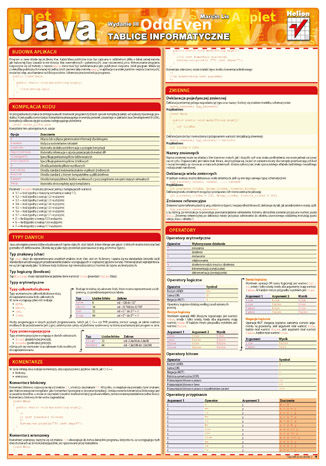
Bez Javy ani rusz! Od czego zacząć budowanie aplikacji za pomocą Javy? Jakie instrukcje języka i operatory są najważniejsze dla działania aplikacji? Jak optymalnie wykorzystać klasy i obiekty? Java przydaje się do wszystkiego. Jej legendarna elastyczność zyskuje rzesze zwolenników, z których żaden nie może obyć się bez tablic informatycznych, zawierających wszystkie najważniejsze elementy i konstrukcje tego języka. Wśród nich wymienić można chociażby szczegółowo rozpisane typy danych, operatory i instrukcje, a także informacje dotyczące budowy i funkcji klas oraz obiektów czy tworzenia i wykorzystywania interfejsów. Ponadto znajdziesz tu wskazówki dotyczące obsługi wyjątków czy współpracy z systemem plików. Podręczny i poręczny zestaw oferuje Ci możliwość szybkiego przeglądania i odnalezienia konkretnych informacji bez wielogodzinnego ślęczenia nad opasłymi tomami książek. Budowa aplikacji i kompilacja kodu Typy danych i komentarze Zmienne i operatory Instrukcje języka Tablice i interfejsy Klasy i obiekty Typy uogólnione Pakiety i wyjątki Współpraca z systemem Tablice informatyczne - ściąga na każdą okazję!
Tablice informatyczne. Podstawy C++
Radosław Sokół
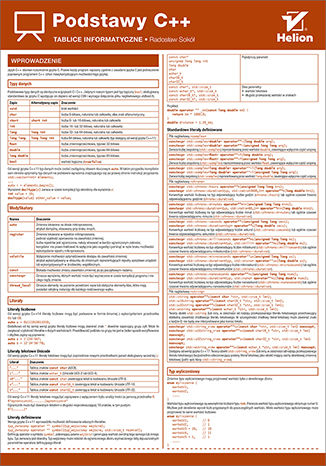
Koduj w C++ i miej ściągę zawsze przy sobie! C++ to język tak fantastyczny i powszechnie doceniany, że nikomu nie trzeba przypominać o jego zaletach. Jeśli posługujesz się tym językiem albo chcesz zacząć w nim programować, koniecznie musisz zaopatrzyć się w tablice informatyczne z najważniejszymi poleceniami C++. Znajdziesz w nich typy danych, modyfikatory, literały i typy wyliczeniowe. Będziesz mógł łatwo odnaleźć wskaźniki i referencje oraz asercje statyczne. Przypomnisz sobie, na czym polegają: iterowanie kolekcji danych i rzutowanie typów danych. Odświeżysz wiadomości o podprogramach, dynamicznym gospodarowaniu pamięcią operacyjną i przestrzeni nazw. Od tej chwili zawsze pod ręką będziesz mieć ważne informacje dotyczące zastosowania klas, obiektów i operatorów, programowania uogólnionego i sytuacji wyjątkowych. Ułatw sobie pracę i połóż na biurku Tablice informatyczne. Podstawy C++. Tablice informatyczne — Twój sposób na unikanie błędów!
Adalbert Arsen
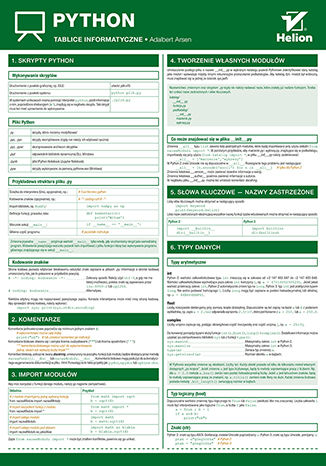
Programowanie w Pythonie? Z tablicami to nic trudnego! Poznaj konstrukcje języka Python Utrwal wiedzę o instrukcjach i typach danych Odkryj metody pisania wydajnych skryptów Python to jeden z najpopularniejszych dynamicznych języków programowania. Nie od dziś znajduje on zastosowanie w różnych dziedzinach informatyki, zwłaszcza jako doskonały język skryptowy. Jeśli korzystasz z niego na co dzień i chcesz szybko wyszukiwać niezbędne informacje lub odświeżyć swoją wiedzę, sięgnij po odpowiednią ściągę! Tablice informatyczne stanowią zwięzłe, lecz wyczerpujące źródło wiadomości na temat Pythona, które można – i warto! – zawsze mieć pod ręką. Niezależnie od tego, czy jesteś profesjonalistą wykorzystującym ten język w pracy, czy też amatorem, który dopiero zaczyna się go uczyć, tablice okażą się dla Ciebie nieocenioną pomocą! Rodzaje plików Pythona Uruchamianie skryptów Korzystanie z modułów Typy danych i rzutowanie Operatory i instrukcje Debugowanie kodu Testowanie kodu Tworzenie wykresów Sięgnij po źródło skondensowanej wiedzy o Pythonie!
Jacek Ross
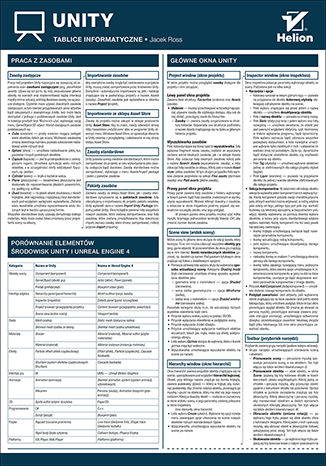
Projekt z Unity? Skorzystaj z tablic! Poznaj możliwości Unity Wyszukaj odpowiednie opcje Zastosuj właściwe narzędzia Unity to niezwykle popularne środowisko do tworzenia komputerowych gier 2D i 3D oraz innych materiałów interaktywnych, takich jak filmy, animacje, prezentacje i wizualizacje. Silnik ten działa pod kontrolą większości powszechnie używanych systemów operacyjnych, a powstałe dzięki niemu materiały mogą być uruchamiane na niemal wszystkich platformach komputerowych i mobilnych, co w połączeniu z dużymi możliwościami i praktycznym brakiem opłat licencyjnych zdecydowało o sukcesie rozwiązania. Nieocenioną pomocą w codziennej pracy z Unity są tablice informatyczne, które w telegraficznym skrócie i przystępnej formie prezentują najważniejsze narzędzia oraz funkcje środowiska. Dzięki tablicom bez konieczności wertowania grubych tomów i zaprzęgania do pracy wyszukiwarki internetowej dowiesz się, jak znaleźć odpowiednie opcje i szybko osiągnąć zamierzone cele! Interfejs środowiska Unity Przegląd najważniejszych narzędzi Sposoby tworzenia scen i obiektów Definiowanie akcji Korzystanie z zasobów Tworzenie skryptów Tablice informatyczne - zawsze pod ręką!
Tablice informatyczne. Wzorce projektowe
Daniel Krasnokucki
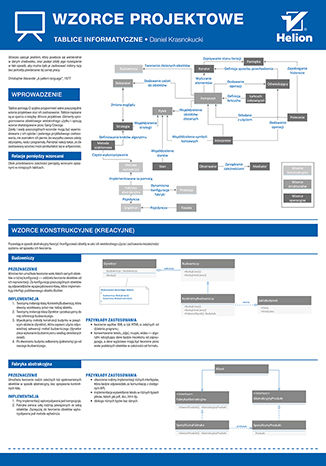
Wzorce projektowe bez tajemnic! Odkryj najlepsze z używanych obecnie wzorców projektowych Dowiedz się, jaki wzorzec zastosować w konkretnym przypadku Naucz się właściwie wykorzystywać dany wzorzec w praktyce Wzorce projektowe ułatwiają tworzenie dobrego oprogramowania, umożliwiają unikanie typowych błędów i stanowią sprawdzone rozwiązania problemów informatycznych, z którymi ktoś kiedyś miał już do czynienia. Korzysta się z nich w celu zapewnienia wysokiej jakości wynikowego kodu i elastyczności rozwiązania programistycznego oraz skrócenia czasu jego tworzenia. Jeśli nie chcesz wymyślać koła na nowo i nie masz zamiaru podejmować beznadziejnego trudu zrobienia tego lepiej niż tysiące osób przed Tobą, wzorce projektowe są właśnie dla Ciebie! Stosuj je w codziennej pracy, korzystając z praktycznej ściągi, zawierającej najpotrzebniejsze informacje o najbardziej przydatnych wzorcach, dzięki którym Twoje programy będą spełniały branżowe standardy! Wzorce konstrukcyjne, strukturalne i operacyjne Zależności występujące między wzorcami Przeznaczenie i implementacja poszczególnych wzorców Zastosowanie wzorców projektowych w praktyce Tablice informatyczne — cała wiedza pod ręką!
Marino Posadas
Książka Tajniki C# i .NET Framework szczegółowo przedstawia zagadnienia związane z językiem C# 6.0/7.0 oraz platformą .NET 4.6 pozwalając zrozumieć, jak działa ta platforma podczas wykonywania kodu i jak wykorzystać tę wiedzę do pisania wydajnych aplikacji. Pozwala w pełni spożytkować nową rewolucję w programowaniu .NET, w tym otwarty kod źródłowy platformy, możliwości wieloplatformowe i zmiany architektoniczne w CoreCLR. Zaczniemy od omówienia, w jaki sposób CLR wykonuje kod oraz odkryjemy niszowe i zaawansowane aspekty programowania w języku C# - od delegatów i typów ogólnych aż do programowania asynchronicznego. Poznamy nowe formy deklarowania typów i przypisań, wywoływanie kodu źródłowego, składnię statycznych deklaracji using, automatyczne inicjowanie właściwości, inicjowanie słowników, operatory warunkowe dla wartości null i wiele innych zagadnień. Następnie odblokujemy prawdziwy potencjał platformy .NET. Dowiemy się, jak pisać aplikacje zgodne z OWASP, jak prawidłowo implementować wzorce projektowe w C# oraz jak stosować ogólne zasady SOLID i ich implementacje w kodzie C#. Zakończymy na wskazówkach pomagających maksymalnie wykorzystać język C# i platformę .NET. W ostatnim rozdziale książki omówimy też kwestie związane z platformą .NET Core 1.1. Dzięki tej książce można: Dokładnie zrozumieć podstawowe pojęcia języka C# od algorytmów sortujących do notacji dużego O. Poznać najnowsze zmiany w języku C# 6/7. Łączyć bazy danych SQL Server i NoSQL z platformą .NET. Zrozumieć zasady SOLID i najistotniejsze wzorce Gang of Four na praktycznych przykładach w języku C# 6.0. Dowiedzieć się, jak bronić aplikacje w języku C# przed atakami. Korzystać z platformy Roslyn do kompilowania i manipulowania językami C# oraz Visual Basic .NET. Rozróżniać zapytania LINQ i związane z nimi wyrażenia Lambda, typy ogólne oraz delegaty. Zaprojektować od podstaw nową aplikację w .NET. Zrozumieć wewnętrzną strukturę podzespołu .NET. Poznać przydatne i zaawansowane funkcje związane z optymalizacją i programowaniem równoległym.
Tajniki Java 9. Pisanie reaktywnego, modularnego, współbieżnego i bezpiecznego kodu
Edward Lavieri, Peter Verhas
Pisanie reaktywnego, modularnego, współbieżnego i bezpiecznego kodu Wersja Java 9 i jej nowe funkcje rozwijają bogactwo języka Java, jednego z najczęściej używanych języków programowania do budowania sprawnych aplikacji. Java 9 kładzie specjalny nacisk na modularność dzięki integracji z Jigsaw. Ta książka stanowi przewodnik pozwalający dokładnie opanować ten język. Zapewnia ogólny przegląd oraz szczegółowe wyjaśnienia nowych funkcji, wprowadzonych w wersji Java 9 oraz podkreśla znaczenie nowych interfejsów API i innych ulepszeń. Niektóre nowe funkcje Java 9 mają przełomowe znaczenie, a doświadczonemu programiście pomogą usprawnić tworzone aplikacje korporacyjne. Ten podręcznik zapewnia praktyczne wskazówki, pozwalające zastosować nowo zdobytą wiedzę, dotyczącą wersji Java 9, a także dodatkowe informacje, związane z przyszłym rozwojem platformy Java. Dzięki tej książce można poprawić swoją wydajność i przyspieszyć działanie swoich aplikacji. Poznając najlepsze praktyki związane z językiem Java, można stać się ekspertem od tego języka w swojej firmie. Przeczytanie tej książki pozwoli nie tylko poznać najważniejsze pojęcia języka Java 9, ale również zrozumieć niuanse związane z ważnymi aspektami programowania w tym świetnym języku. Dzięki tej książce można: Pisać modularne aplikacje w języku Java, korzystając z nowo wprowadzonego systemu modułów. Migrować istniejące aplikacje Java do wersji modularnych. Zrozumieć, jak korzystać z odśmiecania G1 w celu poprawienia wydajności swoich aplikacji. Odkryć możliwości zapewniane przez nowo wprowadzoną powłokę Java. Testować wydajność swoich aplikacji przy użyciu JVM. Poznać, jak Java 9 wspiera standard HTTP 2.0. Korzystać z nowego interfejsu API dla procesów. Odkryć dodatkowe usprawnienia i funkcje zapewniane przez Java 9.
Gigi Sayfan
Rozwijaj umiejętności orkiestrowania kontenerów w Kubernetes, aby budować, uruchamiać, zabezpieczać i monitorować wielkoskalowe aplikacje rozproszone To wydanie Tajników Kubernetes zostało uzupełnione o najnowsze narzędzia i kod oraz najświeższe funkcje Kubernetes 1.18. Książka koncentruje się na pogłębianiu znajomości złożonych koncepcji i najlepszych praktyk, pomagając w opanowaniu umiejętności projektowania i wdrażania wielkich klastrów Kubernetes w rozmaitych platformach chmurowych. Czytelnik pozna techniki uruchamiania w Kubernetes złożonych, stanowych mikrousług, włącznie z zaawansowanymi funkcjami, takimi jak horyzontalne skalowanie podów, aktualizacje kroczące, przydziały zasobów czy trwała pamięć masowa. Dzięki dwóm nowym rozdziałom zdobędzie wiedzę na temat przetwarzania bezserwerowego i siatek usług. W trakcie lektury Czytelnik pozna różne opcje konfigurowania sieci i nauczy się, jak dobierać, uruchamiać i rozwiązywać problemy z wtyczkami sieciowych Kubernetes poprzez rzeczywiste przykłady zastosowań. Opanuje również mechanizmy tworzenia niestandardowych zasobów i ich stosowanie w automatyzacji i obsłudze aplikacji. Po wykonaniu zawartych w książce ćwiczeń Czytelnik awansuje do poziomu zaawansowanego profesjonalisty Kubernetes. Dzięki tej książce można: Opanować podstawy architektury i projektu Kubernetes Budować i uruchamiać w Kubernetes aplikacje z pamięcią stanu i złożone mikrousługi Opanować posługiwanie się takimi narzędziami, jak Kubectl, sekretami i Helm do zarządzania zasobami i pamięcią masową Opanować rozwiązania sieciowe Kubernetes wraz z opcjami równoważenia obciążeń Osiągać wysoką dostępność klastrów Kubernetes Usprawniać możliwości monitorowania Kubernetes dzięki takim narzędziom, jak Prometheus, Grafana i Jaeger Rozszerzać możliwości Kubernetes poprzez Kubernetes API, wtyczki i webhooki

Tao mikrousług. Projektowanie i wdrażanie
Richard Rodger
Systemy oparte na mikrousługach różnią się od aplikacji monolitycznych. Są bardziej skalowalne, efektywniejsze, a także łatwiejsze w implementacji, rozwijaniu i utrzymaniu. Architektura mikrousług pozwala na doskonalenie danego elementu bez zastanawiania się nad działaniem całości aplikacji. Tego rodzaju systemy opierają się na nowoczesnych wzorcach, takich jak asynchroniczna komunikacja za pomocą komunikatów, usługi API i hermetyzacja. Po odpowiedniej optymalizacji dobrze działają zarówno w chmurach, jak i w scentralizowanych środowiskach opartych na kontenerach. Niniejsza książka jest przeznaczona dla programistów, menedżerów projektów i architektów oprogramowania. Wyjaśniono tu niezbędne pojęcia oraz różnice dzielące systemy oparte na mikrousługach i aplikacje monolityczne, a także zasady ich projektowania. Wyczerpująco omówiono techniki rozwiązywania problemów z mikrousługami oraz sposoby kontrolowania ryzyka wystąpienia awarii. Pokazano, w jaki sposób mikrousługi mogą współpracować z trwałymi danymi i jak wygląda ich współpraca z bazami danych. Sporo miejsca poświęcono technikom oceny kondycji działających systemów mikrousługowych, a także studiom przypadków oraz najlepszym praktykom pracy zespołu, planowania zmian i wyboru narzędzi. Najważniejsze zagadnienia: mikrousługi i ich architektura mikrousługi a wymagania biznesowe i korporacyjne komunikaty i ich wzorce wdrażanie systemów o dużej skali wady systemów opartych na mikrousługach Pracuj mądrzej i bardziej humanitarnie. Wdrażaj mikrousługi!
Alexander Kolesnikov
This book is for those who want to build sophisticated Java web applications quickly and easily. It assumes that the reader is reasonably comfortable with the Java programming language, but no knowledge of web technologies is needed. For experienced Servlet, JSP, or Struts developers, the book will show an alternative way that will allow them to raise their productivity to an incomparable level. With this book you will see that a contemporary component-based framework can be easy to learn and a pleasure to work with.
TDD. Programowanie w Javie sterowane testami
Viktor Farcic, Alex Garcia
Programowanie sterowane testami (ang. test-driven development — TDD) nie jest nową metodyką. Jej praktyczne zastosowanie pozwala na rozwiązanie wielu problemów związanych z procesami rozwijania i wdrażania oprogramowania. Mimo ogromnych zalet, programowanie sterowane testami nie jest zbyt popularne wśród programistów. Wynika to z tego, że techniki TDD nie są łatwe do opanowania. Choć teoretyczne podstawy wydają się logiczne i zrozumiałe, nabranie wprawy w stosowaniu TDD wymaga długiej praktyki. Książka, którą trzymasz w ręce, została napisana przez programistów dla programistów. Jej celem jest przekazanie podstaw TDD i omówienie najważniejszych praktyk związanych z tą metodyką, a przede wszystkim — nauczenie praktycznego stosowania TDD w pracy. Autorzy nie ukrywają, że nabranie biegłości w takim programowaniu wymaga sporo wysiłku, jednak korzyści płynące z metodyki TDD są znaczne: skrócenie czasu wprowadzania produktów na rynek, łatwiejsza refaktoryzacja, a także wyższa jakość tworzonych projektów. Z tą książką dogłębnie zrozumiesz metodykę TDD i uzyskasz wystarczającą pewność siebie, by z powodzeniem stosować to podejście w trakcie programowania aplikacji w Javie. Dzięki tej książce: Nauczysz się podstaw metodyki TDD Poznasz potrzebne narzędzia, platformy i środowiska wraz ze szczegółami ich konfiguracji Wykonywasz praktyczne ćwiczenia i stopniowo wdrożysz się w TDD Poznasz proces „czerwone, zielone, refaktoryzacja” Dowiesz się, jak pisać testy jednostkowe wykonywane w izolacji od reszty kodu Dowiesz się, jak tworzyć prosty i łatwy w konserwacji kod, nauczysz się refaktoryzować już istniejący Nauczysz się pracować z atrapami, stosować programowanie sterowane zachowaniami, a także udostępniać połowicznie ukończone funkcje w środowisku produkcyjnym za pomocą przełączników funkcji Programowanie sterowane testami to metodyka dla prawdziwych profesjonalistów!
TDD. Sztuka tworzenia dobrego kodu
Kent Beck
Idealny kod, pokryty w pełni testami, to marzenie każdego dewelopera. Niestety, marzenia zazwyczaj rozmijają się z rzeczywistością. Codzienność większości programistów to nieczytelny kod i brak testów. Są to doskonałe warunki do powstawania błędów, często bardzo trudnych do wykrycia. Czy jest sposób, żeby wybrnąć z tego ślepego zaułka? Czy są techniki pozwalające tworzyć przejrzysty kod, którego zmiana nie będzie sprawiała trudności? Oczywiście, że tak - wykorzystaj TDD (ang. Test Driven Development). Programowanie sterowane testami można sprowadzić do prostej zasady: w pierwszej kolejności napisz test, a następnie kod, który ma być testowany. Kent Beck w swojej książce zaprezentuje Ci w praktyce podejście TDD i pokaże, jak wdrożyć jego zasady w codziennej pracy. Zapoznaj się z licznymi przykładami zastosowania tej metody, przydatnymi poradami i najlepszymi wzorcami. To doskonały początek, żeby wdrożyć TDD w Twoim projekcie. Dowiedz się, jak tworzyć idealny kod! Dzięki tej książce: poznasz technikę programowania sterowanego testami stworzysz czytelny kod, doskonale pokryty testami nie będziesz się bał dokonywać zmian w Twoim kodzie Twój kod osiągnie nowe standardy jakości Twoja przepustka do świata idealnego kodu!
TDD. Techniki programowania sterowanego testami
Dariusz Woźniak
Odnieś sukces dzięki TDD! Poznaj filozofię programowania sterowanego testami Dowiedz się, jak wdrożyć metodę TDD w praktyce Naucz się stosować właściwe narzędzia i techniki Metoda Test-Driven Development pozwala na pisanie lepszej jakości, bardziej elastycznego i łatwiejszego w utrzymaniu kodu, na którym można w pełni polegać. Większa wydajność pracy programistów, którzy o wiele lepiej rozumieją potrzeby biznesowe stawiane tworzonym przez nich aplikacjom, znaczne przyspieszenie powtarzalnych testów - to tylko niektóre zalety TDD. Nic dziwnego, że świat zachwycił się tą techniką, a jej znajomość należy do podstawowych wymagań, które muszą spełnić inżynierowie pragnący rozwijać swoją karierę w branży IT. Jeśli chcesz poznać metodę TDD i nauczyć się tworzyć zgodne z nią testy jednostkowe, trafiłeś na właściwą książkę! W prosty sposób przedstawi Ci ona cykl Red-Green-Refactor, zaprezentuje zalety poprawnie zaimplementowanej techniki TDD, zwróci uwagę na trudności związane z wdrażaniem tej techniki i podpowie, jak sobie z nimi poradzić. Nauczysz się z niej pisać testy jednostkowe zgodnie z dobrymi praktykami oraz sprawdzać zależności i tworzyć atrapy obiektów. Dowiesz się, jak stosować TDD w przypadku już istniejącego kodu, a także jak mierzyć pokrycie kodu testami. Poznasz również podstawowe informacje na temat ciągłej integracji i jej znaczenia dla techniki TDD. Podstawowe informacje o testach i metodzie TDD Tworzenie dobrych testów jednostkowych Praktyczne zastosowanie biblioteki NUnit Atrapy i ich klasyfikacja Zastosowanie TDD do istniejącego kodu Pokrycie kodu testami i ciągła integracja Najważniejsze biblioteki wspierające TDD Poznaj w praktyce najbardziej przebojową metodę tworzenia oprogramowania!
TDD w praktyce. Niezawodny kod w języku Python
Harry Percival
„Ta książka to znacznie więcej niż tylko wprowadzenie do programowania sterowanego testami w Pythonie. To jest pełny kurs przedstawiający najlepsze praktyki, od początku do końca na przykładzie nowoczesnego programowania aplikacji sieciowej w Pythonie.” — Kenneth Reitz, członek Python Software Foundation Twórz niezawodne aplikacje w języku Python! Każdy programista marzy o pracy z przejrzystym kodem, który został w całości pokryty testami. Niestety, rzeczywistość bywa często daleka od ideału. A może da się go jednak osiągnąć? Odpowiedzią na to pytanie jest TDD (ang. Test-Driven Development), czyli wytwarzanie oprogramowania sterowane testami. Jak zacząć stosować tę technikę? Na to i wiele innych pytań odpowiada ta książka. Zacznij w praktyce realizować koncepcje płynące z TDD w połączeniu z językiem Python. Na początku dowiedz się, jak skonfigurować Django za pomocą testu funkcjonalnego, oraz skorzystaj z modułu unittest. Zdobądź też bezcenną wiedzę na temat testowania widoków, szablonów i adresów URL oraz naucz się testować układy strony i style. Sprawdź, jak zapewnić ciągłą integrację z wykorzystaniem systemu Jenkins oraz najlepszych praktyk w tworzeniu testowalnego kodu. Książka ta jest doskonałą lekturą dla wszystkich programistów tworzących aplikacje internetowe w języku Python. Twój kod może być naprawdę łatwy w utrzymaniu! Poznaj sposób pracy wykorzystujący podejście TDD, między innymi cykl test jednostkowy i tworzenie kodu, a później refaktoryzacja. Używaj testów jednostkowych dla klas i funkcji oraz testów funkcjonalnych pozwalających na symulowanie działań podejmowanych przez użytkownika w przeglądarce internetowej. Dowiedz się kiedy i jak używać obiektów imitacji, a także poznaj wady i zalety testów odizolowanych i zintegrowanych. Przetestuj i automatyzuj wdrożenie za pomocą serwera prowizorycznego. Zastosuj testy względem przygotowanych przez firmy trzecie wtyczek, które integrujesz z witryną. Używaj środowiska ciągłej integracji w celu automatycznego wykonywania testów. Poznaj techniki TDD w połączeniu z Pythonem!
TDD z wykorzystaniem C# 7. Programowanie sterowane testami
John Callaway, Clayton Hunt
Coraz więcej profesjonalnych środowisk produkcyjnych opiera się na oprogramowaniu. Ewentualne błędy w pracy kodu mogą prowadzić do poważnych konsekwencji - dlatego od rozwiązań informatycznych wymaga się solidności i poprawności. Równocześnie oczekuje się wydajnego działania, skalowalności i podatności na modyfikacje, a także możliwości łatwego utrzymania kodu. Aplikacje utworzone zgodnie z paradygmatem TDD są w większym stopniu testowalne i zapewniają wysoki poziom poprawnej, stabilnej pracy. Sprawia to, że coraz więcej zespołów programistycznych skłania się ku TDD, mimo że zautomatyzowane testowanie bywa czasochłonne, pracochłonne i dość trudne w implementacji. To książka przeznaczona dla tych, którzy chcą dogłębnie zrozumieć istotę TDD. Omówiono tu wszystkie aspekty TDD, włączając w to podstawy, dzięki którym średnio zaawansowany programista komfortowo rozpocznie budowę aplikacji zgodnie z tym paradygmatem. Przedstawiono zasady definiowania i testowania granic, a także pojęcie abstrahowania kodu zewnętrznego. W książce pojawiają się też - wprowadzane stopniowo - bardziej zaawansowane koncepcje, takie jak szpiedzy, imitacje i fałszywki. Pokazano w niej, w jaki sposób za pomocą TDD można przekształcić wymagania i historie użytkownika w funkcjonującą aplikację. Sporo miejsca poświęcono pisaniu różnych rodzajów testów, również integracyjnych. Poszczególne koncepcje zostały zilustrowane praktycznymi fragmentami kodu napisanego w C# i JavaScripcie. W tej książce między innymi: koncepcje programowania sterowanego testami i przygotowanie środowiska do pracy różne podejścia do budowania aplikacji i sterowania testami poprawa elastyczności aplikacji i jej podatności na przyszłe modyfikacje TDD w warunkach zmieniających się wymagań rozwiązywanie problemów z kodem zastanym TDD: tak pracują najlepsi programiści!
Gordon Beeming
Team Foundation Server is an efficacious collaboration tools that will allow you to share code, track records, software, all in a single package. Integrate it with your existing IDE or editor and let your team work in a flexible environment that adapts to projects of all shapes and sizes.Explore what gives you the edge over other developers by knowing the tips and quick fixes of customizing TFS. Effectively minimize the time users spend interacting with TFS so that they can be more productive.In this book you will quickly cover lots of TFS extension points, from the very basic task of customizing and configuring dashboards to customizing automated builds and check-in policies.You will learn how to create dashboards in TFS 2015, as well as add tiles, graphs, and more useful modifications. You'll perform customizations that make TFS work for you by streamlining your team’s boards. You'll cast modifications to the process template and learn the tips and tricks required to make efficient and valuable uses of your team’s board.From team-specific dashboards to complex server plugins, everything is covered in this concentrated guide to aid your knowledge. Delving deep, this book covers the pros and cons of check-in policies, as well as their proper debugging and deployment strategies. After that you will learn about advanced XAML builds and TFS jobs to further experiment with the activities of your jobs on your system. Finally, you will learn about service hooks and the amazing utility of .VSO extensions to help you create new extensions and explore new levels of customization.

Tech Trends of the 4th Industrial Revolution. Navigating the Future of Technology in Business
Mercury Learning and Information, D. Pyo, J....
The term 4th Industrial Revolution is often mentioned in the media, but public understanding of its technologies lags behind their rapid development. This book bridges the gap, explaining essential technologies like IoT, blockchain, AI, cloud computing, and big data. It aims to enhance comprehension by minimizing technical content.The book introduces key technologies and their applications, emphasizing their importance in contemporary business models. Readers will find accessible descriptions and practical examples to aid understanding. Covering topics and trends vital for modern business, this book ensures readers grasp the technological landscape shaping the future.Throughout the book, you'll explore how these technologies are revolutionizing industries and their integration into business strategies. This journey provides a comprehensive understanding of the 4th Industrial Revolution, equipping readers with the knowledge needed to navigate and leverage these advancements effectively.
Joshua Alan Teter, Ben Tobin
The technical program manager (TPM) is a relatively new role born out of the need of the tech industry to have a specialized practitioner who speaks both tech and business and leverages this bilingual talent to get results that no one else can.This book dives into what makes a TPM tick. You’ll find out which project and program management skills will help you shine and how you can apply your technical skills for effective results. This book looks at the TPM role across the Big Five tech companies (Amazon, Google, Microsoft, Apple, and Meta) to help you discern the most effective skills to be successful no matter which company you work for.Are you already a well-performing TPM looking to see what’s next? This book identifies the career paths for a TPM at the Big Five to help you decide the next step for you.By the end of this book, you’ll have a clear understanding of how to be a TPM, along with a breakdown of the necessary technical and program management skills to develop a clear roadmap for your career.
Technologiada. Młodzi kompetentni
Piotr Synowiec
Doświadczyć znaczy zrozumieć Świat biegnie do przodu coraz szybciej i szybciej, w rytmie, w jakim rozwija się ludzka wiedza i technologia, jaka dzięki niej powstaje. Z jednej strony to świetnie - kto czterdzieści lat temu przypuszczał, że nosić będzie w kieszeni mały, supersprawny i wszechwiedzący komputer, dla niepoznaki zwany "telefonem"? Z drugiej, to trochę przerażające. Ciężko nadążyć. Bo choć większość z nas, starszych i młodszych, na co dzień korzysta z nowoczesnych technologii, to jednak rzadko kto je naprawdę rozumie. Bo żeby zrozumieć, żeby się nauczyć i móc pójść dalej, trzeba spróbować: zaprojektować trójwymiarowy obiekt w programie pCon.planner zbudować silnik z klocków LEGO stworzyć animację, a może i grę w Scratchu Potem można ruszyć do przodu. Na ścieżkę twórców, odkrywców, naukowców i inżynierów na miarę XXI wieku. Potem można dorosnąć i przemienić pasję w pracę. Najpierw jednak trzeba sięgnąć do zasobów nieograniczonej w młodym wieku wyobraźni i połączyć ją z możliwościami, jakie daje nam dzisiejszy świat, już teraz pukający do drzwi przyszłości. Z niewielką pomocą tej książki Twoje nastoletnie dziecko bawiąc się aplikacjami i narzędziami dostępnymi na wyciągnięcie ręki i kliknięcie myszką, opanuje umiejętności, które mogą okazać się kluczowe dla jego przyszłego życia. Podaruj mu Technologiadę, a wraz z nią kompetencje przyszłości!