
Programowanie
Niezależnie czy dopiero rozpoczynacie swoją przygodę z programowaniem, czy jesteście już uznanymi na rynku profesjonalistami, to w kategorii Programowanie na pewno znajdziecie podręczniki, które pomogą Wam w przebiegu pracy, czy też w nauce podstaw programowania.
W książkach z tego działu zawarta jest wiedza zarówno związana z czysto technicznymi sprawami typu składnia języków, ale także z umiejętnościami bardziej "miękkimi" jak obsługa i wykorzystanie pełnych możliwości środowisk programistycznych, czy też projektowanie oprogramowania lub metody numeryczne czy oraz struktury danych.
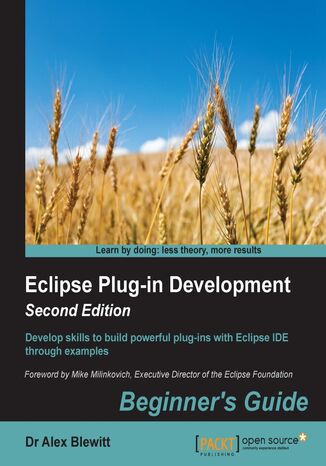
Eclipse Plug-in Development Beginner's Guide. Extend and customize Eclipse - Second Edition
Alex Blewitt
Eclipse is used by everyone from indie devs to NASA engineers. Its popularity is underpinned by its impressive plug-in ecosystem, which allows it to be extended to meet the needs of whoever is using it. This book shows you how to take full advantage of the Eclipse IDE by building your own useful plug-ins from start to finish.Taking you through the complete process of plug-in development, from packaging to automated testing and deployment, this book is a direct route to quicker, cleaner Java development. It may be for beginners, but we're confident that you'll develop new skills quickly. Pretty soon you'll feel like an expert, in complete control of your IDE.Don't let Eclipse define you - extend it with the plug-ins you need today for smarter, happier, and more effective development.

Perry Lea
The migration of computing to the edge is the logical progression of where computing is performed on a global scale. Edge computing is not a new paradigm but a necessary technology to address issues such as latency, service charges, reliability, connectivity, and privacy. This book walks you through the definition and architecture of edge computing systems and why they are critical in today’s ecosystem of IoT devices and an “everything connected” world.You will start your journey with an introduction to different edge computing hardware platforms, which vary by use case. From there, you’ll explore operating systems and middleware packages that manage edge devices such as Azure IoT. Then, you will explore communication systems such as near-range Bluetooth and RFID as well as long-range systems such as 5G. Networking protocols will be covered, which are the heart of edge systems. Technologies such as MQTT, which make up the backbone of edge to cloud communication, are examined. Then, you will move on to edge applications such as edge predictive AI and federated computing. We wrap up by investigating the security and vulnerability envelope of edge systems.This book is intended to quickly familiarize you with edge systems technologies and use cases, without burdening you with complicated jargon and low-level details.

Sean Howard
The surge in connected edge devices has driven organizations to capitalize on the opportunities presented by the massive amounts of data generated by these devices. However, adapting to this landscape demands significant changes in application architectures.This book serves as your guide to edge computing fundamentals, shedding light on the constraints and risks inherent in selecting solutions within this domain. You’ll explore an extensive suite of edge computing services from AWS, gaining insights into when and how to use AWS Outposts, AWS Wavelength, AWS Local Zones, AWS Snow Family, and AWS IoT Greengrass. With detailed use cases, technical requirements, and architectural patterns, you’ll master the practical implementation of these services and see how they work in real life through step-by-step examples, using the AWS CLI and AWS Management Console. To conclude, you’ll delve into essential security and operational considerations to maximize the value delivered by AWS services.By the end of this book, you'll be ready to design powerful edge computing architectures and handle complex edge computing use cases across multiple AWS services.
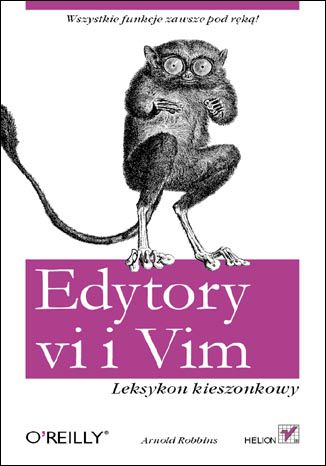
Edytory vi i Vim. Leksykon kieszonkowy
Arnold Robbins
Wszystkie funkcje zawsze pod ręką! Jak wygenerować losowy ciąg znaków? Posadzić nowego użytkownika przed vi i kazać mu wyłączyć edytor. To jeden z dowcipów obrazujących specyficzną składnię edytorów vi i Vim. Prawdopodobnie edytory te są trudne dla początkującego użytkownika, ale jeżeli tylko opanujesz ich elementarną obsługę, nie zamienisz ich na nic innego. Oba sprawdzą się idealnie przy edycji różnego rodzaju plików tekstowych - nieważne, czy będzie to plik HTML, PHP czy kod źródłowy Javy. Niezliczona ilość opcji edytorów vi i Vim sprawia, że zapamiętanie ich wszystkich sprawia pewne trudności. Dlatego Arnold Robbins zebrał dla Ciebie najbardziej użyteczne polecenia edytorów vi, Vim i najważniejszych klonów vi (nvi, elvis i vile), a potem skondensował je i przedstawił w formie niewielkiego leksykonu, który sprawdzi się w codziennej pracy. Wykorzystanie wyrażeń regularnych, wyszukiwanie i zamiana tekstu, zarządzanie oknami, funkcje użytkownika, dopełnianie poleceń to tylko niektóre z omówionych elementów. Leksykon ten powinni mieć zawsze pod ręką zarówno zaawansowani, jak i początkujący użytkownicy edytora vi! Opcje wywołania edytora Polecenia i opcje trybu edycyjnego vi Skróty klawiszowe Podstawienia i wyrażenia regularne Inicjalizacja sesji edycji i przywracanie plików Rozszerzona obsługa znaczników i stosu znaczników Polecenia i opcje edytora Vim Wykaz dodatkowych funkcji nvi, vile i elvisa Niezastąpiony przewodnik dla użytkowników edytorów vi i Vim!
Efektywny Kotlin. Najlepsze praktyki
Marcin Moskała
Projektanci Kotlina postawili na pragmatyzm. Oznacza to, że do dziś wszystkie decyzje związane z rozwojem języka są podejmowane z uwzględnieniem potrzeb biznesowych: produktywności, skalowalności, prostej konserwacji, niezawodności i wydajności. Od początku szczególną uwagę zwraca się również na bezpieczeństwo, czytelność, wielokrotne używanie kodu, łatwość użycia narzędzi i możliwości współdziałania z innymi językami. Bardzo ważna okazała się też wydajność zarówno działania kodu, jak i pracy programisty. Konsekwentne przestrzeganie tych założeń dało znakomite efekty. Dziś Kotlin jest świetnym wyborem dla programisty - pod jednym warunkiem: że zna specyfikę języka i korzysta z niego we właściwy sposób. Ta książka jest przeznaczona dla doświadczonych programistów Kotlina, którzy chcą opanować ten język na wysokim poziomie. Wyjaśniono w niej sposoby korzystania ze szczególnych funkcji Kotlina, aby możliwe było uzyskanie bezpiecznego, czytelnego, skalowalnego i wydajnego kodu. Znalazły się w niej informacje o najlepszych praktykach pisania kodu w Kotlinie ze szczególnym uwzględnieniem praktyk wysokiego poziomu, zalecanych przez autorytety i twórców języka. Wyczerpująco omówiono też kwestie związane z właściwościami i typami specyficznymi dla platformy oraz tworzenie języków dziedzinowych, a także klasy i funkcje wewnątrzwierszowe. Jest to praktyczny przewodnik zawierający zbiór wytycznych, których uwzględnienie pozwoli pisać dobry i idiomatyczny kod w Kotlinie. W tej książce między innymi: reguły pisania kodu o wysokiej jakości programowanie dla różnych platform oraz aplikacje mobilne wzorce i konwencje programistyczne konwencje i kontrakty dla programistów wspólnie tworzących projekt zapewnianie wysokiej wydajności aplikacji i bibliotek Kotlin: wydajność, bezpieczeństwo, radość z programowania!
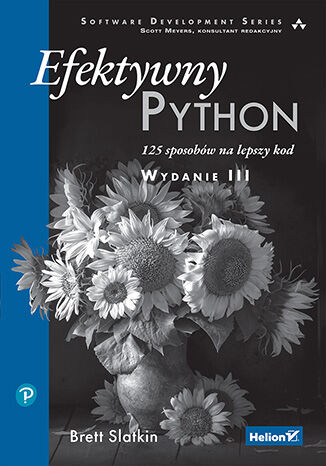
Efektywny Python. 125 sposobów na lepszy kod. Wydanie III
Brett Slatkin
Python cieszy się dużym uznaniem. Jest wszechstronny i efektywny, a przy tym konsekwentnie rozwijany. Język ten ma również wiele trudniejszych do uchwycenia zalet. Aby uzyskać imponujące efekty wydajności kodu, jego wieloplatformowość i bezpieczeństwo, a przy tym w pełni korzystać z możliwości Pythona, potrzebujesz czegoś więcej niż tylko znajomość jego składni. To trzecie, zaktualizowane i uzupełnione wydanie lubianego podręcznika programowania w Pythonie. Zawiera dodatkowe rozdziały dotyczące tak ważnych zagadnień jak algorytmy i struktury danych. Zawarty w książce materiał, w tym słowniki , ułatwi Ci tworzenie solidnego i wydajnego kodu. Znajdziesz tu jasne, zwięzłe i praktyczne rady przeznaczone dla programistów na różnym poziomie zaawansowania. Niezależnie od tego, czy tworzysz aplikacje internetowe, analizujesz dane, czy trenujesz modele sztucznej inteligencji, dzięki temu podręcznikowi zdobędziesz cenne umiejętności pracy z Pythonem! W książce: 125 gotowych do użycia sposobów na lepszy kod uaktualnione najlepsze praktyki, uwzględniające nowości w Pythonie do wersji 3.13 dodatkowe rozdziały poświęcone tworzeniu niezawodnych, wysoko wydajnych programów tworzenie modułów rozszerzeń w języku C współpraca z natywnymi bibliotekami współdzielonymi praktyczne przykłady kodu odzwierciedlające najlepsze praktyki Programujesz w Pythonie? Poznaj 125 sposobów na lepszy kod!
Efektywny Python. 59 sposobów na lepszy kod
Brett Slatkin
Twórz zoptymalizowany i efektywny kod! Python to jeden z najstarszych używanych języków programowania. Co ciekawe, jego nazwa wcale nie pochodzi od zwierzęcia, a od popularnego serialu komediowego. Język ten daje programistom ogromne pole do popisu, a ponadto posiada sporo bibliotek realizujących najbardziej wymyślne zadania. Z uwagi na te atuty rozpoczęcie programowania w tym języku nie powinno przysporzyć Ci większych problemów. Jeżeli jednak chcesz robić to efektywnie, potrzebujesz tej książki. Sięgnij po nią i poznaj 59 sposobów na tworzenie lepszego kodu w Pythonie! W kolejnych rozdziałach znajdziesz bezcenne informacje na temat programowania zgodnego z duchem Pythona, funkcji, klas i dziedziczenia oraz metaklas i atrybutów. Dalsze strony zawierają przydatną wiedzę na temat wątków i współbieżności, wbudowanych modułów oraz sposobów zarządzania kodem. Książka ta sprawdzi się w rękach każdego programisty pracującego w języku Python. Warto ją mieć! W książce poruszono następujące zagadnienia: Podpowiedzi na wszystkich najważniejszych obszarach programowania w Pythonie 3.x i 2.x wraz z dokładnymi objaśnieniami i przykładami. Najlepsze praktyki dotyczące tworzenia funkcji czytelnie wyrażających intencje, promujących wielokrotne użycie tego samego kodu i pomagających uniknąć błędów. Omówienie tematu właściwego wyrażenia zachowania programu za pomocą klas i obiektów. Podpowiedzi pomagające uniknąć pułapek podczas użycia metaklas i atrybutów dynamicznych. Prezentacja znacznie efektywniejszego podejścia w zakresie współbieżności i równoległości. Przedstawienie lepszych technik i sposobów użycia wbudowanych modułów Pythona. Prezentacja narzędzi i najlepszych praktyk stosowanych podczas wspólnej pracy nad projektami. Rozwiązania dotyczące usuwania błędów, testowania i optymalizacji, co prowadzi do poprawy jakości kodu i wydajności jego działania. Poznaj najlepsze praktyki programowania w Pythonie!
Efektywny Python. 90 sposobów na lepszy kod. Wydanie II
Brett Slatkin
Python słusznie cieszy się stale rosnącym uznaniem programistów: jest wszechstronny i efektywny, pozwala też na tworzenie wysokiej jakości oprogramowania. Język ten ma poza tym wiele trudniejszych do uchwycenia zalet. Aby uzyskać naprawdę imponujące efekty w zakresie wydajności kodu, jego przenaszalności i bezpieczeństwa, trzeba zagłębić się w dość subtelne niuanse kodowania. Wielu programistów, choć posiada spore doświadczenie w programowaniu w innych językach, nie dostrzega tych zależności. Z kolei osoby dopiero rozpoczynające przygodę z programowaniem mogą poczuć się zaskoczone i zdezorientowane, jeśli nie zdołają uniknąć kilku nieoczywistych błędów podczas pracy. To drugie, zaktualizowane i uzupełnione wydanie podręcznika programowania w duchu Pythona. Zawarty tu materiał umożliwia wykorzystanie tego języka do tworzenia wyjątkowo solidnego i niezwykle wydajnego kodu źródłowego. Książka jest napisana w zwięzłym stylu i ma przemyślany układ, oparty na scenariuszach, dzięki czemu przystępnie przedstawia 90 najlepszych praktyk, wskazówek i skrótów oraz wyjaśnia ich działanie na rzeczywistych przykładach kodu. Pokazano tu szereg mało znanych, być może nieco dziwnych sztuczek i sposobów udoskonalających pracę kodu źródłowego. Przyswojenie zaprezentowanych tu praktyk pozwoli Ci tworzyć kod łatwy do zrozumienia, obsługi i dalszej rozbudowy. W tym wydaniu treść poszczególnych wskazówek zaktualizowano do Pythona 3, a poszczególne przykłady kodu zostały przejrzane i udoskonalone - najlepsze praktyki również ewoluują! W tej książce: nowe rozwiązania dla wszystkich najważniejszych obszarów programowania w Pythonie techniki stosowania konstrukcji składanych i funkcji generatorów właściwe korzystanie z klas, obiektów, metaklas i atrybutów dynamicznych współbieżność, równoległość, optymalizacja i bezpieczeństwo kodu wbudowane moduły Pythona do debugowania i testowania narzędzia i najlepsze praktyki podczas wspólnej pracy nad projektami Python: elegancja, wydajność i ekspresja kodu!