
Programowanie
Niezależnie czy dopiero rozpoczynacie swoją przygodę z programowaniem, czy jesteście już uznanymi na rynku profesjonalistami, to w kategorii Programowanie na pewno znajdziecie podręczniki, które pomogą Wam w przebiegu pracy, czy też w nauce podstaw programowania.
W książkach z tego działu zawarta jest wiedza zarówno związana z czysto technicznymi sprawami typu składnia języków, ale także z umiejętnościami bardziej "miękkimi" jak obsługa i wykorzystanie pełnych możliwości środowisk programistycznych, czy też projektowanie oprogramowania lub metody numeryczne czy oraz struktury danych.

Burak Serdar
The Go language has been gaining momentum due to its treatment of concurrency as a core language feature, making concurrent programming more accessible than ever. However, concurrency is still an inherently difficult skill to master, since it requires the development of the right mindset to decompose problems into concurrent components correctly. This book will guide you in deepening your understanding of concurrency and show you how to make the most of its advantages.You’ll start by learning what guarantees are offered by the language when running concurrent programs. Through multiple examples, you will see how to use this information to develop concurrent algorithms that run without data races and complete successfully. You’ll also find out all you need to know about multiple common concurrency patterns, such as worker pools, asynchronous pipelines, fan-in/fan-out, scheduling periodic or future tasks, and error and panic handling in goroutines.The central theme of this book is to give you, the developer, an understanding of why concurrent programs behave the way they do, and how they can be used to build correct programs that work the same way in all platforms.By the time you finish the final chapter, you’ll be able to develop, analyze, and troubleshoot concurrent algorithms written in Go.
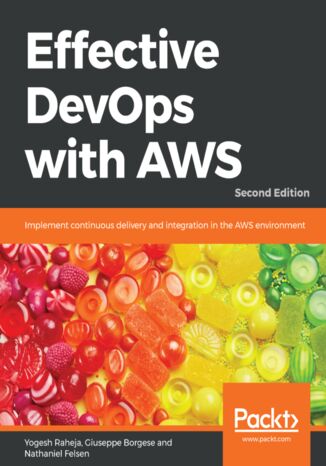
Yogesh Raheja, Thinknyx Technologies, Giuseppe Borgese, Nathaniel...
The DevOps movement has transformed the way modern tech companies work. Amazon Web Services (AWS), which has been at the forefront of the cloud computing revolution, has also been a key contributor to the DevOps movement, creating a huge range of managed services that help you implement DevOps principles.Effective DevOps with AWS, Second Edition will help you to understand how the most successful tech start-ups launch and scale their services on AWS, and will teach you how you can do the same. This book explains how to treat infrastructure as code, meaning you can bring resources online and offline as easily as you control your software. You will also build a continuous integration and continuous deployment pipeline to keep your app up to date. Once you have gotten to grips will all this, we'll move on to how to scale your applications to offer maximum performance to users even when traffic spikes, by using the latest technologies, such as containers. In addition to this, you'll get insights into monitoring and alerting, so you can make sure your users have the best experience when using your service. In the concluding chapters, we'll cover inbuilt AWS tools such as CodeDeploy and CloudFormation, which are used by many AWS administrators to perform DevOps. By the end of this book, you'll have learned how to ensure the security of your platform and data, using the latest and most prominent AWS tools.
Effective DevOps with AWS. Ship faster, scale better, and deliver incredible productivity
Nathaniel Felsen
The DevOps movement has transformed the way modern tech companies work. AWS which has been on the forefront of the Cloud computing revolution has also been a key contributor of this DevOps movement creating a huge range of managed services that help you implement the DevOps principles. In this book, you’ll see how the most successful tech start-ups launch and scale their services on AWS and how you can too. Written by a lead member of Mediums DevOps team, this book explains how to treat infrastructure as code, meaning you can bring resources online and offline as necessary with the code as easily as you control your software. You will also build a continuous integration and continuous deployment pipeline to keep your app up to date. You’ll find out how to scale your applications to offer maximum performance to users anywhere in the world, even when traffic spikes with the latest technologies, such as containers and serverless computing. You will also take a deep dive into monitoring and alerting to make sure your users have the best experience when using your service.Finally, you’ll get to grips with ensuring the security of your platform and data.
Effective .NET Memory Management. Build memory-efficient cross-platform applications using .NET Core
Trevoir Williams
In today’s software development landscape, efficient memory management is crucial for ensuring application performance and scalability. Effective .NET Memory Management addresses this need by explaining the intricacies of memory utilization within .NET Core apps, from fundamental concepts to advanced optimization techniques. Starting with an overview of memory management basics, you’ll quickly go through .NET’s garbage collection system. You’ll grasp the mechanics of memory allocation and gain insights into the distinctions between stack and heap memory and the nuances of value types and reference types. Building on this foundation, this book will help you apply practical strategies to address real-world app demands, spanning profiling memory usage, spotting memory leaks, and diagnosing performance bottlenecks, through clear explanations and hands-on examples. This book goes beyond theory, detailing actionable techniques to optimize data structures, minimize memory fragmentation, and streamline memory access in scenarios involving multithreading and asynchronous programming for creating responsive and resource-efficient apps that can scale without sacrificing performance. By the end of this book, you’ll have gained the knowledge to write clean, efficient code that maximizes memory usage and boosts app performance.
Alfonso San Miguel Sánchez, Danny Obando García
In response to the escalating challenges of cloud adoption, where balancing costs and maximizing cloud values is paramount, FinOps practices have emerged as the cornerstone of fi nancial optimization. This book serves as your comprehensive guide to understanding how FinOps is implemented in organizations worldwide through team collaboration and proper cloud governance.Presenting FinOps from a practical point of view, covering the three phases—inform, optimize, and operate—this book demonstrates an end-to-end methodology for optimizing costs and performing financial management in the cloud. You’ll learn how to design KPIs and dashboards for judicious cost allocation, covering key features of cloud services such as reserved instances, rightsizing, scaling, and automation for cost optimization. This book further simplifi es architectural concepts and best practices, enabling you to design superior and more optimized solutions. Finally, you’ll discover potential synergies and future challenges, from the integration of artifi cial intelligence to cloud sustainability considerations, to prepare for the future of cloud FinOps.By the end of this book, you’ll have built the expertise to seamlessly implement FinOps practices across major public clouds, armed with insights and ideas to propel your organization toward business growth.
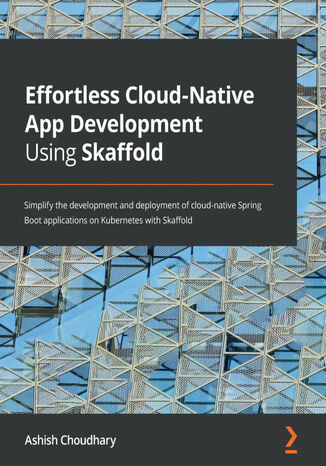
Ashish Choudhary
Kubernetes has become the de facto standard for container orchestration, drastically improving how we deploy and manage cloud-native apps. Although it has simplified the lives of support professionals, we cannot say the same for developers who need to be equipped with better tools to increase productivity. An automated workflow that solves a wide variety of problems that every developer faces can make all the difference!Enter Skaffold – a command-line tool that automates the build, push, and deploy steps for Kubernetes applications.This book is divided into three parts, starting with common challenges encountered by developers in building apps with Kubernetes. The second part covers Skaffold features, its architecture, supported container image builders, and more. In the last part, you'll focus on practical implementation, learning how to deploy Spring Boot apps to cloud platforms such as Google Cloud Platform (GCP) using Skaffold. You'll also create CI/CD pipelines for your cloud-native apps with Skaffold. Although the examples covered in this book are written in Java and Spring Boot, the techniques can be applied to apps built using other technologies too.By the end of this Skaffold book, you'll develop skills that will help accelerate your inner development loop and be able to build and deploy your apps to the Kubernetes cluster with Skaffold.
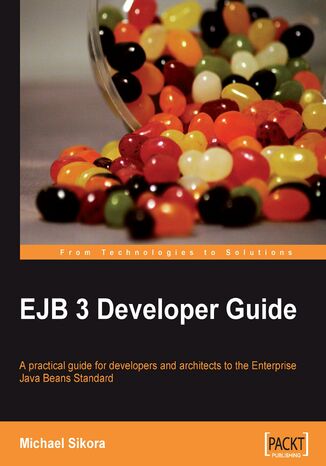
Michael Sikora
This book is a fast-paced tutorial that explores the key features of EJB 3 with many accompanying examples. This book is not a complete reference guide, but a concise exploration of EJB 3's core elements. This book is primarily aimed at professional developers who already have a working knowledge of Java. Enterprise architects and designers with a background in Java would also find this book of use. Previous experience of working with Java is essential and knowledge of relational databases is desirable. As this book is an introduction to EJB 3, it is aimed at those who are new to EJB 3. As the new version of EJB is so radically different from the previous version (EJB 2.x), the book is suitable for and should be of interest to those who have had experience working with EJB 2.x. The text makes it clear where the differences between the versions of EJB lie, although they are not explored in detail.
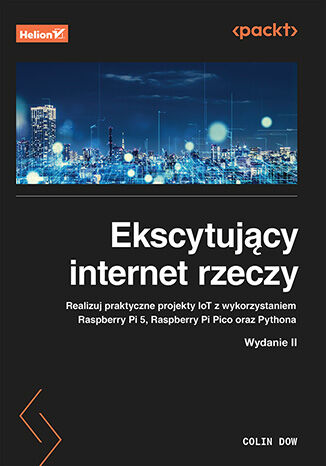
Colin Dow
Programowanie dla internetu rzeczy różni się od tworzenia standardowych aplikacji internetowych. Najlepszym sposobem na naukę praktycznych projektów IoT jest praca z mikrokontrolerami Raspberry Pi - znanymi z wszechstronności i przystępnej ceny. To one znajdują się dziś w awangardzie urządzeń stosowanych w inteligentnych rozwiązaniach internetu rzeczy i wyznaczają nowe trendy. Dzięki tej książce pewnie wkroczysz do fascynującego świata internetu rzeczy! Zaczniesz od podstaw: poznasz usługi internetowe, komunikację LoRa, porty GPIO, a także możliwości najnowszych mikrokontrolerów Raspberry Pi. Dowiesz się też, czym jest ROS i jak stworzyć projekt oparty na rozpoznawaniu obrazów. Krok po kroku będziesz przechodzić do coraz bardziej zaawansowanych rozwiązań. Nauczysz się integrować aplikacje z usługami sieciowymi i używać technologii LoRa do komunikacji na dużą odległość przy niskim zużyciu energii. Dzięki jasnym instrukcjom i zrozumiałym wyjaśnieniom uzyskasz niezbędne umiejętności, by tworzyć innowacyjne urządzenia IoT. W książce: integracja usług internetowych w celu pobierania i analizowania danych w czasie rzeczywistym łączenie czujników, silników i wyświetlaczy podczas budowy inteligentnych urządzeń IoT budowanie wskaźnika pogody konstruowanie autonomicznego robota projekt domowego systemu zabezpieczeń zastosowanie LoRa i LoRaWAN do zdalnego monitorowania warunków środowiskowych