
Programowanie
Niezależnie czy dopiero rozpoczynacie swoją przygodę z programowaniem, czy jesteście już uznanymi na rynku profesjonalistami, to w kategorii Programowanie na pewno znajdziecie podręczniki, które pomogą Wam w przebiegu pracy, czy też w nauce podstaw programowania.
W książkach z tego działu zawarta jest wiedza zarówno związana z czysto technicznymi sprawami typu składnia języków, ale także z umiejętnościami bardziej "miękkimi" jak obsługa i wykorzystanie pełnych możliwości środowisk programistycznych, czy też projektowanie oprogramowania lub metody numeryczne czy oraz struktury danych.
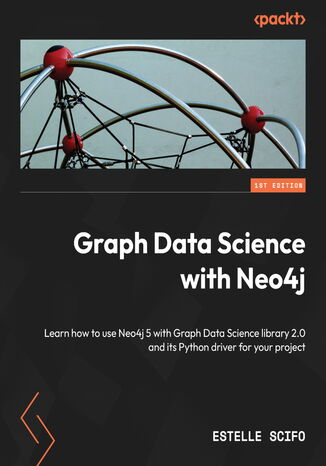
Estelle Scifo
Neo4j, along with its Graph Data Science (GDS) library, is a complete solution to store, query, and analyze graph data. As graph databases are getting more popular among developers, data scientists are likely to face such databases in their career, making it an indispensable skill to work with graph algorithms for extracting context information and improving the overall model prediction performance.Data scientists working with Python will be able to put their knowledge to work with this practical guide to Neo4j and the GDS library that offers step-by-step explanations of essential concepts and practical instructions for implementing data science techniques on graph data using the latest Neo4j version 5 and its associated libraries. You’ll start by querying Neo4j with Cypher and learn how to characterize graph datasets. As you get the hang of running graph algorithms on graph data stored into Neo4j, you’ll understand the new and advanced capabilities of the GDS library that enable you to make predictions and write data science pipelines. Using the newly released GDSL Python driver, you’ll be able to integrate graph algorithms into your ML pipeline.By the end of this book, you’ll be able to take advantage of the relationships in your dataset to improve your current model and make other types of elaborate predictions.
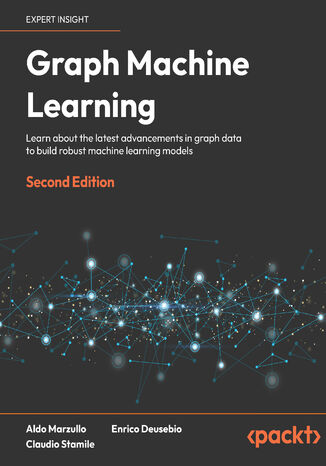
Aldo Marzullo, Enrico Deusebio, Claudio Stamile
Graph Machine Learning, Second Edition builds on its predecessor’s success, delivering the latest tools and techniques for this rapidly evolving field. From basic graph theory to advanced ML models, you’ll learn how to represent data as graphs to uncover hidden patterns and relationships, with practical implementation emphasized through refreshed code examples. This thoroughly updated edition replaces outdated examples with modern alternatives such as PyTorch and DGL, available on GitHub to support enhanced learning.The book also introduces new chapters on large language models and temporal graph learning, along with deeper insights into modern graph ML frameworks. Rather than serving as a step-by-step tutorial, it focuses on equipping you with fundamental problem-solving approaches that remain valuable even as specific technologies evolve. You will have a clear framework for assessing and selecting the right tools.By the end of this book, you’ll gain both a solid understanding of graph machine learning theory and the skills to apply it to real-world challenges.*Email sign-up and proof of purchase required -
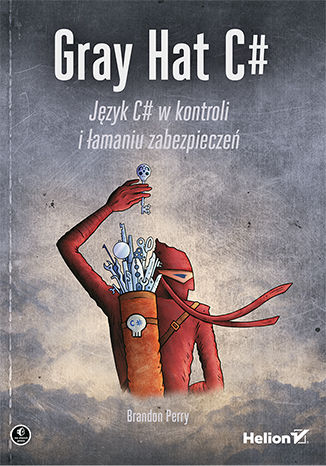
Gray Hat C#. Język C# w kontroli i łamaniu zabezpieczeń
Brandon Perry
C# to nowoczesny język programowania, który został od podstaw zaprojektowany jako obiektowy. Ta dojrzała technologia jest często wybierana przez twórców oprogramowania, również tego służącego do pokonywania zabezpieczeń systemów. Dzięki temu, że platforma .NET jest oprogramowaniem open source, w C# można pisać kod, który bez problemu będzie działał w każdym systemie operacyjnym. Co prawda język ten jest prosty i łatwy do nauczenia się, jednak dopiero gruntowna znajomość C# umożliwia efektywne tworzenie narzędzi związanych z bezpieczeństwem, służących choćby do wyszukiwania luk w infrastrukturze czy prowadzenia testów penetracyjnych. Ta książka jest przeznaczona dla specjalistów ds. bezpieczeństwa, którzy chcą korzystać z języka C# do takich zadań jak fuzzowanie, skanowanie w poszukiwaniu luk zabezpieczeń i analiza złośliwego oprogramowania. Opisano tu zarówno podstawy języka C#, jak i jego dość zaawansowane funkcje. Przedstawiono szereg bibliotek dostępnych dla tego języka. Pokazano, jak pisać kod wyszukujący luki w zabezpieczeniach i jak tworzyć eksploity. Przedstawiono sposoby korzystania z takich narzędzi jak Nessus, sqlmap i Cuckoo Sandbox. Dzięki technikom zaprezentowanym w książce administrator bezpieczeństwa bez problemu zautomatyzuje nawet najbardziej żmudne codzienne zadania! W tej książce między innymi: Podstawowe i zaawansowane funkcjonalności języka C# Generowanie kodu ładunków, również wieloplatformowych Skanery, w tym OpenVAS, Nessus i Nexpose Automatyczna identyfikacja luk umożliwiających wstrzyknięcie kodu SQL Tworzenie w C# narzędzi do inżynierii wstecznej C#. Sprawdź swój system zabezpieczeń! Brandon Perry jest programistą i gorącym zwolennikiem idei open source. Odkąd pojawiło się środowisko Mono, pisze aplikacje w języku C#. Tworzy też moduły dla frameworka Metasploit, analizuje pliki binarne i zarządza ciekawymi projektami (https://volatileminds.net/). Fascynuje się badaniami nad bezpieczeństwem systemów informatycznych. Chętnie dzieli się swoją wiedzą, pisze książki i pomaga innym w tworzeniu solidniejszego oprogramowania.
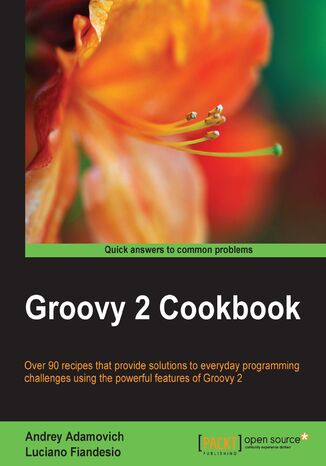
Andrey Adamovich, Luciano Fiandesio
Get up to speed with Groovy, a language for the Java Virtual Machine (JVM) that integrates features of both object-oriented and functional programming. This book will show you the powerful features of Groovy 2 applied to real-world scenarios and how the dynamic nature of the language makes it very simple to tackle problems that would otherwise require hours or days of research and implementation.Groovy 2 Cookbook contains a vast number of recipes covering many facets of today's programming landscape. From language-specific topics such as closures and metaprogramming, to more advanced applications of Groovy flexibility such as DSL and testing techniques, this book gives you quick solutions to everyday problems.The recipes in this book start from the basics of installing Groovy and running your first scripts and continue with progressively more advanced examples that will help you to take advantage of the language's amazing features.Packed with hundreds of tried-and-true Groovy recipes, Groovy 2 Cookbook includes code segments covering many specialized APIs to work with files and collections, manipulate XML, work with REST services and JSON, create asynchronous tasks, and more. But Groovy does more than just ease traditional Java development: it brings modern programming features to the Java platform like closures, duck-typing, and metaprogramming.In this new book, you'll find code examples that you can use in your projects right away along with a discussion about how and why the solution works. Focusing on what's useful and tricky, Groovy 2 Cookbook offers a wealth of useful code for all Java and Groovy programmers, not just advanced practitioners.
gRPC Go for Professionals. Implement, test, and deploy production-grade microservices
Clément Jean
In recent years, the popularity of microservice architecture has surged, bringing forth a new set of requirements. Among these, efficient communication between the different services takes center stage, and that's where gRPC shines. This book will take you through creating gRPC servers and clients in an efficient, secure, and scalable way. However, communication is just one aspect of microservices, so this book goes beyond that to show you how to deploy your application on Kubernetes and configure other tools that are needed for making your application more resilient. With these tools at your disposal, you’ll be ready to get started with using gRPC in a microservice architecture.In gRPC Go for Professionals, you'll explore core concepts such as message transmission and the role of Protobuf in serialization and deserialization. Through a step-by-step implementation of a TODO list API, you’ll see the different features of gRPC in action. You’ll then learn different approaches for testing your services and debugging your API endpoints. Finally, you’ll get to grips with deploying the application services via Docker images and Kubernetes.
Marcelo Guerra Hahn
Developing graphical user interfaces in C# can feel overwhelming with so many frameworks and tools to choose from. This book simplifies the journey by teaching GUI fundamentals through small, structured, and practical examples.You start with core GUI concepts, event driven programming, and basic interface design. Then you build simple web apps using Blazor and WebAssembly, learning about components, rendering, and data binding. Next, you explore cross platform development with .NET MAUI, working with XAML, layouts, controls, and basic app logic. Finally, you create Windows desktop applications with WinUI 3, using common controls and foundational patterns such as MVVM and data binding.Rather than focusing on complex enterprise architecture, the book builds your skills step by step. Each chapter reinforces key ideas through clear examples designed to build confidence and practical understanding.Written by Marcelo, a developer with over 18 years of experience in C#, C++, Azure, and data driven systems, this book helps you gain clarity in GUI development. By the end, you will be able to create simple, well structured web and desktop interfaces in C# and understand the core concepts behind them.
Shiva Achari
This book jumps into the world of Hadoop and its tools, to help you learn how to use them effectively to optimize and improve the way you handle Big Data.Starting with the fundamentals Hadoop YARN, MapReduce, HDFS, and other vital elements in the Hadoop ecosystem, you will soon learn many exciting topics such as MapReduce patterns, data management, and real-time data analysis using Hadoop. You will also explore a number of the leading data processing tools including Hive and Pig, and learn how to use Sqoop and Flume, two of the most powerful technologies used for data ingestion. With further guidance on data streaming and real-time analytics with Storm and Spark, Hadoop Essentials is a reliable and relevant resource for anyone who understands the difficulties - and opportunities - presented by Big Data today.With this guide, you'll develop your confidence with Hadoop, and be able to use the knowledge and skills you learn to successfully harness its unparalleled capabilities.
Nanayakkara Kuruppuge T Gunarathne
If you are a Big Data enthusiast and wish to use Hadoop v2 to solve your problems, then this book is for you. This book is for Java programmers with little to moderate knowledge of Hadoop MapReduce. This is also a one-stop reference for developers and system admins who want to quickly get up to speed with using Hadoop v2. It would be helpful to have a basic knowledge of software development using Java and a basic working knowledge of Linux.