
Programowanie
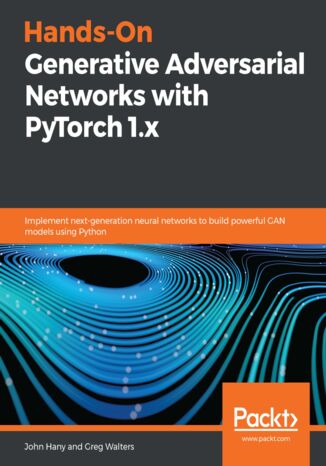
John Hany , Greg Walters
With continuously evolving research and development, Generative Adversarial Networks (GANs) are the next big thing in the field of deep learning. This book highlights the key improvements in GANs over generative models and guides in making the best out of GANs with the help of hands-on examples.This book starts by taking you through the core concepts necessary to understand how each component of a GAN model works. You'll build your first GAN model to understand how generator and discriminator networks function. As you advance, you'll delve into a range of examples and datasets to build a variety of GAN networks using PyTorch functionalities and services, and become well-versed with architectures, training strategies, and evaluation methods for image generation, translation, and restoration. You'll even learn how to apply GAN models to solve problems in areas such as computer vision, multimedia, 3D models, and natural language processing (NLP). The book covers how to overcome the challenges faced while building generative models from scratch. Finally, you'll also discover how to train your GAN models to generate adversarial examples to attack other CNN and GAN models.By the end of this book, you will have learned how to build, train, and optimize next-generation GAN models and use them to solve a variety of real-world problems.
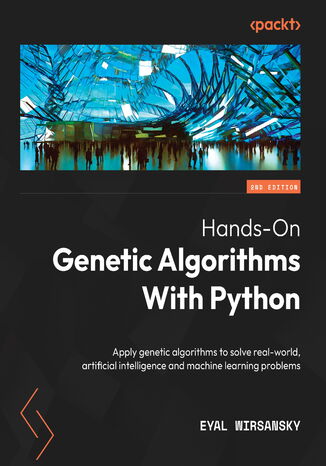
Eyal Wirsansky
Written by Eyal Wirsansky, a senior data scientist and AI researcher with over 25 years of experience and a research background in genetic algorithms and neural networks, Hands-On Genetic Algorithms with Python offers expert insights and practical knowledge to master genetic algorithms.After an introduction to genetic algorithms and their principles of operation, you’ll find out how they differ from traditional algorithms and the types of problems they can solve, followed by applying them to search and optimization tasks such as planning, scheduling, gaming, and analytics. As you progress, you’ll delve into explainable AI and apply genetic algorithms to AI to improve machine learning and deep learning models, as well as tackle reinforcement learning and NLP tasks. This updated second edition further expands on applying genetic algorithms to NLP and XAI and speeding up genetic algorithms with concurrency and cloud computing. You’ll also get to grips with the NEAT algorithm. The book concludes with an image reconstruction project and other related technologies for future applications.By the end of this book, you’ll have gained hands-on experience in applying genetic algorithms across a variety of fields, with emphasis on artificial intelligence with Python.
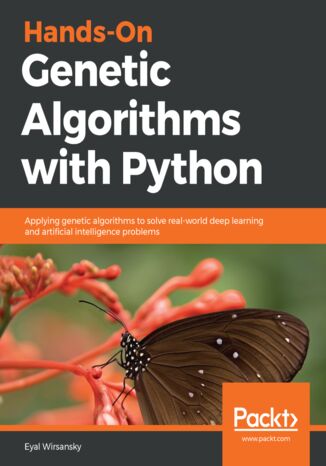
Eyal Wirsansky
Genetic algorithms are a family of search, optimization, and learning algorithms inspired by the principles of natural evolution. By imitating the evolutionary process, genetic algorithms can overcome hurdles encountered in traditional search algorithms and provide high-quality solutions for a variety of problems. This book will help you get to grips with a powerful yet simple approach to applying genetic algorithms to a wide range of tasks using Python, covering the latest developments in artificial intelligence.After introducing you to genetic algorithms and their principles of operation, you'll understand how they differ from traditional algorithms and what types of problems they can solve. You'll then discover how they can be applied to search and optimization problems, such as planning, scheduling, gaming, and analytics. As you advance, you'll also learn how to use genetic algorithms to improve your machine learning and deep learning models, solve reinforcement learning tasks, and perform image reconstruction. Finally, you'll cover several related technologies that can open up new possibilities for future applications.By the end of this book, you'll have hands-on experience of applying genetic algorithms in artificial intelligence as well as in numerous other domains.
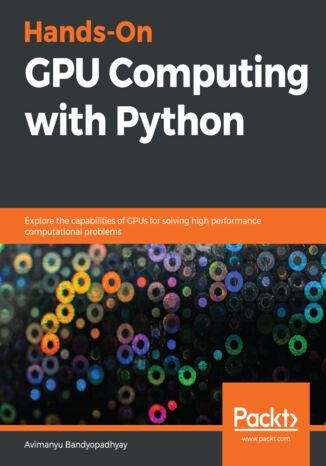
Avimanyu Bandyopadhyay
GPUs are proving to be excellent general purpose-parallel computing solutions for high-performance tasks such as deep learning and scientific computing.This book will be your guide to getting started with GPU computing. It begins by introducing GPU computing and explaining the GPU architecture and programming models. You will learn, by example, how to perform GPU programming with Python, and look at using integrations such as PyCUDA, PyOpenCL, CuPy, and Numba with Anaconda for various tasks such as machine learning and data mining. In addition to this, you will get to grips with GPU workflows, management, and deployment using modern containerization solutions. Toward the end of the book, you will get familiar with the principles of distributed computing for training machine learning models and enhancing efficiency and performance.By the end of this book, you will be able to set up a GPU ecosystem for running complex applications and data models that demand great processing capabilities, and be able to efficiently manage memory to compute your application effectively and quickly.
Hands-On GPU Programming with Python and CUDA. Explore high-performance parallel computing with CUDA
Dr. Brian Tuomanen
Hands-On GPU Programming with Python and CUDA hits the ground running: you’ll start by learning how to apply Amdahl’s Law, use a code profiler to identify bottlenecks in your Python code, and set up an appropriate GPU programming environment. You’ll then see how to “query” the GPU’s features and copy arrays of data to and from the GPU’s own memory.As you make your way through the book, you’ll launch code directly onto the GPU and write full blown GPU kernels and device functions in CUDA C. You’ll get to grips with profiling GPU code effectively and fully test and debug your code using Nsight IDE. Next, you’ll explore some of the more well-known NVIDIA libraries, such as cuFFT and cuBLAS.With a solid background in place, you will now apply your new-found knowledge to develop your very own GPU-based deep neural network from scratch. You’ll then explore advanced topics, such as warp shuffling, dynamic parallelism, and PTX assembly. In the final chapter, you’ll see some topics and applications related to GPU programming that you may wish to pursue, including AI, graphics, and blockchain.By the end of this book, you will be able to apply GPU programming to problems related to data science and high-performance computing.
Bhaumik Vaidya
Computer vision has been revolutionizing a wide range of industries, and OpenCV is the most widely chosen tool for computer vision with its ability to work in multiple programming languages. Nowadays, in computer vision, there is a need to process large images in real time, which is difficult to handle for OpenCV on its own. This is where CUDA comes into the picture, allowing OpenCV to leverage powerful NVDIA GPUs. This book provides a detailed overview of integrating OpenCV with CUDA for practical applications. To start with, you’ll understand GPU programming with CUDA, an essential aspect for computer vision developers who have never worked with GPUs. You’ll then move on to exploring OpenCV acceleration with GPUs and CUDA by walking through some practical examples.Once you have got to grips with the core concepts, you’ll familiarize yourself with deploying OpenCV applications on NVIDIA Jetson TX1, which is popular for computer vision and deep learning applications. The last chapters of the book explain PyCUDA, a Python library that leverages the power of CUDA and GPUs for accelerations and can be used by computer vision developers who use OpenCV with Python.By the end of this book, you’ll have enhanced computer vision applications with the help of this book's hands-on approach.
Corey Wade
XGBoost is an industry-proven, open-source software library that provides a gradient boosting framework for scaling billions of data points quickly and efficiently.The book introduces machine learning and XGBoost in scikit-learn before building up to the theory behind gradient boosting. You’ll cover decision trees and analyze bagging in the machine learning context, learning hyperparameters that extend to XGBoost along the way. You’ll build gradient boosting models from scratch and extend gradient boosting to big data while recognizing speed limitations using timers. Details in XGBoost are explored with a focus on speed enhancements and deriving parameters mathematically. With the help of detailed case studies, you’ll practice building and fine-tuning XGBoost classifiers and regressors using scikit-learn and the original Python API. You'll leverage XGBoost hyperparameters to improve scores, correct missing values, scale imbalanced datasets, and fine-tune alternative base learners. Finally, you'll apply advanced XGBoost techniques like building non-correlated ensembles, stacking models, and preparing models for industry deployment using sparse matrices, customized transformers, and pipelines.By the end of the book, you’ll be able to build high-performing machine learning models using XGBoost with minimal errors and maximum speed.
Andrew Williams
Go is often compared to C++ when it comes to low-level programming and implementations that require faster processing, such as Graphical User Interfaces (GUIs). In fact, many claim that Go is superior to C++ in terms of its concurrency and ease of use. Most graphical application toolkits, though, are still written using C or C++, and so they don't enjoy the benefits of using a modern programming language such as Go. This guide to programming GUIs with Go 1.11 explores the various toolkits available, including UI, Walk, Shiny, and Fyne. The book compares the vision behind each project to help you pick the right approach for your project. Each framework is described in detail, outlining how you can build performant applications that users will love. To aid you further in creating applications using these emerging technologies, you'll be able to easily refer to code samples and screenshots featured in the book. In addition to toolkit-specific discussions, you'll cover more complex topics, such as how to structure growing graphical applications, and how cross-platform applications can integrate with each desktop operating system to create a seamless user experience. By delving into techniques and best practices for organizing and scaling Go-based graphical applications, you'll also glimpse Go's impressive concurrency system. In the concluding chapters, you'll discover how to distribute to the main desktop marketplaces and distribution channels. By the end of this book, you'll be a confident GUI developer who can use the Go language to boost the performance of your applications.