
Programowanie
Niezależnie czy dopiero rozpoczynacie swoją przygodę z programowaniem, czy jesteście już uznanymi na rynku profesjonalistami, to w kategorii Programowanie na pewno znajdziecie podręczniki, które pomogą Wam w przebiegu pracy, czy też w nauce podstaw programowania.
W książkach z tego działu zawarta jest wiedza zarówno związana z czysto technicznymi sprawami typu składnia języków, ale także z umiejętnościami bardziej "miękkimi" jak obsługa i wykorzystanie pełnych możliwości środowisk programistycznych, czy też projektowanie oprogramowania lub metody numeryczne czy oraz struktury danych.
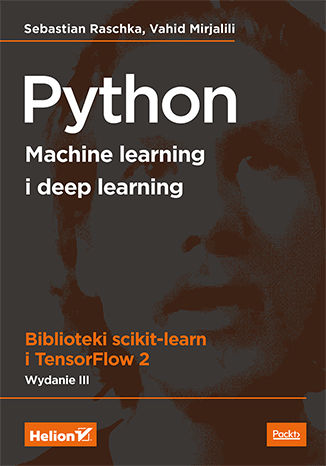
Python. Machine learning i deep learning. Biblioteki scikit-learn i TensorFlow 2. Wydanie III
Sebastian Raschka, Vahid Mirjalili
Uczenie maszynowe jest jedną z najbardziej fascynujących technologii naszych czasów - rozwojem jego najróżniejszych zastosowań zajmują się tacy giganci jak Google, Facebook, Apple, Amazon czy IBM. Uczenie maszynowe otwiera zupełnie nowe możliwości i powoli staje się nieodzowne: wystarczy wymienić asystenty głosowe w smartfonach, chatboty ułatwiające klientom wybór produktu, a także sieci ułatwiające podejmowanie decyzji o inwestycjach giełdowych, filtrujące niechciane wiadomości e-mail czy wspomagające diagnostykę medyczną. Oto obszerny przewodnik po uczeniu maszynowym i uczeniu głębokim w Pythonie. Zawiera dokładne omówienie najważniejszych technik uczenia maszynowego oraz staranne wyjaśnienie zasad rządzących tą technologią. Poszczególne zagadnienia zilustrowano mnóstwem wyjaśnień, wizualizacji i przykładów, co znakomicie ułatwia zrozumienie materiału i sprawne rozpoczęcie samodzielnego budowania aplikacji i modeli, takich jak te służące do klasyfikacji obrazów, odkrywania ukrytych wzorców czy wydobywania dodatkowych informacji z danych. Wydanie trzecie zostało zaktualizowane - znalazł się w nim opis biblioteki TensorFlow 2 i najnowszych dodatków do biblioteki scikit-learn. Dodano również wprowadzenie do dwóch nowatorskich technik: uczenia przez wzmacnianie i budowy generatywnych sieci przeciwstawnych (GAN). W książce między innymi: platformy, modele i techniki uczenia maszynowego wykorzystywanie biblioteki scikit-learn i TensorFlow sieci neuronowe, sieci GAN i inne przygotowywanie danych dla modeli uczenia maszynowego ocena i strojenie modeli analizy: regresyjna, skupień i sentymentów Uczenie głębokie z Pythonem: zrozum i zastosuj!
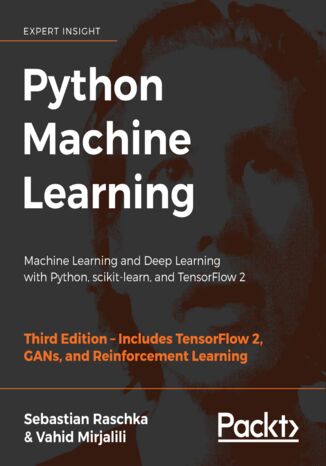
Sebastian Raschka, Vahid Mirjalili
Python Machine Learning, Third Edition is a comprehensive guide to machine learning and deep learning with Python. It acts as both a step-by-step tutorial, and a reference you'll keep coming back to as you build your machine learning systems.Packed with clear explanations, visualizations, and working examples, the book covers all the essential machine learning techniques in depth. While some books teach you only to follow instructions, with this machine learning book, Raschka and Mirjalili teach the principles behind machine learning, allowing you to build models and applications for yourself.Updated for TensorFlow 2.0, this new third edition introduces readers to its new Keras API features, as well as the latest additions to scikit-learn. It's also expanded to cover cutting-edge reinforcement learning techniques based on deep learning, as well as an introduction to GANs. Finally, this book also explores a subfield of natural language processing (NLP) called sentiment analysis, helping you learn how to use machine learning algorithms to classify documents.This book is your companion to machine learning with Python, whether you're a Python developer new to machine learning or want to deepen your knowledge of the latest developments.
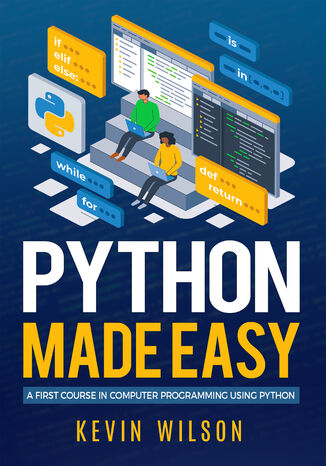
Python Made Easy. A First Course in Computer Programming Using Python
Kevin Wilson
Python Made Easy is designed to transform beginners into proficient Python programmers. The journey begins with an introduction to Python, covering basic concepts and syntax that lay the foundation for your coding skills. As you progress, you'll dive into essential programming constructs like data structures, functions, and file handling.In the second phase of the course, you'll explore more complex topics such as object-oriented programming, modules, and libraries. These sections will give you the tools to write efficient, reusable, and modular code. You'll also learn how to handle exceptions, ensuring your programs are robust and error-resistant. Special attention is given to graphical user interfaces (GUIs) and game development, making your Python skills applicable to a wide range of projects.The final part of the course covers advanced topics like debugging, testing, and deploying Python applications. You'll also delve into web development, where you'll learn to build and deploy web applications using Python. The course concludes with valuable video resources to reinforce your learning and provide additional insights. By the end of this course, you'll have a solid understanding of Python and be ready to tackle real-world programming challenges.
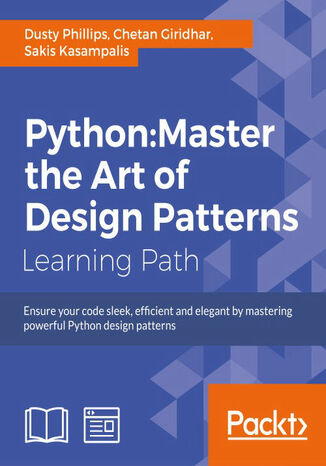
Python: Master the Art of Design Patterns. Click here to enter text
Dusty Phillips, Chetan Giridhar, Sakis Kasampalis
Python is an object-oriented scripting language that is used in everything from data science to web development. Known for its simplicity, Python increases productivity and minimizes development time. Through applying essential software engineering design patterns to Python, Python code becomes even more efficient and reusable from project to project. This learning path takes you through every traditional and advanced design pattern best applied to Python code, building your skills in writing exceptional Python. Divided into three distinct modules, you’ll go from foundational to advanced concepts by following a series of practical tutorials.Start with the bedrock of Python programming – the object-oriented paradigm. Rethink the way you work with Python as you work through the Python data structures and object-oriented techniques essential to modern Python programming. Build your confidence as you learn Python syntax, and how to use OOP principles with Python tools such as Django and Kivy.In the second module, run through the most common and most useful design patterns from a Python perspective. Progress through Singleton patterns, Factory patterns, Façade patterns and more all with detailed hands-on guidance. Enhance your professional abilities in in software architecture, design, and development.In the final module, run through the more complex and less common design patterns, discovering how to apply them to Python coding with the help of real-world examples. Get to grips with the best practices of writing Python, as well as creating systems architecture and troubleshooting issues.This Learning Path combines some of the best that Packt has to offer in one complete, curated package. It includes content from the following Packt products:? Python 3 Object-Oriented Programming - Second Edition by Dusty Phillips? Learning Python Design Patterns - Second Edition by Chetan Giridhar? Mastering Python Design Patterns by Sakis Kasampalis
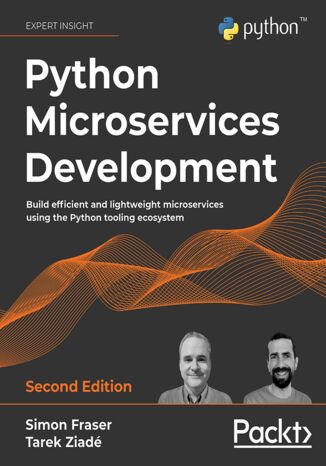
Simon Fraser, Tarek Ziadé
The small scope and self-contained nature of microservices make them faster, cleaner, and more scalable than code-heavy monolithic applications. However, building microservices architecture that is efficient as well as lightweight into your applications can be challenging due to the complexity of all the interacting pieces.Python Microservices Development, Second Edition will teach you how to overcome these issues and craft applications that are built as small standard units using proven best practices and avoiding common pitfalls. Through hands-on examples, this book will help you to build efficient microservices using Quart, SQLAlchemy, and other modern Python toolsIn this updated edition, you will learn how to secure connections between services and how to script Nginx using Lua to build web application firewall features such as rate limiting. Python Microservices Development, Second Edition describes how to use containers and AWS to deploy your services. By the end of the book, you’ll have created a complete Python application based on microservices.
Python Microservices Development. Build, test, deploy, and scale microservices in Python
Tarek Ziadé
We often deploy our web applications into the cloud, and our code needs to interact with many third-party services. An efficient way to build applications to do this is through microservices architecture. But, in practice, it's hard to get this right due to the complexity of all the pieces interacting with each other.This book will teach you how to overcome these issues and craft applications that are built as small standard units, using all the proven best practices and avoiding the usual traps. It's a practical book: you’ll build everything using Python 3 and its amazing tooling ecosystem. You will understand the principles of TDD and apply them. You will use Flask, Tox, and other tools to build your services using best practices. You will learn how to secure connections between services, and how to script Nginx using Lua to build web application firewall features such as rate limiting. You will also familiarize yourself with Docker’s role in microservices, and use Docker containers, CoreOS, and Amazon Web Services to deploy your services.This book will take you on a journey, ending with the creation of a complete Python application based on microservices. By the end of the book, you will be well versed with the fundamentals of building, designing, testing, and deploying your Python microservices.
Python Microservices with FastAPI. Design production-ready, AI-enabled microservices with Python
Giunio De Luca, Igor Benav
This book shows you how to turn an idea into a reliable product.This is a playbook for practical progress. Choose what to ship now, what to delay, and how to avoid risky changes. Keep services tidy, naming clear, and tests small but useful. You will build a realistic end-to-end system step by step, following the evolution of a babysitting marketplace platform with sign-up, search, booking, messaging, and payments delivered in steady increments.When it is time to add intelligence, you learn practical ways to use AI for customer support, recommendations, and operational insights. The focus stays on measurable value, not hype, while keeping performance, costs, and reliability predictable in production.Your guides are Giunio De Luca, PhD, author of Packt’s FastAPI Cookbook and an architect who has shipped systems across research, sports, and energy, and Igor “Benav” Magalhães, founder of Benav Labs and maintainer of widely used open-source tools. They share patterns they rely on when deadlines are real and reliability matters.By the end, you will not just know FastAPI. You will think like a senior engineer, plan delivery with confidence, avoid common traps, measure what matters, and run a backend platform that users trust and teams enjoy maintaining.
Python na maturze. Rozwiązania i analiza wybranych zadań programistycznych
Roland Zimek
Matura z Pythonem to nic trudnego! Ucz się! Analizuj! Programuj! Nauka programowania na dobre zadomowiła się w szkołach, a umiejętności informatyczne są od lat sprawdzane na egzaminach maturalnych. Jej adepci zapewne zdają sobie sprawę, jakim wzięciem na rynku cieszą się osoby, które mogą się pochwalić znajomością Pythona. To język, który dzięki swoim możliwościom i wszechstronności znajduje zastosowanie w najróżniejszych dziedzinach nauki, przemysłu i biznesu. Książka Python na maturze. Rozwiązania i analiza wybranych zadań programistycznych pozwoli Ci zapoznać się z prawdziwymi zadaniami maturalnymi z kilku ostatnich lat. Będziesz mógł je przeanalizować, a także opracować prawidłowe rozwiązania w języku Python. W efekcie nie tylko zdobędziesz i utrwalisz umiejętności programistyczne, lecz również - co nie mniej ważne - rozwiniesz zdolności w zakresie analizy problemów i wyboru właściwych rozwiązań. Treść zadań maturalnych Analiza problemów Praktyczne rozwiązania Uzasadnienie wybranych technik Typowe pułapki w zadaniach Składnia i instrukcje Pythona Zastosowanie języka w praktyce Naucz się Pythona i zdaj maturę jak prymus!