
Java
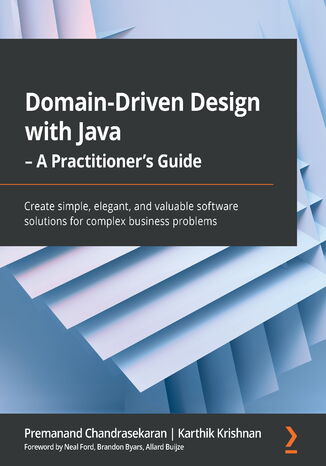
Premanand Chandrasekaran, Karthik Krishnan
Domain-Driven Design (DDD) makes available a set of techniques and patterns that enable domain experts, architects, and developers to work together to decompose complex business problems into a set of well-factored, collaborating, and loosely coupled subsystems.This practical guide will help you as a developer and architect to put your knowledge to work in order to create elegant software designs that are enjoyable to work with and easy to reason about. You'll begin with an introduction to the concepts of domain-driven design and discover various ways to apply them in real-world scenarios. You'll also appreciate how DDD is extremely relevant when creating cloud native solutions that employ modern techniques such as event-driven microservices and fine-grained architectures. As you advance through the chapters, you'll get acquainted with core DDD’s strategic design concepts such as the ubiquitous language, context maps, bounded contexts, and tactical design elements like aggregates and domain models and events. You'll understand how to apply modern, lightweight modeling techniques such as business value canvas, Wardley mapping, domain storytelling, and event storming, while also learning how to test-drive the system to create solutions that exhibit high degrees of internal quality.By the end of this software design book, you'll be able to architect, design, and implement robust, resilient, and performant distributed software solutions.
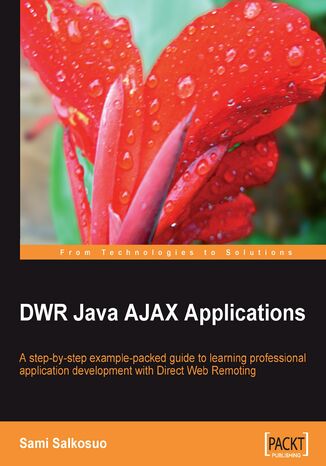
Sami Salkosuo
The initial part guides the reader through the features of DWR and how it works to make the developer ready for practical implementation. The later part contains plenty of code (with explanations) and graphical interface-driven step-by-step examples, which the reader can try out while surfing through the book to learn by doing. This book is written for competent Java developers and assumes that you are a professional rather than hobbyist. You should be familiar with the concepts of programming, Web 2.0, and AJAX.
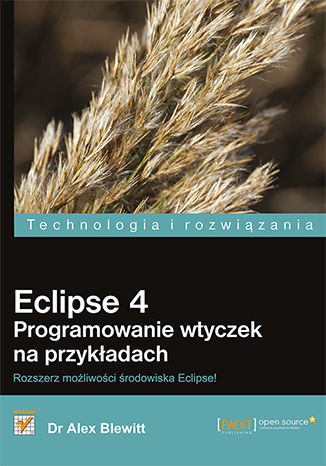
Eclipse 4. Programowanie wtyczek na przykładach
Dr Alex Blewitt
Rozszerz możliwości środowiska Eclipse! Eclipse to przede wszystkim darmowe i popularne środowisko programistyczne, używane głównie przez programistów języka Java. Dzięki swej elastyczności oraz możliwości tworzenia wtyczek Eclipse przydaje się także programistom wielu innych języków, między innymi C, C++, PHP. Platformę tę można wykorzystać również do tworzenia aplikacji. Dzięki tej książce przekonasz się, że to wcale nie musi być trudne! Już w trakcie lektury początkowych rozdziałów wykonasz swoją pierwszą wtyczkę. Nauczysz się tworzyć widoki w SWT oraz JFace, pobierać dane od użytkownika oraz korzystać z zasobów. Ponadto dowiesz się, jak grupować wtyczki oraz je aktualizować. Z pewnością Twoją uwagę zwróci rozdział poświęcony automatycznym testom tworzonych rozszerzeń. Dzięki nim będziesz zawsze pewien, że rozszerzenia działają dokładnie tak, jak zaplanowałeś! Książka ta jest doskonałą lekturą dla wszystkich programistów chcących wykorzystać potencjał platformy Eclipse! Dzięki tej książce: poznasz platformę Eclipse zrozumiesz model Eclipse w wersji 4 pozwolisz użytkownikom dostosować aplikację do ich potrzeb błyskawicznie zbudujesz aplikację z użyciem Eclipse Rozwiń swoje umiejętności programistyczne z Eclipse!
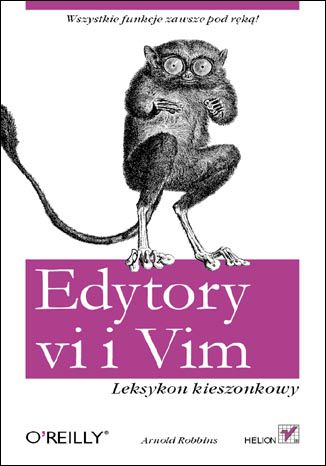
Edytory vi i Vim. Leksykon kieszonkowy
Arnold Robbins
Wszystkie funkcje zawsze pod ręką! Jak wygenerować losowy ciąg znaków? Posadzić nowego użytkownika przed vi i kazać mu wyłączyć edytor. To jeden z dowcipów obrazujących specyficzną składnię edytorów vi i Vim. Prawdopodobnie edytory te są trudne dla początkującego użytkownika, ale jeżeli tylko opanujesz ich elementarną obsługę, nie zamienisz ich na nic innego. Oba sprawdzą się idealnie przy edycji różnego rodzaju plików tekstowych - nieważne, czy będzie to plik HTML, PHP czy kod źródłowy Javy. Niezliczona ilość opcji edytorów vi i Vim sprawia, że zapamiętanie ich wszystkich sprawia pewne trudności. Dlatego Arnold Robbins zebrał dla Ciebie najbardziej użyteczne polecenia edytorów vi, Vim i najważniejszych klonów vi (nvi, elvis i vile), a potem skondensował je i przedstawił w formie niewielkiego leksykonu, który sprawdzi się w codziennej pracy. Wykorzystanie wyrażeń regularnych, wyszukiwanie i zamiana tekstu, zarządzanie oknami, funkcje użytkownika, dopełnianie poleceń to tylko niektóre z omówionych elementów. Leksykon ten powinni mieć zawsze pod ręką zarówno zaawansowani, jak i początkujący użytkownicy edytora vi! Opcje wywołania edytora Polecenia i opcje trybu edycyjnego vi Skróty klawiszowe Podstawienia i wyrażenia regularne Inicjalizacja sesji edycji i przywracanie plików Rozszerzona obsługa znaczników i stosu znaczników Polecenia i opcje edytora Vim Wykaz dodatkowych funkcji nvi, vile i elvisa Niezastąpiony przewodnik dla użytkowników edytorów vi i Vim!
Michael Sikora
This book is a fast-paced tutorial that explores the key features of EJB 3 with many accompanying examples. This book is not a complete reference guide, but a concise exploration of EJB 3's core elements. This book is primarily aimed at professional developers who already have a working knowledge of Java. Enterprise architects and designers with a background in Java would also find this book of use. Previous experience of working with Java is essential and knowledge of relational databases is desirable. As this book is an introduction to EJB 3, it is aimed at those who are new to EJB 3. As the new version of EJB is so radically different from the previous version (EJB 2.x), the book is suitable for and should be of interest to those who have had experience working with EJB 2.x. The text makes it clear where the differences between the versions of EJB lie, although they are not explored in detail.
Vishal Shukla
The Hadoop ecosystem is a de-facto standard for processing terra-bytes and peta-bytes of data. Lucene-enabled Elasticsearch is becoming an industry standard for its full-text search and aggregation capabilities. Elasticsearch-Hadoop serves as a perfect tool to bridge the worlds of Elasticsearch and Hadoop ecosystem to get best out of both the worlds. Powered with Kibana, this stack makes it a cakewalk to get surprising insights out of your massive amount of Hadoop ecosystem in a flash.In this book, you'll learn to use Elasticsearch, Kibana and Elasticsearch-Hadoop effectively to analyze and understand your HDFS and streaming data.You begin with an in-depth understanding of the Hadoop, Elasticsearch, Marvel, and Kibana setup. Right after this, you will learn to successfully import Hadoop data into Elasticsearch by writing MapReduce job in a real-world example. This is then followed by a comprehensive look at Elasticsearch essentials, such as full-text search analysis, queries, filters and aggregations; after which you gain an understanding of creating various visualizations and interactive dashboard using Kibana. Classifying your real-world streaming data and identifying trends in it using Storm and Elasticsearch are some of the other topics that we'll cover. You will also gain an insight about key concepts of Elasticsearch and Elasticsearch-hadoop in distributed mode, advanced configurations along with some common configuration presets you may need for your production deployments. You will have “Go production checklist” and high-level view for cluster administration for post-production. Towards the end, you will learn to integrate Elasticsearch with other Hadoop eco-system tools, such as Pig, Hive and Spark.
Rafal Kuc, Marek Rogozinski
This book begins by introducing the most commonly used Elasticsearch server functionalities, from creating your own index structure, through querying, faceting, and aggregations, and ends with cluster monitoring and problem diagnosis. As you progress through the book, you will cover topics such as starting Elasticsearch, creating a new index, and designing its proper structure. After that, you'll read about the query API that Elasticsearch exposes, as well as about filtering capabilities, aggregations, and faceting. Last but not least, you will get to know how to find similar documents by using similar functionalities and how to implement application alerts by using the prospective search functionality called percolator. Some advanced topics such as shard allocation control, gateway configuration, and how to use the discovery module will also be discussed. This book will also show you the possibilities of cluster state and health monitoring as well as how to use third-party tools.
Dipankar Mazumdar, Vinoth Govindarajan, Chao Sun
Engineering Lakehouses with Open Table Formats provides detailed insights into lakehouse concepts, and dives deep into the practical implementation of open table formats such as Apache Iceberg, Apache Hudi, and Delta Lake.You’ll explore the internals of a table format and learn in detail about the transactional capabilities of lakehouses. You’ll also get hands on with each table format with exercises using popular computing engines, such as Apache Spark, Flink, Trino, and Python-based tools. The book addresses advanced topics, including performance optimization techniques and interoperability among different formats, equipping you to build production-ready lakehouses. With step-by-step explanations, you’ll get to grips with the key components of lakehouse architecture and learn how to build, maintain, and optimize them.By the end of this book, you’ll be proficient in evaluating and implementing open table formats, optimizing lakehouse performance, and applying these concepts to real-world scenarios, ensuring you make informed decisions in selecting the right architecture for your organization’s data needs.