
Analiza danych
Analiza danych jest ekscytującą dyscypliną, która umożliwia zrozumienie pewnych zjawisk, uzyskanie wglądu i wiedzy na podstawie surowych danych. Pojęcie to oznacza dokładnie przetwarzanie danych za pomocą technik matematycznych i statystycznych w celu uzyskania cennych wniosków, podjęcia ważnych decyzji i opracowania przydatnych produktów. Termin ten wywodzi się od angielskiego data science, często traktowanego jako synonim takich terminów, jak analityka biznesowa, badania operacyjne, business intelligence, wywiad konkurencyjny, analiza i modelowanie danych, a także pozyskiwanie wiedzy. Dzięki takim technologiom, jak języki Python czy R, platformy Hadoop i Spark masz szansę wyciągnąć maksimum wniosków, dostrzec szanse na rozwój swojej organizacji albo przewidzieć i zapobiec zagrożeniom.
Shweta Savale
Data is everywhere and everything is data! Visualization of data allows us to bring out the underlying trends and patterns inherent in the data and gain insights that enable faster and smarter decision making. Tableau is one of the fastest growing and industry leading Business Intelligence platforms that empowers business users to easily visualize their data and discover insights at the speed of thought. Tableau is a self-service BI platform designed to make data visualization and analysis as intuitive as possible. Creating visualizations with simple drag-and-drop, you can be up and running on Tableau in no time.Starting from the fundamentals such as getting familiarized with Tableau Desktop, connecting to common data sources and building standard charts; you will walk through the nitty gritty of Tableau such as creating dynamic analytics with parameters, blended data sources, and advanced calculations. You will also learn to group members into higher levels, sort the data in a specific order & filter out the unnecessary information. You will then create calculations in Tableau & understand the flexibility & power they have and go on to building story-boards and share your insights with others.Whether you are just getting started or whether you need a quick reference on a “how-to” question, This book is the perfect companion for you
Pablo Sáenz de Tejada, Daria Kirilenko
In today’s data-driven business world, advanced analytics set organizations apart. Basic visualizations no longer suffice for Tableau developers tackling complex data challenges. Written by Tableau experts who've trained Fortune 500 companies and led global analytics initiatives, this cookbook delivers battle-tested techniques with the perfect blend of technical depth and practical application.You’ll master advanced techniques such as geospatial analysis, data modeling for optimized workflows, and enterprise-scale content management. This book shows you how to leverage Tableau cloud’s Data Management capabilities to centralize data sources and ensure data quality for consistent analytics. You’ll also explore advanced management features such as the Content Migration Tool in Tableau 2025.1 and beyond.Bridging the gap between fundamentals and cutting-edge practices, this book extends Tableau’s capabilities with APIs, custom LOD expressions, virtual connections, data apps, and TabPy. You’ll gain the skills to solve complex business problems, create high-impact dashboards, and seamlessly integrate Tableau into your data strategy, all while adhering to security and governance best practices.*Email sign-up and proof of purchase required
Tableau: Creating Interactive Data Visualizations. Creating Interactive Data Visualizations
Ashutosh Nandeshwar, Ashley Ohmann, Jen Stirrup
With increasing interest for data visualization in the media, businesses are looking to create effective dashboards that engage as well as communicate the truth of data. Tableau makes data accessible to everyone, and is a great way of sharing enterprise dashboards across the business. Tableau is a revolutionary toolkit that lets you simply and effectively create high-quality data visualizations.This course starts with making you familiar with its features and enable you to develop and enhance your dashboard skills, starting with an overview of what dashboard is, followed by how you can collect data using various mathematical formulas. Next, you'll learn to filter and group data, as well as how to use various functions to present the data in an appealing and accurate way. In the first module, you will learn how to use the key advanced string functions to play with data and images. You will be walked through the various features of Tableau including dual axes, scatterplot matrices, heat maps, and sizing.In the second module, you’ll start with getting your data into Tableau, move onto generating progressively complex graphics, and end with the finishing touches and packaging your work for distribution. This module is filled with practical examples to help you create filled maps, use custom markers, add slider selectors, and create dashboards. You will learn how to manipulate data in various ways by applying various filters, logic, and calculating various aggregate measures. Finally, in the third module, you learn about Tableau Public using which allows readers to explore data associations in multiple-sourced public data, and uses state-of-the-art dashboard and chart graphics to immerse the users in an interactive experience. In this module, the readers can quickly gain confidence in understanding and expanding their visualization, creation knowledge, and quickly create interesting, interactive data visualizations to bring a richness and vibrancy to complex articles.The course provides a great overview for beginner to intermediate Tableau users, and covers the creation of data visualizations of varying complexities.
Dmitry Anoshin, JC Gillet , Fabian Peri,...
The Tableau Desktop Certified Associate exam measures your knowledge of Tableau Desktop and your ability to work with data and data visualization techniques. This book will help you to become well-versed in Tableau software and use its business intelligence (BI) features to solve BI and analytics challenges.With the help of this book, you'll explore the authors' success stories and their experience with Tableau. You'll start by understanding the importance of Tableau certification and the different certification exams, along with covering the exam format, Tableau basics, and best practices for preparing data for analysis and visualization. The book builds on your knowledge of advanced Tableau topics such as table calculations for solving problems. You'll learn to effectively visualize geographic data using vector maps. Later, you'll discover the analytics capabilities of Tableau by learning how to use features such as forecasting. Finally, you'll understand how to build and customize dashboards, while ensuring they convey information effectively. Every chapter has examples and tests to reinforce your learning, along with mock tests in the last section.By the end of this book, you'll be able to efficiently prepare for the certification exam with the help of mock tests, detailed explanations, and expert advice from the authors.

Te małe seksowne cyferki. Jak rozwinąć biznes przy użyciu danych, które już mamy
Paul Brown, Dimitri Maex
Czy możesz sobie wyobrazić, że jesteś w stanie zidentyfikować klientów przynoszących największe zyski, wypracować lepszą strategię komunikowania się z nimi i zainspirować ich, aby kupowali więcej? A więc, naprawdę możesz to zrobić. A najlepsze jest to, że możesz to osiągnąć używając danych, które już masz. Wszystko, co robimy, tworzy dane. Za każdym razem, gdy ktoś ogląda coś w sieci, szuka w Google lub nawet przegląda sieć w swoim telefonie, tworzona jest kolejna cząstka danych, które mogą pomóc nam zrozumieć i przewidzieć zachowanie konsumentów. Rewolucja w analizowaniu danych właśnie się toczy i metody oraz narzędzia radzące sobie z tym „potopem danych” stają się coraz prostsze i mniej kosztowne, a jednocześnie bardziej precyzyjne, niż kiedykolwiek wcześniej. Dimitri Maex, Managing Director globalnej agencji reklamowej OgilvyOne New York i mózg praktyki analitycznej stosowanej w agencji pokazuje, jak możemy przekształcić swoje dane – te małe seksowne cyferki, które mogą zapewnić więcej zysków naszemu biznesowi – w skuteczne strategie prawdziwego wzrostu. W jasnym, przejrzystym stylu wyjaśnia, jak: • Ustalić, którzy klienci mają największy potencjał zwiększenia wartości, po których można spodziewać się większych zakupów, a którzy nie są warci targetowania. • Alokować zasoby marketingowe w najlepszy możliwy sposób. • Przewidzieć, jakich produktów lub usług klienci będą potrzebować w przyszłości. • Zoptymalizować swoją obecność w sieci, aby uzyskać największy zwrot z wyszukiwania. Lektura obowiązkowa dla marketerów starających się uzyskać najwyższy zwrot z inwestycji, właścicieli małych firm pragnących rosnąć szybciej lub kreatywnych twórców pragnących poznać reakcję na swoje działania – i nie tylko.
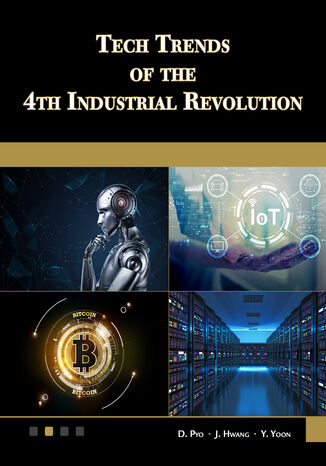
Tech Trends of the 4th Industrial Revolution. Navigating the Future of Technology in Business
Mercury Learning and Information, D. Pyo, J....
The term 4th Industrial Revolution is often mentioned in the media, but public understanding of its technologies lags behind their rapid development. This book bridges the gap, explaining essential technologies like IoT, blockchain, AI, cloud computing, and big data. It aims to enhance comprehension by minimizing technical content.The book introduces key technologies and their applications, emphasizing their importance in contemporary business models. Readers will find accessible descriptions and practical examples to aid understanding. Covering topics and trends vital for modern business, this book ensures readers grasp the technological landscape shaping the future.Throughout the book, you'll explore how these technologies are revolutionizing industries and their integration into business strategies. This journey provides a comprehensive understanding of the 4th Industrial Revolution, equipping readers with the knowledge needed to navigate and leverage these advancements effectively.
Antonio Gulli, Amita Kapoor
Deep neural networks (DNNs) have achieved a lot of success in the field of computer vision, speech recognition, and natural language processing. This exciting recipe-based guide will take you from the realm of DNN theory to implementing them practically to solve real-life problems in the artificial intelligence domain.In this book, you will learn how to efficiently use TensorFlow, Google’s open source framework for deep learning. You will implement different deep learning networks, such as Convolutional Neural Networks (CNNs), Recurrent Neural Networks (RNNs), Deep Q-learning Networks (DQNs), and Generative Adversarial Networks (GANs), with easy-to-follow standalone recipes. You will learn how to use TensorFlow with Keras as the backend. You will learn how different DNNs perform onsome popularly used datasets, such as MNIST, CIFAR-10, and Youtube8m. You will not only learn about the different mobile and embedded platforms supported by TensorFlow, but also how to set up cloud platforms for deep learning applications. You will also get a sneak peek at TPU architecture and how it will affect the future of DNNs.By using crisp, no-nonsense recipes, you will become an expert in implementing deep learning techniques in growing real-world applications and research areas such as reinforcement learning,GANs, and autoencoders.
Tony Holdroyd
TensorFlow is one of the most popular machine learning frameworks in Python. With this book, you will improve your knowledge of some of the latest TensorFlow features and will be able to perform supervised and unsupervised machine learning and also train neural networks.After giving you an overview of what's new in TensorFlow 2.0 Alpha, the book moves on to setting up your machine learning environment using the TensorFlow library. You will perform popular supervised machine learning tasks using techniques such as linear regression, logistic regression, and clustering. You will get familiar with unsupervised learning for autoencoder applications. The book will also show you how to train effective neural networks using straightforward examples in a variety of different domains.By the end of the book, you will have been exposed to a large variety of machine learning and neural network TensorFlow techniques.