
Analiza danych
Analiza danych jest ekscytującą dyscypliną, która umożliwia zrozumienie pewnych zjawisk, uzyskanie wglądu i wiedzy na podstawie surowych danych. Pojęcie to oznacza dokładnie przetwarzanie danych za pomocą technik matematycznych i statystycznych w celu uzyskania cennych wniosków, podjęcia ważnych decyzji i opracowania przydatnych produktów. Termin ten wywodzi się od angielskiego data science, często traktowanego jako synonim takich terminów, jak analityka biznesowa, badania operacyjne, business intelligence, wywiad konkurencyjny, analiza i modelowanie danych, a także pozyskiwanie wiedzy. Dzięki takim technologiom, jak języki Python czy R, platformy Hadoop i Spark masz szansę wyciągnąć maksimum wniosków, dostrzec szanse na rozwój swojej organizacji albo przewidzieć i zapobiec zagrożeniom.
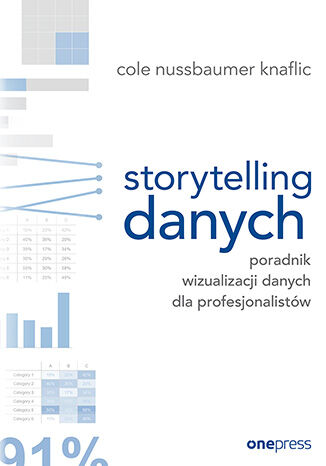
Storytelling danych. Poradnik wizualizacji danych dla profesjonalistów
Cole Nussbaumer Knaflic
Rozwój technologiczny nie tylko zwiększył ilość i dostępność danych, ale również zaowocował wszechobecnością narzędzi do ich obróbki i prezentacji. W zasadzie każdy może tworzyć diagramy i prezentacje. Aby przykuć uwagę odbiorcy i przekazać mu informację zawartą w zbiorze danych, sama wiedza techniczna nie wystarczy. Problem wynika z tego, że większość ludzi nie ma naturalnej umiejętności przekładania danych na interesujące historie. Tego się po prostu trzeba nauczyć. Dopiero wtedy można mówić o skutecznym przekazie. Ta książka jest przewodnikiem dla każdego, kto musi przekazywać informacje, robiąc przy tym użytek z danych. Szczególnie wartościowa będzie dla analityków, studentów i naukowców, a także dla każdego, kto w swojej komunikacji odwołuje się do danych. Pokazano tu prostą i intuicyjną technikę przedstawiania historii przy użyciu danych w sześciu krokach („lekcjach”). Skuteczność tej metody potwierdzono wieloma przykładami zaczerpniętymi z przeróżnych branż. Poszczególne procesy zaprezentowano za pomocą instrukcji „krok po kroku”, opisano także tok rozumowania podczas realizacji projektu graficznej wizualizacji danych. Przy tym wszystkim zawarte w książce praktyczne wskazówki są gotowe do natychmiastowego zastosowania. Sześć kluczowych lekcji skutecznej komunikacji wizualnej: Zrozumienie kontekstu. Wybór odpowiedniego wykresu. Eliminacja śmieci. Kierowanie uwagą odbiorców. Myślenie niczym projektant. Przedstawianie historii. Dane nadają sens prezentacji!
Anindita Basak, Krishnaswamy Venkataraman, Ryan Murphy, Manpreet...
Microsoft Azure is a very popular cloud computing service used by many organizations around the world. Its latest analytics offering, Stream Analytics, allows you to process and get actionable insights from different kinds of data in real-time. This book is your guide to understanding the basics of how Azure Stream Analytics works, and building your own analytics solution using its capabilities. You will start with understanding what Stream Analytics is, and why it is a popular choice for getting real-time insights from data. Then, you will be introduced to Azure Stream Analytics, and see how you can use the tools and functions in Azure to develop your own Streaming Analytics. Over the course of the book, you will be given comparative analytic guidance on using Azure Streaming with other Microsoft Data Platform resources such as Big Data Lambda Architecture integration for real time data analysis and differences of scenarios for architecture designing with Azure HDInsight Hadoop clusters with Storm or Stream Analytics. The book also shows you how you can manage, monitor, and scale your solution for optimal performance.By the end of this book, you will be well-versed in using Azure Stream Analytics to develop an efficient analytics solution that can work with any type of data.
Supercharge Excel. Learn How to Write DAX for Power Pivot
MrExcel's Holy Macro! Books, Matt Allington
This guide empowers you to master Excel and Data Analysis Expressions (DAX), guiding you from the basics of data modeling to advanced DAX functions. You'll begin by learning how to load and structure data effectively, then dive into essential DAX functions like SUM, COUNT, and FILTER, which are crucial for accurate data manipulation. As you progress, the book covers advanced concepts such as context transition, calculated columns, and time intelligence, enabling you to perform sophisticated data analyses.By incorporating hands-on exercises, the guide ensures that you can apply what you've learned to real-world scenarios. You'll also explore advanced topics like disconnected tables and cube formulas, expanding your ability to create dynamic models and dashboards. Towards the end, the guide introduces transitioning from Excel to Power BI, helping you leverage your Excel expertise in a more powerful environment.This book is perfect for technical professionals and Excel power users looking to enhance their data analysis skills and transition smoothly to Power BI. By the end, you'll have the knowledge and tools to take your data modeling and analysis to the next level.
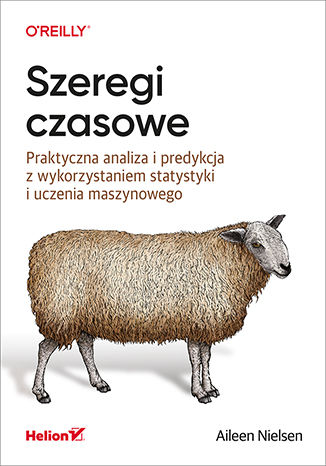
Szeregi czasowe. Praktyczna analiza i predykcja z wykorzystaniem statystyki i uczenia maszynowego
Aileen Nielsen
Analiza szeregów czasowych zyskuje na znaczeniu. Wraz z postępującą digitalizacją danych służby zdrowia, rozwojem inteligentnych miast czy upowszechniającym się internetem rzeczy staje się coraz bardziej potrzebna. Obiecującym rozwiązaniem jest analiza szeregów czasowych metodami wspomaganymi uczeniem maszynowym. Techniki te umożliwiają skuteczne monitorowanie i wykorzystywanie coraz większych zbiorów danych. Być może ich zastosowanie do pracy z szeregami czasowymi wydaje się nieoczywiste, jednak bez analiz szeregów czasowych nie można w pełni wykorzystać zebranych danych. Ta książka jest szerokim, aktualnym i praktycznym przeglądem metod analizy szeregów czasowych, w którym ujęto pełny potok przetwarzania danych czasowych i modelowania. Zaprezentowano w niej rzeczywiste przypadki użycia tych metod i zilustrowano je obszernymi fragmentami znakomicie zaprojektowanego kodu w językach R i Python. Znalazły się tutaj praktyczne wskazówki ułatwiające rozwiązywanie najczęstszych problemów występujących w inżynierii danych czasowych i ich analizie. Ujęto tu zarówno konwencjonalne metody statystyczne, jak i nowoczesne techniki uczenia maszynowego. To bardzo przydatny przewodnik, dzięki któremu analitycy danych, inżynierowie oprogramowania i naukowcy będą mogli płynnie przejść od podstaw pracy z szeregami czasowymi do rozwiązywania konkretnych zagadnień na profesjonalnym poziomie. Dzięki tej książce nauczysz się: pozyskiwać, przechowywać i przetwarzać szeregi czasowe eksplorować dane czasowe i symulować je wykonywać pomiary błędów pracować z szeregami czasowymi za pomocą uczenia maszynowego lub uczenia głębokiego oceniać dokładność i wydajność modeli Skutecznie analizuj szeregi czasowe i wydobywaj bezcenną wiedzę!
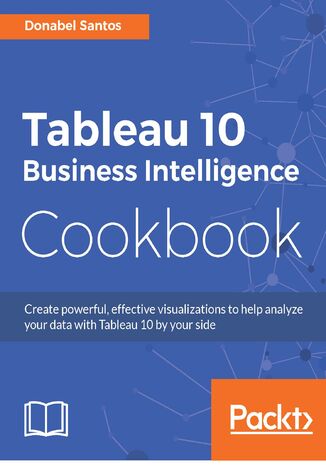
Tableau 10 Business Intelligence Cookbook. Create powerful, effective visualizations with Tableau 10
Donabel Santos, Paul Banoub
Tableau is a software tool that can speed up data analysis through its rich visualization capabilities, and help uncover insights for better and smarter decision making. This book is for the business, technology, data and analytics professionals who use and analyze data and data-driven approaches to support business operations and strategic initiatives in their organizations.This book provides easy-to-follow recipes to get the reader up and running with Tableau 10, and covers basic to advanced use cases and scenarios. The book starts with building basic charts in Tableau and moves on to building more complex charts by incorporating different Tableau features and interactivity components. There is an entire chapter dedicated to dashboard techniques and best practices. A number of recipes specifically for geospatial visualization, analytics, and data preparation are also covered.By the end of this book, you’ll have gained confidence and competence to analyze and communicate data and insights more efficiently and effectively by creating compelling interactive charts, dashboards, and stories in Tableau.
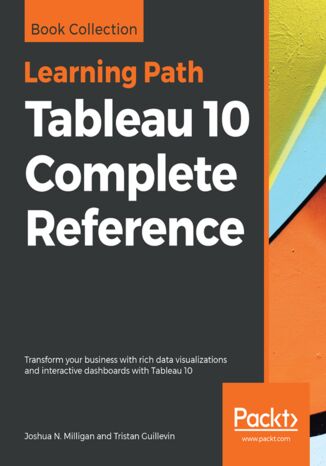
Joshua N. Milligan, Tristan Guillevin
Graphical presentation of data enables us to easily understand complex data sets. Tableau 10 Complete Reference provides easy-to-follow recipes with several use cases and real-world business scenarios to get you up and running with Tableau 10.This Learning Path begins with the history of data visualization and its importance in today's businesses. You'll also be introduced to Tableau - how to connect, clean, and analyze data in this visual analytics software. Then, you'll learn how to apply what you've learned by creating some simple calculations in Tableau and using Table Calculations to help drive greater analysis from your data. Next, you'll explore different advanced chart types in Tableau. These chart types require you to have some understanding of the Tableau interface and understand basic calculations. You’ll study in detail all dashboard techniques and best practices. A number of recipes specifically for geospatial visualization, analytics, and data preparation are also covered. Last but not least, you'll learn about the power of storytelling through the creation of interactive dashboards in Tableau. Through this Learning Path, you will gain confidence and competence to analyze and communicate data and insights more efficiently and effectively by creating compelling interactive charts, dashboards, and stories in Tableau.This Learning Path includes content from the following Packt products:• Learning Tableau 10 - Second Edition by Joshua N. Milligan• Getting Started with Tableau 2018.x by Tristan Guillevin
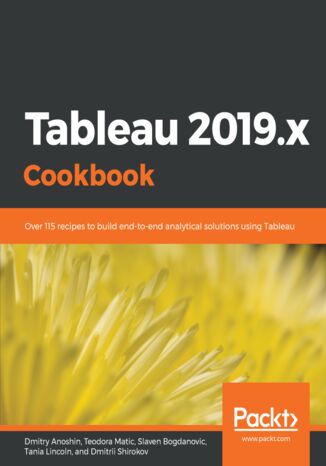
Tableau 2019.x Cookbook. Over 115 recipes to build end-to-end analytical solutions using Tableau
Dmitry Anoshin, Teodora Matic, Slaven Bogdanovic, Tania...
Tableau has been one of the most popular business intelligence solutions in recent times, thanks to its powerful and interactive data visualization capabilities. Tableau 2019.x Cookbook is full of useful recipes from industry experts, who will help you master Tableau skills and learn each aspect of Tableau's ecosystem.This book is enriched with features such as Tableau extracts, Tableau advanced calculations, geospatial analysis, and building dashboards. It will guide you with exciting data manipulation, storytelling, advanced filtering, expert visualization, and forecasting techniques using real-world examples. From basic functionalities of Tableau to complex deployment on Linux, you will cover it all. Moreover, you will learn advanced features of Tableau using R, Python, and various APIs. You will learn how to prepare data for analysis using the latest Tableau Prep. In the concluding chapters, you will learn how Tableau fits the modern world of analytics and works with modern data platforms such as Snowflake and Redshift. In addition, you will learn about the best practices of integrating Tableau with ETL using Matillion ETL.By the end of the book, you will be ready to tackle business intelligence challenges using Tableau's features.
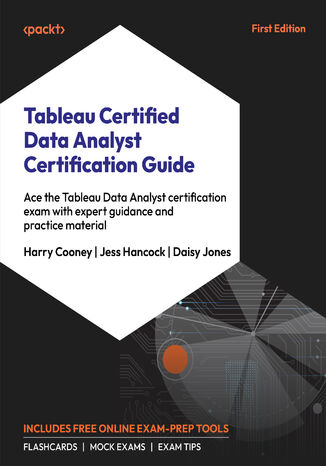
Harry Cooney, Daisy Jones
The Tableau Certified Data Analyst certification validates the essential skills needed to explore, analyze, and present data, propelling your career in data analytics. Whether you're a seasoned Tableau user or just starting out, this comprehensive resource is your roadmap to mastering Tableau and achieving certification success.The book begins by exploring the fundamentals of data analysis, from connecting to various data sources to transforming and cleaning data for meaningful insights. With practical exercises and realistic mock exams, you'll gain hands-on experience that reinforces your understanding of Tableau concepts and prepares you for the challenges of the certification exam.As you progress, expert guidance and clear explanations make it easy to navigate complex topics as each chapter builds upon the last, providing a seamless learning experience—from creating impactful visualizations to managing content on Tableau Cloud.Written by a team of experts, this Tableau book not only helps you pass the certification exam but also equips you with the skills and confidence needed to excel in your career. It is an indispensable resource for unlocking the full potential of Tableau.