
Uczenie maszynowe
Uczenie maszynowe (ang. machine learning) zajmuje się teorią i praktycznym zastosowaniem algorytmów analizujących dane — stanowi najciekawszą dziedzinę informatyki. Żyjemy w czasach przetwarzania olbrzymiej ilości informacji; za pomocą samouczących się algorytmów będących częścią uczenia maszynowego informacje te są przekształcane w rzeczywistą wiedzę. Dzięki licznym i potężnym bibliotekom o jawnym kodzie źródłowym, które powstały w ostatnich latach, prawdopodobnie teraz jest najlepszy czas, aby zainteresować się uczeniem maszynowym i nauczyć się wykorzystywać potężne algorytmy do wykrywania wzorców w przetwarzanych danych oraz prognozować przyszłe zdarzenia. Przykładami zastosowania Machine Learning są np. mechanizmy wyszukiwarek internetowych, GPS, autokorekta w edytorze tekstu czy boty w komunikatorach. Jedną z dziedzin uczenia maszynowego jest deep learning, podczas którego komputer uczy się procesów naturalnych dla ludzkiego mózgu (tworzy sieci neuronowe). Technologia ta jest wykorzystywana np. przy identyfikacji głosu i obrazów.
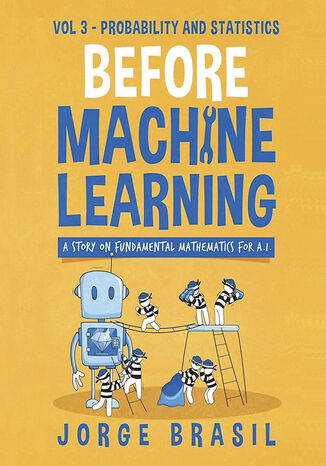
Jorge Brasil
Delve into the importance of probability and statistics in AI, beginning with fundamental measures like mean, median, and variance. This book takes you on a journey through the basics of probability theory, introducing key concepts such as central tendency, variance, and probability distributions. It emphasizes the role of statistical measures in understanding and analyzing data.Building on these foundations, the book explores hypothesis testing, Bayesian inference, and statistical distributions in-depth. Readers will gain practical insights into essential techniques for model evaluation, maximum likelihood estimation, and the interpretation of data in the context of AI applications. Each concept is illustrated with practical examples and case studies to ensure clarity and application.Finally, advanced topics like Markov processes, hierarchical Bayesian models, and multivariate distributions are introduced. The book addresses critical areas like variance, correlation, and hypothesis testing, equipping readers with the skills to tackle real-world challenges in AI and machine learning. Whether you're a student, professional, or AI enthusiast, this book offers the essential statistical tools and knowledge to excel in the field.
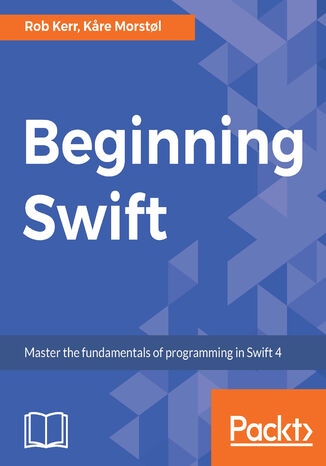
Beginning Swift. Master the fundamentals of programming in Swift 4
Rob Kerr, Kare Morstol
Take your first foray into programming for Apple devices with Swift.Swift is fundamentally different from Objective-C, as it is a protocol-oriented language. While you can still write normal object-oriented code in Swift, it requires a new way of thinking to take advantage of its powerful features and a solid understanding of the basics to become productive.
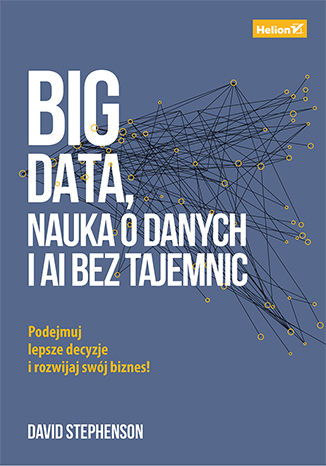
Big data, nauka o danych i AI bez tajemnic. Podejmuj lepsze decyzje i rozwijaj swój biznes!
David Stephenson
Koncepcja big data zmieniła zasady gry w biznesie. Wiele osób z kadry zarządczej nie rozumie specyfiki tego rodzaju danych: ogromnych, szybko narastających, często niepasujących do tradycyjnej struktury. Są one zasadniczo różne od konwencjonalnych danych, zarówno pod względem wielkości, jak i złożoności. Rzucają nowe wyzwania, stwarzają nowe możliwości, zacierają tradycyjne granice konkurencji i zmuszają do zmiany paradygmatów pozyskiwania wartości z danych. Big data i data science wraz z uczeniem maszynowym radykalnie zmieniają ekosystem biznesu. Aby przetrwać tę rewolucję, trzeba dostosować się do nowych warunków. Ta książka jest przystępnym wprowadzeniem do koncepcji big data i data science. Pozwoli na uzyskanie wiedzy niezbędnej do oceny, czy korzyści z tych technologii są warte kosztów i wysiłku związanych z wdrożeniem w firmie. Poszczególne techniki zostały dokładnie i przejrzyście opisane. Przedstawiono zasady tworzenia odpowiednich strategii. Wyjaśniono, jakich zasobów i jakich ludzi potrzeba do przeprowadzenia transformacji w kierunku zbierania, analizy i wykorzystywania danych, a także omówiono związane z tym ryzyko. Ważnym elementem książki są praktyczne wskazówki i podpowiedzi. W tej książce: podstawy big data, data science i sztucznej inteligencji praktyczne zastosowanie big data w technikach analitycznych przegląd podstawowych rodzajów analityki i dobór technologii przygotowanie firmy do wdrożenia projektów big data i data science wymagania prawne i ochrona danych a korzystanie z narzędzi big data Big data: łatwiejsze, niż myślisz, skuteczniejsze, niż marzysz!
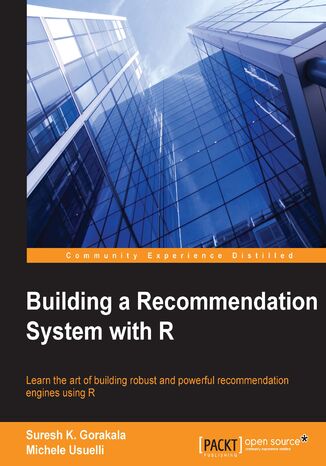
Michele Usuelli
A recommendation system performs extensive data analysis in order to generate suggestions to its users about what might interest them. R has recently become one of the most popular programming languages for the data analysis. Its structure allows you to interactively explore the data and its modules contain the most cutting-edge techniques thanks to its wide international community. This distinctive feature of the R language makes it a preferred choice for developers who are looking to build recommendation systems.The book will help you understand how to build recommender systems using R. It starts off by explaining the basics of data mining and machine learning. Next, you will be familiarized with how to build and optimize recommender models using R. Following that, you will be given an overview of the most popular recommendation techniques. Finally, you will learn to implement all the concepts you have learned throughout the book to build a recommender system.
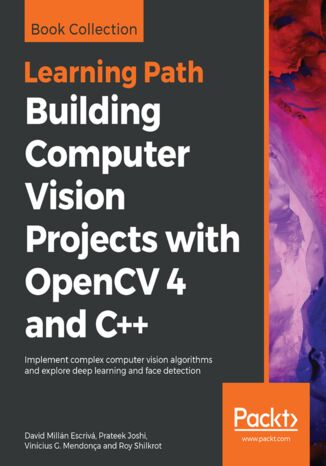
David Millán Escrivá, Prateek Joshi, Vinícius G....
OpenCV is one of the best open source libraries available and can help you focus on constructing complete projects on image processing, motion detection, and image segmentation.This Learning Path is your guide to understanding OpenCV concepts and algorithms through real-world examples and activities. Through various projects, you'll also discover how to use complex computer vision and machine learning algorithms and face detection to extract the maximum amount of information from images and videos. In later chapters, you'll learn to enhance your videos and images with optical flow analysis and background subtraction. Sections in the Learning Path will help you get to grips with text segmentation and recognition, in addition to guiding you through the basics of the new and improved deep learning modules. By the end of this Learning Path, you will have mastered commonly used computer vision techniques to build OpenCV projects from scratch. This Learning Path includes content from the following Packt books:•Mastering OpenCV 4 - Third Edition by Roy Shilkrot and David Millán Escrivá•Learn OpenCV 4 By Building Projects - Second Edition by David Millán Escrivá, Vinícius G. Mendonça, and Prateek Joshi
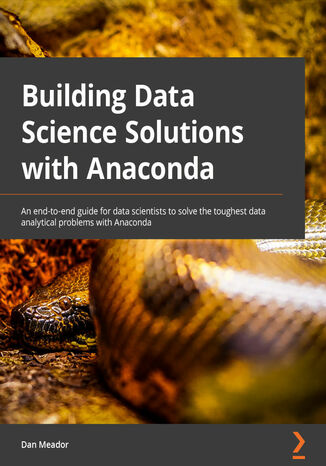
Dan Meador
You might already know that there's a wealth of data science and machine learning resources available on the market, but what you might not know is how much is left out by most of these AI resources. This book not only covers everything you need to know about algorithm families but also ensures that you become an expert in everything, from the critical aspects of avoiding bias in data to model interpretability, which have now become must-have skills.In this book, you'll learn how using Anaconda as the easy button, can give you a complete view of the capabilities of tools such as conda, which includes how to specify new channels to pull in any package you want as well as discovering new open source tools at your disposal. You’ll also get a clear picture of how to evaluate which model to train and identify when they have become unusable due to drift. Finally, you’ll learn about the powerful yet simple techniques that you can use to explain how your model works.By the end of this book, you’ll feel confident using conda and Anaconda Navigator to manage dependencies and gain a thorough understanding of the end-to-end data science workflow.
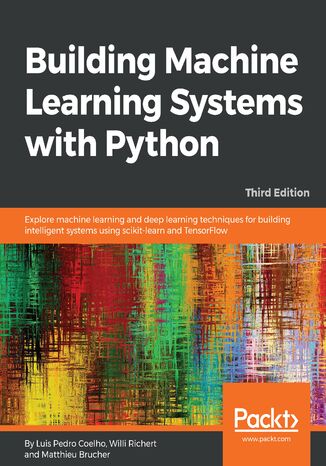
Luis Pedro Coelho, Willi Richert , Matthieu...
Machine learning enables systems to make predictions based on historical data. Python is one of the most popular languages used to develop machine learning applications, thanks to its extensive library support. This updated third edition of Building Machine Learning Systems with Python helps you get up to speed with the latest trends in artificial intelligence (AI).With this guide’s hands-on approach, you’ll learn to build state-of-the-art machine learning models from scratch. Complete with ready-to-implement code and real-world examples, the book starts by introducing the Python ecosystem for machine learning. You’ll then learn best practices for preparing data for analysis and later gain insights into implementing supervised and unsupervised machine learning techniques such as classification, regression and clustering. As you progress, you’ll understand how to use Python’s scikit-learn and TensorFlow libraries to build production-ready and end-to-end machine learning system models, and then fine-tune them for high performance.By the end of this book, you’ll have the skills you need to confidently train and deploy enterprise-grade machine learning models in Python.
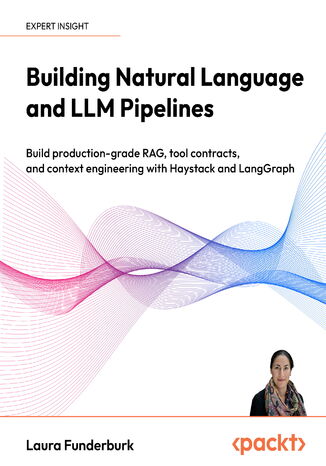
Laura Funderburk
Modern LLM applications often break in production due to brittle pipelines, loose tool definitions, and noisy context. This book shows you how to build production-ready, context-aware systems using Haystack and LangGraph. You’ll learn to design deterministic pipelines with strict tool contracts and deploy them as microservices. Through structured context engineering, you’ll orchestrate reliable agent workflows and move beyond simple prompt-based interactions. You'll start by understanding LLM behavior—tokens, embeddings, and transformer models—and see how prompt engineering has evolved into a full context engineering discipline. Then, you'll build retrieval-augmented generation (RAG) pipelines with retrievers, rankers, and custom components using Haystack’s graph-based architecture. You’ll also create knowledge graphs, synthesize unstructured data, and evaluate system behavior using Ragas and Weights & Biases. In LangGraph, you’ll orchestrate agents with supervisor-worker patterns, typed state machines, retries, fallbacks, and safety guardrails. By the end of the book, you’ll have the skills to design scalable, testable LLM pipelines and multi-agent systems that remain robust as the AI ecosystem evolves.*Email sign-up and proof of purchase required