JavaScript
Parth Ghiya
In the last few years or so, microservices have achieved the rock star status and right now are one of the most tangible solutions in enterprises to make quick, effective, and scalable applications. The apparent rise of Typescript and long evolution from ES5 to ES6 has seen lots of big companies move to ES6 stack. If you want to learn how to leverage the power of microservices to build robust architecture using reactive programming and Typescript in Node.js, then this book is for you.Typescript Microservices is an end-to-end guide that shows you the implementation of microservices from scratch; right from starting the project to hardening and securing your services. We will begin with a brief introduction to microservices before learning to break your monolith applications into microservices. From here, you will learn reactive programming patterns and how to build APIs for microservices. The next set of topics will take you through the microservice architecture with TypeScript and communication between services. Further, you will learn to test and deploy your TypeScript microservices using the latest tools and implement continuous integration. Finally, you will learn to secure and harden your microservice.By the end of the book, you will be able to build production-ready, scalable, and maintainable microservices using Node.js and Typescript.
TypeScript: Skuteczne programowanie
Dan Vanderkam
TypeScript jest typowanym nadzbiorem języka JavaScript, stanowiącym potencjalne rozwiązanie wielu słynnych bolączek, z którymi borykają się programiści JavaScript. Aby skutecznie programować w TypeScript, musimy poświęcić czas na naukę i praktykę. Niniejsza praktyczna książka, wykorzystująca metody spopularyzowane w książkach Skuteczny nowoczesny C++ (APN Promise) i Java. Efektywne programowanie (Helion), zawiera omówienie 62 zagadnień wraz z konkretnymi zaleceniami jak należy korzystać z języka, czego należy unikać, a także jak powinno się go postrzegać. Autor, Dan Vanderkam, główny programista w Sidewalk Labs, prezentuje praktyczne przykłady zastosowania każdej porady. Dzięki tej książce początkujący i średniozaawansowani programiści znający podstawy TypeScript osiągną poziom ekspertów, doskonale posługujących się tym językiem. Poznaj praktyczne aspekty systemu typowania w języku TypeScript Definiuj typy, dzięki którym kod będzie bezpieczniejszy i bardziej zrozumiały Używaj inferencji typów, aby uzyskać pełne bezpieczeństwo przy minimalnej liczbie oznaczeń typów Korzystaj w taktyczny sposób z typu any Poznaj mechanizm zależności i skorzystaj z plików deklaracji typów w TypeScript Z powodzeniem przenieś swój kod JavaScript do TypeScript Dan Vanderkam jest głównym programistą w Sidewalk Labs i współorganizatorem spotkań społeczności TypeScript NYC. Od dawna uczestniczy w projektach typu Open Source. Wcześniej pracował na uniwersytecie Icahn School of Medicine at Mount Sinai, a także uczestniczył w rozwijaniu funkcji wyszukiwania, wykorzystywanych przez miliardy użytkowników Google. TypeScript. Skuteczne programowanie odpowiada na większość najczęstszych pytań, jakie nasuwają się podczas pracy z TypeScript, a także oferuje porady praktyczne, ukierunkowane na wyniki. Niezależnie od poziomu znajomości TypeScript, z pewnością każdy znajdzie w tej książce coś dla siebie. Ryan Cavanaugh Główny inżynier ds. TypeScript w firmie Microsoft Ta książka obfituje w praktyczne przepisy i powinna się znaleźć na biurku każdego programisty TypeScript. Nawet jeśli uważasz, że znasz już TypeScript, koniecznie ją przeczytaj. Z pewnością tego nie pożałujesz. Yakov Fain Java Champion
Uczenie maszynowe z językiem JavaScript. Rozwiązywanie złożonych problemów
Burak Kanber
Uczenie maszynowe jeszcze kilka lat temu stanowiło niemal wiedzę tajemną. Nieliczni eksperci w tej dziedzinie publikowali materiały w naukowym, matematycznym języku, który wymagał biegłości w algebrze liniowej czy rachunku wektorowym. Korzystano najczęściej z Pythona i jego bibliotek. Obecnie, wraz ze wzrostem popularności uczenia maszynowego, zwiększają się możliwości jego praktycznej implementacji. Rzeczywista biegłość w tej dziedzinie wymaga jednak dogłębnego zrozumienia mechaniki działania algorytmów stosowanych w uczeniu maszynowym. Implementacja tych algorytmów w JavaScripcie jest znakomitym wyborem: język ten stał się dojrzałym, potężnym i wszechstronnym narzędziem do rozwiązywania złożonych problemów. Chcesz nauczyć się implementacji algorytmów uczenia maszynowego bez zbytniego zagłębiania się w niuanse matematyczne? Jeśli dodatkowo znasz język JavaScript, ta książka jest dla Ciebie idealnym wyborem. Wyjaśniono w niej, w jaki sposób tworzyć własne implementacje, podano też przykłady przydatnych bibliotek. Sporo miejsca poświęcono sieciom neuronowym, ich architekturze i przykładom zastosowania. Przedstawiono takie zagadnienia jak wykrywanie twarzy, filtrowanie spamu, tworzenie systemów rekomendacji, rozpoznawanie znaków oraz przetwarzanie języka naturalnego. Znalazły się tu również wskazówki dotyczące dobierania odpowiednich bibliotek JavaScriptu, takich jak NaturalNode, brain, harthur oraz klasyfikatory, co umożliwia projektowanie bardziej inteligentnych aplikacji. Najważniejsze zagadnienia przedstawione w książce: potencjał JavaScriptu w uczeniu maszynowym algorytmy grupowania, klasyfikacji, reguły kojarzenia algorytmy regresji, przewidywanie wzorców i predykcja sieci neuronowe i głębokie sieci neuronowe uczenie maszynowe w aplikacjach czasu rzeczywistego Uczenie maszynowe - coś dla wyjadaczy JavaScriptu!
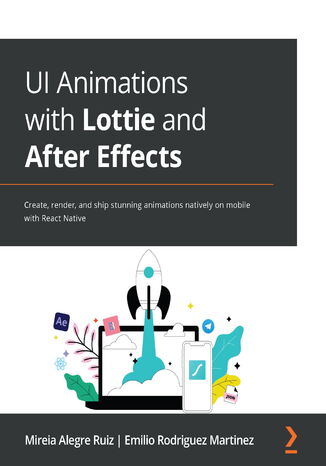
Mireia Alegre Ruiz, Emilio Rodriguez Martinez

Lottie is a small and scalable JSON-based animation file. LottieFiles is the platform where Lottie animations can be uploaded, tested, and shared. By combining the LottieFiles plugin and the LottieFiles platform, you’ll be able to create stunning animations that are easy to integrate in any device. You’ll also see how to use the Bodymovin plugin in After Effects to export your animation to a JSON file.The book starts by giving you an overview of Lottie and LottieFiles. As you keep reading, you’ll understand the entire Lottie ecosystem and get hands-on with classic 2D animation principles. You’ll also get a step-by-step guided tour to ideate, sketch for storytelling, design an icon that will fulfill the needs and expectations of users based on UX, and finally animate it in Adobe After Effects. This will help you get familiar with the After Effects environment, work with vector shape layers, create and modify keyframes using layer properties, explore path and mask features, and adjust timing easily to create professional-looking animations.By the end of this animation book, you’ll be able to create and export your own Lottie animations using After Effects and implement them in mobile apps using React Native. You’ll also have an understanding of 2D animation best practices and principles that you can apply in your own projects.
Unreal Engine. Nauka pisania gier dla kreatywnych
Joanna Lee
Wśród graczy są tacy, którzy codziennie większość swojego czasu poświęcają rozgrywkom i testowaniu nowości. Nieliczni jednak potrafią pisać własne gry. Jesteś pasjonatem? Wykorzystaj to! Sprawdź, co oferuje Ci Unreal Engine — intuicyjne, wszechstronne narzędzie, dzięki któremu szybko można zacząć pisać profesjonalne gry o różnorodnej tematyce. Wystarczy Twoja kreatywność — resztę zapewni Unreal Engine! Niniejsza książka jest przeznaczona dla początkujących twórców gier, którzy postanowili nauczyć się technologii Unreal Engine. Autorka rozpoczyna od przedstawienia prostych pomysłów i projektów gier, które spróbujesz samodzielnie rozwinąć i dokończyć. Następnie prezentuje podstawowe wiadomości na temat Unreal Engine, dzięki którym można stworzyć od podstaw prostą grę. W dalszych rozdziałach poznasz kolejne tajniki tworzenia gier z wykorzystaniem aktorów, animacji, efektów itd. Po lekturze tej książki każdy powinien umieć napisać własną grę w Unreal Engine. Najważniejsze zagadnienia omówione w książce: Podstawowe wiadomości o silnikach gier i historia Unreal Engine Obsługa edytora Unreal Engine 4 i tworzenie pomieszczeń w poziomie gry Podstawowe struktury obiektów w grze Tworzenie interaktywnych obiektów przy użyciu szablonów Podstawowe informacje na temat renderowania grafiki Interfejsy użytkownika, różne rodzaje oświetlenia, system cząsteczkowy, system audio, edytor terenu, sekwencje filmowe w Unreal Engine 4 — i wiele innych! Joanna Lee od blisko dziesięciu lat zajmuje się projektowaniem i programowaniem gier komputerowych. Biegle posługuje się wieloma różnymi silnikami gier. Unreal Engine zna od 2005 roku. Jest również znana jako recenzentka książek i filmów na temat CryEngine 4. Unreal Engine — Twoje narzędzie do pisania świetnych gier!
Vue CLI 3 Quick Start Guide. Build and maintain Vue.js applications quickly with the standard CLI
Ajdin Imsirovic
The sprawling landscape of various tools in JavaScript web development is becoming overwhelming. This book will show you how Vue CLI 3 can help you take back control of the tool chain. To that end, we'll begin by configuring webpack, utilizing HMR, and using single-file .vue components. We'll also use SCSS, ECMAScript, and TypeScript. We'll unit test with Jest and perform E2E testing with Cypress.This book will show you how to configure Vue CLI as your default way of building Vue projects. You'll discover the reasons behind using webpack, babel, eslint, and other modern JavaScript toolchain technologies. You'll learn about the inner workings of each through the lens of Vue CLI 3. We'll explore the extendibility of Vue CLI with the built-in settings, and various core and third-party plugins.Vue CLI helps you work with Vue components, routers, directives, and services in the Vue ecosystem. While learning these concepts, you'll examine the evolution of JavaScript. You'll learn about use of npm, IIFEs, modules in JavaScript, Common.js modules, task runners, npm scripts, module bundlers, and webpack. You'll get familiar with the reasons why Vue CLI 3 is set up the way it is. You'll also learn to perform linting with ESLint and Prettier.Towards the end, we'll introduce you to working with styles and SCSS. Finally, we'll show you how to deploy your very own Vue project on Github Pages.
Olga Filipova
In this book, we will build a full stack web application right from scratch up to its deployment.We will start by building a small introduction application and then proceed to the creation of a fully functional, dynamic responsive web application called ProFitOro. In this application, we will build a Pomodoro timer combined with office workouts. Besides the Pomodoro timer and ProFitOro workouts will enable authentication and collaborative content management. We will explore topics such as Vue reactive data binding, reusable components, routing, and Vuex store along with its state, actions, mutations, and getters. We will create Vue applications using both webpack and Nuxt.js templates while exploring cool hot Nuxt.js features such as code splitting and server-side rendering. We will use Jest to test this application, and we will even revive some trigonometry from our secondary school! While developing the app, you will go through the new grid system of Bootstrap 4 along with Vue.js’ directives. We will connect Vuex store to the Firebase real-time database, data storage, and authentication APIs and use this data later inside the application’s reactive components. Finally, we will quickly deploy our application using the Firebase hosting mechanism.
Vue.js 2 Cookbook. Build modern, interactive web applications with Vue.js
Andrea Passaglia
Vue.js is an open source JavaScript library for building modern, interactive web applications. With a rapidly growing community and a strong ecosystem, Vue.js makes developing complex single page applications a breeze. Its component-based approach, intuitive API, blazing fast core, and compact size make Vue.js a great solution to craft your next front-end application.From basic to advanced recipes, this book arms you with practical solutions to common tasks when building an application using Vue. We start off by exploring the fundamentals of Vue.js: its reactivity system, data-binding syntax, and component-based architecture through practical examples. After that, we delve into integrating Webpack and Babel to enhance your development workflow using single file components. Finally, we take an in-depth look at Vuex for state management and Vue Router to route in your single page applications, and integrate a variety of technologies ranging from Node.js to Electron, and Socket.io to Firebase and HorizonDB.This book will provide you with the best practices as determined by the Vue.js community.
Paul Halliday
Vue.js 2 Design Patterns and Best Practices starts by comparing Vue.js with other frameworks and setting up the development environment for your application, and gradually moves on to writing and styling clean, maintainable, and reusable Vue.js components that can be used across your application. Further on, you'll look at common UI patterns, Vue form submission, and various modifiers such as lazy binding, number typecasting, and string trimming to create better UIs. You will also explore best practices for integrating HTTP into Vue.js applications to create an application with dynamic data. Routing is a vitally important part of any SPA, so you will focus on the vue-router and explore routing a user between multiple pages. Next, you'll also explore state management with Vuex, write testable code for your application, and create performant, server-side rendered applications with Nuxt. Toward the end, we'll look at common antipatterns to avoid, saving you from a lot of trial and error and development headaches.By the end of this book, you'll be on your way to becoming an expert Vue developer who can leverage design patterns to efficiently architect the design of your application and write clean and maintainable code.
Vue.js 2 Web Development Projects. Learn Vue.js by building 6 web apps
CHAU GUILLAUME
Do you want to make your web application amazingly responsive? Are you unhappy with your app's performance and looking forward to trying out ways to make your app more powerful? Then Vue.js, a framework for building user interfaces, is a great choice, and this book is the ideal way to put it through its paces.This book's project-based approach will get you to build six stunning applications from scratch and gain valuable insights in Vue.js 2.5. You'll start by learning the basics of Vue.js and create your first web app using directives along with rich and attractive user experiences. You will learn about animations and interactivity by creating a browser-based game. Using the available tools and preprocessor, you will learn how to create multi-page apps with plugins. You will create highly efficient and performant functional components for your app. Next, you will create your own online store and optimize it. Finally, you will integrate Vue.js with the real-time Meteor library and create a dashboard showing real-time data.By the end of this book you will have enough skills and will have worked through enough examples of real Vue.js projects to create interactive professional web applications with Vue.js 2.5.
Vue.js 2. Wprowadzenie dla profesjonalistów
Adam Freeman
Vue.js jest frameworkiem, który służy do budowy nowoczesnych, reaktywnych i skalowanych aplikacji WWW, a przy tym ułatwia korzystanie z komponentów wielokrotnego użytku. Framework ten powstał jako narzędzie do szybkiego prototypowania, a teraz dynamicznie się rozwija i ewoluuje, dzięki czemu liczba dostępnych funkcji stale rośnie. Prostocie i wszechstronności zawdzięcza ogromne uznanie deweloperów. Z całą pewnością można go uznać za narzędzie niezbędne każdemu, kto buduje kompleksowe aplikacje WWW i pragnie utrzymywać wysokie standardy. Dzięki tej książce dowiesz się, czym jest Vue.js i jak rozpocząć z nim pracę, przekonasz się także, jakie ma możliwości. Nauczysz się budować dynamiczne aplikacje wykorzystujące właściwości nowoczesnych przeglądarek internetowych i urządzeń. Odkryjesz zalety wzorca MVC (model - widok - kontroler) i dowiesz się, jak zadziwiająco sprawnym językiem stał się JavaScript. Zapoznasz się z anatomią projektu Vue.js, z procesami kompilacji i transformacji oraz nabierzesz biegłości w posługiwaniu się zaawansowanymi funkcjami frameworka. Liczne przykłady pozwolą Ci na niemal natychmiastowe przetestowanie opisywanych zagadnień w praktyce. W rezultacie bardzo szybko będziesz przygotowany do tworzenia zaawansowanych, reaktywnych i dynamicznych aplikacji WWW! W książce między innymi: zarys budowy frameworka, jego instalacja i sposoby wykorzystania wzorzec MVC i architektura aplikacji w Vue.js 2 dynamiczne aplikacje WWW po stronie klienta korzystanie z usług REST rozszerzanie i modyfikowanie Vue.js w zależności od potrzeb Vue.js 2: zyskaj większe możliwości i pisz najlepsze aplikacje!
Vue.js 2.x by Example. Example-driven guide to build web apps with Vue.js for beginners
Mike Street
Vue.js is a frontend web framework which makes it easy to do just about anything, from displaying data up to creating full-blown web apps, and has become a leading tool for web developers. This book puts Vue.js into a real-world context, guiding you through example projects that helps you build Vue.js applications from scratch.With this book, you will learn how to use Vue.js by creating three Single Page web applications. Throughout this book, we will cover the usage of Vue, for building web interfaces, Vuex, an official Vue plugin which makes caching and storing data easier, and Vue-router, a plugin for creating routes and URLs for your application.Starting with a JSON dataset, the first part of the book covers Vue objects and how to utilize each one. This will be covered by exploring different ways of displaying data from a JSON dataset. We will then move on to manipulating the data with filters and search and creating dynamic values.Next, you will see how easy it is to integrate remote data into an application by learning how to use the Dropbox API to display your Dropbox contents in an applicationIn the final section, you will see how to build a product catalog and dynamic shopping cart using the Vue-router, giving you the building blocks of an e-commerce store.
John Au-Yeung
With its huge ecosystem and wide adoption, Vue is one of the leading frameworks thanks to its ease of use when developing applications. However, it can get challenging for aspiring Vue.js developers to make sense of the ecosystem and build meaningful applications.This book will help you understand how you can leverage Vue effectively to develop impressive apps quickly using its latest version – Vue 3.0.The book takes an example-based approach to help you get to grips with the basics of Vue 3 and create a simple application by exploring features such as components and directives. You'll then enhance your app building skills by learning how to test the app with Jest and Vue Test Utils. As you advance, you'll understand how to write non-web apps with Vue 3, create cross-platform desktop apps with the Electron plugin, and build a multi-purpose mobile app with Vue and Ionic. You'll also be able to develop web apps with Vue 3 that interact well with GraphQL APIs. Finally, you'll build a chat app that performs real-time communication using Vue 3 and Laravel.By the end of this Vue.js book, you'll have developed the skills you need to build real-world apps using Vue 3 by working through a range of projects.
Heitor Ramon Ribeiro
Vue.js is a progressive web framework for building professional user interfaces for your web applications. With Vue.js 3, the frontend framework is reinforced with architectural enhancements, new base languages, new render processes, and separated core components.The book starts with recipes for implementing Vue.js 3’s new features in your web development projects and migrating your existing Vue.js apps to the latest version. You will get up and running with TypeScript with Vue.js and find succinct solutions to common challenges and pitfalls faced in implementing components, derivatives, and animation, through to building plugins, adding state management, routing, and developing complete single-page applications (SPAs). As you advance, you'll discover recipes to help you integrate Vue.js apps with Nuxt.js in order to add server-side rendering capabilities to your SPAs. You'll then learn about the Vue.js ecosystem by exploring modern frameworks such as Quasar, Nuxt.js, Vuex, and Vuetify in your web projects. Finally, the book provides you with solutions for packaging and deploying your Vue.js apps.By the end of this Vue.js book, you'll be able to identify and solve challenges faced in building Vue.js applications and be able to adopt the Vue.js framework for frontend web projects of any scale.
Simone Cuomo, Tracy Lee
Discover why Vue.js is a must-learn JavaScript framework for aspiring developers. If you’re a beginner fascinated by Vue.js and its potential, then this book will show you how the progressive and versatile framework can help you build performant applications. Written by an accomplished software architect with over 12 years of experience, Vue.js 3 for Beginners provides a solid foundation in Vue.js and guides you at every step to create a robust social media application, component by component.Starting with a clean canvas using plain HTML and CSS, you’ll learn new topics to build your application incrementally. Beyond the core features, you’ll explore crucial parts of the Vue.js ecosystem, such as state management with Pinia, routing with Vue Router, and testing with Vitest, and Cypress. The structured GitHub repository ensures a smooth transition from one chapter to the next, offering valuable insights into advanced topics, techniques, and resources. This book is designed to serve as a practical reference guide, allowing you to quickly revisit specific topics when needed.By the end of the book, you’ll have built a strong understanding of Vue.js and be ready to build simple applications effortlessly.
Ajdin Imsirovic
Vue.js is the latest trending frontend framework. Simplicity, reactivity, and ?exibility are some of the key benefits that Vue offers to developers. This book will help you learn everything you need to know to build stunning reactive web apps with Vue.js 2 quickly and easily.This book will take you through the Vue 2 framework. You will start by learning the different Vue installation options: CDN, NPM, and Vue CLI. Then we will look at the core concepts of Vue: templates and components – ways to modularize Vue code. You will learn how to utilize directives, which are Vue-specific HTML attributes with additional features. Also, you will see how Vue uses a streamlined approach to development, with reusable methods, computed properties, and watchers, and how it controls state with the help of its data option.You will learn about the concepts of reactive programming in Vue, and how to understand communication between parent and child components. We will take a look at props and slots, working with CSS, filters, and mixins. We will also look at ways to add transitions and animations to Vue apps. Then you will extend Vue by building custom directives and your own plugins. Finally, you will learn about Vuex – a Vue plugin that allows us to centralize state, and also introduce Nuxt, which is a framework that builds on top of Vue and solves some issues of single-page applications. After learning about these components, you will be ready to build your own reactive web apps with Vue.js 2.