
Python
W kategorii Python zostały zebrane podręczniki poruszające tematykę programowania z zastosowaniem praktycznie niezależnego sprzętowo, dostępnego na licencji Open Source języka. Książki przedstawią Wam wszechstronności i elastyczności Pythona a także różne typy tworzenia kodu poprzez programowanie strukturalne, obiektowe czy funkcjonalne.
Nauczycie się tworzyć aplikacje sieciowe o dowolnym przeznaczeniu, komunikujące się z systemami operacyjnymi, lub korzystające z baz danych. Techniki analizy składni, przetwarzanie tekstu czy rozłożenie obciążenia programu na wiele wątków i procesów przestanie być problematyczne.
Data Analysis with Python. A Modern Approach
David Taieb
Data Analysis with Python offers a modern approach to data analysis so that you can work with the latest and most powerful Python tools, AI techniques, and open source libraries. Industry expert David Taieb shows you how to bridge data science with the power of programming and algorithms in Python. You'll be working with complex algorithms, and cutting-edge AI in your data analysis. Learn how to analyze data with hands-on examples using Python-based tools and Jupyter Notebook. You'll find the right balance of theory and practice, with extensive code files that you can integrate right into your own data projects.Explore the power of this approach to data analysis by then working with it across key industry case studies. Four fascinating and full projects connect you to the most critical data analysis challenges you’re likely to meet in today. The first of these is an image recognition application with TensorFlow – embracing the importance today of AI in your data analysis. The second industry project analyses social media trends, exploring big data issues and AI approaches to natural language processing. The third case study is a financial portfolio analysis application that engages you with time series analysis - pivotal to many data science applications today. The fourth industry use case dives you into graph algorithms and the power of programming in modern data science. You'll wrap up with a thoughtful look at the future of data science and how it will harness the power of algorithms and artificial intelligence.
Ryan Collingwood
In Data Contracts in Practice, seasoned business-IT strategist Ryan Collingwood draws on over 20 years of cross-functional expertise in product management, data analysis, and software development to offer a transformative approach to managing complex data ecosystems in organizations of all sizes. He introduces data contracts as a powerful tool for formalizing expectations, roles, and guarantees of data exchange across domain boundaries and organizational structures, whether centralized or decentralized.Through real-world examples in retail customer marketing segmentation, you'll navigate the entire data contracts lifecycle—from creation to deployment and enforcement, covering essential topics such as requirements gathering, quality assurance, and change management, equipping you with the skills to integrate data contracts in your continuous development cycle.You'll integrate data contracts into existing workflows, addressing the perspectives of both data producers and consumers, and learn proactive strategies for identifying and addressing data drift, ensuring your data management practices remain robust and adaptable.By the end of this book, you’ll be prepared to tackle data challenges with a techno-social approach that balances system-level control and organizational alignment, to build solutions that are both useful and used.
Trâm Ngoc Pham, Gonzalo Herreros González, Viquar...
Performing data engineering with Amazon Web Services (AWS) combines AWS's scalable infrastructure with robust data processing tools, enabling efficient data pipelines and analytics workflows. This comprehensive guide to AWS data engineering will teach you all you need to know about data lake management, pipeline orchestration, and serving layer construction.Through clear explanations and hands-on exercises, you’ll master essential AWS services such as Glue, EMR, Redshift, QuickSight, and Athena. Additionally, you’ll explore various data platform topics such as data governance, data quality, DevOps, CI/CD, planning and performing data migration, and creating Infrastructure as Code. As you progress, you will gain insights into how to enrich your platform and use various AWS cloud services such as AWS EventBridge, AWS DataZone, and AWS SCT and DMS to solve data platform challenges.Each recipe in this book is tailored to a daily challenge that a data engineer team faces while building a cloud platform. By the end of this book, you will be well-versed in AWS data engineering and have gained proficiency in key AWS services and data processing techniques. You will develop the necessary skills to tackle large-scale data challenges with confidence.
Gareth Eagar
Written by a Senior Data Architect with over twenty-five years of experience in the business, Data Engineering for AWS is a book whose sole aim is to make you proficient in using the AWS ecosystem. Using a thorough and hands-on approach to data, this book will give aspiring and new data engineers a solid theoretical and practical foundation to succeed with AWS.As you progress, you’ll be taken through the services and the skills you need to architect and implement data pipelines on AWS. You'll begin by reviewing important data engineering concepts and some of the core AWS services that form a part of the data engineer's toolkit. You'll then architect a data pipeline, review raw data sources, transform the data, and learn how the transformed data is used by various data consumers. You’ll also learn about populating data marts and data warehouses along with how a data lakehouse fits into the picture. Later, you'll be introduced to AWS tools for analyzing data, including those for ad-hoc SQL queries and creating visualizations. In the final chapters, you'll understand how the power of machine learning and artificial intelligence can be used to draw new insights from data.By the end of this AWS book, you'll be able to carry out data engineering tasks and implement a data pipeline on AWS independently.
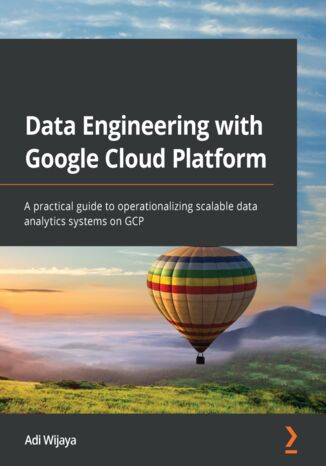
Adi Wijaya
With this book, you'll understand how the highly scalable Google Cloud Platform (GCP) enables data engineers to create end-to-end data pipelines right from storing and processing data and workflow orchestration to presenting data through visualization dashboards.Starting with a quick overview of the fundamental concepts of data engineering, you'll learn the various responsibilities of a data engineer and how GCP plays a vital role in fulfilling those responsibilities. As you progress through the chapters, you'll be able to leverage GCP products to build a sample data warehouse using Cloud Storage and BigQuery and a data lake using Dataproc. The book gradually takes you through operations such as data ingestion, data cleansing, transformation, and integrating data with other sources. You'll learn how to design IAM for data governance, deploy ML pipelines with the Vertex AI, leverage pre-built GCP models as a service, and visualize data with Google Data Studio to build compelling reports. Finally, you'll find tips on how to boost your career as a data engineer, take the Professional Data Engineer certification exam, and get ready to become an expert in data engineering with GCP.By the end of this data engineering book, you'll have developed the skills to perform core data engineering tasks and build efficient ETL data pipelines with GCP.
Paul Crickard
Data engineering provides the foundation for data science and analytics, and forms an important part of all businesses. This book will help you to explore various tools and methods that are used for understanding the data engineering process using Python.The book will show you how to tackle challenges commonly faced in different aspects of data engineering. You’ll start with an introduction to the basics of data engineering, along with the technologies and frameworks required to build data pipelines to work with large datasets. You’ll learn how to transform and clean data and perform analytics to get the most out of your data. As you advance, you'll discover how to work with big data of varying complexity and production databases, and build data pipelines. Using real-world examples, you’ll build architectures on which you’ll learn how to deploy data pipelines.By the end of this Python book, you’ll have gained a clear understanding of data modeling techniques, and will be able to confidently build data engineering pipelines for tracking data, running quality checks, and making necessary changes in production.
Data Lakehouse in Action. Architecting a modern and scalable data analytics platform
Pradeep Menon
The Data Lakehouse architecture is a new paradigm that enables large-scale analytics. This book will guide you in developing data architecture in the right way to ensure your organization's success.The first part of the book discusses the different data architectural patterns used in the past and the need for a new architectural paradigm, as well as the drivers that have caused this change. It covers the principles that govern the target architecture, the components that form the Data Lakehouse architecture, and the rationale and need for those components. The second part deep dives into the different layers of Data Lakehouse. It covers various scenarios and components for data ingestion, storage, data processing, data serving, analytics, governance, and data security. The book's third part focuses on the practical implementation of the Data Lakehouse architecture in a cloud computing platform. It focuses on various ways to combine the Data Lakehouse pattern to realize macro-patterns, such as Data Mesh and Data Hub-Spoke, based on the organization's needs and maturity level. The frameworks introduced will be practical and organizations can readily benefit from their application.By the end of this book, you'll clearly understand how to implement the Data Lakehouse architecture pattern in a scalable, agile, and cost-effective manner.
Data Mining. Eksploracja danych w sieciach społecznościowych. Wydanie III
Matthew A. Russell, Mikhail Klassen
Internetu nie można rozważać wyłącznie jako tworu techniki. Powstanie tej sieci doprowadziło do rozwoju różnych zjawisk społecznych. Z tej perspektywy na szczególną uwagę zasługują media społecznościowe. Są źródłem informacji, które, właściwie spożytkowane, mogą przynieść niezły dochód. Mogą też dać odpowiedzi na wiele pytań zadawanych przez naukowców z różnych branż. Sama eksploracja tych danych przynosi sporo satysfakcji i radości. Zaskakujące przy tym jest to, że przygotowanie zestawu potrzebnych narzędzi i nauka posługiwania się nimi zabiera naprawdę niewiele czasu i nie wymaga specjalnych talentów! To trzecie, zaktualizowane wydanie popularnego podręcznika dla osób, które chcą zająć się wydobywaniem danych z sieci społecznościowych. Uwzględniono tu zmiany interfejsów API wprowadzone do poszczególnych platform i dodano rozdział o eksploracji Instagrama. Dowiesz się, jak dzięki danym z mediów społecznościowych określić sieć powiązań użytkowników, zorientować się, kto o czym mówi i gdzie się znajduje. Treść bogato zilustrowano przykładami kodu w Pythonie, a także plikami Jupyter Notebook lub kontenerów Dockera. Ciekawym elementem książki jest zbiór receptur dotyczących rozwiązywania konkretnych problemów z Twitterem. W tej książce między innymi: wprowadzenie do świata mediów społecznościowych przybliżenie bogactwa danych zawartych w mediach społecznościowych eksploracja danych za pomocą narzędzi Pythona 3 zaawansowane techniki eksploracji danych, w tym współczynniki TFIDF, podobieństwo kosinusów i rozpoznawanie obrazów tworzenie wizualizacji pozyskanych danych Jakie informacje dziś znajdziesz dzięki danym z Facebooka?