
Python
W kategorii Python zostały zebrane podręczniki poruszające tematykę programowania z zastosowaniem praktycznie niezależnego sprzętowo, dostępnego na licencji Open Source języka. Książki przedstawią Wam wszechstronności i elastyczności Pythona a także różne typy tworzenia kodu poprzez programowanie strukturalne, obiektowe czy funkcjonalne.
Nauczycie się tworzyć aplikacje sieciowe o dowolnym przeznaczeniu, komunikujące się z systemami operacyjnymi, lub korzystające z baz danych. Techniki analizy składni, przetwarzanie tekstu czy rozłożenie obciążenia programu na wiele wątków i procesów przestanie być problematyczne.
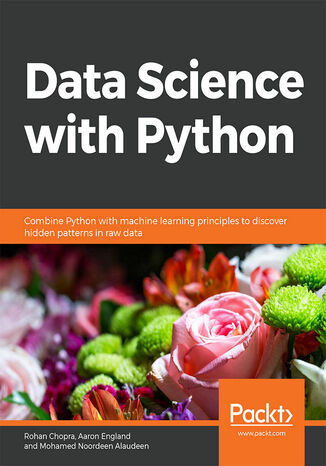
Rohan Chopra , Aaron England, Mohamed Noordeen...
Data Science with Python begins by introducing you to data science and teaches you to install the packages you need to create a data science coding environment. You will learn three major techniques in machine learning: unsupervised learning, supervised learning, and reinforcement learning. You will also explore basic classification and regression techniques, such as support vector machines, decision trees, and logistic regression.As you make your way through the book, you will understand the basic functions, data structures, and syntax of the Python language that are used to handle large datasets with ease. You will learn about NumPy and pandas libraries for matrix calculations and data manipulation, discover how to use Matplotlib to create highly customizable visualizations, and apply the boosting algorithm XGBoost to make predictions. In the concluding chapters, you will explore convolutional neural networks (CNNs), deep learning algorithms used to predict what is in an image. You will also understand how to feed human sentences to a neural network, make the model process contextual information, and create human language processing systems to predict the outcome.By the end of this book, you will be able to understand and implement any new data science algorithm and have the confidence to experiment with tools or libraries other than those covered in the book.
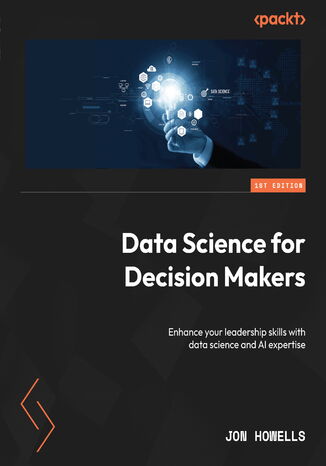
Data Science for Decision Makers. Enhance your leadership skills with data science and AI expertise
Jon Howells
As data science and artificial intelligence (AI) become prevalent across industries, executives without formal education in statistics and machine learning, as well as data scientists moving into leadership roles, must learn how to make informed decisions about complex models and manage data teams. This book will elevate your leadership skills by guiding you through the core concepts of data science and AI.This comprehensive guide is designed to bridge the gap between business needs and technical solutions, empowering you to make informed decisions and drive measurable value within your organization. Through practical examples and clear explanations, you'll learn how to collect and analyze structured and unstructured data, build a strong foundation in statistics and machine learning, and evaluate models confidently. By recognizing common pitfalls and valuable use cases, you'll plan data science projects effectively, from the ground up to completion. Beyond technical aspects, this book provides tools to recruit top talent, manage high-performing teams, and stay up to date with industry advancements.By the end of this book, you’ll be able to characterize the data within your organization and frame business problems as data science problems.
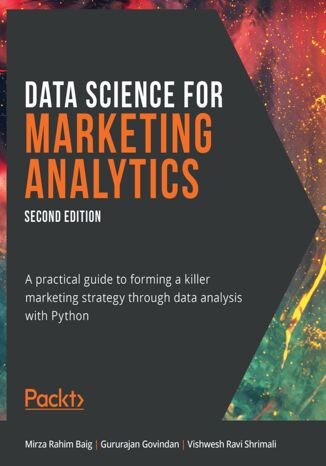
Mirza Rahim Baig , Gururajan Govindan ,...
Unleash the power of data to reach your marketing goals with this practical guide to data science for business.This book will help you get started on your journey to becoming a master of marketing analytics with Python. You'll work with relevant datasets and build your practical skills by tackling engaging exercises and activities that simulate real-world market analysis projects.You'll learn to think like a data scientist, build your problem-solving skills, and discover how to look at data in new ways to deliver business insights and make intelligent data-driven decisions.As well as learning how to clean, explore, and visualize data, you'll implement machine learning algorithms and build models to make predictions. As you work through the book, you'll use Python tools to analyze sales, visualize advertising data, predict revenue, address customer churn, and implement customer segmentation to understand behavior.By the end of this book, you'll have the knowledge, skills, and confidence to implement data science and machine learning techniques to better understand your marketing data and improve your decision-making.
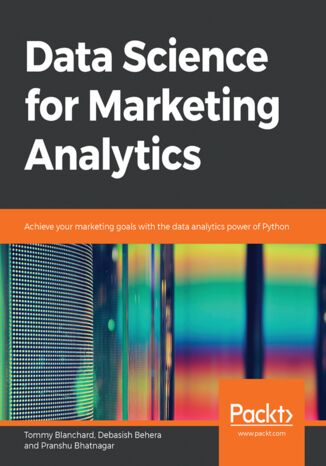
Tommy Blanchard, Debasish Behera, Pranshu Bhatnagar
Data Science for Marketing Analytics covers every stage of data analytics, from working with a raw dataset to segmenting a population and modeling different parts of the population based on the segments.The book starts by teaching you how to use Python libraries, such as pandas and Matplotlib, to read data from Python, manipulate it, and create plots, using both categorical and continuous variables. Then, you'll learn how to segment a population into groups and use different clustering techniques to evaluate customer segmentation. As you make your way through the chapters, you'll explore ways to evaluate and select the best segmentation approach, and go on to create a linear regression model on customer value data to predict lifetime value. In the concluding chapters, you'll gain an understanding of regression techniques and tools for evaluating regression models, and explore ways to predict customer choice using classification algorithms. Finally, you'll apply these techniques to create a churn model for modeling customer product choices.By the end of this book, you will be able to build your own marketing reporting and interactive dashboard solutions.
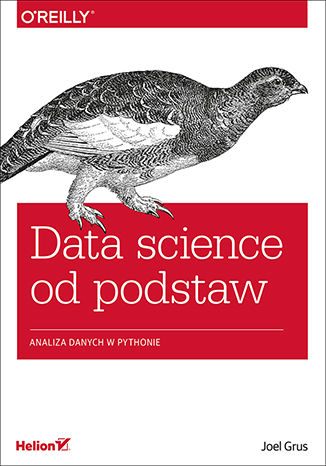
Data science od podstaw. Analiza danych w Pythonie
Joel Grus
Współczesne ogromne zbiory danych zawierają odpowiedzi na prawie każde pytanie. Równocześnie nauka o danych jest dziedziną, która cokolwiek onieśmiela. Znajduje się gdzieś pomiędzy subtelnymi umiejętnościami hakerskimi, twardą wiedzą z matematyki i statystyki a merytoryczną znajomością zagadnień z danej branży. Co więcej, dziedzina ta niezwykle dynamicznie się rozwija. Trud włożony w naukę o danych niewątpliwie się jednak opłaca: biegły analityk danych może liczyć na dobrze płatną, inspirującą i bardzo atrakcyjną pracę. Dzięki tej książce opanujesz najważniejsze zagadnienia związane z matematyką i statystyką, będziesz także rozwijać umiejętności hakerskie. W ten sposób zyskasz podstawy pozwalające na rozpoczęcie przygody z analizą danych. Gruntownie zapoznasz się z potrzebnymi narzędziami i algorytmami. Pozwoli Ci to lepiej zrozumieć ich działanie. Poszczególne przykłady, którymi zilustrowano omawiane zagadnienia, są przejrzyste, dobrze opisane i zrozumiałe. Podczas lektury książki poznasz biblioteki, które umożliwią zaimplementowanie omówionych technik podczas analizy dużych zbiorów danych. Szybko się przekonasz, że aby zostać analitykiem danych, wystarczy odrobina ciekawości, sporo chęci, mnóstwo ciężkiej pracy i... ta książka. Najważniejsze zagadnienia: Praktyczne wprowadzenie do Pythona Podstawy algebry liniowej, statystyki i rachunku prawdopodobieństwa w analizie danych Podstawy uczenia maszynowego Implementacje algorytmów modeli, w tym naiwny klasyfikator bayesowski, regresja liniowa, regresja logistyczna, drzewa decyzyjne, sieci neuronowe i grupowanie, MapReduce Systemy rekomendacji i mechanizmy przetwarzania języka naturalnego Korzystanie z mediów społecznościowych i baz danych. Python. Wyciśniesz z danych każdą kroplę wiedzy!
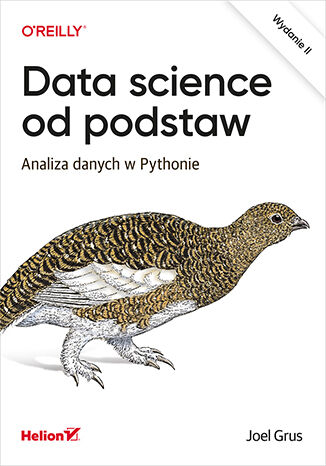
Data science od podstaw. Analiza danych w Pythonie. Wydanie II
Joel Grus
Analityka danych jest uważana za wyjątkowo obiecującą dziedzinę wiedzy. Rozwija się błyskawicznie i znajduje coraz to nowsze zastosowania. Profesjonaliści biegli w eksploracji danych i wydobywaniu z nich pożytecznych informacji mogą liczyć na interesującą pracę i bardzo atrakcyjne warunki zatrudnienia. Jednak aby zostać analitykiem danych, trzeba znać matematykę i statystykę, a także nauczyć się programowania. Umiejętności w zakresie uczenia maszynowego i uczenia głębokiego również są ważne. W przypadku tak specyficznej dziedziny, jaką jest nauka o danych, szczególnie istotne jest zdobycie gruntownych podstaw i dogłębne ich zrozumienie. W tym przewodniku opisano zagadnienia związane z podstawami nauki o danych. Wyjaśniono niezbędne elementy matematyki i statystyki. Przedstawiono także techniki budowy potrzebnych narzędzi i sposoby działania najistotniejszych algorytmów. Książka została skonstruowana tak, aby poszczególne implementacje były jak najbardziej przejrzyste i zrozumiałe. Zamieszczone tu przykłady napisano w Pythonie: jest to język dość łatwy do nauki, a pracę na danych ułatwia szereg przydatnych bibliotek Pythona. W drugim wydaniu znalazły się nowe tematy, takie jak uczenie głębokie, statystyka i przetwarzanie języka naturalnego, a także działania na ogromnych zbiorach danych. Zagadnienia te często pojawiają się w pracy współczesnego analityka danych. W książce między innymi: elementy algebry liniowej, statystyki i rachunku prawdopodobieństwa zbieranie, oczyszczanie i eksploracja danych algorytmy modeli analizy danych podstawy uczenia maszynowego systemy rekomendacji i przetwarzanie języka naturalnego analiza sieci społecznościowych i algorytm MapReduce Nauka o danych: bazuj na solidnych podstawach!
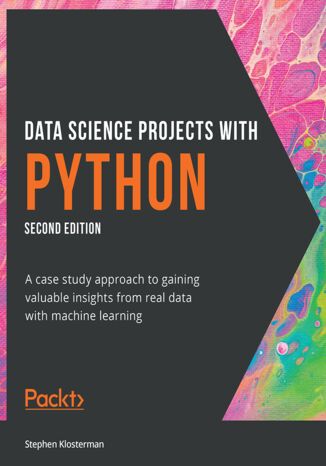
Stephen Klosterman
If data is the new oil, then machine learning is the drill. As companies gain access to ever-increasing quantities of raw data, the ability to deliver state-of-the-art predictive models that support business decision-making becomes more and more valuable.In this book, you’ll work on an end-to-end project based around a realistic data set and split up into bite-sized practical exercises. This creates a case-study approach that simulates the working conditions you’ll experience in real-world data science projects.You’ll learn how to use key Python packages, including pandas, Matplotlib, and scikit-learn, and master the process of data exploration and data processing, before moving on to fitting, evaluating, and tuning algorithms such as regularized logistic regression and random forest. Now in its second edition, this book will take you through the end-to-end process of exploring data and delivering machine learning models. Updated for 2021, this edition includes brand new content on XGBoost, SHAP values, algorithmic fairness, and the ethical concerns of deploying a model in the real world.By the end of this data science book, you’ll have the skills, understanding, and confidence to build your own machine learning models and gain insights from real data.
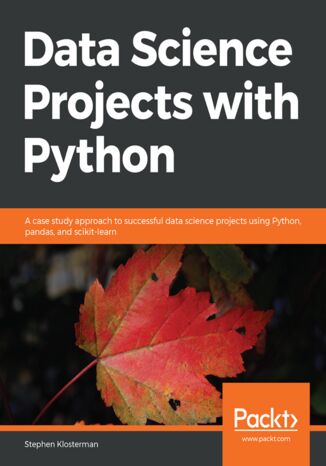
Stephen Klosterman
Data Science Projects with Python is designed to give you practical guidance on industry-standard data analysis and machine learning tools, by applying them to realistic data problems. You will learn how to use pandas and Matplotlib to critically examine datasets with summary statistics and graphs, and extract the insights you seek to derive. You will build your knowledge as you prepare data using the scikit-learn package and feed it to machine learning algorithms such as regularized logistic regression and random forest. You’ll discover how to tune algorithms to provide the most accurate predictions on new and unseen data. As you progress, you’ll gain insights into the working and output of these algorithms, building your understanding of both the predictive capabilities of the models and why they make these predictions.By then end of this book, you will have the necessary skills to confidently use machine learning algorithms to perform detailed data analysis and extract meaningful insights from unstructured data.