
Big data
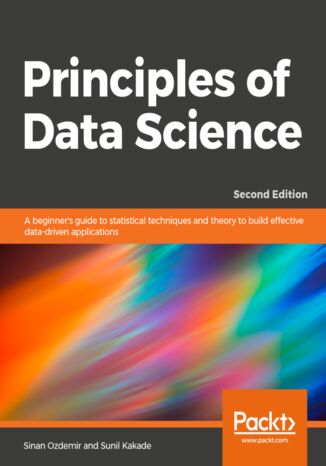
Sinan Ozdemir, Sunil Kakade, Marco Tibaldeschi
Need to turn programming skills into effective data science skills? This book helps you connect mathematics, programming, and business analysis. You’ll feel confident asking—and answering—complex, sophisticated questions of your data, making abstract and raw statistics into actionable ideas.Going through the data science pipeline, you'll clean and prepare data and learn effective data mining strategies and techniques to gain a comprehensive view of how the data science puzzle fits together. You’ll learn fundamentals of computational mathematics and statistics and pseudo-code used by data scientists and analysts. You’ll learn machine learning, discovering statistical models that help control and navigate even the densest datasets, and learn powerful visualizations that communicate what your data means.
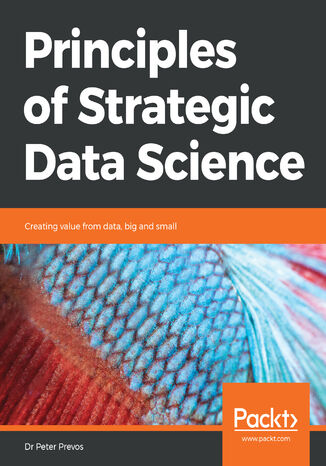
Principles of Strategic Data Science. Creating value from data, big and small
Peter Prevos
Mathematics and computer science form an integral part of data science, and understanding them is crucial for efficiently managing data. This book is designed to take you through the entire data science pipeline and help you join the dots between mathematics, programming, and business analysis. You’ll start by learning what data science is and how organizations can use it to revolutionize the way they use their data. The book then covers the criteria for the soundness of data products and demonstrates how to effectively visualize information. As you progress, you’ll discover the strategic aspects of data science by exploring the five-phase framework that enables you to enhance the value you extract from data. Toward the concluding chapters, you’ll understand the role of a data science manager in helping an organization take the data-driven approach.By the end of this book, you’ll have a good understanding of data science and how it can enable you to extract value from your data.
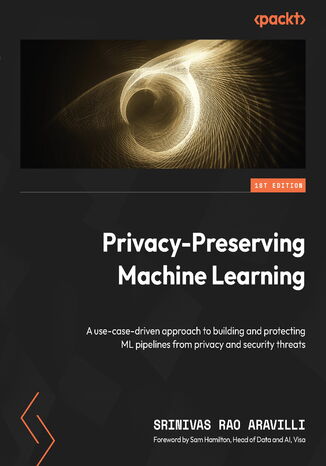
Srinivasa Rao Aravilli, Sam Hamilton
– In an era of evolving privacy regulations, compliance is mandatory for every enterprise – Machine learning engineers face the dual challenge of analyzing vast amounts of data for insights while protecting sensitive information – This book addresses the complexities arising from large data volumes and the scarcity of in-depth privacy-preserving machine learning expertise, and covers a comprehensive range of topics from data privacy and machine learning privacy threats to real-world privacy-preserving cases – As you progress, you’ll be guided through developing anti-money laundering solutions using federated learning and differential privacy – Dedicated sections will explore data in-memory attacks and strategies for safeguarding data and ML models – You’ll also explore the imperative nature of confidential computation and privacy-preserving machine learning benchmarks, as well as frontier research in the field – Upon completion, you’ll possess a thorough understanding of privacy-preserving machine learning, equipping them to effectively shield data from real-world threats and attacks
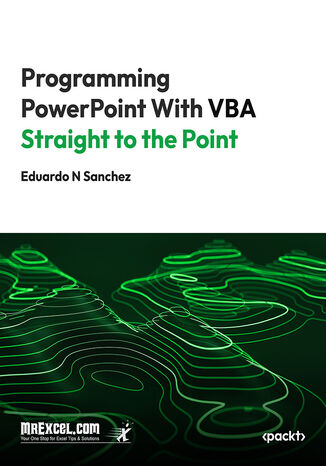
MrExcel's Holy Macro! Books, Eduardo N Sanchez
This book dives deep into the world of PowerPoint VBA with this practical guide. Starting with basic operations, the book moves through advanced automation techniques, covering themes, layouts, and animations. Readers will learn to craft professional-grade presentations, create interactive quizzes, and integrate PowerPoint with other Office apps, while mastering VBA essentials.This book provides a comprehensive introduction to PowerPoint VBA, enabling readers to apply programming concepts to automate repetitive tasks, enhance presentations, and build creative visual effects. With real-world projects and practical code examples, the book helps readers gain confidence in customizing PowerPoint features.Whether you're creating professional reports, interactive presentations, or seamless Office integrations, this guide ensures you stay ahead with advanced VBA techniques, enabling you to transform your PowerPoint workflow.
Projektowanie aplikacji LLM. Holistyczne podejście do dużych modeli językowych
Suhas Pai
Duże modele językowe przeniknęły do wielu dziedzin techniki uważa się je za skuteczne narzędzia do rozwiązywania szerokiej gamy problemów. Coraz więcej przedsiębiorstw korzysta z ich potencjału w celu własnego rozwoju. Jednak przekształcenie prototypów w funkcjonalne aplikacje bywa złożone i skomplikowane. To wyjątkowe opracowanie zawiera wszystkie ważne koncepcje w dziedzinie LLM! Madhav Singhal, CEO, AutoComputer W tej praktycznej książce opisano wszelkie niezbędne narzędzia, techniki i rozwiązania, których potrzebujesz do tworzenia użytecznych produktów wykorzystujących potęgę modeli językowych. Na początku zdobędziesz wiedzę o budowie modelu językowego. Następnie poznasz różne sposoby zastosowania modeli językowych, czy to poprzez bezpośrednie zapytania do modelu, czy też poprzez jego dostrajanie. Zrozumiesz ograniczenia LLM, takie jak halucynacje i problemy z rozumowaniem, a także dowiesz się, jak sobie z nimi poradzić. Znajdziesz tu również omówienie paradygmatów zastosowań, takich jak generowanie wspomagane wyszukiwaniem (RAG) czy agenty. Z tą książką: przygotujesz zbiory danych do treningu i dostrajania modeli zrozumiesz architekturę transformera zaadaptujesz wstępnie wytrenowane modele do własnych potrzeb poznasz skuteczne techniki optymalizacji i adaptacji dziedzinowej dowiesz się, jak integrować modele językowe z zewnętrznymi środowiskami i źródłami danych Gorąco polecam tę książkę! Megan Risdal, Kaggle (Google) To mistrzowski kurs budowania zaawansowanych systemów AI! Jay Alammar, autor książek
Projektowanie głosowych interfejsów użytkownika. Zasady doświadczeń konwersacyjnych
Cathy Pearl
Możliwość porozmawiania ze swoim komputerem od lat rozpalała wyobraźnię inżynierów, użytkowników i... artystów. Jak się okazało, sprawa nie jest - i nigdy nie była - oczywista: rozumienie naturalnej mowy to skomplikowany proces. Języki, którymi posługują się ludzie, są bowiem przepełnione subtelnościami i niejednoznacznością, a ich zrozumienie wymaga znajomości kontekstu. Intensywny rozwój technologii VUI doprowadził do tego, że komputer wykonujący polecenia głosowe nie jest niczym nadzwyczajnym. Wciąż jednak sporo można w tej dziedzinie poprawić. Szczególnie ważne wydaje się wzięcie pod uwagę wrażeń użytkownika: interfejs VUI, który jest uciążliwy dla odbiorcy, nie podaje potrzebnych informacji lub podaje zupełnie nieprzydatne, będzie użytkowany z niechęcią albo wcale. W tym przewodniku znajdziesz przegląd najważniejszych zasad projektowania interfejsów głosowych, a także opis narzędzi służących do tego celu. Poza najbardziej podstawowymi informacjami o mechanizmach rozpoznawania głosu omówiono złożone strategie rozumienia języka naturalnego, analizę nastroju, zbieranie danych oraz techniki przekształcania tekstu w mowę. W książce wyczerpująco opisano zagadnienia wydajności interfejsu VUI: dowiesz się, co na tę wydajność wpływa i w jaki sposób można ją podnieść. Przedstawiono również problematykę systemów sterowanych głosowo, takich jak asystenty domowe czy interfejsy projektowane dla samochodów. Z przewodnika skorzystają zarówno menedżerowie oraz projektanci biznesowi, jak i projektanci interfejsów VUI, niezależnie od tego, czy samodzielnie piszą swoje VUI, czy korzystają z istniejących platform. W książce: kluczowe koncepcje projektów interfejsów głosowych wizualne reprezentacje interfejsów głosowych technologie rozpoznawania mowy metody testowania aplikacji głosowych poprawa wydajności aplikacji głosowych rzeczywiste przykłady interfejsów głosowych
John Arundel
A revolution is happening in web operations. Configuration management tools can build servers in seconds, and automate your entire network. Tools like Puppet are essential to taking full advantage of the power of cloud computing, and building reliable, scalable, secure, high-performance systems. More and more systems administration and IT jobs require some knowledge of configuration management, and specifically Puppet.Puppet 3 Cookbook takes you beyond the basics to explore the full power of Puppet, showing you in detail how to tackle a variety of real-world problems and applications. At every step it shows you exactly what commands you need to type, and includes full code samples for every recipe.The book takes the reader from a basic knowledge of Puppet to a complete and expert understanding of Puppet's latest and most advanced features, community best practices, writing great manifests, scaling and performance, and extending Puppet by adding your own providers and resources. It starts with guidance on how to set up and expand your Puppet infrastructure, then progresses through detailed information on the language and features, external tools, reporting, monitoring, and troubleshooting, and concludes with many specific recipes for managing popular applications.The book includes real examples from production systems and techniques that are in use in some of the world's largest Puppet installations, including a distributed Puppet architecture based on the Git version control system. You'll be introduced to powerful tools that work with Puppet such as Hiera. The book also explains managing Ruby applications and MySQL databases, building web servers, load balancers, high-availability systems with Heartbeat, and many other state-of-the-art techniques
Denny Lee, Tomasz Drabas
Apache Spark is an open source framework for efficient cluster computing with a strong interface for data parallelism and fault tolerance. The PySpark Cookbook presents effective and time-saving recipes for leveraging the power of Python and putting it to use in the Spark ecosystem.You’ll start by learning the Apache Spark architecture and how to set up a Python environment for Spark. You’ll then get familiar with the modules available in PySpark and start using them effortlessly. In addition to this, you’ll discover how to abstract data with RDDs and DataFrames, and understand the streaming capabilities of PySpark. You’ll then move on to using ML and MLlib in order to solve any problems related to the machine learning capabilities of PySpark and use GraphFrames to solve graph-processing problems. Finally, you will explore how to deploy your applications to the cloud using the spark-submit command.By the end of this book, you will be able to use the Python API for Apache Spark to solve any problems associated with building data-intensive applications.