
Hardware
Dział poświęcony w całości tematyce związanej ze sprzętem komputerowym. Gdy Twój pecet nie działa jak należy, sięgnij po którąś z niniejszych pozycji.
Książki nie tylko dla profesjonalistów: serwisantów, projektantów urządzeń współpracujących z PC i programistów. Każdy, kto chce dowiedzieć się jak działa jego pecet znajdzie tu odpowiedzi na wszystkie swoje pytania.
Niedoświadczony użytkownik komputera nie będzie musiał się już obawiać samodzielnego majstrowania we wnętrzu "peceta". Dzięki naszym książkom pozna dokładnie budowę komputera, dowie się jak połączyć poszczególne jego komponenty, tak by pracował on szybko i stabilnie. Zaawansowani znajdą tu wiele cennych wskazówek, podpowiedzi i sprawdzonych sposobów osiągania maksymalnej wydajności komputera.
Trevor James, Mark Noble
You can use the Drupal 7 content management system to build a small business website quickly. You may add blogs, images, maps, e-commerce, social application integration, and more to your site to connect with your customers and make more money from your business.Drupal 7 Business Solutions will give you hands-on practical tutorials on how to build a rich and dynamic website for your business quickly using one of the most popular tools in open source.You'll start by adding blogs and images to your website. Then you'll learn how to add a VIP section to your site so that you can give your logged in users special discounts and other VIP freebies. Next, you will learn to send your customers e-mail newsletters and show them a dynamic events calendar.The book will then teach you to add e-commerce to your site so you can sell your products online. You'll add YouTube videos and Google maps to help enhance your business site. You will then learn to incorporate feedback mechanisms for your customers.The book also explains how to maintain your site, upgrade it, and continue adding dynamic content to it.
Drupal 7 First Look. Learn the new features of Drupal 7, how they work and how they will impact you
Mark Noble
Drupal 7 contains features for which site administrators have been clamoring for years, including support for fields, an improved administration interface, better database support, improved theming, and more. You could of course make a laborious search on sites, blogs, and many online tutorials that would promise to update you about every new feature, but there's an even better way to know all about Drupal 7's new features: Drupal 7 First Look is the first and only book that covers all of the fantastic new features in Drupal 7 in depth and covers the process of upgrading your Drupal 6 site to Drupal 7. If you've used Drupal 6 and want to use Drupal 7, you need this book.Drupal 7 First Look takes an in-depth look into all of the major new features in Drupal 7 so you can quickly take full advantage of Drupal 7. It also assists you in upgrading your site to Drupal 7. Some of the new features in Drupal 7 include:Fields API, based on Drupal 6 CCK, which allows you to easily build your own content typesImproved user interface for administering your websiteBuilt-in support for working with images and filesImproved security for the site and users of the siteCompletely rewritten database layer DBTNG to make working with the database easier and more secure. Improved API for custom module development and user interface theming
MICHAEL KEITH PEACOCK
Drupal is ideally equipped to serve as a base system for creating a custom social networking site like Facebook or MySpace. While these large social networks have their place, niche social networking websites can help promote businesses, products, projects, and hobbies of any nature.Drupal 7 Social Networking provides careful instructions and clear explanations to take you through the setup and management of your social network site, covering topics from users, to marketing, to maintenance. It will help you create your own social networking site, suitable for whatever audience you choose!Starting from the very basics of both Drupal and Social Networking, right through to more complicated aspects, you will progressively learn how to add to and expand your social networking site and add more features. You will learn how to secure your social network, deploy it on the Internet, and keep it running and well maintained. As social networking sites rely on the participation of their users, this book helps you to structure your site in such a way so that users can easily and enjoyably contribute, thus creating a powerful social network.
Robert Varkonyi
Rules is what every Drupal site builder and developer has to use when creating event ñ action-based applications. The framework provides a highly flexible way to create sophisticated, condition-based functions any Drupal based system into an interactive application. Rules makes Drupal rule the CMS world.Drupal Rules How-to is a practical, hands-on guide that provides you with a number of clear step-by-step exercises, which will help you take advantage of the real power of the Rules framework, and understand how to use it on a site builder and developer levelThis book demonstrates the power and flexibility of the Rules framework. It discusses the main aspects of the module both from the site builder and developer perspective, from basic and advanced Rule configurations using Events, Conditions, Actions and Components to getting familiar with the Rules API. You will also learn how to use additional modules together with Rules to further extend the possibilities of your Drupal system, such as Rules Scheduler to schedule the execution of your Rule configurations and Views Bulk Operations to execute Rule configurations on a view result list. The book also demonstrates the main API features that enable you to create your own Events, Conditions and Actions, provide new data types to Rules and execute your configurations programmatically
Perry Lea
The migration of computing to the edge is the logical progression of where computing is performed on a global scale. Edge computing is not a new paradigm but a necessary technology to address issues such as latency, service charges, reliability, connectivity, and privacy. This book walks you through the definition and architecture of edge computing systems and why they are critical in today’s ecosystem of IoT devices and an “everything connected” world.You will start your journey with an introduction to different edge computing hardware platforms, which vary by use case. From there, you’ll explore operating systems and middleware packages that manage edge devices such as Azure IoT. Then, you will explore communication systems such as near-range Bluetooth and RFID as well as long-range systems such as 5G. Networking protocols will be covered, which are the heart of edge systems. Technologies such as MQTT, which make up the backbone of edge to cloud communication, are examined. Then, you will move on to edge applications such as edge predictive AI and federated computing. We wrap up by investigating the security and vulnerability envelope of edge systems.This book is intended to quickly familiarize you with edge systems technologies and use cases, without burdening you with complicated jargon and low-level details.
Sergio Mendez
Edge computing is a way of processing information near the source of data instead of processing it on data centers in the cloud. In this way, edge computing can reduce latency when data is processed, improving the user experience on real-time data visualization for your applications. Using K3s, a light-weight Kubernetes and k3OS, a K3s-based Linux distribution along with other open source cloud native technologies, you can build reliable edge computing systems without spending a lot of money.In this book, you will learn how to design edge computing systems with containers and edge devices using sensors, GPS modules, WiFi, LoRa communication and so on. You will also get to grips with different use cases and examples covered in this book, how to solve common use cases for edge computing such as updating your applications using GitOps, reading data from sensors and storing it on SQL and NoSQL databases. Later chapters will show you how to connect hardware to your edge clusters, predict using machine learning, and analyze images with computer vision. All the examples and use cases in this book are designed to run on devices using 64-bit ARM processors, using Raspberry Pi devices as an example.By the end of this book, you will be able to use the content of these chapters as small pieces to create your own edge computing system.
Jay Kimelman
Xero empowers business owners to gain insights into their business and performance and collaborate seamlessly with their accountants and tax professionals. This book goes beyond the basics and explores the more advanced Xero features, techniques, and best practices for managing sales taxes, budgeting, and reporting.You’ll begin by diving right into Xero, setting up a bank feed, and exploring its power while experiencing just how easy it is to use. The book will guide you in setting up Xero the right way to ensure that you succeed in each of your transactions. As you progress through the chapters, you’ll learn what spend money and receive money transactions are and be able to easily send invoices and collect receivables or payments, collect and pay bills, and even track your business assets with Xero. Toward the end, you’ll be proficient at producing powerful reports, giving you the keys to running or advising any business.By the end of this Xero book, you’ll have gained the confidence to add a company to Xero, set up the bank feeds, reconcile the transactions, send invoices, and pay bills, ending up with beautiful financial statements.
Deepak Vohra
EJB (Enterprise JavaBeans) 3.0 is a commonly used database persistence technology in Java EE applications. EJB 3.0 has simplified the development of EJBs with an annotations-based API that eliminates the use of remote/local interfaces, home/local home interfaces, and deployment descriptors. A number of other books are available on EJB 3.0, but none covers EJB 3.0 support in Oracle Fusion Middleware 11g, which is one of the leaders in the application server market.This is the first book that covers all aspects of EJB 3.0 database persistence development using Oracle Fusion Middleware technology. It covers all the best practices for database persistence ensuring that your applications are easily maintainable. Leaving theory behind, this book uses real-world examples to guide you in building your own EJB 3.0 applications that are well integrated with commonly used Java EE frameworks.The book gets going by discussing the new features in the EJB 3.0 specification. As some readers may still be using EJB 2.0, the book explains how to convert your EJB 2.0 entity beans to EJB 3.0. It then goes on to discuss using EJB 3.0 database persistence with JDeveloper, WebLogic Server, and Enterprise Pack for Eclipse, the main Java EE components of Oracle Fusion Middleware 11g. The book also covers EJB 3.0 relationships and integrating EJB 3.0 relationships with JSF user interfaces. EJB 3.0 database persistence with some of the commonly used frameworks such as ADF Faces, AJAX, and Web Services is also discussed in the book. It uses the integrated WebLogic Server 11g in some of the chapters and the standalone WebLogic Server in other chapters. While JDeveloper is the primary Java IDE used in the book, one of the chapters is based on the Oracle Enterprise Pack for Eclipse.By the time you reach the end of this book, you will be well-versed with developing EJB 3.0 applications using the different Java EE components of Oracle Fusion Middleware 11g.
Colin Dow
Programowanie dla internetu rzeczy różni się od tworzenia standardowych aplikacji internetowych. Najlepszym sposobem na naukę praktycznych projektów IoT jest praca z mikrokontrolerami Raspberry Pi - znanymi z wszechstronności i przystępnej ceny. To one znajdują się dziś w awangardzie urządzeń stosowanych w inteligentnych rozwiązaniach internetu rzeczy i wyznaczają nowe trendy. Dzięki tej książce pewnie wkroczysz do fascynującego świata internetu rzeczy! Zaczniesz od podstaw: poznasz usługi internetowe, komunikację LoRa, porty GPIO, a także możliwości najnowszych mikrokontrolerów Raspberry Pi. Dowiesz się też, czym jest ROS i jak stworzyć projekt oparty na rozpoznawaniu obrazów. Krok po kroku będziesz przechodzić do coraz bardziej zaawansowanych rozwiązań. Nauczysz się integrować aplikacje z usługami sieciowymi i używać technologii LoRa do komunikacji na dużą odległość przy niskim zużyciu energii. Dzięki jasnym instrukcjom i zrozumiałym wyjaśnieniom uzyskasz niezbędne umiejętności, by tworzyć innowacyjne urządzenia IoT. W książce: integracja usług internetowych w celu pobierania i analizowania danych w czasie rzeczywistym łączenie czujników, silników i wyświetlaczy podczas budowy inteligentnych urządzeń IoT budowanie wskaźnika pogody konstruowanie autonomicznego robota projekt domowego systemu zabezpieczeń zastosowanie LoRa i LoRaWAN do zdalnego monitorowania warunków środowiskowych
Rafal Kuc, Marek Rogozinski
ElasticSearch is an open source search server built on Apache Lucene. It was built to provide a scalable search solution with built-in support for near real-time search and multi-tenancy.Jumping into the world of ElasticSearch by setting up your own custom cluster, this book will show you how to create a fast, scalable, and flexible search solution. By learning the ins-and-outs of data indexing and analysis, ElasticSearch Server will start you on your journey to mastering the powerful capabilities of ElasticSearch. With practical chapters covering how to search data, extend your search, and go deep into cluster administration and search analysis, this book is perfect for those new and experienced with search servers.In ElasticSearch Server you will learn how to revolutionize your website or application with faster, more accurate, and flexible search functionality. Starting with chapters on setting up your own ElasticSearch cluster and searching and extending your search parameters you will quickly be able to create a fast, scalable, and completely custom search solution.Building on your knowledge further you will learn about ElasticSearch's query API and become confident using powerful filtering and faceting capabilities. You will develop practical knowledge on how to make use of ElasticSearch's near real-time capabilities and support for multi-tenancy.Your journey then concludes with chapters that help you monitor and tune your ElasticSearch cluster as well as advanced topics such as shard allocation, gateway configuration, and the discovery module.
Elektronika z wykorzystaniem Arduino i Rapsberry Pi. Receptury
Simon Monk
Praktyczne przepisy rozwiązań elektronicznych z wykorzystaniem Arduino i Raspberry Pi Aby zacząć zajmować się elektroniką, wcale nie trzeba być inżynierem w tej dziedzinie. Dzięki powszechnie dostępnym i niedrogim podzespołom, wielu źródłom wiedzy i inspiracji oraz chętnej do pomocy społeczności elektronika staje się ulubionym hobby rosnącej rzeszy osób. Wiele z nich staje się profesjonalistami, tworząc pomysłowe i przydatne konstrukcje. Naturalnie nie oznacza to, że dziedzina ta stała się zupełnie bezproblemową zabawą: elektronik powinien mieć pewną wiedzę teoretyczną i umieć rozwiązywać określone, specyficzne dla elektroniki problemy. Niniejsza książka jest solidnym punktem wyjścia dla elektroników amatorów i osób pragnących zająć się tą dziedziną profesjonalnie. Szczególnie ważnym elementem książki jest omówienie podstaw elektroniki oraz zagadnień stosowania mikrokontrolerów, tworzenia zasilaczy różnego rodzaju, używania odpowiednich tranzystorów do różnych celów, stosowania analogowych i cyfrowych układów scalonych, a także budowania projektów i prototypów oraz posługiwania się sprzętem badawczym. Książkę zorganizowano w ten sposób, aby ułatwić szybkie odnalezienie potrzebnego zagadnienia i skorzystanie z odpowiedniego przepisu. W tej książce znajdziesz takie tematy, jak: zagadnienia teoretyczne i komponenty elektroniczne zasilanie: baterie, akumulatory i panele słoneczne sterowanie za pomocą Arduino i Raspberry Pi rozwiązania analogowe częstotliwości radiowe i przekazywanie pakietów danych korzystanie z narzędzi i urządzeń warsztatowych Zbiór receptur na każdy dzień elektronika!
Cash Costello
As an updated version of the first ever Elgg book, this is an excellent resource for those interested in Elgg development due to its attention to detail, clearly written style and knowledgeable author. - Dave Tosh, Elgg co-founder.In his book, Cash Costello makes full use of his skills in development and communication to tackle the complex subject of Elgg social networking. This easy-to-read guide gives end users, new developers, and old pros alike a solid base to start their venture into social media with Elgg. I highly recommend it as a useful and enjoyable read.- Brett Profitt, Elgg Lead DeveloperThe web is becoming increasingly social as millions of people use it to blog, share, post, 'friend', 'unfriend' (which was made the Oxford word of the year in 2009), comment, and chat. Elgg ñ your award-winning open source social networking engine ñ is tailor-made to create any social networking or social media website you can imagine.If you want to create a social networking website from scratch using Elgg, then this book is exactly what you need.Elgg 1.8 Social Networking covers everything you need to know about building a social networking site with Elgg. It begins with instructions for installing Elgg, continues with a guided tour of its capabilities, and finishes with practical advice on deploying Elgg on a production server. And in between, it is packed with information on configuring and customizing Elgg through plugins and themes.This book is a learn-by-doing guide to creating your own social networking site. It includes three sample case studies on how Elgg could be used as an e-learning tool, an intranet application for organizations, and a niche social networking site. Step by step it takes you through the installation, configuration, and customization of Elgg. Valuable advice is sprinkled throughout the book to enable you to build your site like an expert.For developers, this book provides a multitude of options. First, there is a tutorial-based section that systematically teaches you how to build plugins. Soon you will have ten plugins for use on your site in addition to all the knowledge you have gained. Second, if you prefer a quick overview, this book has an appendix that describes Elgg using the terminology and design patterns common in web development. Third, if you are interested in creating a theme, it also includes a design tutorial and a catalog of Elgg's view templates.The book then goes on to describe what is involved in running a production website. It has sections on selecting a hosting provider, configuring and tuning the server, backing up the site, and dealing with spammers.
Mohammed Billoo
Embedded Linux now powers everything from IoT devices to industrial systems, making it essential for embedded software engineers to be skilled at customizing, deploying, and developing for these platforms. This hands-on guide walks you through the core concepts of Embedded Linux using practical, real-world examples on Raspberry Pi 4 and 5. For those without access to hardware, it also demonstrates how to simulate embedded Linux systems using QEMU.This book contains code samples that you can follow along and build three real-world projects: a Python web-based dashboard that retrieves and displays data from a temperature sensor and two GUI applications demonstrating how to use the Qt framework on Embedded Linux using two different development paradigms. You’ll also step into advanced territory with Linux kernel debugging techniques and discover how to harness eBPF, building the experience employers want and the confidence to tackle complex embedded challenges.By the end of this book, you'll have a solid grasp of Embedded Linux development and the skills to build and deploy production-ready, modern embedded applications.
Spencer Harbar, Lim Mei Ying, Stefan Gossner
The release of Microsoft Content Management Server (MCMS) Service Pack 2 opens up the world of ASP.NET 2.0 to MCMS developers. Written by the masters of MCMS, this book shows you how to use the new features of ASP.NET 2.0 that everyone is talking about in your MCMS development.You will first learn how to install and configure MCMS SP2. There are two approaches to setting up a development environment for SP2: an upgrade from a previous SP1a installation or starting from scratch and building a fresh installation including SP2. Of course, both approaches are covered.You will become familiar with the MCMS Service Pack 2 development environment, and create custom Visual Studio 2005 templates to overcome some of the issues which are present with the templates shipped with MCMS SP2.After that, its time to look at some of the most exciting features of ASP.NET 2.0, and how you can make use of them in MCMS: master pages, site navigation, themes, and the membership provider model.One of the coolest features introduced with ASP.NET 2.0 is master pages, which allow developers to enforce common layout and behaviour across pages within an application. You will learn about the benefits of using master pages and see a step-by-step guide for implementing them in your MCMS applications, where they become master templates!ASP.NET 2.0 introduces a whole new way of implementing site navigation, driven by site maps. By programmatically adding channels and postings to a site map you will see how to smoothly integrate these controls to any MCMS site.To customize the look of your site, we will see how a common look and feel can be applied efficiently to a MCMS site by using ASP.NET 2.0 themes. An essential customization required for themes to work correctly in an MCMS site is a must-read feature of this chapter.MCMS has its own role based authorization and user management system which cannot be extended. However, the new ASP.NET 2.0 Membership Provider Model and the shipped controls can be used within MCMS applications to improve the implementation of Forms Authentication and provide a more elegant solution for authenticating against an external store.A collection of tips and tricks round off the book, including using the Provider Model design pattern to ease migration to Office SharePoint Portal Server
Damien Bruyndonckx
Looking to deliver scalable online learning solutions? Adobe's latest enterprise Learning Manager is a powerful learning management system (LMS) that enables organizations to deliver, manage, and track immersive learning experiences. This book unlocks the full potential of Learning Manager, guiding you to become an adept administrator, author, or teacher, experimenting with Learning Manager from different perspectives. You'll gain an in-depth understanding of the features and their impact on your business. From platform setup to course administration, you’ll be able to create blended learning experiences, deploy your content to different devices, and explore Learning Manager's features for monitoring your students' progress on a daily basis. Finally, you'll discover techniques for organizing and maintaining your course catalog while elevating the learner experience. By the end of the book, you’ll be able to implement your organization’s training strategy, deliver engaging learning experiences, and generate meaningful reports to monitor their effectiveness.
Aaron Woody
Enterprise security redefined using a data-centric approach and trust models to transform information security into a business enablement process. It is a unique and forward thinking approach for deciding the best method to secure data in the enterprise, the cloud, and in BYOD environments.Enterprise Security: A Data-Centric Approach to Securing the Enterprise will guide you through redefining your security architecture to be more affective and turn information security into a business enablement process rather than a roadblock. This book will provide you with the areas where security must focus to ensure end-to-end security throughout the enterprise-supporting enterprise initiatives such as cloud and BYOD. Enterprise Security: A Data-Centric Approach to Securing the Enterprise will first introduce the reader to a new security architecture model and then explores the must have security methods and new tools that can used to secure the enterprise.This book will take a data-centric approach to securing the enterprise through the concept of Trust Models and building a layered security implementation focused on data. This is not your traditional security book focused on point solutions and the network aspect of security. This book combines best practice methods with new methods to approach enterprise security and how to remain agile as the enterprise demands more access to data from traditionally untrusted assets, hosted solutions, and third parties. Applied Information Security - A Data-Centric Approach to Securing the Enterprise will provide the reader an easy-to-follow flow from architecture to implementation, diagrams and recommended steps, and resources for further research and solution evaluation.This book is a reference and guide for all levels of enterprise security programs that have realized that non-data centric security is no longer practical and new methods must be used to secure the most critical assets in the enterprise.
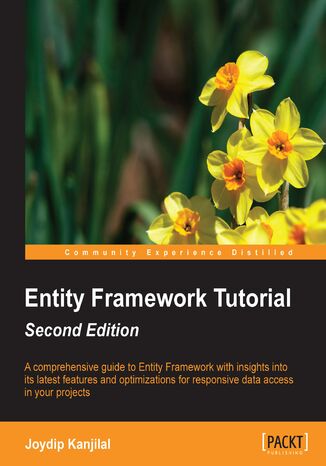
Joydip Kanjilal
The ADO.NET Entity Framework from Microsoft is a new ADO.NET development framework that provides a level of abstraction for data access strategies and solves the impedance mismatch issues that exist between different data modelsThis book explores Microsoft’s Entity Framework and explains how it can used to build enterprise level applications. It will also teach you how you can work with RESTful Services and Google’s Protocol Buffers with Entity Framework and WCF. You will explore how to use Entity Framework with ASP.NET Web API and also how to consume the data exposed by Entity Framework from client applications of varying types, i.e., ASP.NET MVC, WPF and Silverlight. You will familiarize yourself with the new features and improvements introduced in Entity Framework including enhanced POCO support, template-based code generation, tooling consolidation and connection resiliency. By the end of the book, you will be able to successfully extend the new functionalities of Entity framework into your project.
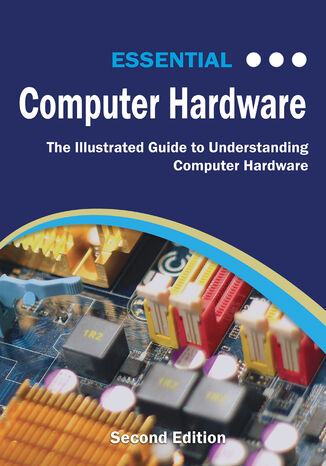
Kevin Wilson
You'll begin this course with basic computer fundamentals, setting the foundation for critical hardware components that power every computing device. From motherboards to processors, you'll gain a solid understanding of how these elements work together to create a functioning computer.As you progress, you'll uncover the importance of peripheral devices, discovering how external components interact with the core hardware. The course also covers the diverse types of computers, ranging from personal desktops to powerful servers, and guides you in interpreting hardware specifications to make informed decisions when purchasing or upgrading equipment. The course continues with an introduction to computer software, focusing on the relationship between hardware & the programs that bring them to life.In the final stages, the course shifts its focus to computer networks and the internet, offering insights into how devices connect and communicate on a global scale. You'll explore the essential principles of internet security, learning how to protect your devices and data from online threats. By the end of this course, you'll have a well-rounded understanding of both the physical and digital aspects of computing, empowering you to navigate the technological landscape with confidence.
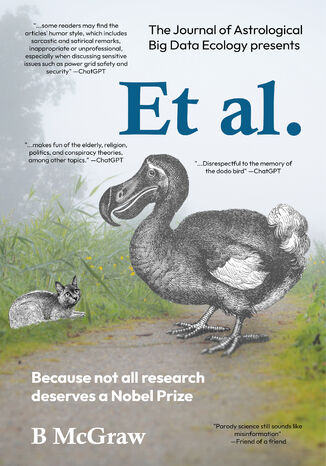
Et al. Because not all research deserves a Nobel Prize
B. McGraw
Tired of the same old math, science, statistics, and programming memes people post online and want something a little more elaborate? This is the book for you.Tremble as we make up all our own facts and data, hand-draw diagrams in MS Paint, and quote from fictional studies and journals. Cower as authors write in the first person because their study is just a little too personal for them. Recoil from the sheer mass of oversimplified methodology, distilling someone's entire thesis into a paragraph of jokes crude enough to make it into a Mike Myers movie.Over the last few years, we have taken arguments that you would normally have after four Jack and cokes at game night and turned them into properly formatted research papers with a writing tone serious enough to confuse the uninitiated. These papers are high-effort jokes by researchers and scientists for researchers and scientists. They cover a range of topics such as the consequences of re-releasing tourists back into Yellowstone National Park after COVID-19, how to play StarCraft competitively online on a quantum computer, and most importantly, how trees around the globe are becoming increasingly radicalized.
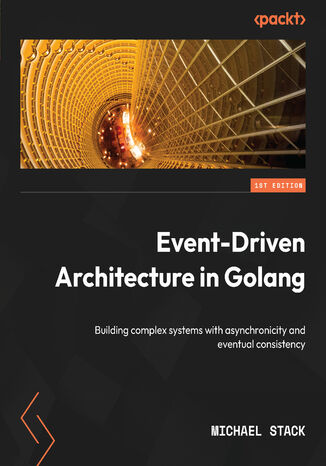
Michael Stack
Event-driven architecture in Golang is an approach used to develop applications that shares state changes asynchronously, internally, and externally using messages. EDA applications are better suited at handling situations that need to scale up quickly and the chances of individual component failures are less likely to bring your system crashing down. This is why EDA is a great thing to learn and this book is designed to get you started with the help of step-by-step explanations of essential concepts, practical examples, and more.You’ll begin building event-driven microservices, including patterns to handle data consistency and resiliency. Not only will you learn the patterns behind event-driven microservices but also how to communicate using asynchronous messaging with event streams. You’ll then build an application made of several microservices that communicates using both choreographed and orchestrated messaging.By the end of this book, you’ll be able to build and deploy your own event-driven microservices using asynchronous communication.
Chris Webb, Alberto Ferrari, Marco Russo
Microsoft's SQL Server Analysis Services 2008 is an OLAP server that allows users to analyze business data quickly and easily. However, designing cubes in Analysis Services can be a complex task: it's all too easy to make mistakes early on in development that lead to serious problems when the cube is in production. Learning the best practices for cube design before you start your project will help you avoid these problems and ensure that your project is a success.This book offers practical advice on how to go about designing and building fast, scalable, and maintainable cubes that will meet your users' requirements and help make your Business Intelligence project a success.This book gives readers insight into the best practices for designing and building Microsoft Analysis Services 2008 cubes. It also provides details about server architecture, performance tuning, security, and administration of an Analysis Services solution.In this book, you will learn how to design and implement Analysis Services cubes. Starting from designing a data mart for Analysis Services, through the creation of dimensions and measure groups, to putting the cube into production, we'll explore the whole of the development lifecycle.This book is an invaluable guide for anyone who is planning to use Microsoft Analysis Services 2008 in a Business Intelligence project.
Dirk Merkel
Even if you find writing PHP code easy, writing code that is efficient and easy to maintain and reuse is not so straightforward. Self-taught PHP developers and programmers transitioning from other languages often lack the knowledge to work with PHP on an enterprise level. They need to take their PHP development skills to that level by learning the skills and tools necessary to write maintainable and efficient code.This book will enable you to take your PHP development skills to an enterprise level by teaching you the skills and tools necessary to write maintainable and efficient code. You will learn how to perform activities such as unit testing, enforcing coding standards, automating deployment, and interactive debugging using tools created for PHP developers – all the information in one place. Your code will be more maintainable, efficient, and self-documented.From the design phase to actually deploying the application, you will learn concepts and apply them using the best-of-breed tools available in PHP.Experienced developers looking for expertise in PHP development will learn how to follow best practices within the world of PHP. The book contains many well-documented code samples and recipes that can be used as a starting point for producing quality code.Specifically, you will learn to design an application with UML, code it in Eclipse with PDT, document it with phpDocumentor, debug it interactively with Xdebug, test it by writing PHPUnit tests, manage source code in Subversion, speed up development and increase stability by using Zend Framework, pull everything together using continuous integration, and deploy the application automatically with Phing – all in one book. The author's experience in PHP development enables him to share insights on using enterprise tools, in a clear and friendly way.
Kevin Wilson
This course takes you on a journey through the intricate world of computer hardware, beginning with a solid foundation in the fundamentals of computing. Starting with an overview of computers and microcomputers, you’ll explore the core components that make up these machines, including embedded systems, software, and peripherals. Each chapter is designed to build your understanding of how these elements work together to create the technology we rely on daily.As you progress, the course delves into more complex topics like computer networks, the Internet, and cloud computing. You’ll gain insights into how hardware interacts with software and the critical role of security in maintaining the integrity of systems. Additionally, the course covers binary numbers, Boolean logic, and other essential concepts that underpin modern computing, offering a comprehensive understanding of both theoretical and practical aspects.By the end of this course, you’ll have a thorough knowledge of not just the hardware components but also the data processes like encryption, compression, and storage that ensure efficient and secure computing. Whether you're a beginner or someone with some background in technology, this course provides the knowledge and skills necessary to navigate and understand the complex world of computer hardware.
Hage Yaaapa
Express is a minimal and flexible node.js web application framework, providing a robust set of features for building single and multi-page, and hybrid web applications. It provides a thin layer of features fundamental to any web application, without obscuring features that developers know and love in node.js.Express Web Application Development is a comprehensive guide for those looking to learn how to use the Express web framework for web application development.Starting with the initial setup of the Express web framework, Express Web Application Development helps you to understand the fundamentals of the framework. By the end of Express Web Application Development, you will have acquired enough knowledge and skills to create production-ready Express apps. All of this is made possible by the incremental introduction of more advanced topics, starting from the very essentials.On the way to mastering Express for application development, we teach you the more advanced topics such as routes, views, middleware, forms, sessions, cookies and various other aspects of configuring an Express application. Jade; the recommended HTML template engine, and Stylus; the CSS pre-processor for Express, are covered in detail.Last, but definitely not least, Express Web Application Development also covers practices and setups that are required to make Express apps production-ready.