
Hardware
Dział poświęcony w całości tematyce związanej ze sprzętem komputerowym. Gdy Twój pecet nie działa jak należy, sięgnij po którąś z niniejszych pozycji.
Książki nie tylko dla profesjonalistów: serwisantów, projektantów urządzeń współpracujących z PC i programistów. Każdy, kto chce dowiedzieć się jak działa jego pecet znajdzie tu odpowiedzi na wszystkie swoje pytania.
Niedoświadczony użytkownik komputera nie będzie musiał się już obawiać samodzielnego majstrowania we wnętrzu "peceta". Dzięki naszym książkom pozna dokładnie budowę komputera, dowie się jak połączyć poszczególne jego komponenty, tak by pracował on szybko i stabilnie. Zaawansowani znajdą tu wiele cennych wskazówek, podpowiedzi i sprawdzonych sposobów osiągania maksymalnej wydajności komputera.
Trevor James, Mark Noble
You can use the Drupal 7 content management system to build a small business website quickly. You may add blogs, images, maps, e-commerce, social application integration, and more to your site to connect with your customers and make more money from your business.Drupal 7 Business Solutions will give you hands-on practical tutorials on how to build a rich and dynamic website for your business quickly using one of the most popular tools in open source.You'll start by adding blogs and images to your website. Then you'll learn how to add a VIP section to your site so that you can give your logged in users special discounts and other VIP freebies. Next, you will learn to send your customers e-mail newsletters and show them a dynamic events calendar.The book will then teach you to add e-commerce to your site so you can sell your products online. You'll add YouTube videos and Google maps to help enhance your business site. You will then learn to incorporate feedback mechanisms for your customers.The book also explains how to maintain your site, upgrade it, and continue adding dynamic content to it.
Drupal 7 First Look. Learn the new features of Drupal 7, how they work and how they will impact you
Mark Noble
Drupal 7 contains features for which site administrators have been clamoring for years, including support for fields, an improved administration interface, better database support, improved theming, and more. You could of course make a laborious search on sites, blogs, and many online tutorials that would promise to update you about every new feature, but there's an even better way to know all about Drupal 7's new features: Drupal 7 First Look is the first and only book that covers all of the fantastic new features in Drupal 7 in depth and covers the process of upgrading your Drupal 6 site to Drupal 7. If you've used Drupal 6 and want to use Drupal 7, you need this book.Drupal 7 First Look takes an in-depth look into all of the major new features in Drupal 7 so you can quickly take full advantage of Drupal 7. It also assists you in upgrading your site to Drupal 7. Some of the new features in Drupal 7 include:Fields API, based on Drupal 6 CCK, which allows you to easily build your own content typesImproved user interface for administering your websiteBuilt-in support for working with images and filesImproved security for the site and users of the siteCompletely rewritten database layer DBTNG to make working with the database easier and more secure. Improved API for custom module development and user interface theming
MICHAEL KEITH PEACOCK
Drupal is ideally equipped to serve as a base system for creating a custom social networking site like Facebook or MySpace. While these large social networks have their place, niche social networking websites can help promote businesses, products, projects, and hobbies of any nature.Drupal 7 Social Networking provides careful instructions and clear explanations to take you through the setup and management of your social network site, covering topics from users, to marketing, to maintenance. It will help you create your own social networking site, suitable for whatever audience you choose!Starting from the very basics of both Drupal and Social Networking, right through to more complicated aspects, you will progressively learn how to add to and expand your social networking site and add more features. You will learn how to secure your social network, deploy it on the Internet, and keep it running and well maintained. As social networking sites rely on the participation of their users, this book helps you to structure your site in such a way so that users can easily and enjoyably contribute, thus creating a powerful social network.
Robert Varkonyi
Rules is what every Drupal site builder and developer has to use when creating event ñ action-based applications. The framework provides a highly flexible way to create sophisticated, condition-based functions any Drupal based system into an interactive application. Rules makes Drupal rule the CMS world.Drupal Rules How-to is a practical, hands-on guide that provides you with a number of clear step-by-step exercises, which will help you take advantage of the real power of the Rules framework, and understand how to use it on a site builder and developer levelThis book demonstrates the power and flexibility of the Rules framework. It discusses the main aspects of the module both from the site builder and developer perspective, from basic and advanced Rule configurations using Events, Conditions, Actions and Components to getting familiar with the Rules API. You will also learn how to use additional modules together with Rules to further extend the possibilities of your Drupal system, such as Rules Scheduler to schedule the execution of your Rule configurations and Views Bulk Operations to execute Rule configurations on a view result list. The book also demonstrates the main API features that enable you to create your own Events, Conditions and Actions, provide new data types to Rules and execute your configurations programmatically
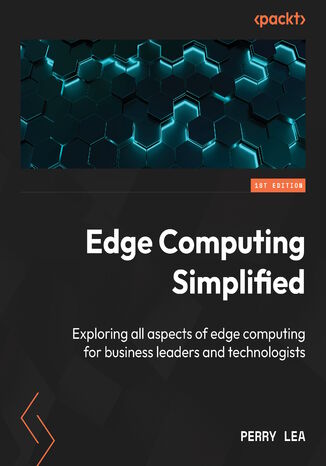
Perry Lea
The migration of computing to the edge is the logical progression of where computing is performed on a global scale. Edge computing is not a new paradigm but a necessary technology to address issues such as latency, service charges, reliability, connectivity, and privacy. This book walks you through the definition and architecture of edge computing systems and why they are critical in today’s ecosystem of IoT devices and an “everything connected” world.You will start your journey with an introduction to different edge computing hardware platforms, which vary by use case. From there, you’ll explore operating systems and middleware packages that manage edge devices such as Azure IoT. Then, you will explore communication systems such as near-range Bluetooth and RFID as well as long-range systems such as 5G. Networking protocols will be covered, which are the heart of edge systems. Technologies such as MQTT, which make up the backbone of edge to cloud communication, are examined. Then, you will move on to edge applications such as edge predictive AI and federated computing. We wrap up by investigating the security and vulnerability envelope of edge systems.This book is intended to quickly familiarize you with edge systems technologies and use cases, without burdening you with complicated jargon and low-level details.
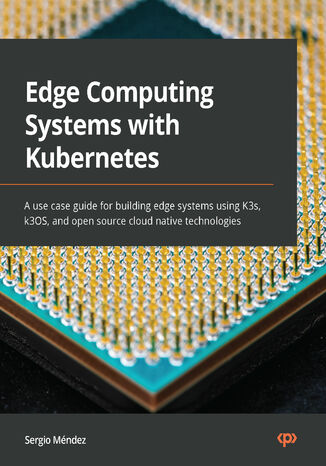
Sergio Mendez
Edge computing is a way of processing information near the source of data instead of processing it on data centers in the cloud. In this way, edge computing can reduce latency when data is processed, improving the user experience on real-time data visualization for your applications. Using K3s, a light-weight Kubernetes and k3OS, a K3s-based Linux distribution along with other open source cloud native technologies, you can build reliable edge computing systems without spending a lot of money.In this book, you will learn how to design edge computing systems with containers and edge devices using sensors, GPS modules, WiFi, LoRa communication and so on. You will also get to grips with different use cases and examples covered in this book, how to solve common use cases for edge computing such as updating your applications using GitOps, reading data from sensors and storing it on SQL and NoSQL databases. Later chapters will show you how to connect hardware to your edge clusters, predict using machine learning, and analyze images with computer vision. All the examples and use cases in this book are designed to run on devices using 64-bit ARM processors, using Raspberry Pi devices as an example.By the end of this book, you will be able to use the content of these chapters as small pieces to create your own edge computing system.
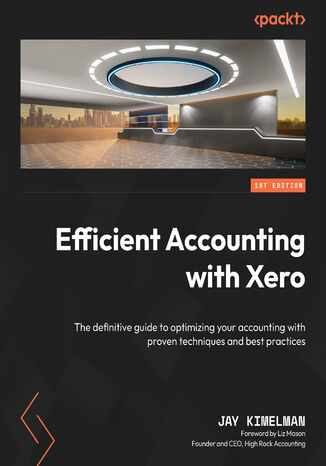
Jay Kimelman
Xero empowers business owners to gain insights into their business and performance and collaborate seamlessly with their accountants and tax professionals. This book goes beyond the basics and explores the more advanced Xero features, techniques, and best practices for managing sales taxes, budgeting, and reporting.You’ll begin by diving right into Xero, setting up a bank feed, and exploring its power while experiencing just how easy it is to use. The book will guide you in setting up Xero the right way to ensure that you succeed in each of your transactions. As you progress through the chapters, you’ll learn what spend money and receive money transactions are and be able to easily send invoices and collect receivables or payments, collect and pay bills, and even track your business assets with Xero. Toward the end, you’ll be proficient at producing powerful reports, giving you the keys to running or advising any business.By the end of this Xero book, you’ll have gained the confidence to add a company to Xero, set up the bank feeds, reconcile the transactions, send invoices, and pay bills, ending up with beautiful financial statements.
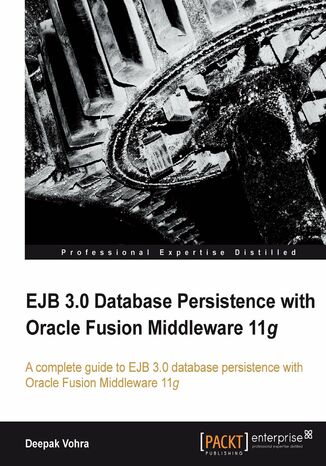
Deepak Vohra
EJB (Enterprise JavaBeans) 3.0 is a commonly used database persistence technology in Java EE applications. EJB 3.0 has simplified the development of EJBs with an annotations-based API that eliminates the use of remote/local interfaces, home/local home interfaces, and deployment descriptors. A number of other books are available on EJB 3.0, but none covers EJB 3.0 support in Oracle Fusion Middleware 11g, which is one of the leaders in the application server market.This is the first book that covers all aspects of EJB 3.0 database persistence development using Oracle Fusion Middleware technology. It covers all the best practices for database persistence ensuring that your applications are easily maintainable. Leaving theory behind, this book uses real-world examples to guide you in building your own EJB 3.0 applications that are well integrated with commonly used Java EE frameworks.The book gets going by discussing the new features in the EJB 3.0 specification. As some readers may still be using EJB 2.0, the book explains how to convert your EJB 2.0 entity beans to EJB 3.0. It then goes on to discuss using EJB 3.0 database persistence with JDeveloper, WebLogic Server, and Enterprise Pack for Eclipse, the main Java EE components of Oracle Fusion Middleware 11g. The book also covers EJB 3.0 relationships and integrating EJB 3.0 relationships with JSF user interfaces. EJB 3.0 database persistence with some of the commonly used frameworks such as ADF Faces, AJAX, and Web Services is also discussed in the book. It uses the integrated WebLogic Server 11g in some of the chapters and the standalone WebLogic Server in other chapters. While JDeveloper is the primary Java IDE used in the book, one of the chapters is based on the Oracle Enterprise Pack for Eclipse.By the time you reach the end of this book, you will be well-versed with developing EJB 3.0 applications using the different Java EE components of Oracle Fusion Middleware 11g.