
Hardware
Dział poświęcony w całości tematyce związanej ze sprzętem komputerowym. Gdy Twój pecet nie działa jak należy, sięgnij po którąś z niniejszych pozycji.
Książki nie tylko dla profesjonalistów: serwisantów, projektantów urządzeń współpracujących z PC i programistów. Każdy, kto chce dowiedzieć się jak działa jego pecet znajdzie tu odpowiedzi na wszystkie swoje pytania.
Niedoświadczony użytkownik komputera nie będzie musiał się już obawiać samodzielnego majstrowania we wnętrzu "peceta". Dzięki naszym książkom pozna dokładnie budowę komputera, dowie się jak połączyć poszczególne jego komponenty, tak by pracował on szybko i stabilnie. Zaawansowani znajdą tu wiele cennych wskazówek, podpowiedzi i sprawdzonych sposobów osiągania maksymalnej wydajności komputera.
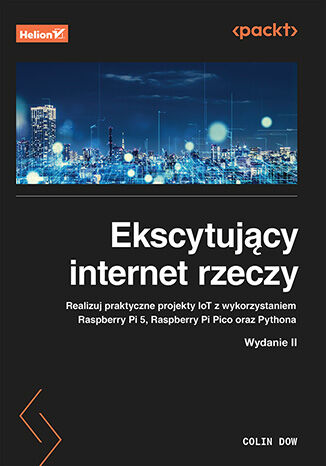
Colin Dow
Programowanie dla internetu rzeczy różni się od tworzenia standardowych aplikacji internetowych. Najlepszym sposobem na naukę praktycznych projektów IoT jest praca z mikrokontrolerami Raspberry Pi - znanymi z wszechstronności i przystępnej ceny. To one znajdują się dziś w awangardzie urządzeń stosowanych w inteligentnych rozwiązaniach internetu rzeczy i wyznaczają nowe trendy. Dzięki tej książce pewnie wkroczysz do fascynującego świata internetu rzeczy! Zaczniesz od podstaw: poznasz usługi internetowe, komunikację LoRa, porty GPIO, a także możliwości najnowszych mikrokontrolerów Raspberry Pi. Dowiesz się też, czym jest ROS i jak stworzyć projekt oparty na rozpoznawaniu obrazów. Krok po kroku będziesz przechodzić do coraz bardziej zaawansowanych rozwiązań. Nauczysz się integrować aplikacje z usługami sieciowymi i używać technologii LoRa do komunikacji na dużą odległość przy niskim zużyciu energii. Dzięki jasnym instrukcjom i zrozumiałym wyjaśnieniom uzyskasz niezbędne umiejętności, by tworzyć innowacyjne urządzenia IoT. W książce: integracja usług internetowych w celu pobierania i analizowania danych w czasie rzeczywistym łączenie czujników, silników i wyświetlaczy podczas budowy inteligentnych urządzeń IoT budowanie wskaźnika pogody konstruowanie autonomicznego robota projekt domowego systemu zabezpieczeń zastosowanie LoRa i LoRaWAN do zdalnego monitorowania warunków środowiskowych
Rafal Kuc, Marek Rogozinski
ElasticSearch is an open source search server built on Apache Lucene. It was built to provide a scalable search solution with built-in support for near real-time search and multi-tenancy.Jumping into the world of ElasticSearch by setting up your own custom cluster, this book will show you how to create a fast, scalable, and flexible search solution. By learning the ins-and-outs of data indexing and analysis, ElasticSearch Server will start you on your journey to mastering the powerful capabilities of ElasticSearch. With practical chapters covering how to search data, extend your search, and go deep into cluster administration and search analysis, this book is perfect for those new and experienced with search servers.In ElasticSearch Server you will learn how to revolutionize your website or application with faster, more accurate, and flexible search functionality. Starting with chapters on setting up your own ElasticSearch cluster and searching and extending your search parameters you will quickly be able to create a fast, scalable, and completely custom search solution.Building on your knowledge further you will learn about ElasticSearch's query API and become confident using powerful filtering and faceting capabilities. You will develop practical knowledge on how to make use of ElasticSearch's near real-time capabilities and support for multi-tenancy.Your journey then concludes with chapters that help you monitor and tune your ElasticSearch cluster as well as advanced topics such as shard allocation, gateway configuration, and the discovery module.
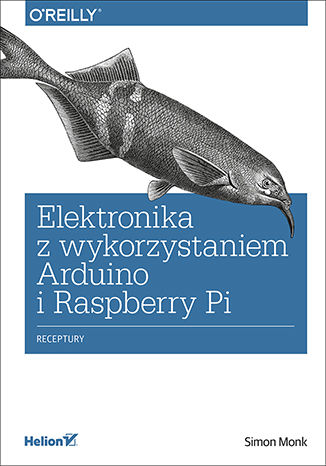
Elektronika z wykorzystaniem Arduino i Rapsberry Pi. Receptury
Simon Monk
Praktyczne przepisy rozwiązań elektronicznych z wykorzystaniem Arduino i Raspberry Pi Aby zacząć zajmować się elektroniką, wcale nie trzeba być inżynierem w tej dziedzinie. Dzięki powszechnie dostępnym i niedrogim podzespołom, wielu źródłom wiedzy i inspiracji oraz chętnej do pomocy społeczności elektronika staje się ulubionym hobby rosnącej rzeszy osób. Wiele z nich staje się profesjonalistami, tworząc pomysłowe i przydatne konstrukcje. Naturalnie nie oznacza to, że dziedzina ta stała się zupełnie bezproblemową zabawą: elektronik powinien mieć pewną wiedzę teoretyczną i umieć rozwiązywać określone, specyficzne dla elektroniki problemy. Niniejsza książka jest solidnym punktem wyjścia dla elektroników amatorów i osób pragnących zająć się tą dziedziną profesjonalnie. Szczególnie ważnym elementem książki jest omówienie podstaw elektroniki oraz zagadnień stosowania mikrokontrolerów, tworzenia zasilaczy różnego rodzaju, używania odpowiednich tranzystorów do różnych celów, stosowania analogowych i cyfrowych układów scalonych, a także budowania projektów i prototypów oraz posługiwania się sprzętem badawczym. Książkę zorganizowano w ten sposób, aby ułatwić szybkie odnalezienie potrzebnego zagadnienia i skorzystanie z odpowiedniego przepisu. W tej książce znajdziesz takie tematy, jak: zagadnienia teoretyczne i komponenty elektroniczne zasilanie: baterie, akumulatory i panele słoneczne sterowanie za pomocą Arduino i Raspberry Pi rozwiązania analogowe częstotliwości radiowe i przekazywanie pakietów danych korzystanie z narzędzi i urządzeń warsztatowych Zbiór receptur na każdy dzień elektronika!
Cash Costello
As an updated version of the first ever Elgg book, this is an excellent resource for those interested in Elgg development due to its attention to detail, clearly written style and knowledgeable author. - Dave Tosh, Elgg co-founder.In his book, Cash Costello makes full use of his skills in development and communication to tackle the complex subject of Elgg social networking. This easy-to-read guide gives end users, new developers, and old pros alike a solid base to start their venture into social media with Elgg. I highly recommend it as a useful and enjoyable read.- Brett Profitt, Elgg Lead DeveloperThe web is becoming increasingly social as millions of people use it to blog, share, post, 'friend', 'unfriend' (which was made the Oxford word of the year in 2009), comment, and chat. Elgg ñ your award-winning open source social networking engine ñ is tailor-made to create any social networking or social media website you can imagine.If you want to create a social networking website from scratch using Elgg, then this book is exactly what you need.Elgg 1.8 Social Networking covers everything you need to know about building a social networking site with Elgg. It begins with instructions for installing Elgg, continues with a guided tour of its capabilities, and finishes with practical advice on deploying Elgg on a production server. And in between, it is packed with information on configuring and customizing Elgg through plugins and themes.This book is a learn-by-doing guide to creating your own social networking site. It includes three sample case studies on how Elgg could be used as an e-learning tool, an intranet application for organizations, and a niche social networking site. Step by step it takes you through the installation, configuration, and customization of Elgg. Valuable advice is sprinkled throughout the book to enable you to build your site like an expert.For developers, this book provides a multitude of options. First, there is a tutorial-based section that systematically teaches you how to build plugins. Soon you will have ten plugins for use on your site in addition to all the knowledge you have gained. Second, if you prefer a quick overview, this book has an appendix that describes Elgg using the terminology and design patterns common in web development. Third, if you are interested in creating a theme, it also includes a design tutorial and a catalog of Elgg's view templates.The book then goes on to describe what is involved in running a production website. It has sections on selecting a hosting provider, configuring and tuning the server, backing up the site, and dealing with spammers.
Mohammed Billoo
Embedded Linux now powers everything from IoT devices to industrial systems, making it essential for embedded software engineers to be skilled at customizing, deploying, and developing for these platforms. This hands-on guide walks you through the core concepts of Embedded Linux using practical, real-world examples on Raspberry Pi 4 and 5. For those without access to hardware, it also demonstrates how to simulate embedded Linux systems using QEMU.This book contains code samples that you can follow along and build three real-world projects: a Python web-based dashboard that retrieves and displays data from a temperature sensor and two GUI applications demonstrating how to use the Qt framework on Embedded Linux using two different development paradigms. You’ll also step into advanced territory with Linux kernel debugging techniques and discover how to harness eBPF, building the experience employers want and the confidence to tackle complex embedded challenges.By the end of this book, you'll have a solid grasp of Embedded Linux development and the skills to build and deploy production-ready, modern embedded applications.
Spencer Harbar, Lim Mei Ying, Stefan Gossner
The release of Microsoft Content Management Server (MCMS) Service Pack 2 opens up the world of ASP.NET 2.0 to MCMS developers. Written by the masters of MCMS, this book shows you how to use the new features of ASP.NET 2.0 that everyone is talking about in your MCMS development.You will first learn how to install and configure MCMS SP2. There are two approaches to setting up a development environment for SP2: an upgrade from a previous SP1a installation or starting from scratch and building a fresh installation including SP2. Of course, both approaches are covered.You will become familiar with the MCMS Service Pack 2 development environment, and create custom Visual Studio 2005 templates to overcome some of the issues which are present with the templates shipped with MCMS SP2.After that, its time to look at some of the most exciting features of ASP.NET 2.0, and how you can make use of them in MCMS: master pages, site navigation, themes, and the membership provider model.One of the coolest features introduced with ASP.NET 2.0 is master pages, which allow developers to enforce common layout and behaviour across pages within an application. You will learn about the benefits of using master pages and see a step-by-step guide for implementing them in your MCMS applications, where they become master templates!ASP.NET 2.0 introduces a whole new way of implementing site navigation, driven by site maps. By programmatically adding channels and postings to a site map you will see how to smoothly integrate these controls to any MCMS site.To customize the look of your site, we will see how a common look and feel can be applied efficiently to a MCMS site by using ASP.NET 2.0 themes. An essential customization required for themes to work correctly in an MCMS site is a must-read feature of this chapter.MCMS has its own role based authorization and user management system which cannot be extended. However, the new ASP.NET 2.0 Membership Provider Model and the shipped controls can be used within MCMS applications to improve the implementation of Forms Authentication and provide a more elegant solution for authenticating against an external store.A collection of tips and tricks round off the book, including using the Provider Model design pattern to ease migration to Office SharePoint Portal Server
Damien Bruyndonckx
Looking to deliver scalable online learning solutions? Adobe's latest enterprise Learning Manager is a powerful learning management system (LMS) that enables organizations to deliver, manage, and track immersive learning experiences. This book unlocks the full potential of Learning Manager, guiding you to become an adept administrator, author, or teacher, experimenting with Learning Manager from different perspectives. You'll gain an in-depth understanding of the features and their impact on your business. From platform setup to course administration, you’ll be able to create blended learning experiences, deploy your content to different devices, and explore Learning Manager's features for monitoring your students' progress on a daily basis. Finally, you'll discover techniques for organizing and maintaining your course catalog while elevating the learner experience. By the end of the book, you’ll be able to implement your organization’s training strategy, deliver engaging learning experiences, and generate meaningful reports to monitor their effectiveness.
Aaron Woody
Enterprise security redefined using a data-centric approach and trust models to transform information security into a business enablement process. It is a unique and forward thinking approach for deciding the best method to secure data in the enterprise, the cloud, and in BYOD environments.Enterprise Security: A Data-Centric Approach to Securing the Enterprise will guide you through redefining your security architecture to be more affective and turn information security into a business enablement process rather than a roadblock. This book will provide you with the areas where security must focus to ensure end-to-end security throughout the enterprise-supporting enterprise initiatives such as cloud and BYOD. Enterprise Security: A Data-Centric Approach to Securing the Enterprise will first introduce the reader to a new security architecture model and then explores the must have security methods and new tools that can used to secure the enterprise.This book will take a data-centric approach to securing the enterprise through the concept of Trust Models and building a layered security implementation focused on data. This is not your traditional security book focused on point solutions and the network aspect of security. This book combines best practice methods with new methods to approach enterprise security and how to remain agile as the enterprise demands more access to data from traditionally untrusted assets, hosted solutions, and third parties. Applied Information Security - A Data-Centric Approach to Securing the Enterprise will provide the reader an easy-to-follow flow from architecture to implementation, diagrams and recommended steps, and resources for further research and solution evaluation.This book is a reference and guide for all levels of enterprise security programs that have realized that non-data centric security is no longer practical and new methods must be used to secure the most critical assets in the enterprise.