
Inne
W tym dziale znajdziecie publikacje charakteryzujące inne, mniej rozpowszechnione aplikacje biurowe, które to jednak znacznie mogą ułatwić Waszą pracę z komputerem.
Przeczytacie między innymi o Total Commander, Lotus Notes czy Microsoft SharePoint, programach, które pomogą przy tworzeniu rozmaitych schematów, przeszukiwaniu zawartości dysków twardych, przesyłaniu plików za pośrednictwem protokołu FTP lub chociażby sortowaniu przychodzącej poczty czy archiwizowaniu wiadomości. Lektura książek z tej kategorii znacznie poszerzy waszą wiedzę na temat aplikacji biurowych, dzięki czemu wasza praca stanie się bardziej wydajna i efektywna.
Akshay Kapoor
DevOps and AWS are the two key enablers for the success of any modern software-run business. DevOps accelerates software delivery, while AWS offers a plethora of services, allowing developers to prioritize business outcomes without worrying about undifferentiated heavy lifting. This book focuses on the synergy between them, equipping you with strong foundations, hands-on examples, and a strategy to accelerate your DevOps journey on AWS.AWS DevOps Simplified is a practical guide that starts with an introduction to AWS DevOps offerings and aids you in choosing a cloud service that fits your company's operating model. Following this, it provides hands-on tutorials on the GitOps approach to software delivery, covering immutable infrastructure and pipelines, using tools such as Packer, CDK, and CodeBuild/CodeDeploy. Additionally, it provides you with a deep understanding of AWS container services and how to implement observability and DevSecOps best practices to build and operate your multi-account, multi-Region AWS environments.By the end of this book, you’ll be equipped with solutions and ready-to-deploy code samples that address common DevOps challenges faced by enterprises hosting workloads in the cloud.
Mustafa Toroman
Microsoft provides organizations with an effective way of managing their network with Azure's networking services. No matter the size of your organization, Azure provides a way to highly reliable performance and secure connectivity with its networking services. The book starts with an introduction to the Azure networking like creating Azure virtual networks, designing address spaces and subnets. Then you will learn to create and manage network security groups, application security groups, and IP addresses in Azure. Gradually, we move on to various aspects like S2S, P2S, and Vnet2Vnet connections, DNS and routing, load balancers and traffic manager. This book will cover every aspect and function required to deliver practical recipes to help readers learn from basic cloud networking practices to planning, implementing, and securing their infrastructure network with Azure. Readers will not only be able to upscale their current environment but will also learn to monitor, diagnose, and ensure secure connectivity. After learning to deliver a robust environment readers will also gain meaningful insights from recipes on best practices.By the end of this book, readers will gain hands-on experience in providing cost-effective solutions that benefit organizations.
Praveen Kumar Sreeram, Jason Marston
Microsoft provides a solution for easily running small segments of code in the cloud with Azure Functions. The second edition of Azure Serverless Computing Cookbook starts with intermediate-level recipes on serverless computing along with some use cases demonstrating the benefits and key features of Azure Functions. You’ll explore the core aspects of Azure Functions, such as the services it provides, how you can develop and write Azure Functions, and how to monitor and troubleshoot them.As you make your way through the chapters, you’ll get practical recipes on integrating DevOps with Azure Functions, and providing continuous integration and continuous deployment with Azure DevOps. This book also provides hands-on, step-by-step tutorials based on real-world serverless use cases to guide you through configuring and setting up your serverless environments with ease. You will also learn how to build solutions for complex, real-world, workflow-based scenarios quickly and with minimal code using Durable Functions. In the concluding chapters, you will ensure enterprise-level security within your serverless environment. The most common tips and tricks that you need to be aware of when working with Azure Functions on production environments will also be covered in this book.By the end of this book, you will have all the skills required for working with serverless code architecture, providing continuous delivery to your users.
Praveen Kumar Sreeram
Microsoft provides a solution to easily run small segment of code in the Cloud with Azure Functions. Azure Functions provides solutions for processing data, integrating systems, and building simple APIs and microservices.The book starts with intermediate-level recipes on serverless computing along with some use cases on benefits and key features of Azure Functions. Then, we’ll deep dive into the core aspects of Azure Functions such as the services it provides, how you can develop and write Azure functions, and how to monitor and troubleshoot them. Moving on, you’ll get practical recipes on integrating DevOps with Azure functions, and providing continuous integration and continous deployment with Visual Studio Team Services. It also provides hands-on steps and tutorials based on real-world serverless use cases, to guide you through configuring and setting up your serverless environments with ease. Finally, you’ll see how to manage Azure functions, providing enterprise-level security and compliance to your serverless code architecture. By the end of this book, you will have all the skills required to work with serverless code architecture, providing continuous delivery to your users.
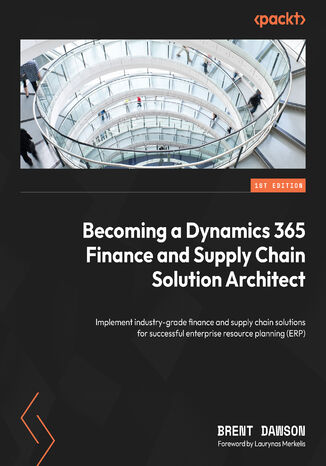
Brent Dawson
Implementing an ERP project is a daunting task, and it can often get derailed due to several reasons, including but not limited to inefficient planning, inadequate resource scoping, insufficient working knowledge of ERP systems, and more. Becoming a Dynamics 365 Finance and Supply Chain Solution Architect helps you understand the intricacies of ERP project implementation for seamless deployment.This comprehensive guide helps you gain a deep understanding of how to implement and optimize robust business applications that meet the evolving needs of organizations. You’ll discover various integration methodologies to integrate different software applications and plan successful data migration seamlessly. By leveraging the author’s expertise, you’ll explore different challenges that can lead to project failure or cost/time overruns, along with customized solutions to maneuver past those issues for a successful outcome.By the end of the book, you’ll be able to identify potential issues that can negatively impact the delivery of the project and make design decisions that will prevent any potential negative impact on the design and functionality of the system at go-live stage.
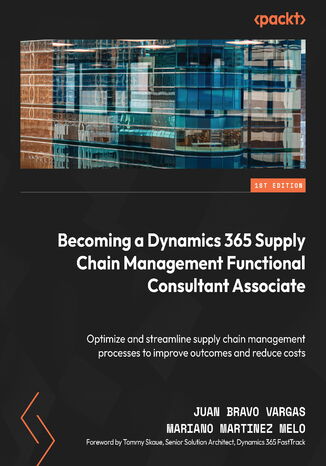
Juan Bravo Vargas, Mariano Martínez Melo, Tommy...
Meeting delivery commitments has become increasingly challenging due to evolving demands and fluctuating material availability. As a result, establishing robust systems and processes that can adapt to this dynamic environment has become a necessity. With Becoming a Dynamics 365 Supply Chain Management Functional Consultant Associate, you’ll understand how to initiate and implement effective supply chain management processes.This book begins with an overview of the processes and modules within Dynamics 365 and then delves into real-life case studies involving procurement, sales, and quality assurance. You’ll explore more advanced tools and core processes, such as warehouse and transportation management, which allows you to define storage flows and shipping controls. You’ll also learn about the various tools available to define solutions and discover how to work within the Dynamics 365 Supply Chain Management platform. The last set of chapters will take you through the planning techniques and considerations to schedule and control all supply process flows seamlessly.By the end of this book, you’ll not only be well-prepared to obtain your certification as a Microsoft Dynamics 365 Supply Chain Management Functional Consultant Associate but also be equipped to solidify your expertise and pursue exciting career opportunities.
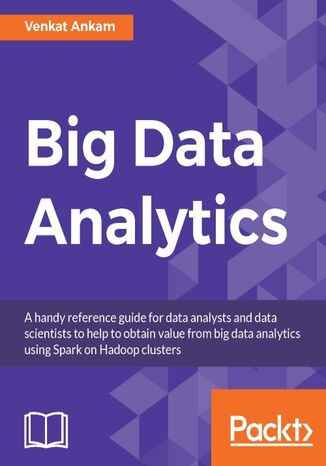
Big Data Analytics. Real time analytics using Apache Spark and Hadoop
Venkat Ankam, Aravind Nallan
Big Data Analytics book aims at providing the fundamentals of Apache Spark and Hadoop. All Spark components – Spark Core, Spark SQL, DataFrames, Data sets, Conventional Streaming, Structured Streaming, MLlib, Graphx and Hadoop core components – HDFS, MapReduce and Yarn are explored in greater depth with implementation examples on Spark + Hadoop clusters. It is moving away from MapReduce to Spark. So, advantages of Spark over MapReduce are explained at great depth to reap benefits of in-memory speeds. DataFrames API, Data Sources API and new Data set API are explained for building Big Data analytical applications. Real-time data analytics using Spark Streaming with Apache Kafka and HBase is covered to help building streaming applications. New Structured streaming concept is explained with an IOT (Internet of Things) use case. Machine learning techniques are covered using MLLib, ML Pipelines and SparkR and Graph Analytics are covered with GraphX and GraphFrames components of Spark. Readers will also get an opportunity to get started with web based notebooks such as Jupyter, Apache Zeppelin and data flow tool Apache NiFi to analyze and visualize data.
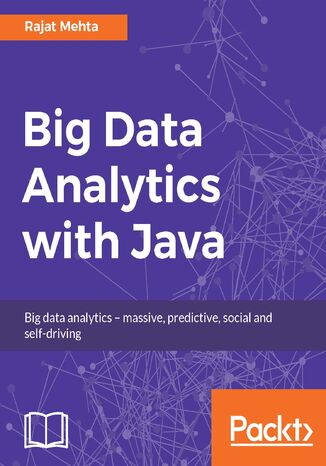
Big Data Analytics with Java. Data analysis, visualization & machine learning techniques
RAJAT MEHTA
This book covers case studies such as sentiment analysis on a tweet dataset, recommendations on a movielens dataset, customer segmentation on an ecommerce dataset, and graph analysis on actual flights dataset.This book is an end-to-end guide to implement analytics on big data withJava. Java is the de facto language for major big data environments, including Hadoop. This book will teach you how to perform analytics on big data with production-friendly Java. This book basically divided into twosections. The first part is an introduction that will help the readers get acquainted with big data environments, whereas the second part will contain a hardcore discussion on all the concepts in analyticson big data. It will take you from data analysis and data visualization to the core concepts and advantages of machine learning, real-life usage of regression and classification using Naïve Bayes, a deep discussion on the concepts of clustering,and a review of simple neural networkson big data using deepLearning4j or plain Java Spark code. This book is a must-have book for Java developers who want to start learning big data analytics and want to use it in the real world.