
Inne
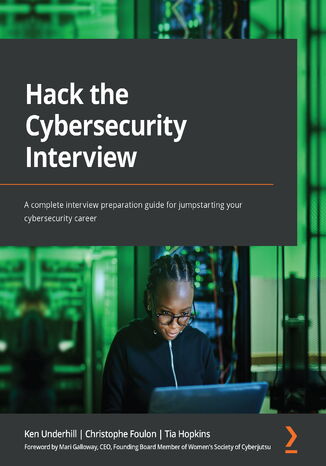
Ken Underhill, Mari Galloway, Christophe Foulon, Tia...
This book is a comprehensive guide that helps both entry-level and experienced cybersecurity professionals prepare for interviews in a wide variety of career areas.Complete with the authors’ answers to different cybersecurity interview questions, this easy-to-follow and actionable book will help you get ready and be confident. You’ll learn how to prepare and form a winning strategy for job interviews. In addition to this, you’ll also understand the most common technical and behavioral interview questions, learning from real cybersecurity professionals and executives with years of industry experience.By the end of this book, you’ll be able to apply the knowledge you've gained to confidently pass your next job interview and achieve success on your cybersecurity career path.
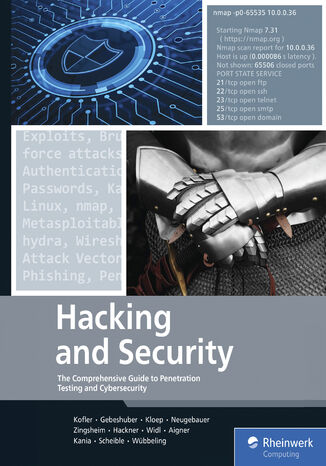
Hacking and Security. The Comprehensive Guide to Penetration Testing and Cybersecurity
Rheinwerk Publishing, Inc, Michael Kofler, Klaus Gebeshuber,...
This book provides a comprehensive guide to cybersecurity, covering hacking techniques, tools, and defenses. It begins by introducing key concepts, distinguishing penetration testing from hacking, and explaining hacking tools and procedures. Early chapters focus on security fundamentals, such as attack vectors, intrusion detection, and forensic methods to secure IT systems.As the book progresses, readers explore topics like exploits, authentication, and the challenges of IPv6 security. It also examines the legal aspects of hacking, detailing laws on unauthorized access and negligent IT security. Readers are guided through installing and using Kali Linux for penetration testing, with practical examples of network scanning and exploiting vulnerabilities.Later sections cover a range of essential hacking tools, including Metasploit, OpenVAS, and Wireshark, with step-by-step instructions. The book also explores offline hacking methods, such as bypassing protections and resetting passwords, along with IT forensics techniques for analyzing digital traces and live data. Practical application is emphasized throughout, equipping readers with the skills needed to address real-world cybersecurity threats.
Mohammed A. Imran, Srinivasa Rao Kotipalli
With the mass explosion of Android mobile phones in the world, mobile devices have become an integral part of our everyday lives. Security of Android devices is a broad subject that should be part of our everyday lives to defend against ever-growing smartphone attacks. Everyone, starting with end users all the way up to developers and security professionals should care about android security. Hacking Android is a step-by-step guide that will get you started with Android security. You’ll begin your journey at the absolute basics, and then will slowly gear up to the concepts of Android rooting, application security assessments, malware, infecting APK files, and fuzzing. On this journey you’ll get to grips with various tools and techniques that can be used in your everyday pentests. You’ll gain the skills necessary to perform Android application vulnerability assessment and penetration testing and will create an Android pentesting lab.
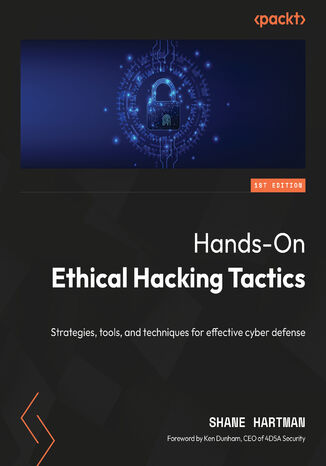
Hands-On Ethical Hacking Tactics. Strategies, tools, and techniques for effective cyber defense
Shane Hartman, Ken Dunham
If you’re an ethical hacker looking to boost your digital defenses and stay up to date with the evolving cybersecurity landscape, then this book is for you. Hands-On Ethical Hacking Tactics is a comprehensive guide that will take you from fundamental to advanced levels of ethical hacking, offering insights into both offensive and defensive techniques. Written by a seasoned professional with 20+ years of experience, this book covers attack tools, methodologies, and procedures, helping you enhance your skills in securing and defending networks.The book starts with foundational concepts such as footprinting, reconnaissance, scanning, enumeration, vulnerability assessment, and threat modeling. Next, you’ll progress to using specific tools and procedures for hacking Windows, Unix, web servers, applications, and databases. The book also gets you up to speed with malware analysis. Throughout the book, you’ll experience a smooth transition from theoretical concepts to hands-on techniques using various platforms. Finally, you’ll explore incident response, threat hunting, social engineering, IoT hacking, and cloud exploitation, which will help you address the complex aspects of ethical hacking.By the end of this book, you’ll have gained the skills you need to navigate the ever-changing world of cybersecurity.
Sean Burns
The C# language and the .NET Core application framework provide the tools and patterns required to make the discipline of network programming as intuitive and enjoyable as any other aspect of C# programming. With the help of this book, you will discover how the C# language and the .NET Core framework make this possible.The book begins by introducing the core concepts of network programming, and what distinguishes this field of programming from other disciplines. After this, you will gain insights into concepts such as transport protocols, sockets and ports, and remote data streams, which will provide you with a holistic understanding of how network software fits into larger distributed systems. The book will also explore the intricacies of how network software is implemented in a more explicit context, by covering sockets, connection strategies such as Transmission Control Protocol (TCP) and User Datagram Protocol (UDP), asynchronous processing, and threads. You will then be able to work through code examples for TCP servers, web APIs served over HTTP, and a Secure Shell (SSH) client. By the end of this book, you will have a good understanding of the Open Systems Interconnection (OSI) network stack, the various communication protocols for that stack, and the skills that are essential to implement those protocols using the C# programming language and the .NET Core framework.

Hardware i testy penetracyjne. Przewodnik po metodach ataku i obrony
Jean-Georges Valle
Hardware i testy penetracyjne. Przewodnik po metodach ataku i obrony Wraz z rozwojem internetu rzeczy, a także upowszechnianiem się elektronicznego sterowania i kontrolowania różnych procesów przestępcy doskonalą techniki łamania zabezpieczeń systemów wbudowanych. Konsekwencje skutecznego ataku na jakiś kluczowy element infrastruktury mogą się okazać dotkliwe i niezwykle kosztowne. Oznacza to, że testowanie pod kątem bezpieczeństwa powinno dotyczyć sprzętu i systemów wbudowanych. Również elektronicy powinni umieć chronić przed atakami swoje urządzenia. Szczególną rolę w tym procesie odgrywają testy penetracyjne, których celem jest wyszukiwanie luk w zabezpieczeniach. Oto praktyczny przewodnik po bezpieczeństwie sprzętu. Opisuje podstawy sprzętowej architektury systemów wbudowanych i protokoły komunikacyjne stosowane w urządzeniach elektronicznych. Pokazuje, w jaki sposób można przechwytywać przesyłane dane i jak wykorzystać tę wiedzę do przeprowadzania ataków. W książce zaprezentowano techniki identyfikacji i klasyfikacji zagrożeń systemu. Przeanalizowano także zależności łączące system wbudowany z jego otoczeniem, przy czym zwrócono uwagę na możliwe podatności na ataki i konsekwencje ewentualnego odczytania oprogramowania układowego. W końcowej części natomiast omówiono zasady inżynierii wstecznej oprogramowania, umożliwiającej ataki na urządzenia. Znajdziemy tu również wskazówki dotyczące ochrony urządzeń przed najbardziej typowymi atakami. Dzięki książce dowiesz się, jak: testować systemy wbudowane i rozpoznawać ich najważniejsze funkcjonalności identyfikować i atakować krytyczne zabezpieczenia odczytywać i modyfikować dane zapisane w systemach wbudowanych badać zależności pomiędzy oprogramowaniem układowym a sprzętem atakować zabezpieczenia stosowane w różnych blokach funkcjonalnych urządzeń rozwijać laboratorium umożliwiające zaawansowane analizy i przygotowanie ataków Internet rzeczy również można skutecznie zaatakować!

Hartowanie Linuksa we wrogich środowiskach sieciowych. Ochrona serwera od TLS po Tor
Kyle Rankin
Bezpieczeństwo serwerów - od TLS do TOR W dzisiejszym świecie, w którym wiele codziennych aktywności odbywa się przez internet, bardzo dużo zależy od bezpieczeństwa serwerów. Kiedy zwykli ludzie tworzą społeczności, komunikują się i robią zakupy online, hakerzy niestrudzenie przeglądają sieć, poszukując słabych punktów. Atakują różne obiekty: mogą to być agencje rządowe, elektrownie i banki, ale równie dobrze ich celem może się stać jakakolwiek sieć komputerów. Chodzi o uzyskanie wrażliwych informacji, zbiorów danych osobowych czy wreszcie przejęcie kontroli nad systemem. Co gorsza, agresorzy odnoszą sukcesy nawet w przypadku sieci, w których wdrożono złożone i kosztowne zabezpieczenia. Dzięki tej książce poznasz sprawdzone i niezbyt skomplikowane procedury, które pozwolą Ci na zahartowanie swoich danych. Zawarte tu treści przedstawiono w sposób bardzo praktyczny, z uwzględnieniem najnowszych osiągnięć w dziedzinie zabezpieczania systemów. Najpierw zapoznasz się z ogólnym ujęciem tematyki bezpieczeństwa systemów, w tym stacji roboczych, serwerów i sieci. Następnie dowiesz się, w jaki sposób zahartować specyficzne usługi, takie jak serwery WWW, pocztę elektroniczną, systemy DNS i bazy danych. Na końcu książki znalazł się rozdział poświęcony reagowaniu na incydenty - to również jest wiedza potrzebna każdemu administratorowi. Najciekawsze zagadnienia: Hartowanie stacji roboczych, w tym stacji roboczych administratorów Zabezpieczanie infrastruktury i ustawienie zapory sieciowej Zaawansowane hartowanie serwerów poczty elektronicznej Korzystanie z podstawowych i zaawansowanych właściwości usługi DNS Poruszanie się w sieci TOR Po pierwsze: zabezpiecz swoją sieć i zahartuj swój system! Kyle Rankin od wielu lat zajmuje się administrowaniem systemów informatycznych. Jest uznanym ekspertem w dziedzinie zabezpieczania infrastruktury, architektury, automatyzacji i rozwiązywania problemów z tym związanych. Rankin jest nagradzanym felietonistą magazynu "Linux Journal" i przewodniczącym rady doradczej Purism. Często wygłasza referaty na konferencjach poświęconych oprogramowaniu open source i bezpieczeństwu, takich jak O'Reilly Security Conference, CactusCon, SCALE, OSCON, LinuxWorld Expo, Penguicon.
Nikki Robinson, Calvin Nobles, Chris Cochran
Cybersecurity isn’t just a technical problem; it’s a human one. Human Factors in Cybersecurity equips you to tackle today’s digital threats by designing systems that respect how cybersecurity professionals actually think, behave, and make decisions.Despite billions spent on advanced technologies, human behavior remains cybersecurity’s greatest vulnerability. This book shows how to design defenses that work with people, not against them. Blending cybersecurity operations expertise with human factors science, it reveals that security failures are not inevitable. They’re design failures. Inside, you’ll learn how to shift from user-blaming policies to human-centered security engineering. Discover how to predict and influence user behavior, design controls that support cognitive realities, and embed human factors strategies at scale. Through actionable frameworks, real-world examples, and clear guidance, you will learn to reduce errors, build trust, and design systems resilient to human limitations.Authored by experts in cybersecurity, machine learning, and human factors engineering, this book delivers the interdisciplinary insight needed to lead the shift toward systems that are not only secure but genuinely usable. It transforms human factors from cybersecurity’s biggest blind spot into its most powerful driver of resilience.