
Sztuczna inteligencja
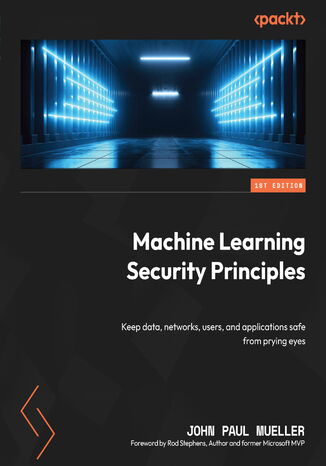
John Paul Mueller
Businesses are leveraging the power of AI to make undertakings that used to be complicated and pricy much easier, faster, and cheaper. The first part of this book will explore these processes in more depth, which will help you in understanding the role security plays in machine learning.As you progress to the second part, you’ll learn more about the environments where ML is commonly used and dive into the security threats that plague them using code, graphics, and real-world references.The next part of the book will guide you through the process of detecting hacker behaviors in the modern computing environment, where fraud takes many forms in ML, from gaining sales through fake reviews to destroying an adversary’s reputation. Once you’ve understood hacker goals and detection techniques, you’ll learn about the ramifications of deep fakes, followed by mitigation strategies.This book also takes you through best practices for embracing ethical data sourcing, which reduces the security risk associated with data. You’ll see how the simple act of removing personally identifiable information (PII) from a dataset lowers the risk of social engineering attacks.By the end of this machine learning book, you'll have an increased awareness of the various attacks and the techniques to secure your ML systems effectively.
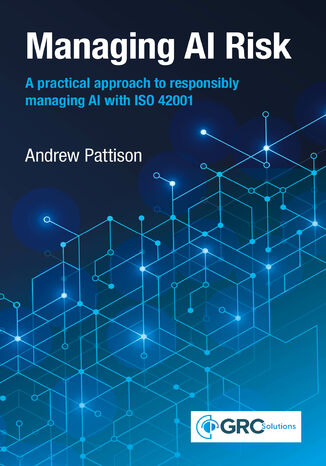
Managing AI Risk. A practical approach to responsibly managing AI with ISO 42001
IT Governance Publishing, Andrew Pattison
This book is a comprehensive guide to understanding and managing the risks associated with artificial intelligence (AI) technologies. It begins by exploring the fundamental aspects of AI, from its ethical and philosophical dimensions to its impact on organizational risk.As the book progresses, it delves into the creation of a risk-aware AI strategy, integrating AI risk management into existing organizational frameworks. It offers practical insights on identifying and assessing various risks, including data privacy, algorithmic transparency, and operational challenges related to AI deployment and maintenance.This book is designed for professionals, risk managers, and AI practitioners who seek to navigate the complexities of AI in organizations. Whether you’re just beginning to explore AI risks or looking to refine your existing strategies, this book equips you with the tools needed for effective management.By the end of this book, you will have gained a solid understanding of AI-related risks, be able to implement effective AI risk management frameworks, and integrate AI strategies within your organization.
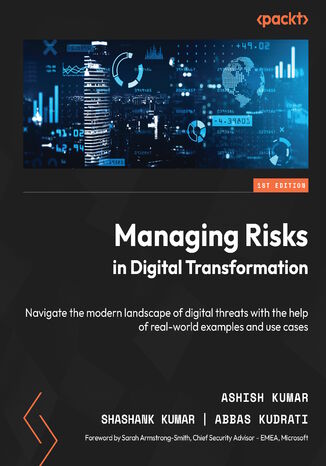
Ashish Kumar, Shashank Kumar, Abbas Kudrati
With the rapid pace of digital change today, especially since the pandemic sped up digital transformation and technologies, it has become more important than ever to be aware of the unknown risks and the landscape of digital threats. This book highlights various risks and shows how business-as-usual operations carried out by unaware or targeted workers can lead your organization to a regulatory or business risk, which can impact your organization’s reputation and balance sheet.This book is your guide to identifying the topmost risks relevant to your business with a clear roadmap of when to start the risk mitigation process and what your next steps should be. With a focus on the new and emerging risks that remote-working companies are experiencing across diverse industries, you’ll learn how to manage risks by taking advantage of zero trust network architecture and the steps to be taken when smart devices are compromised. Toward the end, you’ll explore various types of AI-powered machines and be ready to make your business future-proof.In a nutshell, this book will direct you on how to identify and mitigate risks that the ever- advancing digital technology has unleashed.
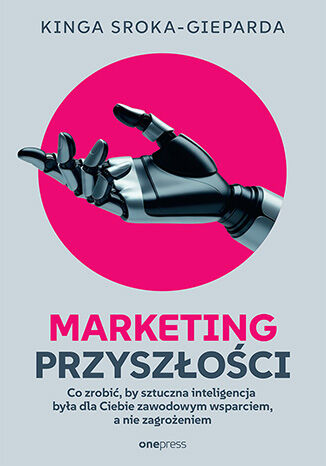
Kinga Sroka-Gieparda
Marketing w dobie sztucznej inteligencji Rewolucja AI, której jesteśmy świadkami, najprawdopodobniej odmieni nasz świat. Wpłynie także a może przede wszystkim na pracę. Pewne zawody znikną, inne znacznie się zmienią, pojawią się też zupełnie nowe stanowiska. Już dziś szeroko dyskutuje się na przykład o tym, że sztuczna inteligencja odbierze zajęcie marketerom. Czy naprawdę jest się czego bać? A może zamiast obawiać się rozwoju technologicznego, warto mu się przyjrzeć bliżej, poznać go i nauczyć się korzystać z nowych narzędzi po to, by wykonywać swoje zadania łatwiej, szybciej i skuteczniej? Celem, jaki postawiła sobie autorka tej książki, jest wprowadzenie czytelnika w zagadnienia rozwoju i historii AI, a także zapoznanie go z jej narzędziami: od modeli konwersacyjnych i służących do tworzenia treści po modele generujące kod i kreujące obrazy. Poradnik Kingi Sroki-Giepardy jest przeznaczony przede wszystkim dla osób działających w branżach marketingowej i technologicznej, jednak zawarta w nim wiedza przyda się każdemu, kto chce się zorientować, jak wyglądają bieżące możliwości narzędzi AI, i nauczyć się ich używać. Książka w mediach: annawolodko_mintconcept Instagram Magiczna.ja Sylwia Bookstagram Mamao.pl Instagram
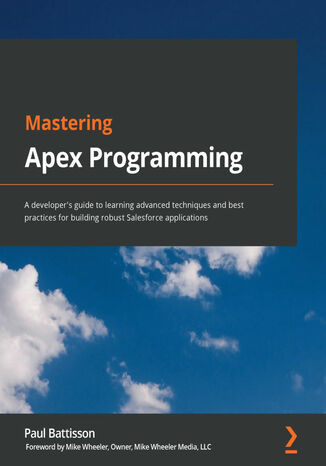
Paul Battisson
As applications built on the Salesforce platform are now a key part of many organizations, developers are shifting focus to Apex, Salesforce’s proprietary programming language. As a Salesforce developer, it is important to understand the range of tools at your disposal, how and when to use them, and best practices for working with Apex. Mastering Apex Programming will help you explore the advanced features of Apex programming and guide you in delivering robust solutions that scale.This book starts by taking you through common Apex mistakes, debugging, exception handling, and testing. You'll then discover different asynchronous Apex programming options and develop custom Apex REST web services. The book shows you how to define and utilize Batch Apex, Queueable Apex, and Scheduled Apex using common scenarios before teaching you how to define, publish, and consume platform events and RESTful endpoints with Apex. Finally, you'll learn how to profile and improve the performance of your Apex application, including architecture trade-offs.With code examples used to facilitate discussion throughout, by the end of the book, you'll have developed the skills needed to build robust and scalable applications in Apex.
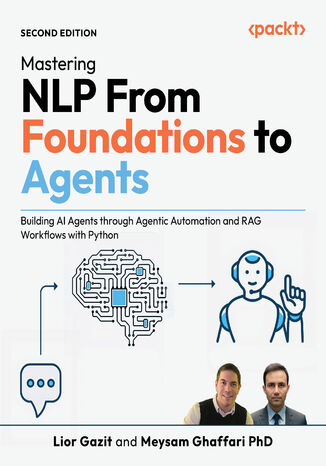
Lior Gazit, Meysam Ghaffari
Natural Language Processing has evolved beyond rule-based systems and classical machine learning (ML). This second edition guides you through that transformation from mathematical and ML foundations to large language models, retrieval pipelines, agentic automation, and AI-native system design. It strengthens core NLP concepts while expanding into modern architectures such as transformers, parameter-efficient fine-tuning (LoRA and QLoRA), and alignment methods like RLHF and DPO.You’ll begin with essential linear algebra, probability, and ML principles before moving into text preprocessing, feature engineering, classification pipelines, and deep learning architectures. From there, the focus shifts to system design: building Retrieval-Augmented Generation (RAG) pipelines, implementing model routing strategies that balance cost and performance, and orchestrating structured multi-agent workflows. You'll also introduce structured interoperability patterns, including the Model Context Protocol (MCP). Governance and safety will be treated as architectural concerns, demonstrating how policy and compliance can be integrated directly into AI systems. By the end, you will have the tools to implement NLP techniques and be equipped to design, govern, and deploy intelligent systems built on them.*Email sign-up and proof of purchase required
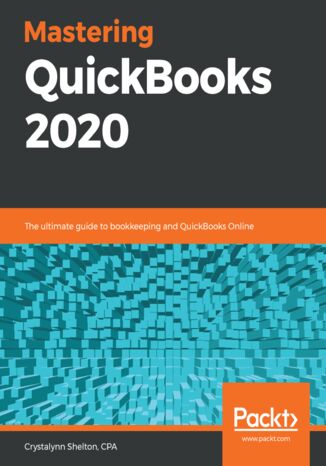
Mastering QuickBooks 2020. The ultimate guide to bookkeeping and QuickBooks Online
Crystalynn Shelton
Intuit QuickBooks is an accounting software package that helps small business owners to manage all their bookkeeping tasks. Its complete range of accounting capabilities, such as tracking income and expenses, managing payroll, simplifying taxes, and accepting online payments, makes QuickBooks software a must-have for business owners and aspiring bookkeepers.This book is a handy guide to using QuickBooks Online to manage accounting tasks and drawing business insights by generating reports easily. Using a fictitious company, the book demonstrates how to create a QuickBooks Online account; customize key settings for a business; manage customers, vendors, and products and services; generate reports; and close the books at the end of the period. QuickBooks records your debits and credits, so you don't need to learn accounting. However, you will find out what happens under the hood and understand how your financial statements are impacted by what you do in QuickBooks. You'll also discover tips, shortcuts, and best practices that will help you save time and become a QuickBooks pro.By the end of this book, you'll have become well-versed with the features of QuickBooks and be able to set up your business and manage all bookkeeping tasks with ease.
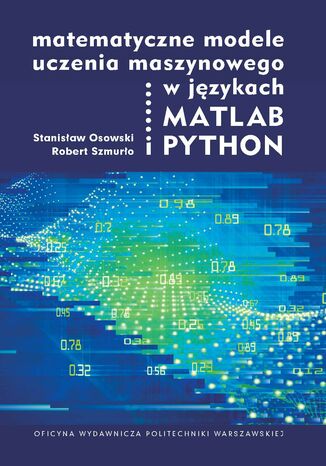
Matematyczne modele uczenia maszynowego w językach MATLAB i PYTHON
Stanisław Osowski, Robert Szmurło
Prezentowane opracowanie dotyczy różnych modeli i metod stosowanych w uczeniu maszynowym. W szczególności, w poszczególnych rozdziałach przedstawione są takie zagadnienia, jak: regresja liniowa; klasyfikatory KNN; klasyfikatory Bayesa; modele matematyczne drzew decyzyjnych; sieci neuronowe MLP; sieci RBF; sieci SVM do klasyfikacji i regresji; sieci głębokie (CNN, autoenkoder, LSTM, transformer); zagadnienia zdolności generalizacyjnych modeli, w tym zespoły klasyfikatorów i systemów regresyjnych; transformacje i metody redukcji wymiaru danych wielowymiarowych; metody grupowania danych wielowymiarowych; wybrane metody generacji i selekcji cech diagnostycznych; metody oceny jakości rozwiązań; podstawowe rozwiązania adaptacyjnych systemów rozmytych. W przedstawieniu poszczególnych rozwiązań modelowych zaprezentowano zarówno strukturę pod-stawowych modeli, jak i algorytmy uczące dostosowane do konkretnego modelu. Ponieważ z punktu widzenia aktualnego stanu wiedzy do najważniejszych rozwiązań sztucznej inteligencji należą sztuczne sieci neuronowe. Tym zagadnieniom poświęcono najwięcej uwagi, wprowadzając różne rozwiązania sieciowe, w tym perceptron wielowarstwowy (MLP), sieć o radialnej funkcji bazowej (RBF), maszynę wektorów nośnych (SVM) czy różne rozwiązania głębokich sieci neuronowych wielowarstwowych, takich jak sieć konwolucyjna (CNN), autoenkoder (AE) czy sieć LSTM. Teoretyczne podstawy algorytmów uczących zostały zilustrowane przykładowymi programami implementującymi je przy użyciu oprogramowania Matlab i Python. Prezentowane w podręczniku skrypty z przykładami w Matlabie i Pythonie zostały udostępnione na platformie Github pod adresem: https://github.com/szmurlor/mmum. Podręcznik jest przeznaczony dla słuchaczy wyższych lat studiów, doktorantów i ludzi zainteresowanych metodami uczenia maszynowego, podstawowego narzędzia sztucznej inteligencji. Ze względu na interdyscyplinarny charakter tematyki może być wykorzystany zarówno w informatyce, inżynierii biomedycznej, jak i innych naukach technicznych. Wprowadzenie zarówno podstawowych jak i zaawansowanych pojęć uczenia maszynowego powoduje, że może być użyteczny dla osób początkujących i zaawansowanych w tej tematyce.