
Sztuczna inteligencja
Rajvardhan Oak
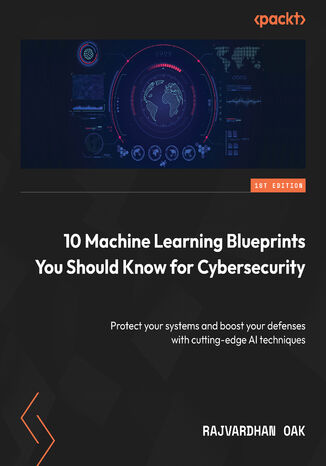
Machine learning in security is harder than other domains because of the changing nature and abilities of adversaries, high stakes, and a lack of ground-truth data. This book will prepare machine learning practitioners to effectively handle tasks in the challenging yet exciting cybersecurity space.The book begins by helping you understand how advanced ML algorithms work and shows you practical examples of how they can be applied to security-specific problems with Python – by using open source datasets or instructing you to create your own. In one exercise, you’ll also use GPT 3.5, the secret sauce behind ChatGPT, to generate an artificial dataset of fabricated news. Later, you’ll find out how to apply the expert knowledge and human-in-the-loop decision-making that is necessary in the cybersecurity space. This book is designed to address the lack of proper resources available for individuals interested in transitioning into a data scientist role in cybersecurity. It concludes with case studies, interview questions, and blueprints for four projects that you can use to enhance your portfolio.By the end of this book, you’ll be able to apply machine learning algorithms to detect malware, fake news, deep fakes, and more, along with implementing privacy-preserving machine learning techniques such as differentially private ML.
Xudong Ma, David Farrugia, Vishakh Hegde, Lilit...
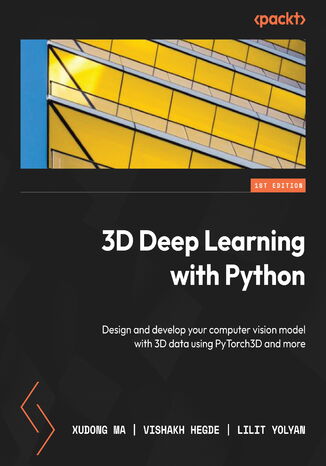
With this hands-on guide to 3D deep learning, developers working with 3D computer vision will be able to put their knowledge to work and get up and running in no time.Complete with step-by-step explanations of essential concepts and practical examples, this book lets you explore and gain a thorough understanding of state-of-the-art 3D deep learning. You’ll see how to use PyTorch3D for basic 3D mesh and point cloud data processing, including loading and saving ply and obj files, projecting 3D points into camera coordination using perspective camera models or orthographic camera models, rendering point clouds and meshes to images, and much more. As you implement some of the latest 3D deep learning algorithms, such as differential rendering, Nerf, synsin, and mesh RCNN, you’ll realize how coding for these deep learning models becomes easier using the PyTorch3D library.By the end of this deep learning book, you’ll be ready to implement your own 3D deep learning models confidently.
Mike X Cohen
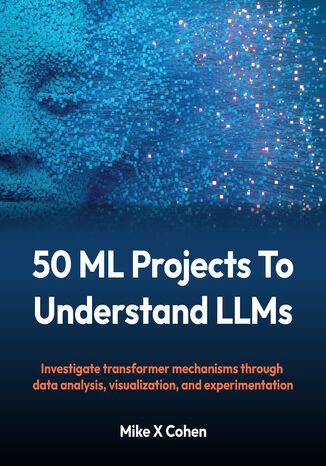
Through 50 hands-on, guided projects solved in Python, you will investigate the internal mechanisms of large language models by treating their hidden states, attention patterns, and embeddings as data to analyze. Rather than accepting LLMs as black boxes, you will open them up, examine what's inside, and run experiments to understand why they behave the way they do. All projects are based on Python (using libraries such as NumPy, PyTorch, statsmodels, scikit-learn, Matplotlib, Pandas, and Seaborn) and come with full solutions and partial solution notebook files, so you can practice and improve your skills in data science, deep learning, data visualization, and scientific and statistical coding.
Erik Benner, Hicham Assoudi, Tural Gulmammadov
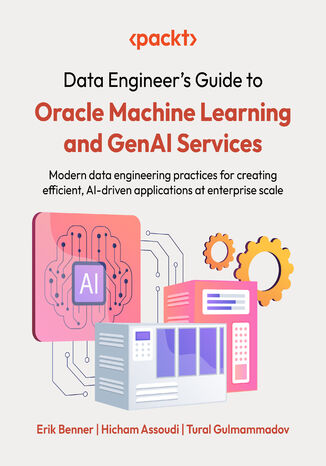
In A Practical Guide to Oracle AI Engineering, you'll learn how to tackle the challenges of building scalable, high-performance AI workflows in modern enterprises. Many organizations struggle to turn raw data into actionable insights while maintaining security, compliance, and operational efficiency. This book provides practical, end-to-end guidance for data engineers and architects to design, secure, implement, and optimize ML and GenAI solutions across Oracle Cloud, Oracle Database, and MySQL HeatWave.Written by multiple Oracle experts with deep experience in Oracle technologies and enterprise data platforms, this book walks you through real-world examples and hands-on workflows, from data preparation and in-database ML to deploying GenAI-powered applications and intelligent agents. You’ll gain skills in building pipelines, managing models, leveraging vector search for advanced AI use cases, and integrating AI into business applications with APEX and Oracle Digital Assistant. Advanced topics include scalable model deployment, serverless inference, monitoring, and MLOps best practices. By the end, you’ll be equipped to solve complex data challenges, accelerate AI adoption, and deliver measurable business impact through intelligent, production-ready solutions.
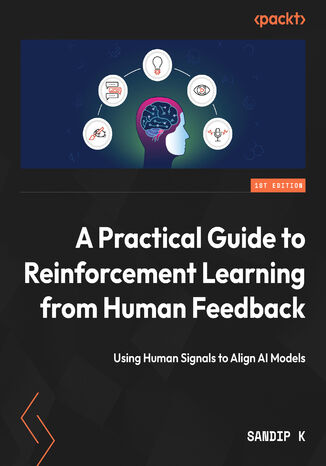
Sandip Kulkarni
Reinforcement Learning from Human Feedback (RLHF) is a powerful approach to AI alignment and human-centered machine learning. By combining reinforcement learning algorithms with human feedback signals, RLHF has become a key method for improving the safety, reliability, and alignment of large language models (LLMs).This book begins with the foundations of reinforcement learning and policy optimization, including algorithms such as proximal policy optimization (PPO), and explains how reward models and human preference learning help fine-tune AI systems and generative AI models. You’ll gain practical insight into how RLHF pipelines optimize models to better match human preferences and real-world objectives.You’ll also explore strategies for collecting human feedback data, training reward models, and improving LLM fine-tuning and alignment workflows. Key challenges—including bias in human feedback, scalability of RLHF training, and reward design—are addressed with practical solutions.The final chapters examine advanced AI alignment methods, model evaluation, and AI safety considerations. By the end, you’ll have the skills to apply RLHF to large language models and generative AI systems, building AI applications aligned with human values.
Vadim Dabravolski
Over the past 10 years, deep learning has grown from being an academic research field to seeing wide-scale adoption across multiple industries. Deep learning models demonstrate excellent results on a wide range of practical tasks, underpinning emerging fields such as virtual assistants, autonomous driving, and robotics. In this book, you will learn about the practical aspects of designing, building, and optimizing deep learning workloads on Amazon SageMaker. The book also provides end-to-end implementation examples for popular deep-learning tasks, such as computer vision and natural language processing. You will begin by exploring key Amazon SageMaker capabilities in the context of deep learning. Then, you will explore in detail the theoretical and practical aspects of training and hosting your deep learning models on Amazon SageMaker. You will learn how to train and serve deep learning models using popular open-source frameworks and understand the hardware and software options available for you on Amazon SageMaker. The book also covers various optimizations technique to improve the performance and cost characteristics of your deep learning workloads.By the end of this book, you will be fluent in the software and hardware aspects of running deep learning workloads using Amazon SageMaker.

Agenci AI bazujący na modelach językowych. Istota, konfiguracje, zastosowania
Mariusz Hofman
Agenci, którzy stoją po stronie biznesu Agenci AI to algorytmy wykorzystujące modele językowe jako reasoning engine. Są one zdolne do postrzegania otoczenia, rozumowania i podejmowania decyzji, co czyni je przydatnymi w wielu dziedzinach biznesu, między innymi: w spersonalizowanej obsłudze klienta w automatyzacji procesów biznesowych w zaawansowanej analityce biznesowej we wspieraniu ludzi pracujących w takich działach jak HR czy R&D Użycie agentów AI może przynieść firmom wymierne oszczędności, usprawnić proces podejmowania decyzji i w efekcie zagwarantować trwałą przewagę konkurencyjną. Autor tej książki stawia sobie za cel wyjaśnienie istoty agentów opartych na modelach językowych, a także omówienie ich kluczowych architektur - od prostych, wyspecjalizowanych rozwiązań po złożone systemy współdziałających ze sobą agentów. Dodatkowo prezentuje przykłady zastosowań wybranych konfiguracji w realiach quasi-biznesowych.
Orhan Yildirim
AI agents have moved from demos to practical tooling, especially for offensive security work where repeatability and context matter. This book shows you how to apply agentic AI to real penetration testing automation, keeping a human in the loop while speeding up reconnaissance, validation, and reporting.You’ll build end-to-end workflows with n8n for reconnaissance automation, attack surface management, and repeatable testing tasks such as port scanning and PCI segmentation testing. You’ll also create browser-based security testing tools using the Model Context Protocol (MCP), enabling LLM-powered agents to coordinate tooling, manage context, and assist with vulnerability analysis and documentation. The focus is hands-on practice, as you’ll assemble practical offensive workflows for web application testing, exploitation support, and professional pentest reporting, then extend your pipeline with threat intelligence automation, including agents that monitor CVE feeds and keep your testing aligned with emerging risk.If you’re a penetration tester, red teamer, or security engineer looking to make assessments faster, more consistent, and easier to scale across engagements, this book gives you patterns that you can adapt to your environment.