
Sztuczna inteligencja
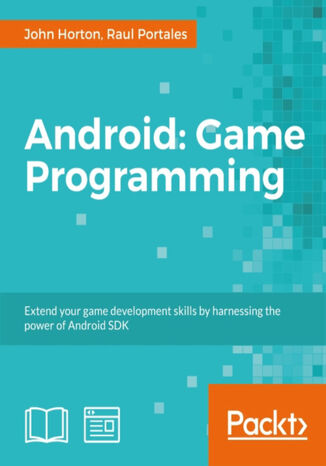
Android: Game Programming. A Developer's Guide
Raul Portales, John Horton
Gaming has historically been a strong driver of technology, whether we’re talking about hardware or software performance, the variety of input methods, or graphics support and the Android game platform is no different. Android is a mature, yet still growing, platform that many game developers have embraced as it provides tools, APIs, and services to help bootstrap Android projects and ensure their success, many of which are specially designed to help game developers.Since Android uses one of the most popular programming languages, Java, as the primary language to build apps of all types, you will start this course by first obtaining a solid grasp of the Java language and its foundation APIs. This will improve your chances of succeeding as an Android app developer. We will show you how to get your Android development environment set up and you will soon have your first working game.The course covers all the aspects of game development through various engrossing and insightful game projects. You will learn all about frame-by-frame animations and resource animations using a space shooter game, create beautiful and responsive menus and dialogs, and explore the different options to play sound effects and music in Android. You will also learn the basics of creating a particle system and will see how to use the Leonids library. By the end of the course, you will be able to configure and use Google Play Services on the developer console and port your game to the big screen.This Learning Path combines some of the best that Packt has to offer in one complete, curated package. It includes content from the following Packt products:? Learning Java by Building Android Games by John Horton? Android Game Programming by Example by John Horton? Mastering Android Game Development by Raul Portales
Mercury Learning and Information, Oswald Campesato
As part of the Pocket Primer series, this book introduces basic deep learning concepts and integrates them into Angular 10 applications. It offers a fast-paced introduction to deep learning features and popular classifiers. Covering Angular 10 functionality, deep learning concepts, and key classification algorithms, the book includes code samples and figures. Topics such as TensorFlow and Keras are also explored.The book begins with an introduction to AI and its applications, followed by state space search and heuristic search strategies. You will delve into expert systems, their development life cycle, knowledge acquisition, and representation. These topics lead to a deeper understanding of neural networks, the learning process, and fuzzy logic systems, ensuring a comprehensive grasp of AI and deep learning principles.Understanding these concepts is essential for developing sophisticated AI applications and enhancing Angular 10 projects. This book transitions you from a novice to a proficient developer, equipped with practical skills and knowledge. Advanced topics like fuzzy expert systems and logic programming are covered, culminating in advanced Prolog. Companion files with source code and color figures enhance the learning experience, making this book an invaluable resource for integrating deep learning with Angular 10.
Aditya Bhattacharya
Explainable AI (XAI) is an emerging field that brings artificial intelligence (AI) closer to non-technical end users. XAI makes machine learning (ML) models transparent and trustworthy along with promoting AI adoption for industrial and research use cases.Applied Machine Learning Explainability Techniques comes with a unique blend of industrial and academic research perspectives to help you acquire practical XAI skills. You'll begin by gaining a conceptual understanding of XAI and why it's so important in AI. Next, you'll get the practical experience needed to utilize XAI in AI/ML problem-solving processes using state-of-the-art methods and frameworks. Finally, you'll get the essential guidelines needed to take your XAI journey to the next level and bridge the existing gaps between AI and end users.By the end of this ML book, you'll be equipped with best practices in the AI/ML life cycle and will be able to implement XAI methods and approaches using Python to solve industrial problems, successfully addressing key pain points encountered.
Ujjwal Ratan
While machine learning is not new, it's only now that we are beginning to uncover its true potential in the healthcare and life sciences industry. The availability of real-world datasets and access to better compute resources have helped researchers invent applications that utilize known AI techniques in every segment of this industry, such as providers, payers, drug discovery, and genomics.This book starts by summarizing the introductory concepts of machine learning and AWS machine learning services. You’ll then go through chapters dedicated to each segment of the healthcare and life sciences industry. Each of these chapters has three key purposes -- First, to introduce each segment of the industry, its challenges, and the applications of machine learning relevant to that segment. Second, to help you get to grips with the features of the services available in the AWS machine learning stack like Amazon SageMaker and Amazon Comprehend Medical. Third, to enable you to apply your new skills to create an ML-driven solution to solve problems particular to that segment. The concluding chapters outline future industry trends and applications.By the end of this book, you’ll be aware of key challenges faced in applying AI to healthcare and life sciences industry and learn how to address those challenges with confidence.
Mercury Learning and Information, Paul Boudreau
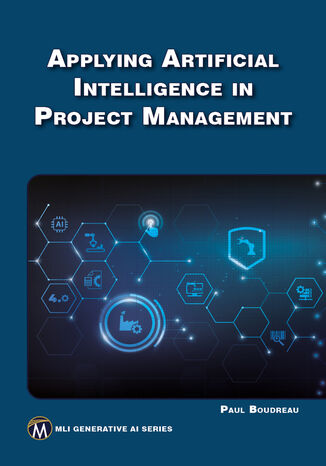
Artificial intelligence is reshaping the way projects are managed, offering unprecedented opportunities to improve efficiency, accuracy, and outcomes. This course begins with an introduction to AI’s role in project management, exploring how machine learning, natural language processing, and predictive algorithms can transform traditional approaches. You’ll learn about the key components of AI-driven projects and how to develop a strong business case for adopting these innovations.As you progress, the course delves into practical applications of AI in automating project tasks, analyzing data, and predicting results. Participants will gain hands-on experience with tools that leverage machine learning to forecast project success, improve productivity, and resolve potential failures. Additionally, you’ll discover how generative AI and large language models can enhance communication, planning, and decision-making throughout the project lifecycle.Finally, the course examines the broader implications of integrating AI into project management. You’ll explore strategies for acquiring AI solutions, implementing them within teams, and navigating the ethical challenges they present. By the end of the course, participants will have a clear understanding of how to leverage AI to optimize projects and stay competitive in a rapidly evolving technological landscape.
Richard D Avila, Imran Ahmad
Architecting AI Software Systems provides a definitive guide to building AI-enabled systems, emphasizing the balance between AI’s capabilities and traditional software architecture principles.As AI technologies gain widespread acceptance and are increasingly expected in future applications, this book provides architects and developers with the essential knowledge to stay competitive. It introduces a structured approach to mastering the complexities of AI integration, covering key architectural concepts and processes critical to building scalable and robust AI systems while minimizing development and maintenance risks. The book guides readers on a progressive journey, using real-world examples and hands-on exercises to deepen comprehension. It also includes the architecture of a fictional AI-enabled system as a learning tool. You will engage with exercises designed to reinforce your understanding and apply practical insights, leading to the development of key architectural products that support AI systems. This is an essential resource for architects seeking to mitigate risks and master the complexities of AI-enabled system development.By the end of the book, readers will be equipped with patterns, strategies and concepts necessary to architect AI-enabled systems across various domains.
Lars Malmqvist
Written for Salesforce architects who want quickly implementable AI solutions for their business challenges, Architecting AI Solutions on Salesforce is a shortcut to understanding Salesforce Einstein’s full capabilities – and using them.To illustrate the full technical benefits of Salesforce’s own AI solutions and components, this book will take you through a case study of a fictional company beginning to adopt AI in its Salesforce ecosystem. As you progress, you'll learn how to configure and extend the out-of-the-box features on various Salesforce clouds, their pros, cons, and limitations. You'll also discover how to extend these features using on- and off-platform choices and how to make the best architectural choices when designing custom solutions. Later, you'll advance to integrating third-party AI services such as the Google Translation API, Microsoft Cognitive Services, and Amazon SageMaker on top of your existing solutions. This isn’t a beginners’ Salesforce book, but a comprehensive overview with practical examples that will also take you through key architectural decisions and trade-offs that may impact the design choices you make.By the end of this book, you'll be able to use Salesforce to design powerful tailor-made solutions for your customers with confidence.
Artificial Intelligence and Expert Systems. Techniques and Applications for Problem Solving
Mercury Learning and Information, I. Gupta, G....
This book covers current AI applications and techniques for solving problems and accomplishing tasks. It introduces branches of AI such as formal logic, reasoning, knowledge engineering, expert systems, neural networks, and fuzzy logic. It emphasizes expert systems, with sections on state space search, knowledge engineering, neural networks, fuzzy logic, and Prolog.It begins with an introduction to AI and its applications, setting the stage for foundational concepts. Readers are guided through state space search and heuristic search strategies, crucial for problem-solving in AI. The focus shifts to expert systems, covering their development life cycle, knowledge acquisition, and representation, providing a deep dive into emulating human decision-making.Later chapters cover neural networks and the learning process, essential for creating adaptive systems. Sections on fuzzy logic and fuzzy systems introduce methods for handling uncertainty in AI. Final chapters on programming in logic and advanced Prolog offer practical techniques for AI solutions. This approach equips readers with the skills to apply AI in various domains, enhancing their problem-solving abilities and understanding of intelligent systems.