
Bezpieczeństwo sieci

Rick Lehtinen, Deborah Russell, G T Gangemi
Zadbaj o bezpieczeństwo swojego komputera Poznaj zagrożenia, na jakie narażony jest komputer Naucz się kontrolować dostęp do komputera Stosuj techniki zapewniające bezpieczeństwo w sieci Czy mój komputer na pewno jest bezpieczny? Wiele osób zadaje sobie to pytanie dopiero w momencie, kiedy system zaczyna zachowywać się w podejrzany sposób. Okazuje się wówczas, że skaner wykrywa dziesiątki, a nawet setki wirusów, programy zaczynają działać nieprawidłowo, a z dysku giną ważne dane. Pół biedy, jeśli jest to tylko domowy komputer z prywatnymi plikami. Dużo gorsze skutki może mieć włamanie do firmowej bazy danych lub przechwycenie poufnej komunikacji. Książka "Podstawy ochrony komputerów" to wszechstronne wprowadzenie do najważniejszych zagadnień dotyczących bezpieczeństwa danych i sprzętu. Czytając ją, poznasz zagrożenia, jakie czyhają na użytkowników komputerów, ale także skuteczne techniki ochrony. Nauczysz się kontrolować dostęp do danych, prowadzić efektywną politykę zabezpieczeń, wykrywać i usuwać wirusy oraz zapobiegać przenikaniu ich do systemu. Dowiesz się, jak zapewnić bezpieczeństwo komputera w sieci oraz jak używać szyfrowania do przesyłania poufnych informacji. Przeczytasz też o najnowszych technikach zabezpieczenia bazującego na danych biometrycznych (wzorze siatkówki czy odciskach palców) oraz ochronie sieci bezprzewodowych. Niebezpieczeństwa grożące użytkownikom komputerów Kontrolowanie dostępu do komputera Walka z wirusami Prowadzenie skutecznej polityki zabezpieczeń Bezpieczne korzystanie z sieci Szyfrowanie poufnych danych Komunikacja bez ryzyka Zabezpieczenia biometryczne Tworzenie bezpiecznych sieci bezprzewodowych Stosuj skuteczne zabezpieczenia i zapewnij maksymalne bezpieczeństwo swojemu komputerowi!
Sravani Bhattacharjee
Securing connected industries and autonomous systems is of primary concern to the Industrial Internet of Things (IIoT) community. Unlike cybersecurity, cyber-physical security directly ties to system reliability as well as human and environmental safety.This hands-on guide begins by establishing the foundational concepts of IIoT security with the help of real-world case studies, threat models, and reference architectures. You’ll work with practical tools to design risk-based security controls for industrial use cases and gain practical knowledge of multi-layered defense techniques, including identity and access management (IAM), endpoint security, and communication infrastructure. You’ll also understand how to secure IIoT lifecycle processes, standardization, and governance. In the concluding chapters, you’ll explore the design and implementation of resilient connected systems with emerging technologies such as blockchain, artificial intelligence, and machine learning.By the end of this book, you’ll be equipped with the all the knowledge required to design industry-standard IoT systems confidently.
Davide Bedin
This second edition will help you get to grips with microservice architectures and how to manage application complexities with Dapr in no time. You'll understand how Dapr simplifies development while allowing you to work with multiple languages and platforms. Following a C# sample, you'll understand how Dapr's runtime, building blocks, and software development kits (SDKs) help you to simplify the creation of resilient and portable microservices.Dapr provides an event-driven runtime that supports the essential features you need for building microservices, including service invocation, state management, and publish/subscribe messaging. You'll explore all of those in addition to various other advanced features with this practical guide to learning Dapr. With a focus on deploying the Dapr sample application to an Azure Kubernetes Service cluster and to the Azure Container Apps serverless platform, you’ll see how to expose the Dapr application with NGINX, YARP, and Azure API Management.By the end of this book, you'll be able to write microservices easily by implementing industry best practices to solve problems related to distributed systems.
Rohit Tamma, Oleg Skulkin, Heather Mahalik, Satish...
Mobile phone forensics is the science of retrieving data from a mobile phone under forensically sound conditions. This updated fourth edition of Practical Mobile Forensics delves into the concepts of mobile forensics and its importance in today's world.The book focuses on teaching you the latest forensic techniques to investigate mobile devices across various mobile platforms. You will learn forensic techniques for multiple OS versions, including iOS 11 to iOS 13, Android 8 to Android 10, and Windows 10. The book then takes you through the latest open source and commercial mobile forensic tools, enabling you to analyze and retrieve data effectively. From inspecting the device and retrieving data from the cloud, through to successfully documenting reports of your investigations, you'll explore new techniques while building on your practical knowledge. Toward the end, you will understand the reverse engineering of applications and ways to identify malware. Finally, the book guides you through parsing popular third-party applications, including Facebook and WhatsApp.By the end of this book, you will be proficient in various mobile forensic techniques to analyze and extract data from mobile devices with the help of open source solutions.
Abhishek Ratan
Network automation is the use of IT controls to supervise and carry out everyday network management functions. It plays a key role in network virtualization technologies and network functions.The book starts by providing an introduction to network automation, and its applications, which include integrating DevOps tools to automate the network efficiently. It then guides you through different network automation tasks and covers various data digging and performing tasks such as ensuring golden state configurations using templates, interface parsing. This book also focuses on Intelligent Operations using Artificial Intelligence and troubleshooting using chatbots and voice commands. The book then moves on to the use of Python and the management of SSH keys for machine-to-machine (M2M) communication, all followed by practical use cases. The book also covers the importance of Ansible for network automation, including best practices in automation; ways to test automated networks using tools such as Puppet, SaltStack, and Chef; and other important techniques.Through practical use-cases and examples, this book will acquaint you with the various aspects of network automation. It will give you the solid foundation you need to automate your own network without any hassle.
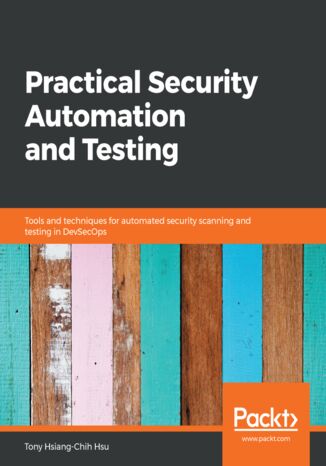
Tony Hsiang-Chih Hsu
Security automation is the automatic handling of software security assessments tasks. This book helps you to build your security automation framework to scan for vulnerabilities without human intervention.This book will teach you to adopt security automation techniques to continuously improve your entire software development and security testing. You will learn to use open source tools and techniques to integrate security testing tools directly into your CI/CD framework. With this book, you will see how to implement security inspection at every layer, such as secure code inspection, fuzz testing, Rest API, privacy, infrastructure security, and web UI testing. With the help of practical examples, this book will teach you to implement the combination of automation and Security in DevOps. You will learn about the integration of security testing results for an overall security status for projects.By the end of this book, you will be confident implementing automation security in all layers of your software development stages and will be able to build your own in-house security automation platform throughout your mobile and cloud releases.
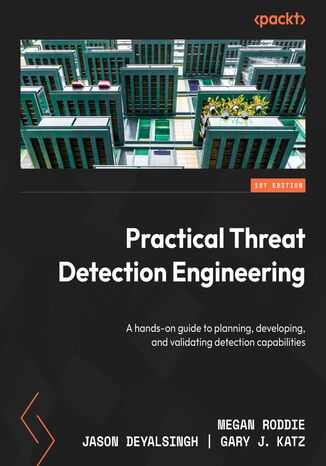
Megan Roddie, Jason Deyalsingh, Gary J. Katz
Threat validation is the backbone of every strong security detection strategy—it ensures your detection pipeline is effective, reliable, and resilient against real-world threats.This comprehensive guide is designed for those new to detection validation, offering clear, actionable frameworks to help you assess, test, and refine your security detections with confidence. Covering the entire detection lifecycle, from development to validation, this book provides real-world examples, hands-on tutorials, and practical projects to solidify your skills.Beyond just technical know-how, this book empowers you to build a career in detection engineering, equipping you with the essential expertise to thrive in today’s cybersecurity landscape.By the end of this book, you'll have the tools and knowledge to fortify your organization’s defenses, enhance detection accuracy, and stay ahead of cyber threats.

Chris Sanders
Przechwytywanie pakietów i badanie ich zawartości może kojarzyć się z szemraną działalnością domorosłych hakerów i włamywaczy. Okazuje się jednak, że analiza pakietów jest jednym ze skuteczniejszych narzędzi do rozwiązywania problemów z siecią. O ile samo przechwycenie pakietu, na przykład za pomocą popularnego narzędzia Wireshark, zasadniczo nie sprawia problemu, o tyle zbadanie zawartości tego pakietu i wykorzystanie zdobytej wiedzy do poprawy działania sieci bywa sporym wyzwaniem nawet dla doświadczonych administratorów. Niniejsza książka jest niezwykle praktycznym, przystępnie napisanym podręcznikiem, który znakomicie ułatwia zrozumienie tego, co się dzieje w sieci, i podjęcie adekwatnych działań w celu poprawy jej funkcjonowania. Niniejsze, trzecie wydanie książki zostało przejrzane i zaktualizowane, uwzględniono w nim również najnowszą wersję narzędzia Wireshark (2.x). Opisano sposób wykorzystywania przechwyconych danych do rozwiązywania problemów sieci. Gruntownie omówiono protokoły IPv6 i SMTP, znalazł się tu również nowy rozdział opisujący narzędzia tshark i tcpdum. Działają one na poziomie powłoki i służą do analizy pakietów. Najważniejsze zagadnienia ujęte w książce: badanie komunikacji sieciowej w czasie rzeczywistym wykrywanie przyczyn problemów z siecią wyodrębnianie plików z pakietów działanie złośliwego kodu na poziomie pakietów generowanie raportów i statystyk dotyczących ruchu sieciowego Sprawdź, co w pakiecie piszczy! Chris Sanders — jest ekspertem w dziedzinie bezpieczeństwa informacji. Pochodzi z Mayfield w stanie Kentucky. Pracował dla wielu agencji rządowych i wojskowych, a także dla kilku firm z listy Fortune 500. W czasie współpracy z Departamentem Obrony USA Sanders rozwijał modele dostawcy usług sieciowych oraz narzędzia wywiadowcze. Założył fundację, której celem jest rozwój zaawansowanych technologii informatycznych na obszarach wiejskich. W wolnych chwilach ogląda mecze koszykówki, grilluje i spędza czas na plaży. Wraz z żoną Ellen mieszka w Charleston, w stanie Karolina Południowa.