
Hacking
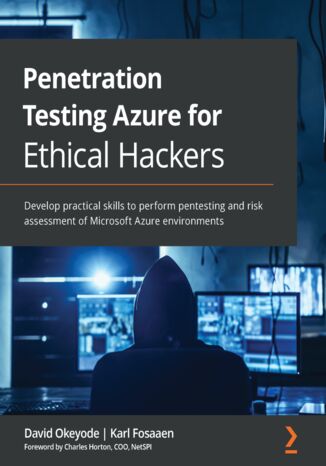
David Okeyode, Karl Fosaaen
“If you’re looking for this book, you need it.” — 5* Amazon ReviewCurious about how safe Azure really is? Put your knowledge to work with this practical guide to penetration testing. This book offers a no-faff, hands-on approach to exploring Azure penetration testing methodologies, which will get up and running in no time with the help of real-world examples, scripts, and ready-to-use source code.As you learn about the Microsoft Azure platform and understand how hackers can attack resources hosted in the Azure cloud, you'll find out how to protect your environment by identifying vulnerabilities, along with extending your pentesting tools and capabilities. First, you’ll be taken through the prerequisites for pentesting Azure and shown how to set up a pentesting lab. You'll then simulate attacks on Azure assets such as web applications and virtual machines from anonymous and authenticated perspectives.In the later chapters, you'll learn about the opportunities for privilege escalation in Azure tenants and ways in which an attacker can create persistent access to an environment.By the end of this book, you'll be able to leverage your ethical hacking skills to identify and implement different tools and techniques to perform successful penetration tests on your own Azure infrastructure.
Penetration Testing Bootcamp. Quickly get up and running with pentesting techniques
Jason Beltrame
Penetration Testing Bootcamp delivers practical, learning modules in manageable chunks. Each chapter is delivered in a day, and each day builds your competency in Penetration Testing.This book will begin by taking you through the basics and show you how to set up and maintain the C&C Server. You will also understand how to scan for vulnerabilities and Metasploit, learn how to setup connectivity to a C&C server and maintain that connectivity for your intelligence gathering as well as offsite processing. Using TCPDump filters, you will gain understanding of the sniffing and spoofing traffic. This book will also teach you the importance of clearing up the tracks you leave behind after the penetration test and will show you how to build a report from all the data obtained from the penetration test.In totality, this book will equip you with instructions through rigorous tasks, practical callouts, and assignments to reinforce your understanding of penetration testing.
Stefan Umit Uygur
This practical book outlines the steps needed to perform penetration testing using BackBox. It explains common penetration testing scenarios and gives practical explanations applicable to a real-world setting. This book is written primarily for security experts and system administrators who have an intermediate Linux capability. However, because of the simplicity and user-friendly design, it is also suitable for beginners looking to understand the principle steps of penetration testing.
Jason Beltrame, Michael McPhee
This book will show you how to utilize the latest credit card sized Raspberry Pi 3 and create a portable, low-cost hacking tool using Kali Linux 2.You’ll begin by installing and tuning Kali Linux 2 on Raspberry Pi 3 and then get started with penetration testing. You will be exposed to various network security scenarios such as wireless security, scanning network packets in order to detect any issues in the network, and capturing sensitive data. You will also learn how to plan and perform various attacks such as man-in-the-middle, password cracking, bypassing SSL encryption, compromising systems using various toolkits, and many more. Finally, you’ll see how to bypass security defenses and avoid detection, turn your Pi 3 into a honeypot, and develop a command and control system to manage a remotely-placed Raspberry Pi 3.By the end of this book you will be able to turn Raspberry Pi 3 into a hacking arsenal to leverage the most popular open source toolkit, Kali Linux 2.0.
If you are looking for a low budget, small form-factor remotely accessible hacking tool, then the concepts in this book are ideal for you. If you are a penetration tester who wants to save on travel costs by placing a low-cost node on a target network, you will save thousands by using the methods covered in this book. You do not have to be a skilled hacker or programmer to use this book. It will be beneficial to have some networking experience; however, it is not required to follow the concepts covered in this book.
Keith M.
An easy-to-understand, step-by-step practical guide that shows you how to use the Linux Bash terminal tools to solve information security problems. If you are a penetration tester, system administrator, or developer who would like an enriching and practical introduction to the Bash shell and Kali Linux command-line-based tools, this is the book for you.
Pentesting APIs. A practical guide to discovering, fingerprinting, and exploiting APIs
Maurício Harley
Understanding API security is crucial as APIs form the backbone of modern interconnected applications, making them prime targets for cyberattacks. Drawing on nearly 30 years of cybersecurity experience and an extensive background in network security and forensic analysis, this book provides the knowledge and tools to strengthen your API security practices and protect against cyber threats comprehensively.This book begins by establishing a foundational understanding of APIs, particularly focusing on REST and GraphQL, emphasizing their critical role and potential security vulnerabilities. It guides you through setting up a penetration testing environment to ensure the practical application of concepts. You’ll learn reconnaissance techniques, information-gathering strategies, and the discovery of API vulnerabilities. Authentication and authorization testing are thoroughly explored, covering mechanisms, weaknesses, and methods to bypass security controls. By comprehensively addressing these aspects, the book equips you to understand, identify, and mitigate risks, strengthening API security and effectively minimizing potential attack surfaces.By the end of this book, you’ll have developed practical skills to identify, exploit, and secure APIs against various vulnerabilities and attacks.
Paul Smith
The industrial cybersecurity domain has grown significantly in recent years. To completely secure critical infrastructure, red teams must be employed to continuously test and exploit the security integrity of a company's people, processes, and products.This is a unique pentesting book, which takes a different approach by helping you gain hands-on experience with equipment that you’ll come across in the field. This will enable you to understand how industrial equipment interacts and operates within an operational environment.You'll start by getting to grips with the basics of industrial processes, and then see how to create and break the process, along with gathering open-source intel to create a threat landscape for your potential customer. As you advance, you'll find out how to install and utilize offensive techniques used by professional hackers. Throughout the book, you'll explore industrial equipment, port and service discovery, pivoting, and much more, before finally launching attacks against systems in an industrial network.By the end of this penetration testing book, you'll not only understand how to analyze and navigate the intricacies of an industrial control system (ICS), but you'll also have developed essential offensive and defensive skills to proactively protect industrial networks from modern cyberattacks.