
Hacking
W kategorii Hacking zebrano publikacje dotyczące nie tylko hackerów, crackerów i ich technik działania, ale także opisujące różne aspekty bezpieczeństwa komputerów i danych na nich przechowywanych. Poznacie technikę przeprowadzania audytów bezpieczeństwa oraz sposoby zabezpieczania się przed atakami hackerów, programami szpiegującymi czy zwykłą plagą wirusów.
Nauczycie się chronić nie tylko poszczególne komputery ale całe sieci komputerowe przez opracowanie i wdrożenie odpowiedniej polityki bezpieczeństwa, poprawne użycie firewalli czy odpowiednie skonfigurowanie serwerów pracujących pod Waszym nadzorem, a także opanujecie sposoby bezpiecznego surfowania po internecie.
Dominiek Verham, Christiaan Brinkhoff, Johan Vanneuville, Scott...
Do you want to effectively implement and maintain secure virtualized systems? This book will give you a comprehensive understanding of Microsoft virtual endpoints, from the fundamentals of Windows 365 and Azure Virtual Desktop to advanced security measures, enabling you to secure, manage, and optimize virtualized environments in line with contemporary cybersecurity challenges.You’ll start with an introduction to Microsoft technologies, gaining a foundational understanding of their capabilities. Next, you’ll delve into the importance of endpoint security, addressing the challenges faced by companies in safeguarding their digital perimeters. This book serves as a practical guide to securing virtual endpoints, covering topics such as network access, data leakage prevention, update management, threat detection, and access control configuration. As you progress, the book offers insights into the nuanced security measures required for Windows 365, Azure Virtual Desktop, and the broader Microsoft Azure infrastructure. The book concludes with real-world use cases, providing practical scenarios for deploying Windows 365 and Azure Virtual Desktop.By the end of this book, you’ll be equipped with practical skills for implementing and evaluating robust endpoint security strategies.
IT Governance Publishing, Lee Newcombe
Cloud computing plays a critical role in modern business, but with it comes a host of security challenges. This book explores the intricacies of securing cloud services, starting with foundational concepts of cloud computing and moving into specific service and deployment models. It provides insights into balancing security benefits with potential risks such as availability issues, shadow IT, and information leakage. The book goes on to focus on security threats, from hackers and insiders to government entities, while offering strategies to mitigate these risks. The practical approach continues with a deep dive into security architecture, providing a structured model to secure cloud environments across IaaS, PaaS, SaaS, and more. Further, it examines the regulatory landscape, including compliance requirements, privacy concerns, and data protection laws that impact cloud service security. Finally, the book concludes with projections about the future of cloud security and emerging challenges. Readers will gain not only the theoretical foundations but also real-world insights that they can apply to strengthen their cloud service security.
Jalal Bouhdada, Marco Ayala
As modern process facilities become increasingly sophisticated and vulnerable to cyber threats, securing critical infrastructure is more crucial than ever. This book offers an indispensable guide to industrial cybersecurity and Safety Instrumented Systems (SIS), vital for maintaining the safety and reliability of critical systems and protecting your operations, personnel, and assets.Starting with SIS design principles, the book delves into the architecture and protocols of safety networks. It provides hands-on experience identifying vulnerabilities and potential attack vectors, exploring how attackers might target SIS components. You’ll thoroughly analyze Key SIS technologies, threat modeling, and attack techniques targeting SIS controllers and engineer workstations. The book shows you how to secure Instrument Asset Management Systems (IAMS), implement physical security measures, and apply integrated risk management methodologies. It also covers compliance with emerging cybersecurity regulations and industry standards worldwide.By the end of the book, you’ll have gained practical insights into various risk assessment methodologies and a comprehensive understanding of how to effectively protect critical infrastructure.
Securing Network Infrastructure. Discover practical network security with Nmap and Nessus 7
Sairam Jetty, Sagar Rahalkar
Digitization drives technology today, which is why it’s so important for organizations to design security mechanisms for their network infrastructures. Analyzing vulnerabilities is one of the best ways to secure your network infrastructure.This Learning Path begins by introducing you to the various concepts of network security assessment, workflows, and architectures. You will learn to employ open source tools to perform both active and passive network scanning and use these results to analyze and design a threat model for network security. With a firm understanding of the basics, you will then explore how to use Nessus and Nmap to scan your network for vulnerabilities and open ports and gain back door entry into a network. As you progress through the chapters, you will gain insights into how to carry out various key scanning tasks, including firewall detection, OS detection, and access management to detect vulnerabilities in your network.By the end of this Learning Path, you will be familiar with the tools you need for network scanning and techniques for vulnerability scanning and network protection.This Learning Path includes content from the following Packt books:•Network Scanning Cookbook by Sairam Jetty•Network Vulnerability Assessment by Sagar Rahalkar
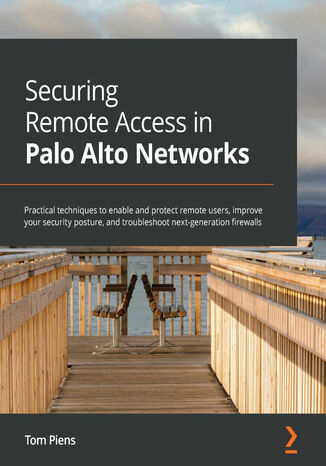
Tom Piens aka 'reaper'
This book builds on the content found in Mastering Palo Alto Networks, focusing on the different methods of establishing remote connectivity, automating log actions, and protecting against phishing attacks through user credential detection.Complete with step-by-step instructions, practical examples, and troubleshooting tips, you will gain a solid understanding of how to configure and deploy Palo Alto Networks remote access products. As you advance, you will learn how to design, deploy, and troubleshoot large-scale end-to-end user VPNs. Later, you will explore new features and discover how to incorporate them into your environment.By the end of this Palo Alto Networks book, you will have mastered the skills needed to design and configure SASE-compliant remote connectivity and prevent credential theft with credential detection.
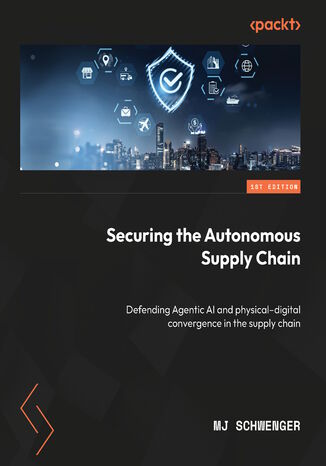
MJ Schwenger
The rapid rise of autonomous AI systems is transforming modern supply chains, where intelligent agents increasingly make decisions that trigger real-world actions across warehouses, ports, and logistics networks. A nation-state actor no longer needs to hack a PLC; compromising the AI agent that tells it what to do may be enough. This book equips security leaders, architects, and engineers with frameworks and strategies to defend emerging agentic ecosystems.The book begins by examining the shift from AI copilots to autonomous execution systems and the risks that arise when digital reasoning directly controls physical processes. It introduces the Cyber-Physical Systems Threat Chain, a model that maps how adversarial intent can enter an agentic system at the intelligence layer and propagate through authorized channels to physical consequences. You will then follow practical approaches to securing models, and autonomous execution environments, along with architectural and operational controls to defend cyber-physical AI systems.By the end of the book, you will be able to defend the full execution chain from AI reasoning to physical actuation. You will gain the ASCR Blueprint—deployment-ready artifacts designed to operationalize security across risk intelligence, technical enforcement, operational response, and governance.
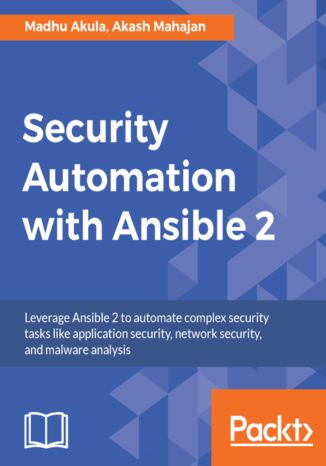
Akash Mahajan, MADHU AKULA
Security automation is one of the most interesting skills to have nowadays. Ansible allows you to write automation procedures once and use them across your entire infrastructure. This book will teach you the best way to use Ansible for seemingly complex tasks by using the various building blocks available and creating solutions that are easy to teach others, store for later, perform version control on, and repeat.We’ll start by covering various popular modules and writing simple playbooks to showcase those modules. You’ll see how this can be applied over a variety of platforms and operating systems, whether they are Windows/Linux bare metal servers or containers on a cloud platform. Once the bare bones automation is in place, you’ll learn how to leverage tools such as Ansible Tower or even Jenkins to create scheduled repeatable processes around security patching, security hardening, compliance reports, monitoring of systems, and so on. Moving on, you’ll delve into useful security automation techniques and approaches, and learn how to extend Ansible for enhanced security. While on the way, we will tackle topics like how to manage secrets, how to manage all the playbooks that we will create and how to enable collaboration using Ansible Galaxy. In the final stretch, we’ll tackle how to extend the modules of Ansible for our use, and do all the previous tasks in a programmatic manner to get even more powerful automation frameworks and rigs.
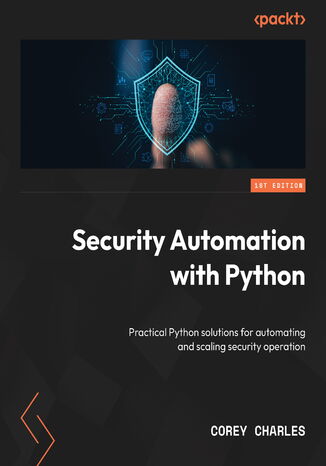
Corey Charles Sr., Frank McMahon
Designed to address the most common pain point for security teams—scalability—Security Automation with Python leverages the author’s years of experience in vulnerability management to provide you with actionable guidance on automating security workflows to streamline your operations and improve your organization’s overall security posture.What makes this book stand out is its hands-on approach. You won’t just learn theoretical concepts—you’ll apply Python-based automation techniques directly to real-world scenarios. Whether you're automating vulnerability scans, managing firewall rules, or responding to security incidents, this book provides clear examples and use cases, breaking down complex topics into easily digestible steps. With libraries like Paramiko, Requests, and PyAutoGUI, you’ll automate everything from network scanning and threat intelligence gathering to system patching and alert management. Plus, this book focuses heavily on practical tips for error handling, scaling automation workflows, and integrating Python scripts into larger security infrastructures.By the end of this book, you'll have developed a set of highly valuable skills, from creating custom automation scripts to deploying them in production environments, and completed projects that can be immediately put to use in your organization.