
Informatyka
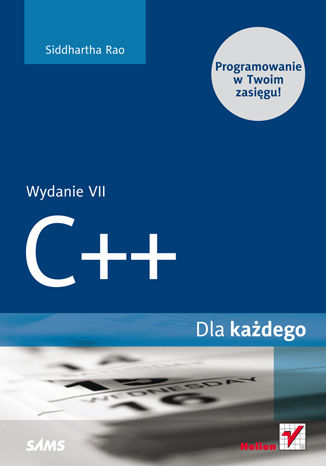
Siddhartha Rao
Programowanie w Twoim zasięgu! Pomimo swojego wieku C++ wciąż zajmuje wysoką lokatę na liście najpopularniejszych języków programowania. Przez lata dzięki wydajności oraz dostępności zdobył sobie licznych wielbicieli i wciąż jest niezastąpiony w wielu zadaniach, choć w branży przewagę nad nim mają język Java i platforma .NET. Jeżeli jednak oczekujesz najwyższej wydajności i przewidywalnego czasu wykonania zadania, język C++ może okazać się jedynym słusznym wyborem. Z tą książką opanujesz język C++ bez trudu, poświęcając na to tylko godzinę dziennie! W trakcie lektury zgłębisz jego tajniki, poznasz zalety oraz wady. Każda kolejna godzina to coraz bardziej zaawansowana, a przy tym ciekawsza dawka wiedzy. Opanowanie materiału zawartego w podręczniku pozwoli Ci na pisanie programów o różnym stopniu złożoności oraz swobodne poruszanie się w świecie języka C++. W trakcie lektury opanujesz składnię i elementy języka - tablice, instrukcje warunkowe, pętle czy stałe nie będą miały przed Tobą żadnych tajemnic. W kolejnych rozdziałach dowiesz się, jak wykorzystać wskaźniki i dyrektywy kompilatora. Ponadto zaznajomisz się z zasadami programowania obiektowego oraz poznasz nowości zawarte w wersji 11. Książka ta jest doskonałym źródłem wiedzy dla każdego adepta języka C++! Dzięki tej książce: poznasz składnię języka C++ opanujesz nowości wersji 11 języka C++ poznasz zasady programowania obiektowego napiszesz program o dowolnym stopniu skomplikowania Poznaj i wykorzystaj potencjał języka C++!
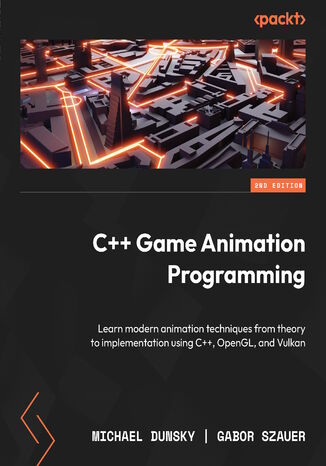
Michael Dunsky, Gabor Szauer
If you‘re fascinated by the complexities of animating video game characters and are curious about the transformation of model files into 3D avatars and NPCs that can explore virtual worlds, then this book is for you. In this new edition, you’ll find expanded content on high-performance graphics and modern animation techniques, along with improved workflows and enhanced guidance on using OpenGL and Vulkan. You’ll learn everything you need to know about game animation, from a simple graphical window to a large crowd of smoothly animated characters.First, you’ll learn how to use modern high-performance graphics, dig into the details of how virtual characters are stored, and load the models and animations into a minimalistic game-like application. Then, you’ll get an overview of the components of an animation system, how to play the animations and combine them, and how to blend from one animation into another. You’ll also get an introduction to topics that will make your programming life easier, such as debugging your code or stripping down the graphical output.By the end of this book, you’ll have gained deep insights into all the parts of game animation programming and how they work together, revealing the magic that brings life to the virtual worlds on your screen.
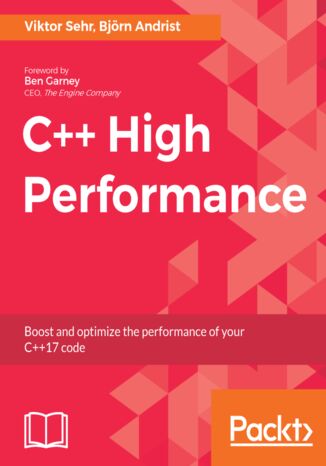
C++ High Performance. Boost and optimize the performance of your C++17 code
Björn Andrist, Viktor Sehr
C++ is a highly portable language and can be used to write both large-scale applications and performance-critical code. It has evolved over the last few years to become a modern and expressive language. This book will guide you through optimizing the performance of your C++ apps by allowing them to run faster and consume fewer resources on the device they're running on without compromising the readability of your code base.The book begins by helping you measure and identify bottlenecks in a C++ code base. It then moves on by teaching you how to use modern C++ constructs and techniques. You'll see how this affects the way you write code. Next, you'll see the importance of data structure optimization and memory management, and how it can be used efficiently with respect to CPU caches. After that, you'll see how STL algorithm and composable Range V3 should be used to both achieve faster execution and more readable code, followed by how to use STL containers and how to write your own specialized iterators.Moving on, you’ll get hands-on experience in making use of modern C++ metaprogramming and reflection to reduce boilerplate code as well as in working with proxy objects to perform optimizations under the hood. After that, you’ll learn concurrent programming and understand lock-free data structures. The book ends with an overview of parallel algorithms using STL execution policies, Boost Compute, and OpenCL to utilize both the CPU and the GPU.
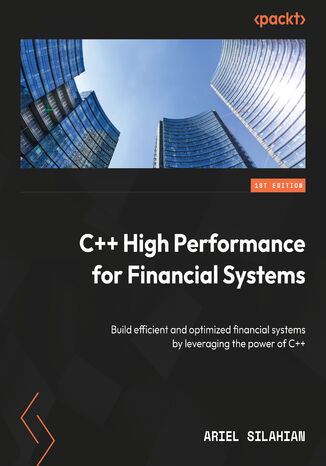
Ariel Silahian
Unlock the secrets of the finance industry and dive into the world of high-performance trading systems with C++ High Performance for Financial Systems. Trading systems are the backbone of the financial world, and understanding how to build them for optimal performance is crucial for success. If you've ever dreamt of creating scalable and cutting-edge financial software, this guide is your key to success. A cornerstone of this book is its coverage of system design and architecture. The book starts by outlining the role of C++ in finance and trading. You'll learn the principles and methodologies behind building systems that can handle vast amounts of data, execute complex trading strategies with ease, and maintain the highest levels of reliability. Armed with this knowledge, you'll be equipped to tackle even the most challenging trading scenarios.In the fast-paced world of finance, every millisecond counts. This book delves into low-latency strategies that will enable your trading systems to react with lightning speed. You’ll also learn the art of reducing latency, optimizing code, and leveraging the latest hardware and software techniques to gain a competitive edge in the market.By the end of this book, you’ll be well-versed in architecting a financial trading system as well as advanced strategies and new industry trends.
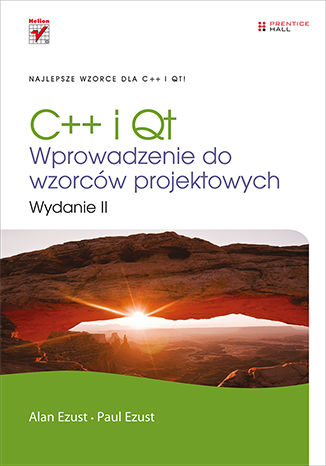
C++ i Qt. Wprowadzenie do wzorców projektowych. Wydanie II
Alan Ezust, Paul Ezust
Najlepsze wzorce dla C++ i Qt! Język C++ przez długie lata był liderem wśród języków programowania i wciąż jest rozwijany. Qt to zestaw bibliotek pozwalający na tworzenie atrakcyjnego interfejsu użytkownika, działającego w różnych systemach operacyjnych — Windows, Mac OS X oraz Linux. Projekt jest intensywnie rozwijany od 1992 roku, a najnowsza wersja daje nawet możliwość tworzenia aplikacji internetowych czy mobilnych. Wykorzystanie możliwości C++ oraz potencjału Qt może dać niezwykłe efekty! W trakcie lektury nauczysz się podstaw języka C++ i zgłębisz tajniki bibliotek Qt. Zdobędziesz interesujące informacje na temat wykorzystania kontenerów, metaobiektów, metawłaściwości i mechanizmu refleksji. Dowiesz się, jak wykorzystać wzorzec MVC (ang. Model-View-Controller) oraz w jaki sposób opanować problemy związane z programowaniem współbieżnym. Ponadto nauczysz się panować nad wskaźnikami i unikać typowych problemów związanych z dostępem do pamięci. Książka ta jest doskonałą pozycją dla wszystkich programistów C++, którzy chcą wzbogacić swój warsztat o bibliotekę Qt. Dzięki tej książce: - poznasz podstawy C++ oraz Qt - opanujesz programowanie współbieżne - zrozumiesz wzorzec MVC - zbudujesz interesującą aplikację przy użyciu C++ i Qt Wykorzystaj moc duetu: C++ i Qt!
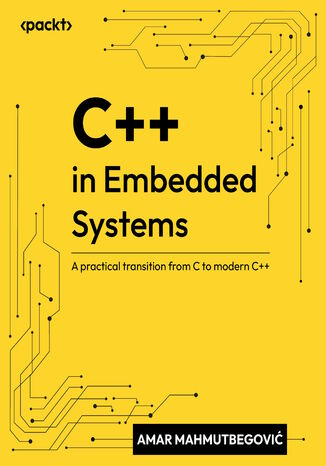
C++ in Embedded Systems. A practical transition from C to modern C++
Amar Mahmutbegović, Steve Branam
Transitioning from C can be daunting, with concerns about performance overhead, added complexity, and unfamiliar tooling. Addressing these challenges, Amar Mahmutbegovic, an advocate for modern C++ in embedded development, shows you how to harness zero-cost abstractions, compile-time checks, and powerful modern C++ capabilities to preserve performance while achieving safer, cleaner code. This book bridges the gap between traditional C and advanced C++, helping you retain the efficiency C developers demand while unlocking the safety and expressiveness of modern C++. Starting with a modern development environment setup, including a Docker container for seamless example replication, you’ll overcome the hurdles of using the C++ standard library in memory-constrained settings and get acquainted with the Embedded Template Library (ETL) as an alternative. The book walks you through essential C++ concepts before exploring advanced topics such as templates, strong typing, error handling, compile-time computation, and RAII. Through practical examples, you'll implement a sequencer, write a type-safe HAL, and apply patterns like Command, State, and Observer to solve common embedded development problems. By the end of this book, you’ll have learned how to apply modern C++ to develop robust, modular firmware with performance matching or exceeding hand-coded C solutions.
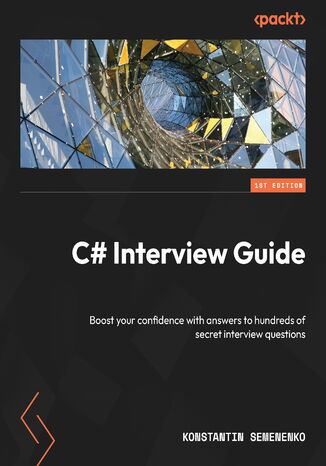
C# Interview Guide. Boost your confidence with answers to hundreds of secret interview questions
Konstantin Semenenko
If you're gearing up for technical interviews by enhancing your programming skills and aiming for a successful career in C# programming and software development, the C# Interview Guide is your key to interview success.Designed to equip you with essential skills for excelling in technical interviews, this guide spans a broad spectrum, covering fundamental C# programming concepts to intricate technical details. As you progress, you'll develop proficiency in crafting compelling resumes, adeptly answering behavioral questions, and navigating the complexities of salary negotiations and job evaluations. What sets this book apart is its coverage, extending beyond technical know-how and incorporating real-world experiences and expert insights from industry professionals. This comprehensive approach, coupled with guidance on overcoming challenges, ranging from interview preparation to post-interview strategies, makes this guide an invaluable resource for those aspiring to advance in their C# programming careers.By the end of this guide, you’ll emerge with a solid understanding of C# programming, advanced technical interview skills, and the ability to apply industry best practices.
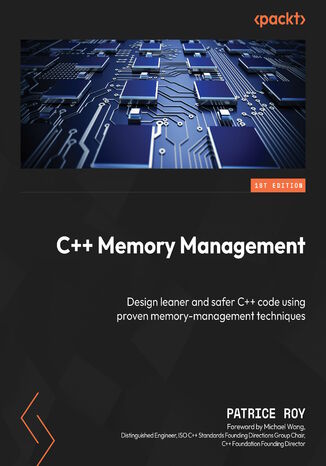
C++ Memory Management. Write leaner and safer C++ code using proven memory-management techniques
Patrice Roy, Michael Wong
C++ programmers often face challenges in allocating and managing memory efficiently, especially given the diverse needs of real-time systems, embedded systems, games, and conventional desktop applications. This book offers a targeted approach to address the unique memory constraints of each domain.Written by an ISO C++ Standards Committee member, Patrice Roy, this guide covers fundamental concepts of object lifetime and memory organization to help you write simpler and safer programs. You’ll learn how to control memory allocation mechanisms, create custom containers and allocators, and adapt allocation operators to suit your specific requirements, making your programs smaller, faster, safer, and more predictable.Starting with core principles of memory management, this book introduces modern facilities that simplify your work and then dives into memory management mechanics, building solutions for specific application needs, and measuring their impact on your program’s behavior.By the end of this book, you’ll be able to write secure programs that handle memory optimally for your application domain. You will also have a strong grasp of both high-level abstractions for safer programs and low-level abstractions that allow detailed customization.