
Informatyka
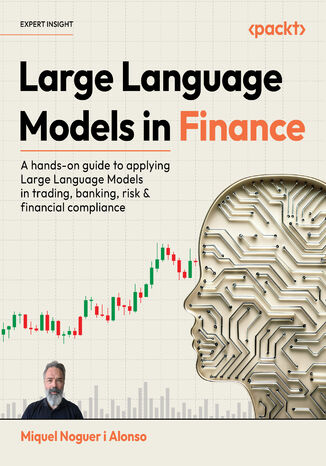
Miquel Noguer i Alonso
Large language models are revolutionizing finance from market analysis to compliance automation but applying them in practice can be challenging. LLMs in Finance is a step-by-step guide that demystifies these powerful models and shows you how to implement them in real financial projects. You'll begin with the fundamentals of how LLMs work, including the transformer architecture, prompt engineering, and fine-tuning for financial data. Next, you'll build applications: intelligent agents for trading; tools for banking tasks like credit scoring and fraud detection; and automated solutions for risk management and regulatory compliance. To deploy these solutions, you'll learn how to scale LLM implementations, from choosing the right hardware to adopting effective cloud strategies. You'll also explore advanced methods to improve model performance, including reinforcement learning for fine-tuning. Finally, learn how to address AI bias and ensure your LLM solutions comply with ethical and regulatory requirements. Real-world case studies illustrate how financial organizations are leveraging LLMs in trading systems, customer service chatbots, and more. By the end of the book, you'll have the expertise to build LLM-powered applications and pick up on trends such as multimodal AI
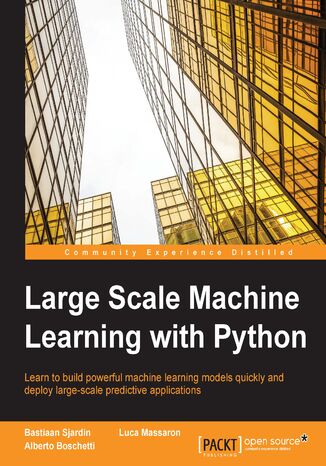
Luca Massaron, Alberto Boschetti, Bastiaan Sjardin
Large Python machine learning projects involve new problems associated with specialized machine learning architectures and designs that many data scientists have yet to tackle. But finding algorithms and designing and building platforms that deal with large sets of data is a growing need. Data scientists have to manage and maintain increasingly complex data projects, and with the rise of big data comes an increasing demand for computational and algorithmic efficiency. Large Scale Machine Learning with Python uncovers a new wave of machine learning algorithms that meet scalability demands together with a high predictive accuracy. Dive into scalable machine learning and the three forms of scalability. Speed up algorithms that can be used on a desktop computer with tips on parallelization and memory allocation. Get to grips with new algorithms that are specifically designed for large projects and can handle bigger files, and learn about machine learning in big data environments. We will also cover the most effective machine learning techniques on a map reduce framework in Hadoop and Spark in Python.
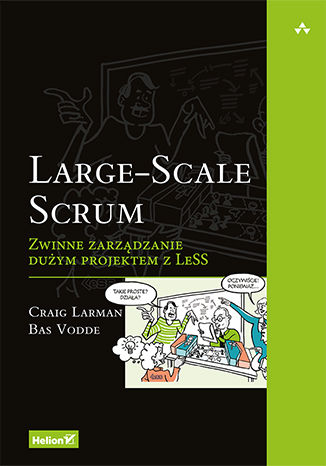
Large-Scale Scrum. Zwinne zarządzanie dużym projektem z LeSS
Craig Larman, Bas Vodde
Large-Scale Scrum. Zwinne zarządzanie dużym projektem Scrum stoi w opozycji do tradycyjnych, hierarchicznych sposobów zarządzania procesami rozwoju oprogramowania. Pozwala na uzyskanie elastyczności i szybkości działania, dzięki czemu możliwe jest zaspokojenie coraz bardziej złożonych wymagań klientów. Metody zwinne doskonale sprawdzają się również w większej skali. Large-Scale Scrum, czyli LeSS, umożliwia pomyślne zarządzanie olbrzymimi międzynarodowymi projektami o dużej złożoności technicznej dzięki prostocie, skupieniu się na najistotniejszych aspektach zagadnień, a przede wszystkim dzięki ciągłemu zwracaniu uwagi na doskonałość techniczną. Niniejsza książka jest przeznaczona dla każdego, kto chce poznać praktyczne aspekty wdrażania LeSS w procesach rozwijania oprogramowania. Jest szczególnie wartościowa dla osób zarządzających dużymi, skomplikowanymi projektami. Poza wyjaśnieniem koncepcji i zasad Scruma przedstawiono tu wnioski płynące z wielu lat doświadczeń wdrażania LeSS w przeróżnych organizacjach. Pokazano, jak można zapewnić, że dostarczony produkt będzie wyższej jakości, będzie prezentował wartości szczególnie cenne dla klienta, zespół będzie pracował wydajniej, elastyczniej i w o wiele prostszy sposób, a poszczególne cele będą osiągane przy znacznie mniejszej formalizacji! Najważniejsze zagadnienia: podstawowe pojęcia LeSS, obowiązujące reguły i zasady techniki skalowania procesów zwinnych zarządzanie pracą zespołów stosujących Scrum stosowanie frameworka LeSS Huge zasady pracy Mistrza Młyna sprinty LeSS Craig Larman urodził się w Kanadzie. Specjalizuje się w kilku technikach projektowania oprogramowania, w tym również w metodykach zwinnych. Jest uznanym konsultantem i autorem wielu książek dotyczących rozwoju oprogramowania. Jako współtwórca LeSS od kilku lat angażuje się we wdrażanie tej metody w różnych organizacjach. Bas Vodde urodził się w Holandii, obecnie mieszka w Singapurze. Jest trenerem, konsultantem, programistą i autorem książek. Specjalizuje się we wdrażaniu nowoczesnych technik rozwijania aplikacji, przede wszystkim w metodykach zwinnych. Wdrażał metodę Scrum w wielu różnych firmach, w tym w Nokia Networks. LeSS: przygotuj swój zespół na sukces w dużej skali!
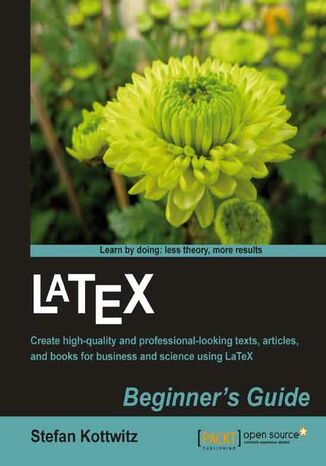
Stefan Kottwitz
LaTeX is high-quality Open Source typesetting software that produces professional prints and PDF files. However, as LaTeX is a powerful and complex tool, getting started can be intimidating. There is no official support and certain aspects such as layout modifications can seem rather complicated. It may seem more straightforward to use Word or other WYSIWG programs, but once you've become acquainted, LaTeX's capabilities far outweigh any initial difficulties. This book guides you through these challenges and makes beginning with LaTeX easy. If you are writing Mathematical, Scientific, or Business papers, or have a thesis to write, then this is the perfect book for you.LaTeX Beginner's Guide offers you a practical introduction to LaTeX with plenty of step-by-step examples. Beginning with the installation and basic usage, you will learn to typeset documents containing tables, figures, formulas, and common book elements like bibliographies, glossaries, and indexes and go on to managing complex documents and using modern PDF features. It's easy to use LaTeX, when you have LaTeX Beginner's Guide to hand.This practical book will guide you through the essential steps of LaTeX, from installing LaTeX, formatting, and justification to page design. Right from the beginning, you will learn to use macros and styles to maintain a consistent document structure while saving typing work. You will learn to fine-tune text and page layout, create professional looking tables as well as include figures and write complex mathematical formulas. You will see how to generate bibliographies and indexes with ease. Finally you will learn how to manage complex documents and how to benefit from modern PDF features. Detailed information about online resources like software archives, web forums, and online compilers completes this introductory guide. It's easy to use LaTeX, when you have LaTeX Beginner's Guide to hand.
Stefan Kottwitz
Writing a thesis, research paper, technical report, or book often challenges users with formatting and consistency. The LaTeX typesetting tool offers a powerful, structured approach to document creation, though mastering it can be daunting for beginners. This third edition of the LaTeX Beginner’s Guide simplifies the learning curve, providing a hands-on introduction to writing professional-quality documents efficiently.Written by Stefan Kottwitz, a leading LaTeX expert and community moderator, this book builds on over 20 years of coding and publishing experience along with feedback from LaTeX users worldwide. Through step-by-step tutorials and real-world examples, you’ll learn how to fine-tune text, typeset complex equations, manage citations, and produce high-quality tables, images, and presentations. The book also explores modern LaTeX features, including advanced PDF capabilities and different TeX engines. With dedicated sections on slide presentations and best practices for document structuring, this edition ensures that users can optimize their workflows and produce publication-ready documents with ease.By the end of this book, you'll confidently use the LaTeX software to produce academic papers, generate bibliographies, and achieve professional layouts for any type of document.*Email sign-up and proof of purchase required
Stefan Kottwitz
The second edition of LaTeX Cookbook offers improved and additional examples especially for users in science and academia, with a focus on new packages for creating graphics with LaTeX. This edition also features an additional chapter on ChatGPT use to improve content, streamline code, and automate tasks, thereby saving time. This book is a practical guide to utilizing the capabilities of modern document classes and exploring the functionalities of the newest LaTeX packages. Starting with familiar document types like articles, books, letters, posters, leaflets, and presentations, it contains detailed tutorials for refining text design, adjusting fonts, managing images, creating tables, and optimizing PDFs. It also covers elements such as the bibliography, glossary, and index. You’ll learn to create graphics directly within LaTeX, including diagrams and plots, and explore LaTeX’s application across various fields like mathematics, physics, chemistry, and computer science. The book’s website offers online compilable code, an example gallery, and supplementary information related to the book, including the author’s LaTeX forum, where you can get personal support. By the end of this book, you’ll have the skills to optimize productivity through practical demonstrations of effective LaTeX usage in diverse scenarios.
LaTeX dla niecierpliwych. Część pierwsza. Wydanie drugie poprawione i uzupełnione
Zofia Walczak
Książka będzie przydatna dla studentów kierunków ścisłych przygotowujących swoje prace licencjackie lub magisterskie, a także pracowników naukowych stających przed koniecznością dostarczenia złożonego w LATEX-u artykułu do czasopisma naukowego. LATEX jest językiem niskiego poziomu, posiada ok. 300 pierwotnych sekwencji sterują-cych, które nie są rozkładalne na prostsze funkcje. Rozumie ok. 900 sekwencji sterują-cych zbudowanych z sekwencji pierwotnych. Są one częścią wbudowanego słownika i możliwe jest budowanie z nich makr i wygodnego interfejsu użytkownika. Obecnie używany, standardowy format LATEX-a powstał w 1994 r.
Stefan Kottwitz
In this first-of-its-kind TikZ book, you’ll embark on a journey to discover the fascinating realm of TikZ—what it’s about, the philosophy behind it, and what sets it apart from other graphics libraries. From installation procedures to the intricacies of its syntax, this comprehensive guide will help you use TikZ to create flawless graphics to captivate your audience in theses, articles, or books.You’ll learn all the details starting with drawing nodes, edges, and arrows and arranging them with perfect alignment. As you explore advanced features, you’ll gain proficiency in using colors and transparency for filling and shading, and clipping image parts. You’ll learn to define TikZ styles and work with coordinate calculations and transformations.That’s not all! You’ll work with layers, overlays, absolute positioning, and adding special decorations and take it a step further using add-on packages for drawing diagrams, charts, and plots.By the end of this TikZ book, you’ll have mastered the finer details of image creation, enabling you to achieve visually stunning graphics with great precision.
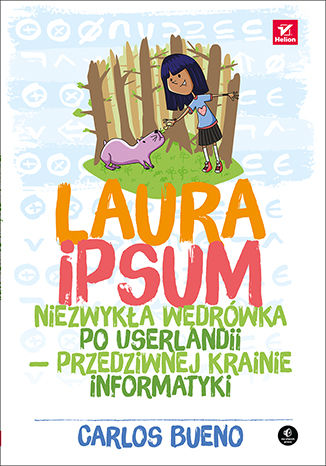
Laura Ipsum. Niezwykła wędrówka po Userlandii - przedziwnej krainie informatyki
Carlos Bueno
Informatyka, nowe technologie i internet stały się nieodzownym elementem naszego świata. Już najmłodsi używają komputera czy smartfona do różnych celów. Oznacza to, że wiedza o tym, czym jest informatyka i jak działa internet, staje się niezbędna i musimy ją przekazywać od najmłodszych lat. Jest to szalenie istotne z jednego względu: najnowsze technologie są niezwykle użyteczne i atrakcyjne, ale niosą ze sobą konkretne zagrożenia. Dobra znajomość podstaw informatyki jest więc w dzisiejszym świecie bardzo ważna — jak tę wiedzę skutecznie przekazać dzieciom? Sięgnij po tę książkę — mogą ją czytać już dziesięciolatki. Nie jest to jednak kolejny nudny podręcznik! To ciekawie napisana, inspirująca historia Laury, która zabłądziła w Userlandii — przedziwnym lesie, Krainie Czarów XXI wieku. Aby wrócić do domu, dziewczynka musi rozwiązać mnóstwo zagadek, odwiedzić wiele różnych miejsc i poznać sporo niesamowitych postaci. Laura, a wraz z nią czytelnik, niemal niepostrzeżenie zdobywa wiedzę z informatyki i podstaw programowania — i to wcale nie przed komputerem. A przy tym wszystkim wspólne, rodzinne czytanie czarującej historii Laury jest świetną zabawą! Dzięki tej książce młody czytelnik: zrozumie kluczowe idee informatyki polubi rozwiązywanie problemów zyska wiedzę o podstawach najnowszych technologii być może zafascynuje się matematyką, filozofią i logiką Daj się zaprosić w niezwykłą podróż po Userlandii! Carlos Bueno — inżynier pracujący dla Facebooka, autor wielu artykułów dotyczących programowania oraz budowy i działania internetu. Z pasją pokazuje najmłodszym, czym jest informatyka i jak działają nowoczesne technologie, za co całkiem niedawno został wyróżniony przez Biały Dom. Ytaelena López — autorka ilustracji, wenezuelska artystka, malarka. Obecnie mieszka i tworzy w San Francisco, w stanie Kalifornia.

Vladimir Dementyev
Rails accelerates web development with its convention-over-configuration principle and MVC pattern. But as your app grows, that simplicity can turn into tangled complexity, making it harder to maintain and extend. The second edition of Layered Design for Ruby on Rails Applications helps tackle this challenge head on, guiding you toward a more scalable and maintainable architecture.Written by a seasoned software engineer and open source contributor to Ruby on Rails, this updated edition refines the proven techniques from the first edition and introduces timely new topics that reflect today’s development challenges. You’ll dive deeper into state machines and workflows, learning how to identify, embed, and eventually isolate them for clarity and resilience. You’ll also explore the exciting frontier of abstractions in the AI era, treating LLMs as APIs, structuring agent layers, and integrating third-party libraries to keep your AI features organized and testable.By embracing layered abstractions, you’ll not only reduce complexity but also improve your ability to adapt to change - whether adding new features, scaling systems, or weaving AI capabilities into your applications.By the end of the book, you’ll be equipped to design clean, extensible, and future-ready Rails applications.*Email sign-up and proof of purchase required

Vladimir Dementyev
The Ruby on Rails framework boosts productivity by leveraging the convention-over-configuration principle and model-view-controller (MVC) pattern, enabling developers to build features efficiently. This initial simplicity often leads to complexity, making a well-structured codebase difficult to maintain. Written by a seasoned software engineer and award-winning contributor to many other open-source projects, including Ruby on Rails and Ruby, this book will help you keep your code maintainable while working on a Rails app.You’ll get to grips with the framework’s capabilities and principles to harness the full potential of Rails, and tackle many common design problems by discovering useful patterns and abstraction layers. By implementing abstraction and dividing the application into manageable modules, you’ll be able to concentrate on specific parts of the app development without getting overwhelmed by the entire codebase. This also encourages code reuse, simplifying the process of adding new features and enhancing the application's capabilities. Additionally, you’ll explore further steps in scaling Rails codebase, such as service extractions.By the end of this book, you’ll become a code design specialist with a deep understanding of the Rails framework principles.
Paul Crickard III
If you are a web developer working with geospatial concepts and mapping APIs, and you want to learn Leaflet to create mapping solutions, this book is for you. You need to have a basic knowledge of working with JavaScript and performing web application development.
Lean Customer Development. Twórz produkty, po które klienci będą ustawiać się w kolejkach
Cindy Alvarez
Znaj klienta swego Zweryfikuj swoją hipotezę, rozmawiając z właściwymi osobami. Krok po kroku naucz się prowadzić skuteczne wywiady Customer Development. Rozpoznawaj zachowania klientów, ich problemy i ograniczenia. Na podstawie pozyskanych w ten sposób informacji zbuduj minimalnie satysfakcjonujący produkt, który pozwoli Ci potwierdzić, co klienci są skłonni kupić i czego będą używać. Dostosuj techniki składające się na model Customer Development do potrzeb dużych organizacji, konserwatywnych branż i istniejących już produktów. Jak tworzyć produkty, które ludzie będą chcieli kupować? Bez względu na to, czy jesteś właścicielem niewielkiej firmy czy pracownikiem wielkiego koncernu, zadajesz sobie to samo pytanie. Jeśli szukasz niezawodnej metody badania potrzeb i preferencji klientów, dzięki której zaoszczędzisz wiele miesięcy pracy oraz mnóstwo pieniędzy, zapraszamy do świata Lean Customer Development. To metoda idąca o krok dalej niż tradycyjne techniki marketingowe. Nie tylko pomoże Ci poznać potrzeby i preferencje klientów oraz zgłębić user experience, ale zweryfikuje tę wiedzę na drodze eksperymentów naukowych. Dzięki odpowiedniemu połączeniu otwartych wywiadów oraz szybkich i elastycznych technik badawczych dowiesz się, jak zachowują się Twoi potencjalni klienci, jakie problemy usiłują rozwiązać, a także co ich frustruje, a co jest przedmiotem ich zachwytów. Dowiedz się, jak zmieniać zachowania konsumentów, tworzyć wielkie produkty i budować trwałą firmę. Książki z serii Lean, serii, której redaktorem jest Eric Ries, założyciel ruchu Lean Startup. Niniejsza książka kładzie nacisk na podstawowe aspekty metodologiczne i zawiera praktyczne przykłady, opracowane z myślą o deweloperach, menedżerach i innych członkach zespołu Twojego startupu. Dzięki niej poznasz skuteczne narzędzia i przyjmiesz sposób myślenia sprzyjający podejmowaniu szybkich i mądrych decyzji.
Lean dla bystrzaków. Wydanie II
Natalie J. Sayer, Bruce Williams
W prostocie tkwi siła™ Otwórz własną firmę na podstawie metody lean Dostarczaj produkty najwyższej jakości i zyskaj przewagę Skutecznie prowadź swoją działalność Niech lean będzie z Tobą! Lean jest nowoczesną metodą pozwalającą przedsiębiorstwom intensywnie działać na rynku, rozwijać się i osiągać zyski. Firmy lean wymagają mniejszego wysiłku od pracowników, zużywają mniej materiału i energii do wytworzenia produktów lub usług, potrzebują mniej czasu i przestrzeni do ich opracowania oraz wyprodukowania. Potrafią lepiej odpowiadać na potrzeby klientów, którym oferują produkty i usługi wysokiej jakości wytworzone w możliwie najbardziej wydajny i ekonomiczny sposób. Ten praktyczny przewodnik pokaże Ci, jak zastosować sprawdzone techniki lean, aby wyeliminować straty i zmaksymalizować skuteczność Twoich zasobów. W książce: Typowe narzędzia, zasady i praktyki lean Sposoby prowadzenia organizacji lean i zarządzania taką firmą Instrukcje mapowania strumienia wartości Pięć rzeczywistych przykładów zastosowania lean w różnych organizacjach Metody stosowania lean w różnych branżach

Lean management po polsku. O dobrych i złych praktykach
Tomasz Król
11 i pół powodu, dlaczego lean, six sigma i kaizen nie działają Każdy przedsiębiorca chciałby, aby jego firma potrafiła działać bardziej elastycznie, nie marnowała zasobów i obniżyła swoje koszty. Odpowiedzią na tę potrzebę jest koncepcja szczupłego zarządzania, która okazała się niezwykle skuteczna w firmach motoryzacyjnych. Po trzydziestu latach od spopularyzowania lean management, six sigma i filozofii kaizen te metody stały się podstawowymi narzędziami usprawniania procesów w firmach produkcyjnych i usługowych. Niestety, próby adaptowania w przedsiębiorstwach koncepcji zarządzania w duchu lean często kończą się niepowodzeniem. Dlaczego tak się dzieje? Tomasz Król dostrzega jedenaście i pół przyczyny, które wymienia w swojej książce. Autor od piętnastu lat pomaga działającym na polskim rynku przedsiębiorstwom doskonalić się w duchu "szczupłego zarządzania". W trakcie swojej pracy zetknął się z wieloma przykładami udanych i nieudanych wdrożeń koncepcji lean. Jest współautorem skutecznego systemu wdrażania, który również opisuje w książce. Skorzystaj z jego doświadczeń i rad przed przystąpieniem do usprawniania własnego biznesu!
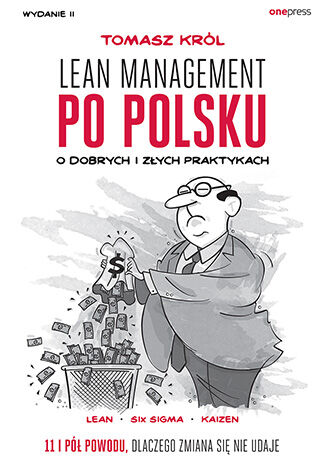
Lean management po polsku. O dobrych i złych praktykach. Wydanie II
Tomasz Król
Szczupłe zarządzanie, które działa Lean management, czyli koncepcja zarządzania zakładająca "wyszczuplanie" firmy, u jednych wywołuje gwałtowny entuzjazm, u innych... dreszcz niepokoju. Wezwanie szefa: "Musimy działać bardziej lean!" bywa odbierane jako komunikat: "Będziemy zwalniać". Szeregowi pracownicy, ale również kierownicy niższego szczebla, a czasem i menedżerowie, zamiast doceniać zalety wysmuklonego zarządzania, serdecznie go nienawidzą i w efekcie, świadomie lub podświadomie, je sabotują. Czy czynią tak z czystej złośliwości? Raczej nie. Prędzej dlatego, że nie rozumieją koncepcji albo nie widzą dla niej zastosowania we własnej zawodowej codzienności. Lean management jawi im się raczej jako dodatkowy problem, a nie rozwiązanie wielu kwestii, z którymi zmagają się w pracy. Skoro tak jest, to znaczy ni mniej, ni więcej, tylko tyle, że szczupłe zarządzanie jest wprowadzane w firmie nieskutecznie. Jak zrobić to efektywnie, tak by nie tylko uniknąć błędów i spełnić pokładane w tej koncepcji nadzieje, ale też by spotkała się ona z pełnym zrozumieniem i akceptacją załogi? Tego dowiesz się z książki Tomasza Króla.