
Informatyka
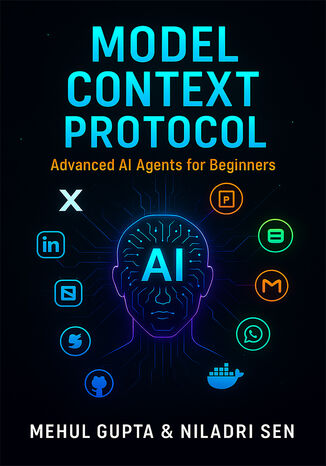
Mehul Gupta, Niladri Sen
This book offers a detailed introduction to the groundbreaking field of AI agents and Model Context Protocol (MCP). The first section delves into generative AI and large language models (LLMs), exploring how these technologies power modern AI systems. From there, the book introduces the concept of AI agents—autonomous systems capable of executing tasks with varying levels of complexity. Moving into practical applications, the book focuses on Model Context Protocol, explaining its key components and how it enables effective interaction between AI and various software tools. Each chapter offers step-by-step instructions for setting up MCP servers for popular tools like Gmail, YouTube, GitHub, and more, empowering readers to automate tasks and streamline workflows. The book concludes by addressing the future of MCP, its potential risks, and how to stay safe while using these advanced technologies. Whether you're a beginner or experienced practitioner, this guide will deepen your understanding of AI and enhance your ability to leverage cutting-edge automation in daily operations.
Model systemu zarządzania indywidualną wiedzą naukową w humanistyce
Anna Matysek
W świecie nadmiaru informacji codziennym wyzwaniem badaczy jest odnajdywanie i selekcjonowanie materiałów, organizowanie literatury przedmiotu i własnych notatek. Proponowany model systemu zarządzania indywidualną wiedzą naukową podpowiada, jak zarządzać wiedzą naukową, jak organizować własną przestrzeń wiedzy naukowej, jakie narzędzia cyfrowe wdrożyć do warsztatu badawczego, by efektywnie wykorzystywać zgromadzony materiał badawczy i tworzyć nową wiedzę w humanistyce. System składa się z elementów podstawowych i uzupełniających - procesów, czynności i narzędzi zarządzania indywidualną wiedzą naukową. Podano przykłady programów komputerowych, ich funkcje i możliwości zastosowania w zarządzaniu wiedzą.

Modele dalszego trwania życia oraz ich zastosowania w przypadku osób starszych
Beata Jackowska
Monografia poświęcona jest metodom i technikom konstrukcji modeli dalszego trwania życia ze szczególnym uwzględnieniem dalszego trwania życia osób starszych. Wobec demograficznego starzenia się społeczeństwa praca wpisuje się w aktualny nurt badań nad umieralnością osób starszych. Zagadnienie modelowania trwania życia leży na styku dziedziny demografii, statystyki i analizy przeżycia. Książka składa się z części teoretycznej i empirycznej. Część teoretyczna stanowi próbę usystematyzowania i wzbogacenia dotychczasowego podejścia badawczego w zakresie estymacji modeli trwania życia w oparciu o różnego rodzaju dane. W części empirycznej przedstawiono specyfikę modelowania rozkładu dalszego trwania życia osób starszych oraz zweryfikowano przydatność przedstawionych metod do wykrywania prawidłowości w procesie wymierania w rozważanej grupie wieku. Plik pdf uniemożliwia kopiowanie tekstu.

Modelowanie wnętrz w 3D z wykorzystaniem bezpłatnych narzędzi
Joanna Pasek
Skąd pobrać i jak zainstalować potrzebne narzędzia? Jak wykonać model w Google SketchUp 8? Jak renderować model i animację w Kerkythei? Nie ma się co oszukiwać, dziś nawet najlepszy projekt aranżacji wnętrza nie ma szans sprzedaży, jeśli nie stoi za nim efektowna, wierna wizualizacja. Naszym klientom naprawdę trudno wyobrazić sobie nasze wzniosłe wizje o tym, jak "chłodny, surowy marmur pięknie skomponuje się z nowym, śliwkowym kolorem wschodniej ściany pokoju…". Oni muszą to przecież zobaczyć! Na szczęście powszechnie wykorzystywane przez architektów, dekoratorów, producentów mebli czy farb kosztowne programy do modelowania wnętrz doczekały się swoich darmowych i równie funkcjonalnych konkurentów. Dzięki temu nawet małe studio projektowe, nie dysponując wielkim budżetem, może wykonywać swoje usługi naprawdę profesjonalnie… a co za tym idzie, skutecznie! Autorka tej książki jest nie tylko specjalistką od grafiki 3D, jest także doświadczonym architektem, dzięki czemu doskonale wie, jakiej wiedzy potrzebujesz, by najlepiej wykorzystać potencjał darmowych narzędzi do modelowania wnętrz. Swoją naukę zaczniesz od poprawnej instalacji niezbędnych programów, ich konfiguracji i oswojenia środowiska pracy. Nauczysz się budować dokładny model wnętrza na podstawie zwymiarowanego rzutu, tworzyć i teksturować modele nietypowych elementów wyposażenia oraz korzystać z gotowych modeli do przyspieszenia pracy nad elementami typowymi (standardowe okna, drzwi, meble kuchenne, sprzęt AGD). Dowiesz się, jak przygotować model do eksportu, wyrenderować go, pracować ze światłem, wprowadzić realistyczne materiały i tło sceny. Na koniec odkryjesz, jak właściwie eksportować i renderować gotową animację. Po tym etapie zdobędziesz już wszystkie niezbędne umiejętności, by tworzyć naprawdę autentyczne, trójwymiarowe prezentacje wnętrz! Instalowanie odpowiednich narzędzi (Google SketchUp, Kerkythea) Rysowanie rzutów, tworzenie prostokątów, łuków, kół i obrysów Modelowanie ścian, tworzenie i wstawianie okien oraz drzwi Praca z materiałami i teksturami Wyposażanie wnętrza w oparciu o własne modele oraz gotowe komponenty Wprowadzanie cieni oraz dodatkowych źródeł światła na użytek programu renderującego Eksportowanie modelu do pliku XML Praca z kamerami, światłami i realistycznymi materiałami Zmiana tła sceny odpowiednio do typu oświetlenia (dzienne, nocne) Renderowanie swojego modelu i animacji Zobacz, jak wykorzystać darmowe narzędzia w tworzeniu profesjonalnych wizualizacji!
Sourabh Sharma
This book is a practical, in-depth guide to using Spring 6 and Spring Boot 3 for building modern, robust web APIs and services. The book leverages the author’s 20 years of industry experience to cover a wide range of topics essential for API development, including RESTful web service fundamentals, Spring concepts, and API specifications.This second edition expands on topics like security, testing, monitoring, and deploying APIs with the latest tools and frameworks, and all the code examples in the book are based on the latest LTS version, Java 17. You’ll explore asynchronous API design, security, designing user interfaces, testing APIs, and the deployment of web services. This book offers a highly contextual real-world sample app that you can use as a reference for building different types of APIs for real-world applications. This sample app will lead you through the entire API development cycle, encompassing design and specification, implementation, testing, and deployment.By the end of this book, you’ll have learned how to design, develop, test, and deploy scalable and maintainable modern APIs using Spring 6 and Spring Boot 3, which has improved support for reactive programming, along with best practices for bolstering the security and reliability of your apps and improving your app's overall functionality.
Manoj R Patil, V Naresh Kumar, Prashant...
The complex structure of data these days requires sophisticated solutions for data transformation, to make the information more accessible to the users.This book empowers you to build such solutions with relative ease with the help of Apache Hadoop, along with a host of other Big Data tools.This book will give you a complete understanding of the data lifecycle management with Hadoop, followed by modeling of structured and unstructured data in Hadoop. It will also show you how to design real-time streaming pipelines by leveraging tools such as Apache Spark, and build efficient enterprise search solutions using Elasticsearch. You will learn to build enterprise-grade analytics solutions on Hadoop, and how to visualize your data using tools such as Apache Superset. This book also covers techniques for deploying your Big Data solutions on the cloud Apache Ambari, as well as expert techniques for managing and administering your Hadoop cluster. By the end of this book, you will have all the knowledge you need to build expert Big Data systems.
Richard Grimes, Marius Bancila
C++ is one of the most widely used programming languages. It is fast, flexible, and used to solve many programming problems.This Learning Path gives you an in-depth and hands-on experience of working with C++, using the latest recipes and understanding most recent developments. You will explore C++ programming constructs by learning about language structures, functions, and classes, which will help you identify the execution flow through code. You will also understand the importance of the C++ standard library as well as memory allocation for writing better and faster programs.Modern C++: Efficient and Scalable Application Development deals with the challenges faced with advanced C++ programming. You will work through advanced topics such as multithreading, networking, concurrency, lambda expressions, and many more recipes.By the end of this Learning Path, you will have all the skills to become a master C++ programmer.This Learning Path includes content from the following Packt products:• Beginning C++ Programming by Richard Grimes• Modern C++ Programming Cookbook by Marius Bancila• The Modern C++ Challenge by Marius Bancila
Marius Bancila
The updated third edition of Modern C++ Programming Cookbook addresses the latest features of C++23, such as the stacktrace library, std::expected and std::mdspan classes, the header, formatting library improvements, and updates to the ranges library. It also gets into more C++20 topics not previously covered, such as sync streams and source_location.The book is organized into practical recipes covering a wide range of real-world problems, helping you find the solutions you need quickly. You’ll find coverage of all the core concepts of modern C++ programming and features and techniques from C++11 through to C++23, meaning you’ll stay ahead of the curve by learning to incorporate the newest language and library improvements.Beyond the core concepts and new features, you’ll explore recipes related to performance and best practices, how to implement useful patterns and idioms, like pimpl, named parameter, attorney-client, and the factory pattern, and how to complete unit testing with the widely used C++ libraries: Boost.Test, Google Test, and Catch2.With the comprehensive coverage this C++ programming guide offers, by the end of the book you’ll have everything you need to build performant, scalable, and efficient applications in C++.
Marius Bancila
C++ is one of the most widely used programming languages. Fast, efficient, and flexible, it is used to solve many problems. The latest versions of C++ have seen programmers change the way they code, giving up on the old-fashioned C-style programming and adopting modern C++ instead.Beginning with the modern language features, each recipe addresses a specific problem, with a discussion that explains the solution and offers insight into how it works. You will learn major concepts about the core programming language as well as common tasks faced while building a wide variety of software. You will learn about concepts such as concurrency, performance, meta-programming, lambda expressions, regular expressions, testing, and many more in the form of recipes. These recipes will ensure you can make your applications robust and fast.By the end of the book, you will understand the newer aspects of C++11/14/17 and will be able to overcome tasks that are time-consuming or would break your stride while developing.
Rafał Świdziński, Alexander Kushnir
Modern CMake for C++ isn't just another reference book, or a repackaging of the documentation, but a blueprint to bridging the gap between learning C++ and being able to use it in a professional setting. It's an end-to-end guide to the automation of complex tasks, including building, testing, and packaging software.This second edition is significantly rewritten, restructured and refreshed with latest additions to CMake, such as support of C++20 Modules.In this book, you'll not only learn how to use the CMake language in CMake projects but also discover how to make those projects maintainable, elegant, and clean. As you progress, you'll dive into the structure of source directories, building targets, and packages, all while learning how to compile and link executables and libraries. You'll also gain a deeper understanding of how those processes work and how to optimize builds in CMake for the best results. You'll discover how to use external dependencies in your project – third-party libraries, testing frameworks, program analysis tools, and documentation generators. Finally, you'll gain profi ciency in exporting, installing, and packaging for internal and external purposes.By the end of this book, you'll be able to use CMake confi dently at a professional level.
Jim Ledin
Computer architecture now extends far beyond CPUs, forming the foundation of cloud platforms, AI systems, cybersecurity solutions, and emerging computing technologies. Modern Computer Architecture and Organization, Third Edition, provides a clear, end-to-end understanding of how today’s computer systems are built and why architectural decisions matter more than ever. You’ll begin with the fundamentals of digital logic, processor elements, memory systems, and the hardware–software interface, building a strong grounding that remains essential for every architect and systems engineer. Next, the book explores modern processor and memory architectures, performance-enhancing techniques, virtualization, and mainstream instruction sets, including x86, ARM, and an in-depth treatment of RISC-V. New and significantly expanded chapters extend this foundation into modern computing domains, including AI and large language model (LLM) computing platforms, GPUs, cloud-scale systems, confidential and security-focused architectures, blockchain and Bitcoin mining systems, self-driving vehicle architectures, and future directions such as quantum computing. This edition reflects today’s AI-driven, cloud-centric, security-aware computing landscape while remaining true to the classical principles that continue to underpin modern computer systems.
Jim Ledin
Are you a software developer, systems designer, or computer architecture student looking for a methodical introduction to digital device architectures but overwhelmed by their complexity? This book will help you to learn how modern computer systems work, from the lowest level of transistor switching to the macro view of collaborating multiprocessor servers. You'll gain unique insights into the internal behavior of processors that execute the code developed in high-level languages and enable you to design more efficient and scalable software systems.The book will teach you the fundamentals of computer systems including transistors, logic gates, sequential logic, and instruction operations. You will learn details of modern processor architectures and instruction sets including x86, x64, ARM, and RISC-V. You will see how to implement a RISC-V processor in a low-cost FPGA board and how to write a quantum computing program and run it on an actual quantum computer. By the end of this book, you will have a thorough understanding of modern processor and computer architectures and the future directions these architectures are likely to take.
V Kishore Ayyadevara, Yeshwanth Reddy
Whether you are a beginner or are looking to progress in your computer vision career, this book guides you through the fundamentals of neural networks (NNs) and PyTorch and how to implement state-of-the-art architectures for real-world tasks.The second edition of Modern Computer Vision with PyTorch is fully updated to explain and provide practical examples of the latest multimodal models, CLIP, and Stable Diffusion.You’ll discover best practices for working with images, tweaking hyperparameters, and moving models into production. As you progress, you'll implement various use cases for facial keypoint recognition, multi-object detection, segmentation, and human pose detection. This book provides a solid foundation in image generation as you explore different GAN architectures. You’ll leverage transformer-based architectures like ViT, TrOCR, BLIP2, and LayoutLM to perform various real-world tasks and build a diffusion model from scratch. Additionally, you’ll utilize foundation models' capabilities to perform zero-shot object detection and image segmentation. Finally, you’ll learn best practices for deploying a model to production.By the end of this deep learning book, you'll confidently leverage modern NN architectures to solve real-world computer vision problems.
Modern Data Architecture on AWS. A Practical Guide for Building Next-Gen Data Platforms on AWS
Behram Irani
Many IT leaders and professionals are adept at extracting data from a particular type of database and deriving value from it. However, designing and implementing an enterprise-wide holistic data platform with purpose-built data services, all seamlessly working in tandem with the least amount of manual intervention, still poses a challenge.This book will help you explore end-to-end solutions to common data, analytics, and AI/ML use cases by leveraging AWS services. The chapters systematically take you through all the building blocks of a modern data platform, including data lakes, data warehouses, data ingestion patterns, data consumption patterns, data governance, and AI/ML patterns. Using real-world use cases, each chapter highlights the features and functionalities of numerous AWS services to enable you to create a scalable, flexible, performant, and cost-effective modern data platform.By the end of this book, you’ll be equipped with all the necessary architectural patterns and be able to apply this knowledge to efficiently build a modern data platform for your organization using AWS services.
Gaurav Agarwal
DevOps and the cloud have changed how we look at software development and operations like never before, leading to the rapid growth of various DevOps tools, techniques, and practices. This updated edition helps you pick up the right tools by providing you with everything you need to get started with your DevOps journey.The book begins by introducing you to modern cloud-native architecture, and then teaches you about the architectural concepts needed to implement the modern way of application development. The next set of chapters helps you get familiarized with Git, Docker, Kubernetes, Ansible, Terraform, Packer, and other similar tools to enable you to build a base. As you advance, you’ll explore the core elements of cloud integration—AWS ECS, GKE, and other CaaS services. The chapters also discuss GitOps, continuous integration, and continuous delivery—GitHub actions, Jenkins, and Argo CD—to help you understand the essence of modern app delivery. Later, you’ll operate your container app in production using a service mesh and apply AI in DevOps. Throughout the book, you’ll discover best practices for automating and managing your development lifecycle, infrastructure, containers, and more.By the end of this DevOps book, you'll be well-equipped to develop and operate applications using modern tools and techniques.
Florian Rappl
Almost a decade after the release of Node.js, the tooling used by frontend developers is fully embracing this cross-platform JavaScript runtime, which is sadly often limited to server-side web development. This is where this Node.js book comes in, showing you what this popular runtime has to offer and how you can unlock its full potential to create frontend-focused web apps.You’ll begin by learning the basics and internals of Node.js, before discovering how to divide your code into modules and packages. Next, you’ll get to grips with the most popular package managers and their uses and find out how to use TypeScript and other JavaScript variants with Node.js. Knowing which tool to use when is crucial, so this book helps you understand all the available state-of-the-art tools in Node.js. You’ll interact with linters such as ESLint and formatters such as Prettier. As you advance, you’ll become well-versed with the Swiss Army Knife for frontend developers – the bundler. You’ll also explore various testing utilities, such as Jest, for code quality verification. Finally, you’ll be able to publish your code in reusable packages with ease.By the end of this web development book, you’ll have gained the knowledge to confidently choose the right code structure for your repositories with all that you’ve learned about monorepos.
Daniel Bugl, Matthias Zronek
Recent trends show deeper integration between the two, opening numerous possibilities for building real-world web applications, through server-side technologies like Node.js, Express, and MongoDB.Written by the author of Learning Redux and Learn React Hooks, and CEO of TouchLay, Modern Full-Stack React Projects will guide you through the entire process of advancing from a frontend developer to a full-stack developer. Starting with how to set up robust projects that can be maintained for a long time, you’ll then progress toward developing a backend system and integrating it with the frontend. Throughout the book, you’ll learn how to build, test, and deploy a blog application and a chat application. You’ll also explore MongoDB, Express, React, Node.js (MERN) stack, best practices for frontend and backend development, different full-stack architectures, unit and end-to-end testing, and deployment of full-stack web applications. Once you get to grips with the essential concepts, you’ll progress to learn how to use Next.js, an enterprise-grade full-stack web framework for React.By the end, you’ll be well-versed in the MERN stack and all set to create performant and scalable full-stack web applications.*Email sign-up and proof of purchase required
Alexandre Malavasi
In the ASP.NET Core ecosystem, choosing the right JavaScript framework is key to addressing diverse project requirements. Witten by a four-time Microsoft MVP with 16 years of software development experience, this book is your comprehensive guide to mastering full-stack development, combining ASP.NET Core’s robust backend capabilities with the dynamic frontend power of Vue.js, Angular, and React.This book uses ASP.NET Core to teach you best practices for integrating modern JavaScript frameworks, and creating responsive, high-performance applications that deliver seamless client–server interactions and scalable RESTful APIs. In addition to building expertise in ASP.NET Core’s core strengths, such as API security, architecture principles, and performance optimization, the chapters will help you develop the essential frontend skills needed for full-stack development. Sections on Blazor take a C#-based approach to creating interactive UIs, showcasing ASP.NET Core’s flexibility in handling both server and client-side needs.By the end of this book, you will have a complete toolkit for designing, deploying, and maintaining complex full-stack applications, along with practical knowledge of both backend and frontend development.*Email sign-up and proof of purchase required
Nikolina Finska
Few things are more annoying for gamers than encountering a buggy new game. This often leads to negative reviews, and in turn, you’ll find that demand for your games declines. The solution lies in better quality assurance (QA) – and Modern Game Testing will show you how to achieve just that. Whether you’re a new tester, developer or producer, the QA testing techniques shown in this book, using modern methodologies and the latest technology, will have you releasing quality games that are on time and, most importantly, on budget.The book begins by introducing you to QA and the various types of tests that are performed on games. You’ll then explore test cases and bug reporting, building tests for different platforms (even consoles and PCs), and LiveOps and test management. As you advance, you’ll build a QA team from scratch and work with remote QA testers. The chapters help you take a more traditional approach to learning lessons, enabling you to examine the modern agile approach and various testing strategies that you can then adopt. All angles are covered with oodles of examples, so you’ll have everything you need to implement QA strategies in your organization.By the end of this book, you’ll have a clear understanding of the modern methodologies of QA testing for games, and be able to build efficient, reliable, and long-lasting QA teams.
Valentina Alto
Generative AI models and AI language models are becoming increasingly popular due to their unparalleled capabilities. This book will provide you with insights into the inner workings of the LLMs and guide you through creating your own language models. You’ll start with an introduction to the field of generative AI, helping you understand how these models are trained to generate new data.Next, you’ll explore use cases where ChatGPT can boost productivity and enhance creativity. You’ll learn how to get the best from your ChatGPT interactions by improving your prompt design and leveraging zero, one, and few-shots learning capabilities. The use cases are divided into clusters of marketers, researchers, and developers, which will help you apply what you learn in this book to your own challenges faster.You’ll also discover enterprise-level scenarios that leverage OpenAI models’ APIs available on Azure infrastructure; both generative models like GPT-3 and embedding models like Ada. For each scenario, you’ll find an end-to-end implementation with Python, using Streamlit as the frontend and the LangChain SDK to facilitate models' integration into your applications.By the end of this book, you’ll be well equipped to use the generative AI field and start using ChatGPT and OpenAI models’ APIs in your own projects.
Modern JavaScript Applications. Keep abreast of the practical uses of modern JavaScript
Narayan Prusty
Over the years, JavaScript has become vital to the development of a wide range of applications with different architectures. But JS moves lightning fast, and it’s easy to fall behind. Modern JavaScript Applications is designed to get you exploring the latest features of JavaScript and how they can be applied to develop high-quality applications with different architectures. Begin by creating a single page application that builds on the innovative MVC approach using AngularJS, then move forward to develop an enterprise-level application with the microservices architecture using Node to build web services. After that, shift your focus to network programming concepts as you build a real-time web application with websockets. Learn to build responsive, declarative UIs with React and Bootstrap, and see how the performance of web applications can be enhanced using Functional Reactive Programming (FRP). Along the way, explore how the power of JavaScript can be increased multi-fold with high performance techniques. By the end of the book, you’ll be a skilled JavaScript developer with a solid knowledge of the latest JavaScript techniques, tools, and architecture to build modern web apps.
Federico Kereki
JavaScript has evolved into a language that you can use on any platform. Modern JavaScript Web Development Cookbook is a perfect blend of solutions for traditional JavaScript development and modern areas that developers have lately been exploring with JavaScript. This comprehensive guide teaches you how to work with JavaScript on servers, browsers, mobile phones and desktops.You will start by exploring the new features of ES8. You will then move on to learning the use of ES8 on servers (with Node.js), with the objective of producing services and microservices and dealing with authentication and CORS. Once you get accustomed to ES8, you will learn to apply it to browsers using frameworks, such as React and Redux, which interact through Ajax with services. You will then understand the use of a modern framework to develop the UI. In addition to this, development for mobile devices with React Native will walk you through the benefits of creating native apps, both for Android and iOS.Finally, you’ll be able to apply your new-found knowledge of server-side and client-side tools to develop applications with Electron.
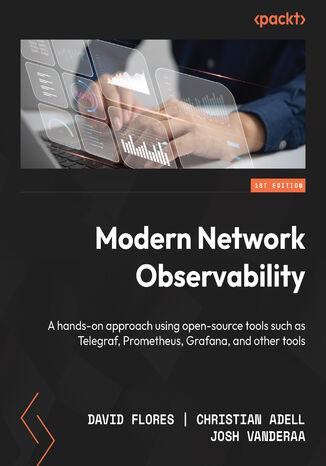
David Flores, Christian Adell, Josh VanDeraa, Eric...
As modern IT services and software architectures such as microservices rely increasingly on network performance, the relevance of networks has never been greater. Network observability has emerged as a critical evolution of traditional monitoring, providing the deep visibility needed to manage today’s complex, dynamic environments. In Modern Network Observability, authors David Flores, Christian Adell, and Josh VanDeraa share their extensive experience to guide you through building and deploying a flexible observability stack using open-source tools.This book begins by addressing the limitations of monolithic monitoring solutions, showing you how to transform them into a composable, flexible observability stack. Through practical implementations, you’ll learn how to collect, normalize, and analyze network data from diverse sources, build intuitive dashboards, and set up actionable alerts that help you stay ahead of potential issues. Later, you’ll cover advanced topics, such as integrating observability data into your network automation strategy, ensuring your network operations align with business objectives.By the end of this book, you'll be able to proactively manage your network, minimize downtime, and ensure resilient, efficient, and future-proof operations.
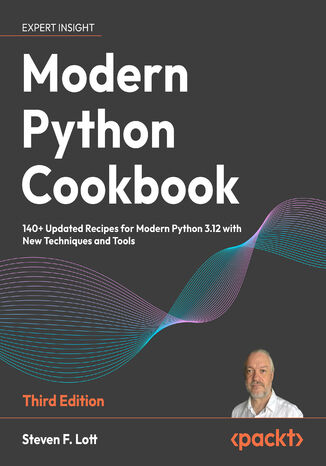
Steven F. Lott
Python is the go-to language for developers, engineers, data scientists, and hobbyists worldwide. Known for its versatility, Python can efficiently power applications, offering remarkable speed, safety, and scalability. This book distills Python into a collection of straightforward recipes, providing insights into specific language features within various contexts, making it an indispensable resource for mastering Python and using it to handle real-world use cases.The third edition of Modern Python Cookbook provides an in-depth look into Python 3.12, offering more than 140 new and updated recipes that cater to both beginners and experienced developers. This edition introduces new chapters on documentation and style, data visualization with Matplotlib and Pyplot, and advanced dependency management techniques using tools like Poetry and Anaconda. With practical examples and detailed explanations, this cookbook helps developers solve real-world problems, optimize their code, and get up to date with the latest Python features.