
Informatyka
Zajrzyj do kategorii Informatyka w księgarni internetowej Ebookpoint. Znajdziesz tutaj bestsellerowe książki, ebooki i kursy video z branży IT. Sięgnij po najlepszą literaturę dla specjalistów i rozwijaj doświadczenie, które już posiadasz, lub rozpocznij swoją przygodę z programowaniem, cyberbezpieczeństwem lub grafiką komputerową. Pogłębiaj swoją wiedzę tak, jak Ci wygodnie - z tradycyjną książką, wygodnym ebookiem lub nowoczesnym videokursem. Sprawdź, jakie tytuły znajdziesz w kategorii Informatyka!
Tomasz Rymarczyk
This monograph aims to synthesize methods, measurement architectures, and algorithms that advance approaches to electrical and ultrasonic tomography, with a particular focus on artificial intelligence in image reconstruction and decision support. The work places these techniques in modern, complex environmental, industrial, and medical diagnostic systems, where non-invasive measurements are required for reliable observation, control, and process optimization. The scope of this work encompasses forward and inverse problems, numerical modelling, and data-driven learning methods, and is based on practical prototypes and verified applications. Tomographic imaging is presented as a family of techniques that infer internal structure based on boundary or remote measurements, enabling inspection without physical intervention. The theoretical foundations are outlined along with historical context and standard formulations of inverse problems, which are ill-posed and sensitive to noise and modelling errors. Established numerical frameworks, such as the Finite Element Method, are used to regularize and solve forward and inverse problems for electric and acoustic fields. These pillars provide a coherent path from physics to computation, and ultimately to images interpreted in an operational context. Artificial intelligence methods were applied to improve reconstruction fidelity, noise immunity, and computational efficiency. The text discusses deterministic frameworks such as Tikhonov, Gauss-Newton, and Total Variation, followed by a discussion of machine learning and deep learning architectures such as LSTM and CNN, along with ResNet, DiffNet, and specifically developed differential models for tomographic signals. The proposed multi-branch and pixel-centric strategies were evaluated using quantitative metrics such as RMSE, SSIM, ICC, Pearson correlation, relative image error, MAE, MAPE, and related metrics that reflect both perceptual and task-specific quality. The combination of physics-based modeling and prior knowledge has been shown to reduce inference time and increase noise tolerance compared to classical iterative solvers. A significant portion of the monograph is devoted to the design and evolution of measurement devices. Electrical and hybrid tomographs, next-generation ultrasound tomographs, a beamforming platform, and specialized flaw detection solutions are designed and characterized. Portable and mobile configurations, along with body potential mapping, are used to extend tomographic detection capabilities to include outpatient and situational monitoring. The measurement layer is integrated with distributed acquisition, synchronization, and embedded processing, allowing the systems to operate within industrial and clinical constraints. Applications in process engineering and medicine are presented. Fermentation control, crystallization monitoring, and autonomous process supervision illustrate industrial utility, including connections to the Internet of Things and real-time data infrastructure. Medical research includes non-invasive lung monitoring, portable diagnostics, and ultrasound brain detection, as well as portable hybrid ultrasound impedance solutions for lower urinary tract assessment. Non-destructive testing is addressed using advanced ultrasound imaging on the DefectoVision platform, which describes 3D reconstruction and quantitative assessment. These cases demonstrate that tomographic sensing can reveal internal states, detect anomalies, and support inspection without disrupting production or compromising safety. The book is designed to guide the reader from fundamentals to implementations and verified use cases. Chapter 1 introduces tomographic imaging, the physical principles underlying electrical and ultrasound techniques, and the challenges of the inverse problem. Chapter 2 discusses reconstruction methods, from deterministic regularization to machine learning and deep learning, along with evaluation metrics. Chapter 3 documents the designed measurement devices along with their electronics, sensor geometry, and system characteristics. Chapter 4 develops reconstruction processes based on simulated and experimental datasets and discusses comparative performance, including hybrid and 3D approaches. Chapter 5 consolidates applications in industrial processes and medical diagnostics, presenting experimental setups, results, and discussions that link quantitative metrics to operational requirements. Chapter 6 concludes with a summary, conclusions, and perspectives for further development. This publication is aimed at researchers and PhD students in the fields of sensors, inverse problems, and computational imaging, as well as engineers and practitioners responsible for process control, non-destructive testing, and medical technology assessment. The material was developed autonomously, with theoretical assumptions, numerical methods, device descriptions, and application studies, so that knowledge can be transferred from laboratory prototypes to real systems. This work was developed thanks to the research community and collaboration at the Netrix S.A. Research and Development Centre and the Institute of Information Technology and Innovative Technologies at the WSEI University in Lublin. Appreciation is expressed to my colleagues who collaborated with me on research projects in the areas of device prototyping, data acquisition, and algorithm development, which translated concepts into working systems. We also extend our gratitude to the reviewers, whose insightful comments contributed to improved clarity and completeness, and to our family for their continued support. The presented projects were developed to demonstrate how intelligent tomographic measurement systems can be constructed and deployed as reliable imaging, monitoring, and control tools. This synthesis of physics-based modelling and learning-based reasoning will be useful to both academia and industry seeking to implement practical, large-scale tomography.
Artificial Intelligence in the 21st Century. The Future of Technology and Human Innovation
Mercury Learning and Information, Stephen Lucci, Sarhan...
This third edition provides a comprehensive, accessible presentation of AI, including examples, applications, full-color images, and human interest boxes. New chapters on deep learning, AI security, and AI programming keep the content cutting-edge. Topics like neural networks, genetic algorithms, natural language processing, planning, and complex board games are covered.The course starts with an AI overview, moving through uninformed search, intelligent search methods, and game-based strategies. It delves into logic in AI, knowledge representation, production systems, uncertainty in AI, and expert systems. Middle chapters cover machine learning, neural networks, and deep learning. It continues with nature-inspired search methods, natural language processing, and automated planning, ending with robotics and advanced computer games.These AI concepts are crucial for developing sophisticated AI applications. This book transitions you from novice to proficient AI practitioner, equipped with practical skills and comprehensive knowledge. Companion files with resources, simulations, and figures enhance learning. By the end, you'll understand AI principles and applications, ready to tackle real-world challenges.
Mercury Learning and Information, Oswald Campesato
This book introduces AI, then explores machine learning, deep learning, natural language processing (NLP), and reinforcement learning. Readers learn about classifiers like logistic regression, k-NN, decision trees, random forests, and SVMs. It delves into deep learning architectures such as CNNs, RNNs, LSTMs, and autoencoders, with Keras-based code samples supplementing the theory.Starting with a foundational AI overview, the course progresses into machine learning, explaining classifiers and their applications. It continues with deep learning, focusing on architectures like CNNs and RNNs. Advanced topics include LSTMs and autoencoders, essential for modern AI. The book also covers NLP and reinforcement learning, emphasizing their importance.Understanding these concepts is vital for developing advanced AI systems. This book transitions you from beginner to proficient AI practitioner, combining theoretical knowledge and practical skills. Appendices on Keras, TensorFlow 2, and Pandas enrich the learning experience. By the end, readers will understand AI principles and be ready to apply them in real-world scenarios.
Prateek Joshi
Artificial Intelligence is becoming increasingly relevant in the modern world. By harnessing the power of algorithms, you can create apps which intelligently interact with the world around you, building intelligent recommender systems, automatic speech recognition systems and more.Starting with AI basics you'll move on to learn how to develop building blocks using data mining techniques. Discover how to make informed decisions about which algorithms to use, and how to apply them to real-world scenarios. This practical book covers a range of topics including predictive analytics and deep learning.
Álvaro Morena Alberola, Gonzalo Molina Gallego, Unai...
Artificial Vision and Language Processing for Robotics begins by discussing the theory behind robots. You'll compare different methods used to work with robots and explore computer vision, its algorithms, and limits. You'll then learn how to control the robot with natural language processing commands. You'll study Word2Vec and GloVe embedding techniques, non-numeric data, recurrent neural network (RNNs), and their advanced models. You'll create a simple Word2Vec model with Keras, as well as build a convolutional neural network (CNN) and improve it with data augmentation and transfer learning. You'll study the ROS and build a conversational agent to manage your robot. You'll also integrate your agent with the ROS and convert an image to text and text to speech. You'll learn to build an object recognition system using a video.By the end of this book, you'll have the skills you need to build a functional application that can integrate with a ROS to extract useful information about your environment.

Arystoteles na nowo odczytany. Ryszarda Kilvingtona
Elżbieta Jung
Książka jest efektem wieloletnich badań dotyczących historii nauki średniowiecznej, mianowicie początków fizyki matematycznej. Można w niej wyodrębnić dwie części: monografię, w której autorka odpowiada na pytanie, czy XIV-wieczna fizyka matematyczna, inspirowana nominalistyczną filozofią Wilhelma Ockhama, doprowadziła do zerwania z jakościową fizyką Arystotelesa już w wieku XIV, oraz – tłumaczenie Kwestii o ruchu Ryszarda Kilvingtona, jednego z twórców szkoły Oksfordzkich Kalkulatorów. Z pozycji nominalistycznej, z jednej strony odrzuca on dużą część podejmowanej przez Arystotelesa problematyki, z drugiej zaś, wypełniając obowiązki nauczycielskie na średniowiecznym uniwersytecie, poddaje teorie Stagiryty interpretacji pozwalającej odnaleźć w jego myśli elementy bliskie – jak się Kilvingtonowi wydaje – jego poglądom. W swoich kwestiach Kilvington podejmuje analizę zagadnienia zmian, rozumianych, zgodnie z definicją Arystotelesa, jako ruch przestrzenny, zmiany jakościowe oraz ilościowe w ujęciu nominalistycznym, czyniąc matematykę właściwym językiem opisu przyrody. Są one też rezultatem jego nauczania, czasami zapisu ćwiczeń odbywanych w klasie ze studentami, zatem tekst ten ma również walor historyczny, ponieważ pokazuje nam, jak wielkie wymagania stawiano studentom średniowiecznym i jak dobrze się z nich wywiązywali. Jakiego rodzaju były to „obliczenia” i jakie dzięki nim można osiągnąć rezultaty, Czytelnik dowie się z lektury książki.
ASP.NET 3.5 CMS Development. Build, Manage, and Extend your own Content Management System
Curt Christianson, Jeff Cochran
ASP.NET 3.5 is equipped with a built-in security system, standard design templates, and easy configurations for database connections, which make it the ideal language for building a content management system. With the strong community support for the ASP.NET platform, you can be assured that what you write today will be around and supported for years to come. You can imagine how easy it is to get lost in the myriad features especially if you are a newcomer.This book shows you how to make use of ASP.NET's features and create a functional Content Management System quickly and conveniently. You will learn how to build your site and see the different ways in which you can customize your code to fit your needs. With this book in hand, you can easily set up users and groups, create valuable content for your users, and manage the layout of your site efficiently. All you need is a basic understanding of coding and a desire to learn, and this book will take care of the rest.This book will teach you to get your site up and running quickly, and maintain its content even if you have little or no web design or programming experience. It will give you all the knowledge you need to use the tools as well as the code required to make yourself a strong developer far beyond your site. It begins with setting up your programming environment and coding a Content Management System. You will learn how to install and configure a database and connect it to your CMS. You will be able to create content and manage the layout of your site, and also make it available beyond the browser. At the end of this book, you will have designed and built a CMS that allows you to administer an Articles section, Images and Files sections, as well as a full set of Administrator tools for your site.
Jesse Liberty, Dan Maharry, Dan Hurwitz
Kompletne źródło informacji na temat ASP.NET! Jak maksymalnie wykorzystać możliwości Visual Studio? Jakie tajemnice kryje język LINQ? Jak tworzyć bezpieczne aplikacje internetowe? Aplikacje internetowe cieszą się wciąż rosnącą popularnością. Na rynku narzędzi do ich tworzenia można znaleźć wiele rozwiązań, a wśród nich jedno wyjątkowe — platformę .NET. Pozwala ona na wykorzystanie dowolnego obsługiwanego przez nią języka programowania do tworzenia dynamicznych, interaktywnych i atrakcyjnych rozwiązań internetowych. Wybierając platformę .NET, otrzymasz dostęp do wielu dodatkowych narzędzi i — co najważniejsze — do wiedzy zgromadzonej przez całą używającą jej społeczność. Niezliczona liczba stron, artykułów i osób chętnych do pomocy sprawia, że rozwiązanie nawet najbardziej skomplikowanego problemu staje się łatwiejsze. Dzięki tej książce zdobędziesz wiedzę pozwalającą Ci na swobodne poruszanie się w świecie aplikacji internetowych opartych o .NET. Nauczysz się w maksymalny sposób wykorzystywać możliwości środowiska Visual Studio 2008, poznasz dostępne kontrolki oraz sprawdzisz, do czego może Ci się przydać ADO.NET. Ponadto odkryjesz tajemnice języka LINQ i zasady, których przestrzeganie zapewni bezpieczeństwo Twojej aplikacji. W kolejnych rozdziałach autorzy przedstawią Ci metody tworzenia usług sieciowych, zwiększania wydajności poprzez buforowanie oraz konfiguracji serwera IIS 7.0. Książka ta pozwoli Ci w łatwy sposób wykonać pierwszy krok w świat dynamicznych stron WWW, tworzonych z wykorzystaniem ASP.NET. Praca w zintegrowanym środowisku programistycznym Visual Studio 2008 Podstawowe kontrolki oraz kontrolki pozwalające na dostęp do danych Dostęp do baz danych z wykorzystaniem ADO.NET Zastosowanie języka LINQ Gwarancja poprawności danych Zapewnienie bezpieczeństwa aplikacji internetowej Tworzenie stron wzorcowych Przygotowanie usług sieciowych Protokoły i standardy usług sieciowych Poprawa wydajności poprzez zastosowanie buforowania Konfiguracja serwera IIS 7.0 Debugowanie kodu i śledzenie jego wykonania Wdrażanie aplikacji w środowisku lokalnym i globalnym Przydatne skróty klawiaturowe Poznaj możliwości jednej z najpopularniejszych platform do tworzenia dynamicznych stron WWW!
Andrew Siemer
Each chapter starts by showing the user experience we are going to create in the chapter. It then has a section discussing the major design decisions we face in building these features, and finally presents the 'solution' – including the overall architecture and highlighting the most important code elements. The book presents a lot of real-world code, with comprehensive explanation and discussion. The full social network application is available for download from the Packt website, for you to examine, study, and modify. This book is written for ASP.NET and C# developers who want to build an enterprise-grade Social Network, either for their own business purposes or as a contract job for another company. The book assumes you have prior experience of developing web applications using ASP.NET 3.5, C# 3.0, SQL Server 2005/2008, and Visual Studio .NET 2008; it focuses on topics that will be of interest to existing developers – not on providing step-by-step examples for each detail.
ASP.NET 3.5. Tworzenie portali internetowych w nurcie Web 2.0
Omar AL Zabir
Poznaj sekrety zaawansowanych technologii budowy portali internetowych Web 2.0 Jak zaprojektować witrynę dla platformy ASP.NET i ASP.NET AJAX? Jak rozbudować serwis zgodnie z zasadami ergonomii? Jak zwiększyć wydajność serwera? Portale sieciowe Web 2.0, opierające się na technologii AJAX, umożliwiają użytkownikom personalizowanie stron, a także agregowanie danych z różnych źródeł. Wszystko to sprawia, że są doskonałymi serwisami korporacyjnymi i należą do najefektywniejszych aplikacji sieciowych. Zastosowanie mechanizmów AJAX pozwala na udostępnienie interaktywnego i rozbudowanego interfejsu, działającego znacznie szybciej i bardziej wydajnie niż w tradycyjnych serwisach. Natomiast wykorzystanie widżetów (komponentów typu plag-and-play) zapewnia przejrzystość architektury portalu i łatwość jego rozbudowy, ponieważ są one opracowywane niezależnie od warstwy rdzeniowej systemu. Książka "ASP.NET 3.5. Tworzenie portali internetowych w nurcie Web 2.0" zawiera opis najnowszych metod i technologii projektowania oraz budowy portali z wykorzystaniem platformy ASP.NET i środowiska ASP.NET AJAX. W podręczniku przedstawiono także praktyczne rozwiązania problemów związanych z projektowaniem, wdrażaniem, utrzymaniem, a także skalowaniem i usprawnianiem serwisu. Dzięki tej pozycji poznasz poszczególne fazy budowy prototypowego portalu, zaawansowane techniki technologii AJAX oraz sposoby optymalizacji kodu. Nauczysz się m. in. przygotowywać widżety klienckie za pomocą kodu JavaScript, tworzyć własne mechanizmy obsługi wywołań, zwiększać wydajność serwera i skalowalność usług sieciowych. Zdobędziesz zatem całą potrzebną Ci wiedzę i umiejętności, które pozwolą zbudować stabilny, nowoczesny i bezpieczny portal internetowy. Wprowadzenie do budowy portali internetowych Architektura portali i widżetów Projekt warstwy sieciowej w środowisku ASP. NET AJAX Projekt warstwy danych i warstwy biznesowej na platformie NET 3.5 Widżety klienckie Optymalizacja pracy środowiska ASP.NET AJAX Tworzenie asynchronicznych i transakcyjnych usług sieciowych z uwzględnieniem buforowania danych Skalowalność usług sieciowych Zwiększenie wydajności serwera i klienckiej części aplikacji Zarządzanie witryną Zaprojektuj bardzo wydajną i supernowoczesną witrynę internetową
Jonathan R. Danylko
As .NET 8 emerges as a long-term support (LTS) release designed to assist developers in migrating legacy applications to ASP.NET, this best practices book becomes your go-to guide for exploring the intricacies of ASP.NET and advancing your skills as a software engineer, full-stack developer, or web architect.This book will lead you through project structure and layout, setting up robust source control, and employing pipelines for automated project building. You’ll focus on ASP.NET components and gain insights into their commonalities. As you advance, you’ll cover middleware best practices, learning how to handle frontend tasks involving JavaScript, CSS, and image files. You’ll examine the best approach for working with Blazor applications and familiarize yourself with controllers and Razor Pages. Additionally, you’ll discover how to leverage Entity Framework Core and exception handling in your application. In the later chapters, you’ll master components that enhance project organization, extensibility, security, and performance.By the end of this book, you’ll have acquired a comprehensive understanding of industry-proven concepts and best practices to build real-world ASP.NET 8.0 websites confidently.
ASP.NET AJAX. Programowanie w nurcie Web 2.0
Christian Wenz
Wykorzystaj najlepsze rozwiązania technologii AJAX i stwórz interaktywną stronę internetową Jak wykorzystywać dane serwerowe? Jak tworzyć i udostępniać własne kontrolki? Jak aktualizować część strony w regularnych odstępach czasu? Zastanawiałeś się, dlaczego interaktywne witryny cieszą się dziś taką popularnością? Dzieje się tak głównie dlatego, że wymagają one od użytkowników współuczestnictwa w tworzeniu i rozwoju serwisu, a tym samym powodują, że abonenci mają duży wpływ na jego ostateczny kształt. Dzięki temu każdy odbiorca korzysta z atrakcyjnej witryny idealnie dopasowanej do swoich potrzeb. To właśnie ASP.NET AJAX umożliwia projektowanie profesjonalnych, interaktywnych stron WWW w duchu Web 2.0. Znawcy tematu zapewniają, że AJAX jest rozwiązaniem przyszłościowym w dziedzinie projektowania serwisów internetowych. O tym, jak za pomocą tej technologii wdrożyć w swoim serwisie rozwiązania zgodne z filozofią Web 2.0, dowiesz się właśnie z tego podręcznika. W książce "ASP.NET AJAX. Programowanie w nurcie Web 2.0" zamieszczono, oprócz teoretycznych wiadomości, mnóstwo przykładów demonstrujących działanie najważniejszych mechanizmów środowiska ASP.NET AJAX. Przedstawione rozwiązania mają bardzo ogólny charakter, a zatem możesz szybko dostosować je do potrzeb własnej aplikacji. Korzystając z tego podręcznika, nauczysz się m.in. projektować własne kontrolki i udostępniać je w serwisie Toolkit, poznasz zasady korzystania ze standardowych bibliotek AJAX-a w innych środowiskach (np. PHP). Będziesz umiał zbudować profesjonalną, dynamiczną stronę internetową, bazującą na platformie ASP.NET AJAX. Struktura i architektura środowiska ASP.NET AJAX JavaScript Rozszerzenia ASP.NET AJAX Usługi sieciowe Odświeżanie części strony -- obiekt UpdatePanel Lokalizacja i globalizacja aplikacji ASP.NET Control Toolkit Animacja na stronie WWW Wiązanie i walidacja danych Zachowania i komponenty Dokumentacja klasy XMLHttpRequest i modelu DOM Płyń z nurtem nowoczesności -- twórz elektryzujące, interaktywne strony WWW!
James Singleton
ASP.NET Core is the new, open source, and cross-platform, web-application framework from Microsoft. It's a stripped down version of ASP.NET that's lightweight and fast. This book will show you how to make your web apps deliver high performance when using it.We'll address many performance improvement techniques from both a general web standpoint and from a C#, ASP.NET Core, and .NET Core perspective. This includes delving into the latest frameworks and demonstrating software design patterns that improve performance.We will highlight common performance pitfalls, which can often occur unnoticed on developer workstations, along with strategies to detect and resolve these issues early. By understanding and addressing challenges upfront, you can avoid nasty surprises when it comes to deployment time.We will introduce performance improvements along with the trade-offs that they entail. We will strike a balance between premature optimization and inefficient code by taking a scientific- and evidence-based approach. We'll remain pragmatic by focusing on the big problems.By reading this book, you'll learn what problems can occur when web applications are deployed at scale and know how to avoid or mitigate these issues. You'll gain experience of how to write high-performance applications without having to learn about issues the hard way.You'll see what's new in ASP.NET Core, why it's been rebuilt from the ground up, and what this means for performance. You will understand how you can now develop on and deploy to Windows, Mac OS X, and Linux using cross-platform tools, such as Visual Studio Code.
Onur Gumus, Mugilan T. S. Ragupathi
The book sets the stage with an introduction to web applications and helps you build an understanding of the tried-and-true MVC architecture. You learn all about views, from what is the Razor view engine to tagging helpers. You gain insight into what models are, how to bind them, and how to migrate database using the correct model. As you get comfortable with the world of ASP.NET, you learn about validation and routing. You also learn the advanced concepts, such as designing Rest Buy (a RESTful shopping cart application), creating entities for it, and creating EF context and migrations. By the time you are done reading the book, you will be able to optimally use ASP.NET to develop, unit test, and deploy applications like a pro.
ASP.NET Core 6 and Angular. Full-stack web development with ASP.NET 6 and Angular 13 - Fifth Edition
Valerio De Sanctis
Every full-stack ninja needs the tools to operate on front-end and back-end application development. This web app development book takes a hands-on, project-based approach to provide you with all the tools and techniques that web developers need to create, debug, and deploy efficient web applications using ASP.NET Core and Angular.The fifth edition has been updated to cover advanced topics such as Minimal APIs, Web APIs with GraphQL, real-time updates with SignalR, and new features in .NET 6 and Angular 13.You begin by building a data model with Entity Framework Core, alongside utilizing the Entity Core Fluent API and EntityTypeConfiguration class. You'll learn how to fetch and display data and handle user input with Angular reactive forms and front-end and back-end validators for maximum effect.Later, you will perform advanced debugging and explore the unit testing features provided by xUnit.net (.NET 6) and Jasmine, as well as Karma for Angular. After adding authentication and authorization to your apps, you will explore progressive web applications, learning about their technical requirements, testing processes, and how to convert a standard web application to a PWA.By the end of this web development book, you will understand how to tie together the front-end and back-end to build and deploy secure and robust web applications.
Valerio De Sanctis
If you want to learn how to use ASP.NET Core with Angular effectively, this hands-on guide is for you.Improve the way you create, debug, and deploy web applications while keeping up to date with the latest developments in .NET 8 and modern Angular, including .NET Minimal APIs and the new Angular standalone API defaults.You’ll begin by setting up SQL Server 2022 and building a data model with Entity Framework Core. You’ll progress to fetching and displaying data, handling user input with Angular reactive forms, and implementing front-end and back-end validators for maximum effect. After that, you will perform advanced debugging and explore unit testing features with xUnit for .NET, and Jasmine and Karma for Angular. You’ll use Identity API endpoints in ASP.NET Core and functional route guards in Angular to add authentication and authorization to your apps. Finally, you’ll learn how to deploy to Windows, Linux, and Azure.By the end of this book, you will understand how to tie together the front-end and back-end to build and deploy secure and robust web applications.
Albert S. Tanure
Build cutting-edge web applications using ASP.NET Core 9 with this comprehensive guide from Microsoft MVP Albert Tanure, a seasoned .NET expert with over 20 years of experience as a cloud solutions architect. Albert brings unparalleled expertise in building modern web applications to ASP.NET Core 9 Essentials to help you kickstart your journey on the right foot.Starting with the platform’s fundamental concepts, you’ll work through practical exercises to develop web applications with powerful UI frameworks, deliver flexible and scalable solutions through an API approach, and explore advanced topics such as customizing request flows and implementing robust security measures. You’ll get to grips with cloud-native practices to prepare your applications for cloud environments. Whether you’re a beginner or an experienced developer, this book is your guide to building modern, secure, and adaptable web applications with ASP.NET Core.By the end, you'll have the skills to create professional web applications that are scalable, resilient, and secure.
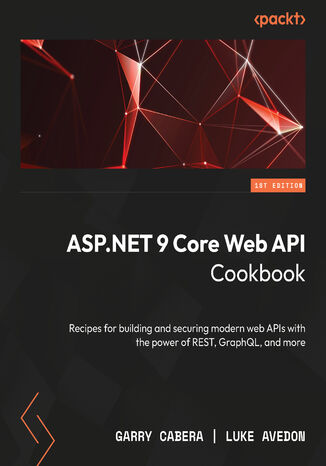
Luke Avedon, Garry Cabrera
Discover what makes ASP.NET Core 9 a powerful and versatile framework for building modern web APIs that are both scalable and secure. This comprehensive, recipe-based guide leverages the authors’ decade-long experience in software development to equip developers with the knowledge to create robust web API solutions using the framework's most powerful features.Designed for intermediate to advanced .NET developers, this cookbook contains hands-on recipes that demonstrate how to efficiently build, optimize, and secure APIs using this cutting-edge technology. You'll master essential topics, such as creating RESTful APIs, implementing advanced data access strategies, securing your APIs, creating custom middleware, and enhancing your logging capabilities. The book goes beyond traditional API development by introducing GraphQL, SignalR, and gRPC, offering insights into how these technologies can extend the reach of your APIs. To prepare you for real-world challenges, the recipes cover testing methodologies, cloud deployment, legacy system integration, and advanced concepts like microservices and Hangfire.By the end of this book, you’ll gain the expertise needed to build and manage enterprise-grade web APIs with ASP.NET Core 9.*Email sign-up and proof of purchase required
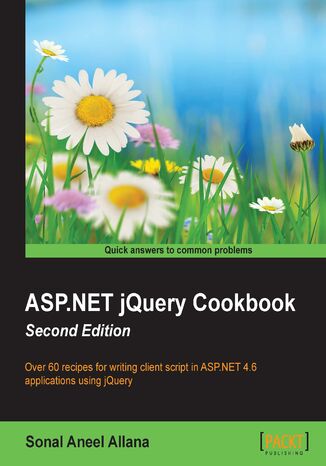
Sonal Aneel Allana
jQuery is a lightweight JavaScript library that has changed the landscape of client scripting in web applications. Developed by John Resig in 2006, it has taken the web by storm because of its cross-browser compatibility and the ability to get more done with less code. It has gained popularity with ASP.NET developers and is now distributed with Visual Studio and the NuGet package manager. ASP.NET jQuery Cookbook explores the wide range of utilities that the jQuery library provides. It teaches you the nitty-gritty of plugging in these features in ASP.NET web applications. It covers every aspect of interfacing the library, right from downloading and including jQuery on web pages to selecting controls, handling events, and creating animations. This book also walks you through DOM traversal and manipulation in ASP.NET and then through visual effects and graphics in ASP.NET sites. It explores advanced features such as posting AJAX requests and writing plugins. It will provide you with all the information you need to use this library confidently with ASP.NET.
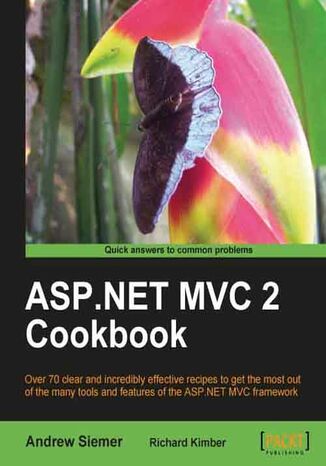
Andrew Siemer
ASP.NET MVC, one of the latest web development platforms from Microsoft, brings the power of MVC programming to ASP.NET development. It simplifies the task of application development and maintenance for developers. However, ASP.NET MVC is filled with so many features that developers end up looking for solutions to the many problems that are encountered in their routine development tasks.ASP.NET MVC 2 Cookbook will provide solutions for the very specific problems that are encountered while developing applications with the ASP.NET MVC platform. It consists of many recipes containing step-by-step instructions that guide developers to effectively use the wide array of tools and features of ASP.NET MVC platform for web development ASP.NET MVC Cookbook is a collection of recipes that will help you to perform your routine development tasks with ease using the ASP.NET MVC platform. In this book you will be walked through the solution to several specific web application development problems. Each recipe will walk you through the creation of a web application, setting up any Visual Studio project requirements, adding in any external tools, and finally the programming steps needed to solve the problem. The focus of the book is to describe the solution from start to finish.The book starts off with recipes that demonstrate how to work effectively with views and controllers – two of the most important ingredients of the ASP.NET MVC framework. It then gradually moves on to cover many advanced routing techniques. Considering the importance of having a consistent structure to the site, the book contains recipes to show how to build a consistent UI and control its look with master pages. It also contains a chapter that is packed with many recipes that demonstrate how to gain control of data within a view.As the book progresses through some exciting recipes on performing complex tasks with forms, you will discover how easy it is to work with forms to jazz up the look of your web site. Building large applications with ease is one of the prime features of the MVC model. Therefore, this book also focuses on tools and features that make building large applications easier to manage. As data plays an important role in the MVC architecture, there are ample recipes dedicated to cover data validation, access, and storage techniques. Finally, the book demonstrates how to enhance the user experience of your visitors by controlling the data at the application, session, caching, and cookie level.By the end of this book, you will have explored a wide array of tools and features available with the ASP.NET MVC platform
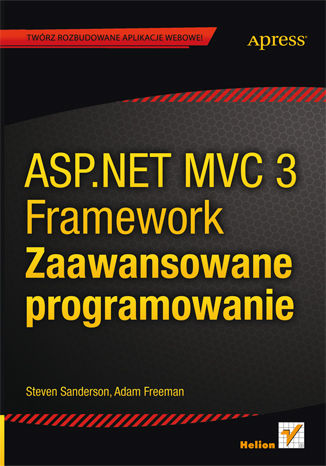
ASP.NET MVC 3 Framework. Zaawansowane programowanie
Steven Sanderson, Adam Freeman
Twórz rozbudowane aplikacje webowe! ASP.NET MVC 3 to kolejny krok w ewolucji platformy ASP.NET firmy Microsoft. W tej bibliotece programowania witryn WWW połączono efektywność i schludność architektury model-widok-kontroler (MVC), najnowsze pomysły i techniki programowania zwinnego oraz najlepsze części istniejącej platformy ASP.NET. Jest ona więc alternatywą dla tradycyjnych projektów ASP.NET Web Forms i ma nad tą platformą znaczną przewagę. Szkielet ASP.NET MVC 3 pozwoli Ci błyskawicznie stworzyć skalowalne, łatwe w utrzymaniu i rozwijaniu aplikacje internetowe, a jego wykorzystanie da Ci niepowtarzalną szansę dziecinnie łatwego stosowania testów jednostkowych i podejścia TDD (ang. test driven development). Co jeszcze możesz zyskać dzięki ASP.NET MVC 3? O tym przekonasz się w trakcie lektury tej wyjątkowej książki. Jej autorzy przyjęli słuszną, zasadę, że dobry przykład mówi więcej niż kilka stron suchej teorii. Zobaczysz więc, jak wzorzec MVC sprawdza się w praktyce, jakie są jego zalety i wady oraz jak unikać typowych pułapek. Nauczysz się korzystać z filtrów, konfigurować kontrolery oraz projektować wydajny model. W dzisiejszych czasach bezpieczeństwo aplikacji stawiane jest na pierwszym miejscu, dlatego szczególną uwagę powinieneś zwrócić na rozdział poświęcony zabezpieczaniu stworzonego przez Ciebie rozwiązania. Ta książka to kompletna pozycja dla każdego programisty ASP.NET. Sięgnij po nią i przekonaj się, że: wzorzec MVC ułatwia pracę jego zastosowanie korzystnie wpływa na jakość kodu bezpieczeństwo aplikacji jest najważniejsze implementacja wzorca MVC nie musi być trudna! Wykorzystaj nowoczesne wzorce w Twoich projektach!
Andrew Scott Meadows
The ASP.NET MVC 4 framework is used to build scalable web applications with the help of design patterns and .NET Framework. The Model-View-Controller (MVC) is a design principle which separates the components of a web application. This separation helps you to modify, develop, and test different components of a web application.ASP.NET MVC 4 Mobile App Development helps you to develop next generation applications, while guiding you to deal with the constraints the mobile web places on application development. By the end of the book, you will be well versed with all the aspects of mobile app development.ASP.NET MVC 4 Mobile App Development introduces you to developing mobile web apps using the ASP.NET MVC 4 framework. Walking you through the process of creating a homebrew recipe sharing application, this book teaches you the fundamentals and concepts relevant to developing Internet-ready mobile-enabled web apps. Through the sample application, you will learn how to secure your apps against XSS and CSRF attacks, open up your application to users using third party logins such as Google or Facebook, and how to use Razor, HTML 5, and CSS 3 to create custom views and content targeting mobile devices. Using these custom views, you will then learn how to create web apps with a native mobile device feel using jQuery mobile. By the end of the book, you will be presented with a set of challenges to prove to yourself that you now have the skills to extend your existing web applications to the mobile web or create new mobile web apps.
Jess Chadwick, Todd Snyder, Hrusikesh Panda
Wykorzystaj potencjał ASP.NET! Platforma ASP.NET to główny konkurent języka Java w zakresie tworzenia aplikacji internetowych oraz zaawansowanych stron internetowych. Jej autorzy zadbali o to, aby każda kolejna wersja ułatwiała pracę programistom w coraz szerszym zakresie. Programiści to doceniają i ASP.NET znajduje się wśród języków najczęściej wybieranych przy tworzeniu zaawansowanych projektów. Jeżeli chcesz w pełni wykorzystać potencjał ASP.NET MVC 4, przyda Ci się wyjątkowa książka. Ta, którą trzymasz w rękach, bez wątpienia taka jest! W trakcie lektury poznasz niuanse architektury MVC oraz dowiesz się, jak tworzyć sieciowe API. Ponadto wykorzystasz Entity Framework do wydajnego korzystania z baz danych oraz zaznajomisz się ze sposobami na równoległe przetwarzanie żądań. Szczególną uwagę powinieneś zwrócić na rozdział poświęcony zapewnieniu jakości — wykorzystanie testów automatycznych znacząco ułatwi Ci życie! Książka ta powinna trafić na podręczną półkę każdego programisty ASP.NET! Sięgnij po tę książkę i: poznaj wzorzec MVC stwórz zaawansowane Web API zobacz, jak uatrakcyjnić Twoją aplikację dzięki technologii AJAX zbuduj bezpieczną aplikację zbuduj system testów automatycznych oraz ciągłej integracji Poznaj i wykorzystaj możliwości ASP.NET w Twoim projekcie!
ASP.NET MVC 4. Programowanie aplikacji webowych
Zbigniew Fryźlewicz, Ewa Bukowska, Daniel Nikończuk
Programuj z ASP.NET MVC 4 - i zostań deweloperem przyszłości! ASP.NET MVC 4, czyli po co komu wzorce projektowe Dodatki zewnętrzne, czyli jak wspomagać aplikację innymi technologiami Studia przypadku, czyli od czego zacząć i na czym skończyć w praktyce ASP.NET MVC to technologia, której poznanie pozwala na szybkie tworzenie eleganckich, prostych w utrzymaniu, lecz wyrafinowanych w działaniu średnich i dużych aplikacji webowych. Współpraca z najważniejszymi standardami internetowymi, takimi jak HTML5, CSS, jQuery czy chmurą Windows Azure, możliwość projektowania aplikacji dla urządzeń mobilnych i uproszczenie budowy modelu domenowego to tylko próbka najnowszych funkcjonalności, jakie zapewnia wersja 4 tego znakomitego frameworka. Jeśli chcesz zostać rozchwytywanym specjalistą pracującym z użyciem ASP.NET MVC 4, nie znajdziesz lepszej książki. W części pierwszej opisano powstanie i warianty wzorca MVC, a także warstwy kontrolerów, widoków i modeli. Jej lektura pozwoli Ci poznać zasady działania frameworka, zorientować się w jego strukturze i opanować korzystanie z komponentów zewnętrznych, takich jak jQuery czy AJAX. Natomiast część druga zawiera cztery studia przypadku, czyli szczegółowe omówienie procesu budowania czterech różnych aplikacji, korzystających z różnych technologii pomocniczych i osadzonych w różnych środowiskach. Dzięki temu uda Ci się zobaczyć w praktyce, jak to wszystko działa. Model-Widok-Kontroler Framework ASP.NET MVC 4 Kontrolery Widoki Modele Routing, czyli przekierowania AJAX Entity Framework + Database Migrations Studium przypadku: serwis Subskrypcja Studium przypadku: serwis Portal Usług Studium przypadku: serwis Moje-Zdjęcia w Windows Azure Studium przypadku: serwis Planner Bibliografia ASP.NET MVC 4 + ta książka = sukces w programowaniu!